The clinic operates under the scientific direction of Massimo Gualerzi, a cardiologist responsible for overseeing clinical methodology and protocol structure.
The governance model integrates a multidisciplinary medical team, including specialists in cardiology, metabolic health, dermatology, and regenerative techniques. This structure supports a system-based approach where multiple biological signals are assessed together rather than in isolation.
The operational model follows a diagnostics-first workflow:
- Initial data collection (DNA, epigenetic, metabolic testing)
- Physician-led interpretation
- Program assignment based on measurable findings
- Periodic reassessment across defined time intervals
This structure enables continuity and tracking over time, rather than one-time evaluation. This reflects a structured longevity medicine approach where prevention is prioritized over treatment.
The clinic is designed for time efficiency, allowing individuals to access high-density diagnostics and structured sessions without extended stays. Many services, such as cryotherapy, are delivered in short-duration formats while still being integrated into long-term monitoring programs.
At a Glance – The Longevity Suite
|
Category
|
Details
|
|
Location
|
Milan (Flagship)
|
|
Clinic Type
|
Preventive longevity and diagnostic medical hub
|
|
Core Focus
|
Biological aging, metabolic health, epigenetics
|
|
Typical Stay
|
Short sessions to structured 12-month programs
|
|
Diagnostic Depth
|
DNA, epigenetic, molecular, and metabolic profiling
|
|
Signature Method
|
Four-pillar Longevity Method
|
|
Environment
|
Urban clinical hub with controlled medical design
|
|
Privacy Level
|
Appointment-based, high-discretion environment
|
|
Professional Recognition
|
European longevity and biohacking clinic network
|
The The Longevity Suite operates across multiple premium locations in Italy, making it easy to access advanced preventive care without long travel. Its presence spans key cities like Milan, Rome, Florence, and Arzignano. Each clinic is designed for busy individuals who need fast, structured, and private health services. No matter the location, the same diagnostics-first approach is followed meaning every program starts with deep testing, then moves into personalized planning. This ensures consistent quality, clear medical insight, and time-efficient sessions across all centers. To better understand this positioning, reviewing the landscape of top longevity clinics in Italy provides useful context across different models.
The Longevity Suite Branches
- Milano Porta Nuova
- Milano Brera
- Milano Scala
- Roma EUR
- Roma Parioli
- Arzignano
- Firenze
The clinic is selected not for lifestyle or experiential reasons, but for its structured approach to biological data, physician interpretation, and long-term monitoring.
Structural Differentiators
- Diagnostics-first model where interventions follow measurable findings
- Epigenetic and DNA-based assessments used to guide decision-making
- Defined monitoring cycles (quarterly, bi-annual, annual)
- Integration of multiple biological systems, including metabolism, inflammation, and neurological markers
Named Technologies and Systems
- Total Body Cryotherapy chambers operating between -121°F and -139°F
- Epigenetic testing for biological age assessment
- Molecular profiling to detect inflammation and metabolic imbalance
- Ultra-focused electromagnetic field technology for muscle stimulation
These technologies are applied within structured programs rather than standalone sessions
USP & Key Takeaways
- Programs begin with data, not assumptions
- Medical interpretation is prioritized over raw metrics
- Monitoring is longitudinal, not one-time
- Technologies are standardized and protocol-based
- Focus remains on risk identification and biological tracking, not outcomes
Here is the next section, written in full detail and aligned with your executive, evidence-aware framework:
Clinical Purpose
The core purpose of The Longevity Suite is to support early identification of biological risk patterns and provide structured insight into how different systems of the body are functioning over time.
Rather than focusing on symptoms or short-term fixes, the clinic operates at a preclinical level. This means it evaluates signals such as inflammation, metabolic efficiency, and cellular aging markers (see biological age vs chronological age) before they develop into measurable disease conditions.
The model is based on three key objectives:
- Early Risk Identification
Detect deviations in biological markers such as lipid profiles, stress indicators, and metabolic activity before they present clinically.
- System-Level Understanding
Assess how multiple systems—metabolic, neurological, cardiovascular—interact, rather than evaluating them in isolation.
- Long-Term Planning Support
Provide structured data that allows individuals to make informed decisions over a 6–12 month horizon, rather than relying on reactive interventions. This becomes especially relevant in cases like why rest diet and exercise stop working.
This approach avoids urgency-based positioning. It is not designed for immediate treatment decisions but for measured, long-term health strategy development under physician supervision.
Who This Clinic Is Designed For
The clinic is structured for individuals who operate in high-demand environments and require clarity without disruption to their schedules.
Suitable Profiles
- Executives and senior leaders managing sustained cognitive and operational demands
- Founders and entrepreneurs balancing high stress and long working hours (common patterns seen in stress after thirty five)
- Investors and decision-makers focused on long-term performance sustainability
- Professional athletes monitoring recovery, metabolic efficiency, and physical output
- High-performers seeking structured biological insight rather than general wellness advice
These individuals typically prioritize:
- Time efficiency
- Data-backed decision-making
- Privacy and discretion
- Long-term performance maintenance
Focus Areas Table
|
Focus Area
|
What This Means in Practice
|
|
Medical Discipline
|
Preventive and systems-based clinical evaluation
|
|
Core Biological System
|
Metabolism, inflammation, epigenetic regulation
|
|
Environment & Design
|
Controlled, urban medical hub designed for short visits
|
|
Program Structure
|
3-month, 6-month, and 12-month monitoring cycles
|
|
Lifestyle as Medicine
|
Structured integration of nutrition, recovery, and stress modulation
|
|
Privacy
|
Appointment-only access with high discretion
|
|
Long-Term Strategy
|
Continuous biological tracking and physician-led interpretation
|
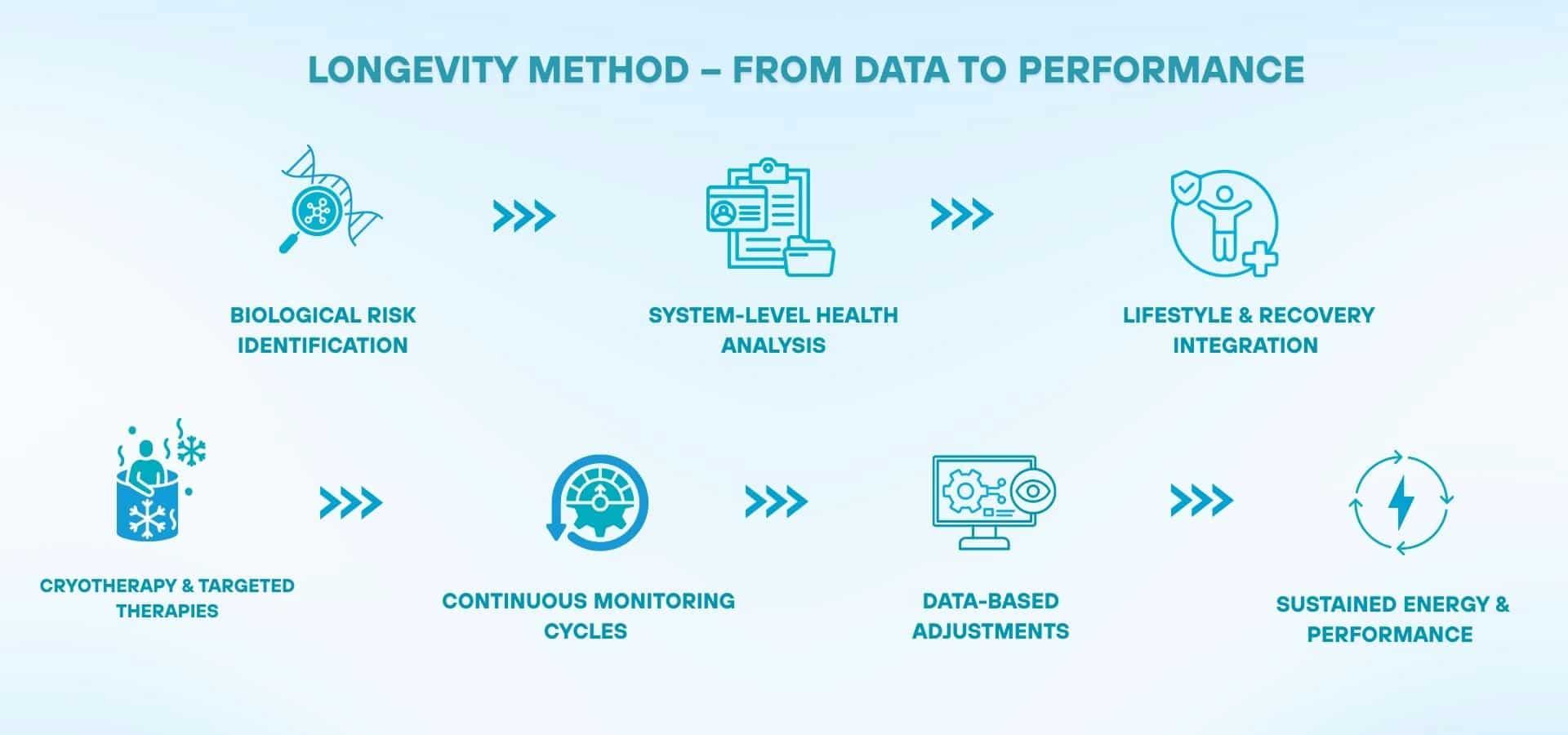
The medical framework at The Longevity Suite is defined by what it calls the Longevity Method. This is a structured, preventive model that focuses on identifying and monitoring biological signals linked to aging and performance over time.
The approach is grounded in preventive medicine, rather than reactive care. Instead of waiting for symptoms to appear, the system evaluates early biological changes—such as metabolic inefficiency, low-grade inflammation, and cellular stress—through measurable diagnostics.
A key principle of this model is that data alone is not sufficient. All diagnostic outputs—DNA reports, epigenetic markers, and molecular profiles—are interpreted within a clinical context by physicians. This reduces the risk of misinterpretation and supports structured decision-making.
The framework deliberately avoids unverified trends and unstandardized interventions. Technologies and protocols are selected based on measurable physiological responses and their ability to be consistently applied across patient profiles.
Core System Focus
The primary biological focus is on metabolic regulation and cellular aging processes, particularly the interaction between energy systems, fat metabolism, and inflammation. This connects with approaches focused on improving metabolic efficiency through lifestyle adjustments.
One key area is the activation of brown adipose tissue (BAT), which plays a role in energy expenditure and thermoregulation. Unlike white fat, which stores energy, brown fat contributes to energy utilization.
The clinic uses controlled cold exposure protocols to stimulate this process within a monitored environment.
|
🔍 Did You Know?
Acute cold exposure has been associated with an increase in daily energy expenditure of approximately 188 kcal and measurable activation of brown fat metabolism in controlled studies.
|
Lifestyle as a Medical Tool
Within this framework, lifestyle is not treated as general advice but as a structured variable that can be measured and adjusted over time.
Key components include:
- Nutrition based on genetic and metabolic data
- Cold exposure protocols applied in controlled sessions
- Stress and recovery tracking through periodic assessments
This also connects with improving deep sleep for longevity.
Rather than broad recommendations, these elements are integrated into programs that follow defined timelines and review cycles.
|
🔍 Did You Know?
Research suggests that approximately 11 minutes of cold exposure per week may be sufficient to stimulate thermogenic activity and metabolic adaptation under controlled conditions.
|

The clinical model at The Longevity Suite is built on layered diagnostics, where multiple biological systems are assessed together to provide a comprehensive view of health status.
Rather than relying on a single test or isolated metric, the clinic combines genetic, molecular, and physiological data. This allows physicians to identify patterns that may not be visible through standard medical screening. A similar structured approach is outlined in the executive physicals guide.
All assessments are conducted within a diagnostics-first workflow, meaning data collection and interpretation occur before any program structure is defined.
Diagnostic Assessment Includes
The diagnostic process typically integrates several categories of evaluation:
- DNA Analysis
Identifies gene polymorphisms linked to metabolism, nutrient response, and physical performance tendencies.
- Epigenetic Assessment
Evaluates biological age and how environmental factors such as stress, sleep, and lifestyle influence gene expression.
- Molecular Profiling (Lipidomics)
Analyzes red blood cell membranes to detect early signs of inflammation and metabolic imbalance.
- Gut Microbiota Analysis
Uses DNA sequencing to assess intestinal balance, which is linked to immune response (see immune resilience strategies) and metabolic function.
- Body Composition & Stress Monitoring
Periodic evaluations of fat distribution, muscle mass, and physiological stress indicators.
- Cardiovascular Screening
Includes imaging and blood markers to assess risk factors associated with cardiovascular conditions.
These assessments are repeated at defined intervals (e.g., quarterly or bi-annually), enabling longitudinal tracking rather than one-time evaluation.
|
🔍 Did You Know?
Standard diagnostic tools may not fully capture metabolic activity in brown fat because they often detect glucose usage rather than fatty acid metabolism, which is the primary energy source for this tissue.
|
Chronomedicine & Future Risk Mapping
A key component of the clinic’s diagnostic framework is chronomedicine, which focuses on how biological processes change over time.
Instead of asking “What is your current condition?”, the system asks:
“Where is your biology heading?”
This includes:
- Tracking changes in biological age over time
- Monitoring shifts in inflammatory markers
- Identifying early deviations in metabolic patterns
- Mapping potential long-term risks based on current data trends
This predictive framing does not establish certainty. Instead, it provides probability-based insight, allowing individuals to understand potential future scenarios under physician guidance.
The result is a structured, forward-looking model where decisions are based on trajectory, not just current state.
Here is the next section, written in full detail and aligned with your executive, evidence-aware framework:

The Longevity Suite is structured around measurable diagnostics and controlled intervention environments. Its strengths are not defined by breadth of services, but by how specific systems are evaluated, monitored, and integrated into repeatable clinical workflows.
The clinic’s capabilities are best understood through three core medical strengths, each supported by defined technologies and structured assessment cycles.
Key Medical Strength 1 – Controlled Cold Exposure & Metabolic Activation
The clinic has developed a standardized approach to whole-body cryotherapy, delivered through Cryosuite chambers operating between approximately -121°F and -139°F for short durations (typically 3–5 minutes).
This is not positioned as a standalone therapy but as part of a monitored metabolic protocol, where cold exposure is used to stimulate physiological responses such as:
- Activation of brown adipose tissue
- Increased energy expenditure
- Circulatory response and thermal regulation
Sessions are integrated into structured programs and evaluated alongside metabolic and inflammatory markers.
|
🔍 Did You Know?
Cold exposure has been associated with increases in norepinephrine (up to ~530%) and dopamine (~250%), which may influence focus and alertness in controlled environments.
|
Key Medical Strength 2 – Multi-Layered Diagnostic Integration
A defining strength of the clinic is its ability to combine multiple diagnostic systems into a single interpretive framework.
Rather than reviewing isolated results, the clinic integrates:
- Epigenetic data (biological age trends)
- Molecular markers (inflammation, lipid profiles)
- Gut microbiome analysis
- Cardiovascular risk indicators
This allows physicians to observe how different systems interact—for example, how metabolic inefficiency may correlate with inflammatory markers or stress indicators.
The result is not a diagnosis, but a structured interpretation of biological patterns, reviewed over time through repeat assessments.
Key Medical Strength 3 – Longitudinal Monitoring & Structured Programs
The clinic operates on a time-based monitoring model, where data is collected and reassessed across defined intervals rather than evaluated once.
Typical program structures include:
- Quarterly reviews (body composition, stress indicators)
- Bi-annual assessments (biological age, microbiota)
- Annual screenings (cardiovascular imaging, full panels)
This creates a longitudinal dataset, allowing individuals to track changes in biological markers over time rather than relying on static snapshots.
The emphasis is on:
- Consistency of measurement
- Physician-led interpretation
- Adjustment based on observed trends
This section reflects reported experiences and observed patterns within structured programs at The Longevity Suite. These are not guaranteed results and should be interpreted as individual cases within a controlled clinical environment.
Outcome 1 – Perceived Energy & Cognitive Clarity
Before:
Individuals entering structured programs often report sustained fatigue, reduced mental clarity, and inconsistent focus, particularly under prolonged work pressure or irregular recovery patterns.
After:
Following repeated exposure to controlled cold sessions and structured monitoring cycles, some individuals report improved alertness, increased perceived energy, and better ability to sustain attention across work periods.
These changes are typically associated with physiological responses such as increased catecholamine release (e.g., norepinephrine and dopamine) observed in controlled cold exposure environments.
Source: Clinical observations and reported experiences within structured cryotherapy-based programs.
Outcome 2 – Body Composition & Physical Response
Before:
Participants may present with imbalances in body composition, including higher localized fat distribution and lower muscle tone, often linked to sedentary work patterns or inconsistent training routines.
After:In programs that combine electromagnetic muscle stimulation with metabolic monitoring, some individuals report measurable improvements in muscle tone (see muscle and longevity connection) and reductions in localized fat over repeated sessions.
Reported data within clinical contexts indicates:
- Up to ~18% increase in muscle tone
- Approximately ~20% reduction in localized fat after multiple sessions
These observations are based on structured program participation and controlled application of technology.
Source: Program-level outcomes associated with electromagnetic stimulation technologies and metabolic protocols.
|
⚠️ Editorial Note
These outcomes reflect individual experiences reported within the clinic’s published materials. Results vary. Diagnostics indicate risk patterns, not certainty, and outcomes depend on multiple individual factors including baseline health, adherence, and physician oversight.
|
The Longevity Suite organizes its clinical offering into structured programs, rather than standalone services. These programs are designed to integrate diagnostics, monitoring, and controlled interventions over defined timeframes.
Each program follows a data → interpretation → structured application → reassessment model, ensuring that all components are connected to measurable biological markers.
Programs vary in duration and depth, ranging from short-cycle interventions to 12-month longitudinal monitoring frameworks.
Prevention Membership (12 Months)
This is the clinic’s most structured and comprehensive program, designed for long-term biological tracking and risk monitoring.
Program Structure
|
Component
|
Details
|
|
Duration
|
12 months
|
|
Core Objective
|
Longitudinal monitoring of biological markers
|
|
Diagnostic Cycle
|
Quarterly, bi-annual, and annual reviews
|
|
Medical Oversight
|
Physician-led interpretation at each stage
|
Included Elements
- Quarterly Assessments
Body composition, stress indicators, and metabolic parameters
- Bi-Annual Evaluations
Biological age (epigenetic testing), gut microbiota profiling
- Annual Screenings
Cardiovascular imaging, full blood panels, molecular analysis
- Data Integration
All results are tracked over time to identify trends and deviations
This program is structured for individuals who require continuous insight rather than isolated testing, allowing changes in biological systems to be observed across a full year.
Advanced Rejuvenation (Multi-Week / Multi-Month Program)
This program integrates aesthetic technologies with metabolic and nutritional monitoring, within a defined clinical structure.
Program Structure
|
Component
|
Details
|
|
Duration
|
Multi-week to multi-month cycles
|
|
Core Objective
|
Structured support for skin, metabolism, and recovery systems
|
|
Integration
|
Combines diagnostics with technology-based interventions
|
Included Elements
- Cryotherapy sessions within defined cycles
- Nutritional planning based on diagnostic findings
- Use of antioxidant-based formulations and cosmeceuticals
- Periodic reassessment of skin and metabolic indicators
The program is not positioned as a cosmetic solution but as a data-informed integration of skin physiology and metabolic processes.
Naturally Slim (Program Duration Varies)
This program focuses on body composition management through metabolic and lifestyle variables, supported by structured diagnostics.
Program Structure
|
Component
|
Details
|
|
Duration
|
Program-based (varies by individual)
|
|
Core Objective
|
Monitor and adjust metabolic and body composition indicators
|
|
Approach
|
Combines nutrition, activity, and technology-based support
|
Included Elements
- Personalized nutrition plans based on metabolic data
- Detox protocols using fiber-rich nutritional systems
- Integration of body-focused technologies (e.g., electromagnetic stimulation)
- Tracking of fat distribution and muscle response over time
These outcomes can also be supported by routines like build a home gym for longevity.
This program emphasizes measurable changes in body composition, rather than short-term weight fluctuations.
Program Positioning Summary
Across all programs, the structure remains consistent:
- Diagnostics guide program entry
- Physicians interpret all findings
- Interventions are applied within defined frameworks
- Progress is evaluated through repeat measurement
Here is the next section, written in a structured, executive-safe, and detail-specific format:
The Longevity Suite operates within a controlled clinical environment where therapies, diagnostics, and infrastructure are integrated into a single medical workflow.
The focus is not on offering a wide range of services, but on ensuring that each therapy is applied within a measurable and repeatable clinical context, supported by physician oversight.
Medical & Restorative Therapies
Therapies are selected based on their ability to produce measurable physiological responses and are applied within structured programs rather than as standalone interventions.
Key therapies include:
- Total Body Cryotherapy (Cryosuite)
Delivered in chambers operating between approximately -121°F and -139°F for short durations (3–5 minutes), used to stimulate thermal and metabolic responses.
- Localized Cryotherapy
Targeted cold application (approximately -25.6°F) used for specific areas to support circulation and localized response.
- Photobiomodulation (LED Therapy)
Light-based therapy used to influence cellular activity and skin-related processes.
- IV Therapy (Intravenous Nutrient Delivery)
Administered under clinical supervision to support nutrient availability and systemic balance. Recovery outcomes are also influenced by habits that improve sleep quality.
- Ozone Therapy
Applied in controlled medical settings to support immune-related processes.
- Electromagnetic Muscle Stimulation
Ultra-focused electromagnetic field technology used to stimulate muscle activity and assess response over repeated sessions.
Each therapy is integrated into a broader data-informed program, ensuring that application is aligned with diagnostic findings.
Clinical Facilities
The clinic operates as a medical hub, combining diagnostic infrastructure with therapy delivery systems in a single environment.
Core facilities include:
- Cryotherapy chambers (Cryosuite Total Body systems)
- Diagnostic laboratories for DNA and epigenetic testing
- Molecular profiling systems (lipidomics analysis)
- Cardiovascular screening equipment (including imaging systems)
- Body composition and metabolic assessment tools
These facilities are designed to support high-frequency, repeatable assessments, enabling consistent data collection across multiple time points.
Architecture, Environment & Digital Discipline
The clinic environment is structured to support efficiency, privacy, and focus, rather than extended stays or lifestyle experiences.
Key characteristics include:
- Urban Location
Positioned within central city areas, allowing integration into work schedules without travel disruption.
- Controlled Clinical Design
Minimalist, aseptic environments designed to support medical workflows and reduce external distractions.
- Short-Duration Visits
Many sessions are designed to be completed within minutes, enabling high-efficiency scheduling.
- Digital Discipline
The environment limits unnecessary digital interruptions, supporting focus during assessments and sessions.
- Privacy Framework
Appointment-based access ensures controlled patient flow and discretion for high-profile individuals.
The Longevity Suite positions its pricing and program structure around diagnostic depth, monitoring frequency, and physician involvement, rather than fixed service bundles.
Costs vary depending on the level of assessment, duration of engagement, and number of review cycles included. The model is structured to support progressive evaluation over time, not one-time transactions.
Pricing
|
Category
|
Details
|
|
Clinic Positioning
|
Preventive longevity clinic with diagnostics-first model
|
|
Stay Length
|
Short sessions to long-term (12-month) programs
|
|
Entry Pricing
|
Varies depending on diagnostic scope and program depth
|
|
What’s Included
|
Diagnostics, physician interpretation, structured monitoring cycles
|
|
Additional Costs
|
Extended diagnostics, advanced therapies, repeat assessments
|
|
Program Structure
|
Time-based (quarterly, bi-annual, annual cycles)
|
|
Clinical Principle
|
Data-driven interpretation under physician supervision
|
How Programs Are Structured
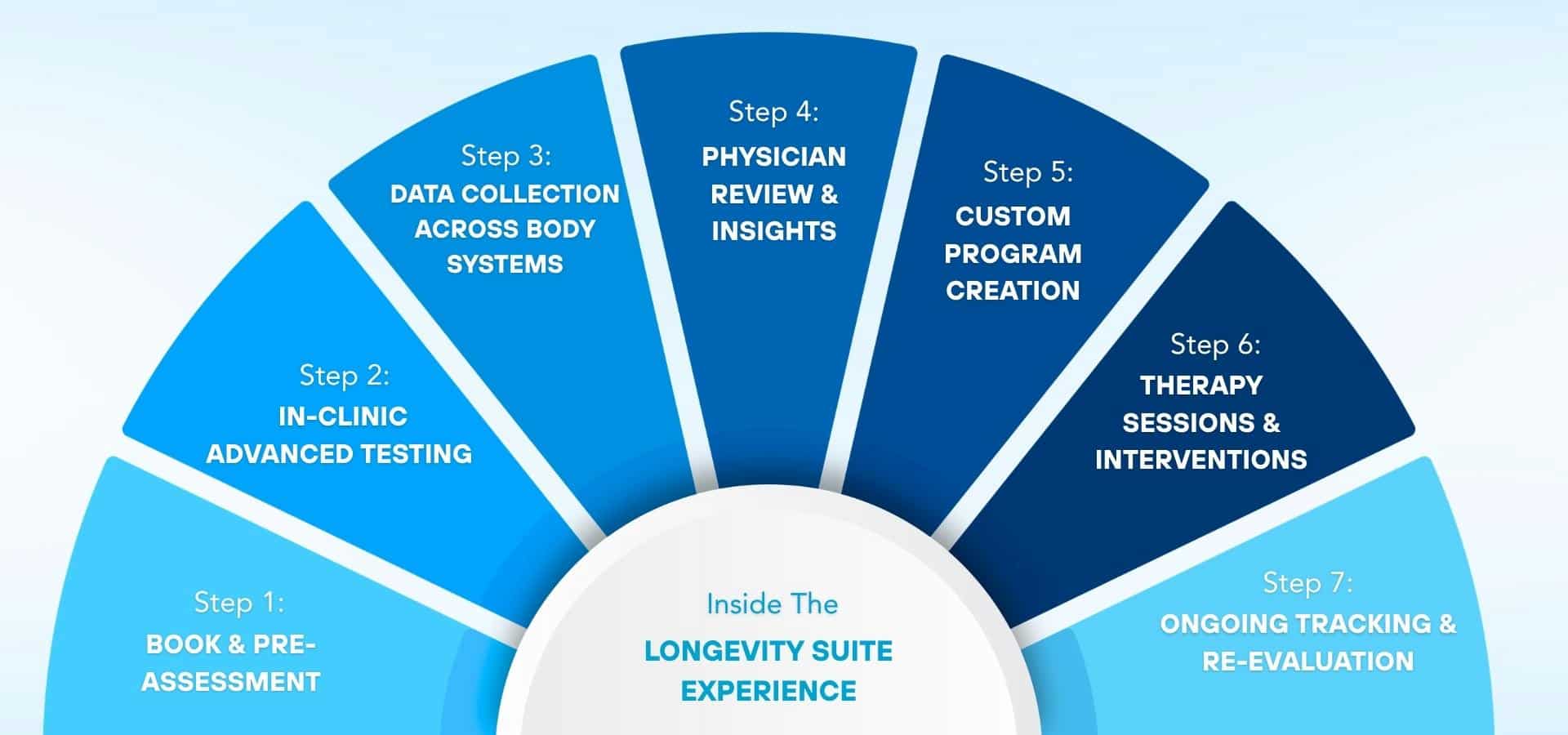
Programs follow a step-by-step clinical workflow, ensuring that each phase is guided by measurable data.
1. Pre-Visit Preparation
- Initial data collection (health history, baseline indicators)
- Planning of diagnostic scope based on individual profile
2. On-Site Diagnostics
- DNA, epigenetic, and molecular testing
- Body composition and metabolic assessment
- Cardiovascular and inflammatory marker evaluation
3. Physician Interpretation
- Data reviewed within a clinical framework
- Identification of patterns across systems (metabolic, inflammatory, neurological)
- No conclusions are drawn without physician oversight
4. Reporting & Program Assignment
- Structured reporting of findings
- Assignment to a defined program (short-term or longitudinal)
- Establishment of monitoring intervals (3, 6, or 12 months)
5. Ongoing Review Cycles
- Repeat diagnostics at defined intervals
- Adjustment based on observed trends, not assumptions
This structure ensures continuity and allows for tracking changes over time, rather than relying on isolated data points.
Length of Stay
The clinic is designed for flexible engagement, rather than fixed residential stays.
- Short Visits:
Individual sessions (e.g., cryotherapy) typically last a few minutes
- Program-Based Engagement:
Structured over weeks, months, or a full 12-month cycle
- No Mandatory Residency:
Most individuals integrate visits into existing travel or work schedules
This model supports high-efficiency access, particularly for professionals who require minimal disruption to their routines.
Here is the next section, written in a structured, neutral, and executive-compliant format:
The Longevity Suite is designed for integration into existing schedules, rather than requiring dedicated travel or extended stays.
Its locations in cities such as Milan, Rome, Florence allow individuals to combine clinic visits with professional commitments, business travel, or short city stays.
The operational model prioritizes efficiency, accessibility, and minimal disruption, making it suitable for individuals managing tight schedules.
Recommended Length of Stay
There is no fixed stay requirement.
Engagement typically falls into two formats:
- Short, Single Visits
Used for individual sessions such as cryotherapy or diagnostic appointments
These visits are often completed within the same day
- Program-Based Visits
Spread across weeks or months
Individuals return periodically for reassessment and monitoring
For long-term programs (e.g., 12-month monitoring), visits are scheduled at defined intervals rather than continuous stays.
How to Reach the Clinic?
Nearest Airports
- Milan: Milan Malpensa Airport
- Rome: Leonardo da Vinci–Fiumicino Airport
Typical Transfer Time
- 30 to 60 minutes depending on location and traffic
Transport Options
- Private car services
- Taxi
- Ride-sharing platforms
- Public transport (metro and rail connections in urban areas)
🔗 Find best flights to Milan
🔗 Find car rentals in Milan
Links provided for travel planning convenience only.
Accommodation & Stay Planning
The clinic does not operate residential accommodation.
Guests typically stay in nearby hotels or serviced apartments, depending on the duration of their visit and personal preference.
Due to the clinic’s central urban locations, there is access to:
- Business hotels
- Luxury hotels
- Short-term apartments
This allows flexibility in planning both short and extended visits.
🔗 Explore nearby hotels & apartments
What to Bring
Preparation requirements are minimal and depend on the type of visit.
Common recommendations include:
- Comfortable clothing for assessments
- Medical records (if relevant for physician review)
- Identification for appointment verification
Specific preparation instructions are typically provided in advance based on the diagnostic scope.
The Longevity Suite presents its outcomes primarily through reported experiences, structured observations, and clinical feedback, rather than outcome guarantees or standardized results.
The emphasis remains on measurable data, physician interpretation, and repeat assessment, rather than fixed claims.
What Patients Commonly Report
Across published materials and user feedback, several consistent themes appear. These should be interpreted as reported experiences, not clinical outcomes.
Commonly Reported Things
- Perceived Increase in Energy Levels
Individuals often describe improved day-to-day energy following repeated sessions and structured monitoring cycles.
- Improved Recovery and Physical Readiness
Particularly among active individuals, some report faster recovery after physical exertion when participating in structured programs.
- Enhanced Focus and Mental Clarity
Reported improvements in concentration and cognitive consistency, especially in high-demand work environments.
- Visible Changes in Body Composition
In programs involving metabolic monitoring and electromagnetic stimulation, some individuals report changes in muscle tone and localized fat distribution.
- Consistency Through Structured Monitoring
Many users highlight the value of periodic reassessment and long-term tracking rather than one-time evaluation.
These observations reflect patterns across user feedback, not standardized clinical endpoints.
Media & Professional Recognition
The clinic has been referenced in a range of media publications and professional contexts, often in relation to longevity science, preventive health, and performance-focused diagnostics.
Notable Mentions & Context
- Coverage in lifestyle and medical-focused publications discussing:
- Cold exposure and metabolic health
- Preventive longevity approaches
- Integration of diagnostics into wellness frameworks
- Association with broader discussions on:
- Epigenetics and aging
- Systems-based medicine
- Performance optimization in high-demand individuals
- Alignment with expert commentary from professionals such as:
- Peter Attia (healthspan-focused medicine)
- Andrew Huberman (cold exposure and neurobiology)
- Mark Hyman (lifestyle-based health frameworks)
These references provide contextual alignment, not direct endorsement.
The Longevity Suite sits within a growing category of diagnostics-led longevity clinics that aim to shift attention from reactive care toward structured, preventive evaluation.
Its positioning is defined less by individual therapies and more by how data is collected, interpreted, and monitored over time. The clinic emphasizes repeatable measurement cycles, physician oversight, and integration of multiple biological systems into a single interpretive framework.
Within the broader longevity sector, this approach reflects a move toward healthspan-oriented thinking, where the focus is not simply on lifespan, but on maintaining functional capacity across physical and cognitive domains. However, it is important to recognize that many underlying areas such as epigenetic reprogramming, metabolic adaptation, and long-term predictive modeling are still evolving fields with ongoing research and varying levels of clinical validation.
The Longevity Suite operates within these boundaries by maintaining a structured, data-first model, avoiding outcome-based positioning and emphasizing observation over intervention claims.
For executives and high-performance individuals, the relevance lies in its ability to provide time-efficient, system-level insight, rather than generalized recommendations. The value is therefore not in immediate results, but in establishing a measurable framework for tracking biological change over time.
Is this a medical clinic or a wellness center?
The Longevity Suite operates as a preventive longevity clinic with a diagnostics-first model. While it includes elements commonly seen in wellness environments, its structure is based on medical oversight, data collection, and physician interpretation. The focus is on biological assessment and monitoring rather than general wellness services.
Who is this clinic most suitable for?
The clinic is designed for individuals who require structured, data-driven insight into their health over time. This typically includes executives, founders, investors, professional athletes, and high-performance individuals managing demanding schedules. It is not designed for individuals seeking immediate treatment or short-term solutions.
How personalized are the programs?
Programs are structured based on individual diagnostic data, including genetic, epigenetic, and metabolic markers. Personalization occurs through physician interpretation of this data and the assignment of structured monitoring cycles. However, personalization does not imply guaranteed outcomes; it reflects adaptation based on measurable indicators.
How is privacy handled?
The clinic operates on an appointment-only model, limiting patient flow and maintaining discretion. This structure supports privacy for individuals who require confidentiality, particularly high-profile clients or those in executive roles.
Can I stay connected to work during visits?
Yes. The clinic is designed for short, efficient visits, often lasting minutes rather than hours. Locations in central urban areas allow individuals to integrate sessions into their workday with minimal disruption.
Is this suitable for individuals with chronic conditions such as diabetes?
The clinic’s role is diagnostic and preventive, not a replacement for ongoing medical care. Individuals with chronic conditions should continue working with their primary healthcare provider. Any data or assessments obtained should be reviewed within the context of existing medical supervision.
How should value be evaluated compared to cost?
Value is typically assessed based on:
- Depth of diagnostics
- Frequency of monitoring
- Access to physician-led interpretation
- Ability to track biological changes over time
The model is not based on single services but on longitudinal insight, which may be more relevant for individuals seeking structured, long-term understanding rather than immediate outcomes.
In high-performance environments, time is often allocated to execution, decision-making, and external demands. What is less frequently structured is time dedicated to understanding internal capacity how biological systems are functioning, adapting, or showing early signs of strain.
The Longevity Suite operates within this gap. Its model does not center on immediate change, but on measured observation and structured interpretation. For individuals managing sustained cognitive and physical demands, this type of insight can serve as a reference point rather than a solution.
The relevance of such an approach lies in its ability to provide clarity without disruption. Short, repeatable sessions and defined monitoring cycles allow health data to be integrated into existing schedules, rather than requiring withdrawal from them.
It is important to recognize that longevity, as a field, remains complex and evolving. No single clinic or system provides complete answers. However, structured diagnostic frameworks may offer a way to better understand how current patterns could influence long-term capacity.
For executives, founders, and high-performers, the decision is less about intervention and more about whether to measure, track, and interpret biological change over time.
👉 View Longevity Program
↩ Return to ExtendMy.Life
↑ Back to Top
Disclaimer
This content is provided for informational and editorial purposes only. It is not intended as medical advice, diagnosis, or treatment recommendation. No doctor–patient relationship is established through this material. All information presented reflects general insights based on available data, clinical structures, and published research. Individual health conditions vary, and outcomes cannot be predicted or guaranteed. Diagnostic assessments discussed in this content are designed to indicate potential patterns or areas of interest. They do not establish certainty, nor do they replace clinical evaluation by a qualified healthcare provider. Any decisions regarding health, diagnostics, or treatment should be made in consultation with a licensed physician or appropriate medical professional. Individuals with existing medical conditions, including chronic diseases, should continue to follow guidance from their primary healthcare provider. The field of longevity science is evolving, and some areas such as epigenetic assessment, metabolic adaptation, and predictive modeling—are still under active research. Interpretations should therefore be considered within the context of current scientific limitations. Readers are encouraged to use this information as a reference point for discussion with medical professionals, not as a basis for independent decision-making.
References
Attia, P. (2023) Outlive: The Science and Art of Longevity.
Elsevier (2021) Longevity and metabolic health research.
Elsevier (2024) Advances in longevity science.
Huberman, A. (2021) Neurobiology of stress and cold exposure.
Hyman, M. (2023) Young Forever: The Secrets to Living Your Longest, Healthiest Life.
National Center for Biotechnology Information (2021) Epigenetics and aging research.
National Center for Biotechnology Information (2021) Inflammation and immune system study.
National Center for Biotechnology Information (2022) Longevity and aging mechanisms study.
Søberg, S. (2022) Cold exposure and metabolic health research.
Walker, M. (2017) Why We Sleep: Unlocking the Power of Sleep and Dreams.