Qualevita operates within a physician-led structure, supported by diagnostic specialists and program coordinators who manage testing, data collection, and program flow. The clinic follows a clearly defined workflow where biological data is gathered first and interpreted afterward, ensuring that all conclusions are based on measurable inputs rather than assumptions. To compare similar providers, you can review the best longevity clinics in the Netherlands and understand different clinical models.
The clinical process is organized into three structured stages:
- Initial Consultation
A physician-led session to define individual objectives, review baseline health information, and align the scope of diagnostics with the individual’s profile.
- Comprehensive Diagnostic Testing
Collection of biological data across multiple systems, including metabolic, hormonal, and cellular markers. This stage forms the foundation of the clinic’s analytical process.
- Physician-Led Interpretation & Reporting
A structured review of all diagnostic results, where physicians analyze interactions between systems and provide a consolidated report for long-term planning.
This staged model allows for efficient and time-controlled engagement, making it suitable for professionals who require structured insight without extended disruption to their schedules.
At a Glance – Qualevita
|
Category
|
Details
|
|
Location
|
Amsterdam, Netherlands
|
|
Clinic Type
|
Preventive longevity clinic
|
|
Core Focus
|
Biomarker-driven health assessment
|
|
Typical Stay
|
1–3 days (program dependent)
|
|
Diagnostic Depth
|
45–200 biomarkers analyzed
|
|
Signature Method
|
Four Pillar Approach
|
|
Environment
|
Clinical-grade with hospitality integration
|
|
Privacy Level
|
High-discretion, appointment-based
|
|
Professional Recognition
|
Harvard-linked expertise and partnerships
|
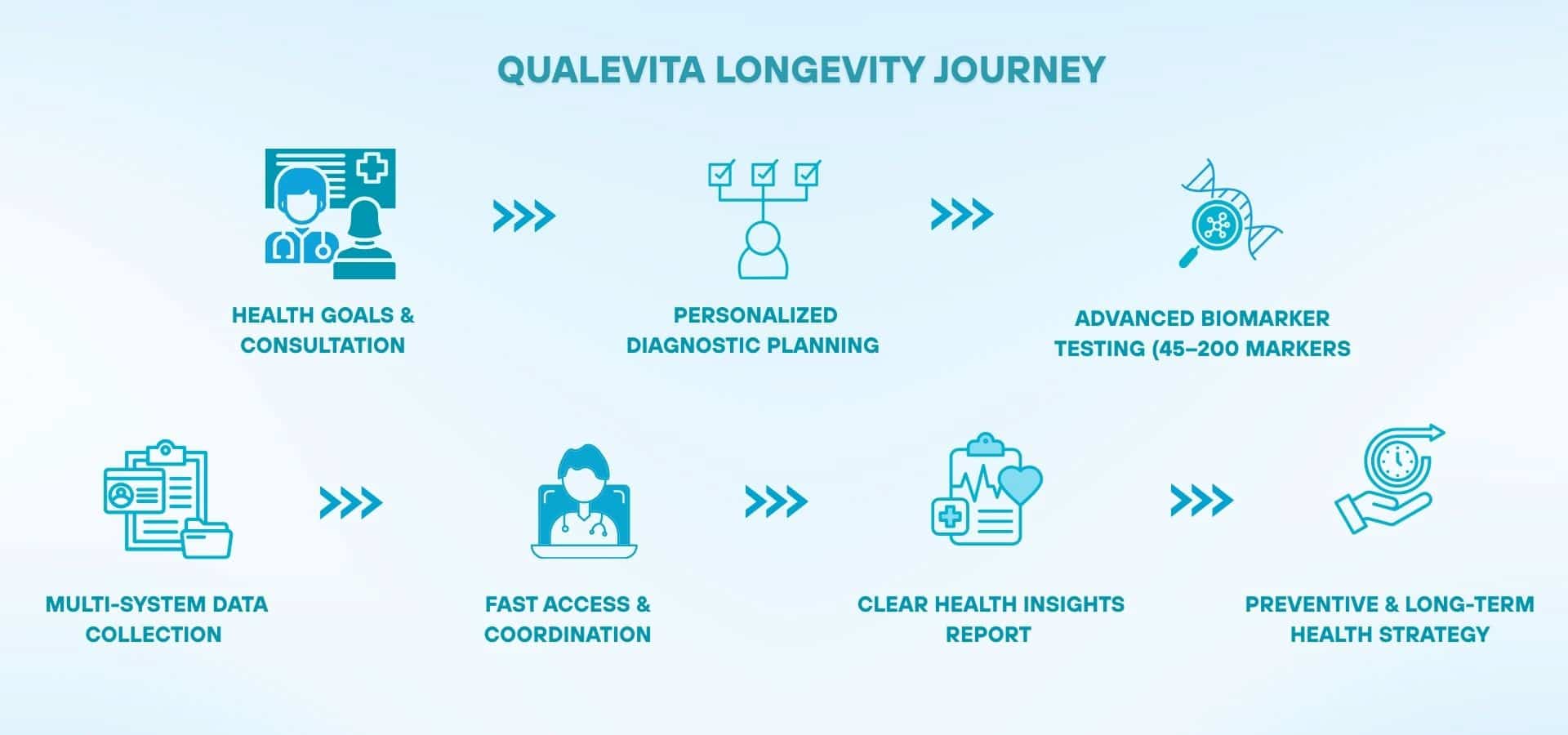
Qualevita is selected by high-performing individuals for its structured, data-driven clinical model and clearly defined workflow. Rather than offering generalized wellness services, the clinic focuses on measurable diagnostics, physician-led interpretation, and consistent program structure. This approach provides clarity and reduces ambiguity, which is often a priority for individuals operating in high-demand environments.
USP & Key Takeaways
- Epigenetic Biological Age Testing (Telotest)
Used to assess cellular aging patterns based on DNA methylation markers, offering a reference point beyond chronological age.
- Multi-Parameter Diagnostics (45–200 Biomarkers)
Comprehensive testing across metabolic, hormonal, and cellular systems to identify patterns and interactions rather than isolated values.
- Integration of Endocrinology Expertise
Hormonal analysis is embedded within the broader diagnostic framework, recognizing its role in energy regulation, recovery, and system balance.
- Structured Four Pillar Approach
- State-of-the-Art Analysis: Use of advanced laboratory diagnostics
- Knowledgeable Expertise: Physician-led interpretation
- Tailor-Made Programs: Individualized planning based on diagnostic findings
- Dedicated Support: Ongoing coordination and follow-up structure
- Health Angel Guidance Model
Each individual is supported by assigned coordinators (“Health Angels”) who assist with scheduling, communication, and program continuity.
The clinic’s primary differentiation lies not in individual tests or therapies, but in how diagnostic data is structured, interpreted, and translated into a long-term planning framework under physician supervision. Many also focus on ways to improve brain performance to maintain cognitive clarity.
Qualevita operates within a preventive medicine framework, where aging is understood as a measurable biological process rather than a fixed or irreversible outcome. The clinic focuses on identifying how biological systems change over time and how these changes can be observed through structured diagnostics. This reflects a shift toward a Medicine 3.0 longevity approach, where prevention and data-driven insights guide long-term health decisions.
Its approach is based on a systems longevity model, meaning that biomarkers are not assessed in isolation. Instead, the clinic evaluates how different systems such as metabolism, hormonal regulation, and cellular function interact with one another. This allows for a broader understanding of patterns that may not be visible when reviewing single data points independently.
A central principle of this model is that data requires interpretation. Diagnostic results are treated as inputs within a clinical framework, and physician-led analysis is used to contextualize findings across multiple systems. This reduces the risk of over-reliance on raw numbers or fragmented insights.
The clinic maintains a deliberate focus on validated diagnostic methods and structured clinical reasoning, avoiding trend-driven approaches or unproven interventions. The emphasis remains on measurable biological indicators, interpreted within established medical frameworks, to support informed and long-term health planning.
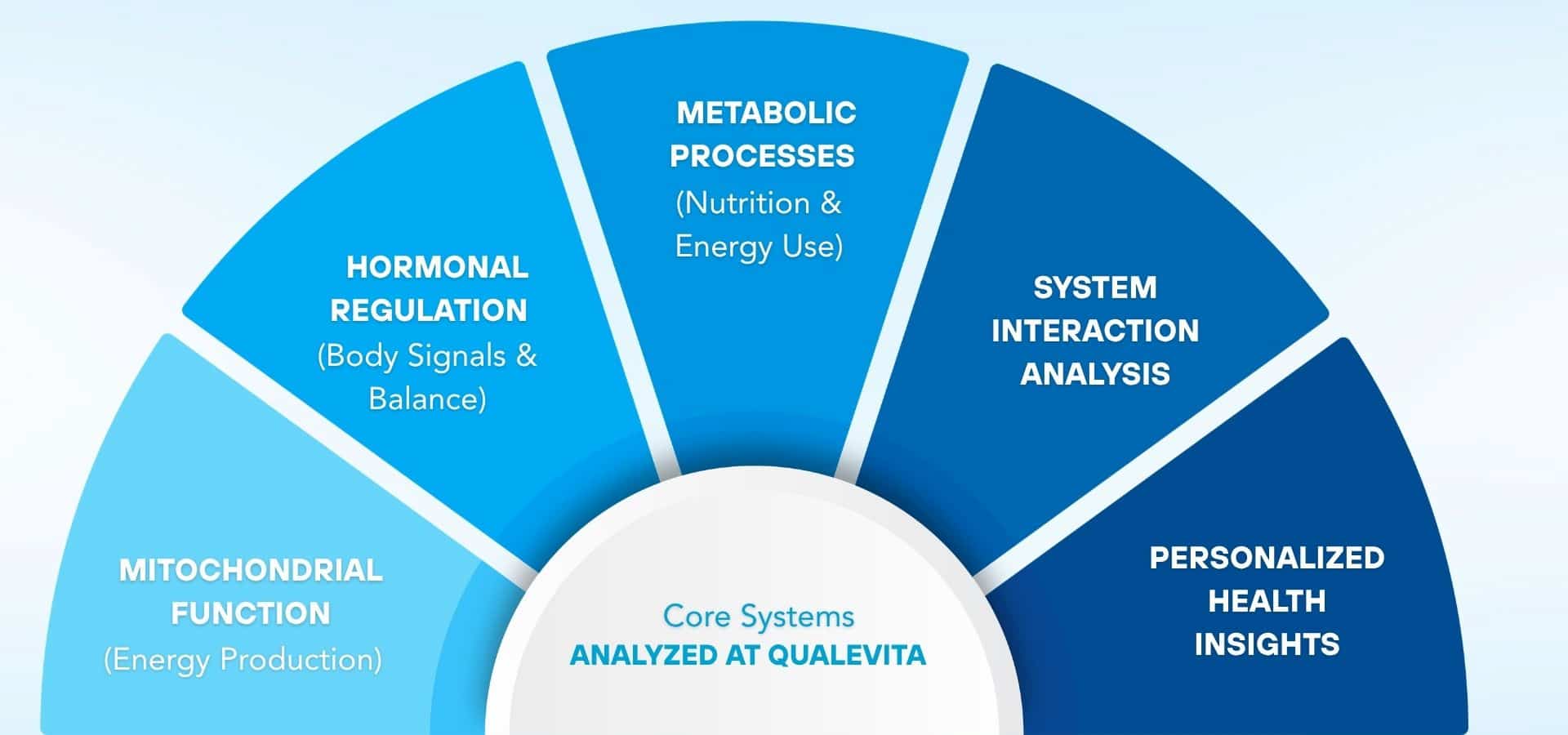
Core System Focus
Qualevita concentrates its diagnostic analysis on three interconnected biological systems that influence overall function and long-term performance. Rather than reviewing isolated markers, these systems are evaluated together to understand how they interact and influence one another.
- Mitochondrial Function (Cellular Energy Production)
The clinic examines how effectively cells produce and utilize energy. Mitochondria play a central role in sustaining physical and cognitive output, and their efficiency is assessed through related biochemical markers.
- Hormonal Regulation (Endocrine System Balance)
Hormones are analyzed as part of a broader regulatory network that affects energy levels, recovery patterns, and physiological stability. The clinic evaluates how hormonal signals interact with other systems rather than treating them independently.
- Metabolic Processes (Glucose, Lipids, and Nutrient Pathways)
Metabolic pathways are assessed to understand how the body processes energy, regulates blood sugar, and utilizes nutrients. This includes examining interactions between glucose metabolism, lipid profiles, and nutrient availability.
This highlights how muscle health for longevity plays a role in maintaining metabolic balance.
By focusing on these core systems together, the clinic aims to build a connected view of biological function, supporting structured interpretation rather than fragmented analysis.)
|
🔍 Did You Know?
NAD⁺ is a coenzyme involved in cellular energy production and DNA repair, and its levels tend to decline with age.
|
Lifestyle as a Medical Tool
Qualevita treats lifestyle variables as measurable clinical inputs rather than general advice. These factors are assessed in relation to diagnostic data, allowing physicians to observe how daily behaviors may influence biological markers across systems.
Instead of applying broad recommendations, the clinic evaluates lifestyle patterns as part of the overall analytical framework, linking them to measurable changes in metabolic, hormonal, and cellular function.
Key areas of assessment include:
- Nutritional Patterns:
Evaluation of dietary habits in relation to metabolic markers, nutrient utilization, and energy regulation. Approaches that strengthen immune resilience can support long-term biological stability.
- Sleep Consistency:
Analysis of sleep duration and regularity, particularly in how it relates to hormonal balance and recovery processes. Short recovery strategies like understanding the power of naps for recovery can support energy regulation.
- Physical Stress Exposure:
Assessment of physical load, including exercise and environmental stressors, and how these influence systemic adaptation and recovery. Many individuals also look to maximize home workouts to maintain consistency outside clinical settings.
By integrating these variables into the clinical model, lifestyle is positioned as a quantifiable factor within biological analysis, supporting more structured interpretation rather than generalized guidance.
|
🔍 Did You Know?
Controlled stress inputs such as fasting may activate cellular maintenance processes like autophagy, which are studied in aging research.
|

Diagnostic Assessment Includes
Qualevita’s diagnostic process is structured as a multi-layered assessment of biological systems, designed to capture data across cellular, metabolic, and hormonal levels. Each test contributes to a broader dataset, which is later interpreted in combination rather than in isolation.
The assessment typically includes:
- Epigenetic Biological Age Testing (Telotest)
Analysis of DNA methylation patterns to estimate biological age and compare it with chronological age, providing a reference point for cellular aging trends.
- Mineral and Heavy Metal Analysis (Oligoscan)
Evaluation of intracellular mineral balance and potential heavy metal accumulation, offering insight into micronutrient status and environmental exposure.
- Genetic-Based Nutrition Profiling (Nutrigentest)
Assessment of genetic variations related to nutrient metabolism, supporting understanding of how the body processes specific vitamins and nutrients. Simple natural nutrition strategies can also influence metabolic efficiency over time.
- Organic Acid Testing
A metabolic analysis that examines biochemical byproducts to identify patterns related to energy production, gut activity, and nutrient pathways. This connects with sustainable weight management, which depends on underlying metabolic function.
- Comprehensive Hormonal Panels
Measurement of key hormones involved in energy regulation, recovery, and physiological balance, analyzed within a broader system context.
- Blood and Urine Biomarker Analysis
Standard and advanced laboratory testing to evaluate metabolic function, inflammation markers, and overall system performance.
Together, these diagnostic layers form a comprehensive dataset, enabling structured physician interpretation and system-level analysis rather than isolated test reporting.
|
🔍 Did You Know?
The clinic evaluates between 45 and 200 diagnostic parameters to build individualized biological profiles.
|
Chronomedicine & Future Risk Mapping
Qualevita incorporates a time-based analytical approach, examining how biological markers may evolve across different stages rather than viewing results as fixed snapshots. This framework, often referred to as chronomedicine, focuses on tracking change over time and understanding patterns within that progression.
Within this model, diagnostic data is used to support:
- Long-Term Tracking of Biomarker Trends
Repeated measurements allow for comparison over time, helping to identify whether specific markers remain stable, improve, or shift outside expected ranges.
- Scenario-Based Planning Under Physician Guidance
Physicians use current data to outline possible trajectories, enabling structured discussion around different biological scenarios without assuming fixed outcomes.
- Identification of Early Deviations
Subtle changes in markers may be observed before clinical symptoms appear, providing an opportunity for earlier awareness within a monitored framework.
This approach does not predict or guarantee outcomes. Instead, it provides structured insight into potential biological trajectories, supporting informed decision-making based on current data and physician interpretation. Over time, factors like deep restorative sleep strategies can influence how biological systems adapt and recover.
Qualevita’s primary strength lies in its ability to conduct structured, multi-system analysis supported by physician-led interpretation and clearly defined clinical workflows. The clinic focuses on how biological data is collected, connected, and reviewed over time, rather than relying on isolated tests or single-point assessments.
Instead of treating diagnostics as standalone outputs, Qualevita integrates data across metabolic, hormonal, and cellular systems to build a cohesive clinical picture. This allows patterns and relationships between systems to be identified, which may not be visible through individual markers alone.
A key component of this approach is the emphasis on process consistency. Each stage from data collection to interpretation is standardized, ensuring that insights are derived within a structured framework rather than subjective evaluation.
By prioritizing continuity, system-level understanding, and physician oversight, the clinic positions itself as an analytical environment where data is translated into structured insight, supporting long-term planning rather than short-term conclusions.
Key Medical Strength 1 – Multi-System Biomarker Analysis
Qualevita evaluates multiple biological systems in parallel, including metabolic, hormonal, and cellular markers, within a single diagnostic framework. This approach moves beyond single-marker assessment and focuses on how different systems interact and influence one another.
By analyzing these systems together, the clinic can identify cross-system relationships for example, how metabolic markers may correlate with hormonal patterns or how cellular indicators relate to energy regulation. These connections are often not visible when markers are reviewed independently.
This method supports a more integrated clinical interpretation, where data is not fragmented but assessed as part of a broader biological network. The result is a structured understanding of how systems function collectively, rather than a series of isolated observations.
|
🔍 Did You Know?
Cross-system analysis can reveal interactions between glucose metabolism, lipid regulation, and hormonal balance, which may not be visible in single-marker testing.
|
Key Medical Strength 2 – Endocrine Integration
At Qualevita, hormonal profiling is embedded within the broader diagnostic framework rather than handled as a separate specialty. Hormones are assessed alongside metabolic and cellular markers, allowing physicians to evaluate how endocrine signals interact with energy regulation, nutrient processing, and recovery patterns.
This integrated approach recognizes hormones as regulatory variables that influence multiple systems simultaneously. Instead of reviewing hormone levels in isolation, the clinic examines how they correlate with other biological markers to identify system-wide patterns.
The model is supported by collaboration with endocrinology expertise, where hormonal balance is treated as a central component of long-term biological assessment. This enables a more connected interpretation of data, aligning hormonal insights with the overall clinical picture rather than separating them from it.
Key Medical Strength 3 – Structured Physician Interpretation
All diagnostic data at Qualevita is reviewed within a structured clinical framework, where physician interpretation is central to the process. Rather than delivering raw test results, the clinic provides a consolidated analysis supported by a defined reporting structure.
This approach ensures that data is not viewed in isolation. Instead, physicians evaluate how different markers relate to one another across systems, forming a more complete understanding of biological function.
The structured interpretation process allows for:
- Contextualization Across Systems
Individual markers are analyzed in relation to metabolic, hormonal, and cellular interactions, reducing fragmented insights.
- Consideration of Variability
Natural biological fluctuations and individual differences are accounted for, avoiding over-reliance on single data points.
- Alignment with Long-Term Planning
Outputs are framed to support ongoing monitoring and structured decision-making, rather than short-term conclusions or immediate actions.
By prioritizing interpretation over raw data delivery, the clinic positions diagnostic results as part of a continuous analytical process, supporting clarity and consistency over time.
Outcome 1 – Travel Fatigue Management
Before:
Reported fatigue, reduced focus, and difficulty maintaining performance after travel
After:
Reported improvement in perceived alertness and reduced fatigue following clinic sessions
Source: Clinic-reported testimonials
Outcome 2 – Energy Perception
Before:
Persistent low energy levels and reduced daily consistency
After:
Reported improvement in perceived energy levels and recovery
Source: Clinic-reported testimonials
|
⚠️ Editorial Note
These outcomes reflect individual experiences reported within clinic materials. Results vary. Diagnostic findings indicate patterns, not certainty, and outcomes depend on multiple individual factors.
|
Qualevita structures its programs around three core variables: diagnostic depth, physician-led interpretation, and time efficiency. Rather than offering fixed packages, the clinic uses flexible program frameworks that are adjusted based on the scope of biological assessment required and the individual’s profile.
Each program is designed to follow a diagnostics-first sequence, where testing and data collection define the direction of clinical review. This ensures that program structure is guided by measurable inputs rather than predefined templates.
The variability across programs typically reflects the following:
- The number and type of biomarkers analyzed
- The level of system-wide assessment (targeted vs full-system)
- The time allocated for physician interpretation and reporting
This approach allows programs to remain structured yet adaptable, supporting different levels of diagnostic detail while maintaining consistency in clinical workflow.
1. Premium Longevity Program (Multi-Day)
|
Category
|
Details
|
|
Focus
|
Full-system diagnostic evaluation across metabolic, hormonal, and cellular markers
|
|
Duration
|
Multi-day program
|
|
Diagnostic Scope
|
High-depth (multi-parameter testing)
|
|
Output
|
Physician-led interpretation and structured reporting
|
|
Review Cycle
|
Follow-up planning based on diagnostic findings
|
2. Health & Hormones Program (1–2 Days)
|
Category
|
Details
|
|
Focus
|
Hormonal profiling and interaction with metabolic systems
|
|
Duration
|
1-2 Days
|
|
Diagnostic Scope
|
Targeted endocrine and metabolic markers
|
|
Output
|
Hormonal assessment with physician interpretation
|
|
Review Cycle
|
Short-term follow-up depending on findings
|
Programs are structured to allow completion within short timeframes, making them compatible with executive schedules.
Medical & Restorative Therapies
Qualevita incorporates a limited range of therapies that are aligned with its diagnostic-first clinical framework. These therapies are not positioned as primary interventions but are considered within the context of diagnostic findings and physician evaluation.
All applications occur under medical supervision and are integrated into the broader analytical process, where therapies follow interpretation rather than precede it. This ensures that any use is contextualized within the individual’s biological profile.
In some cases, detox methods for recovery are considered as part of supporting internal balance alongside clinical evaluation.
Therapies included within the clinic’s scope:
- NAD+ Intravenous Infusions
Administered to support cellular processes related to energy metabolism and biochemical function, as part of a monitored clinical setting.
- Nicotinamide Riboside (NR) Infusions
A precursor-based approach aimed at influencing NAD+ pathways, evaluated within the clinic’s diagnostic and tolerance framework.
- Vitamin and Antioxidant IV Therapies
Includes compounds such as glutathione, vitamin C, and biotin, delivered intravenously and reviewed in relation to metabolic and oxidative markers.
These therapies are applied selectively and are secondary to diagnostic interpretation, reinforcing the clinic’s emphasis on structured analysis rather than therapy-led models.
Clinical Facilities
Qualevita operates with infrastructure designed to support both diagnostic precision and clinical workflow efficiency. The facility is structured to enable seamless movement between data collection, analysis, and physician consultation within a controlled environment.
Core infrastructure includes the following:
- Advanced Laboratory Testing Integration
The clinic is connected with high-specification laboratories for processing complex biomarker panels, including metabolic, hormonal, and cellular analyses.
- IV Infusion Suites
Dedicated clinical spaces designed for supervised administration of intravenous therapies, aligned with the clinic’s diagnostic framework.
- Physician Consultation Rooms
Private, appointment-based rooms where diagnostic findings are reviewed and interpreted within a structured clinical discussion.
- Diagnostic Sampling Facilities
On-site capability for biological sample collection, including blood and urine, ensuring efficient data acquisition as part of the overall assessment process.
This infrastructure supports a closed-loop clinical model, where diagnostics, interpretation, and coordination occur within a single, integrated system.
Architecture, Environment & Digital Discipline
Qualevita’s environment is designed to balance clinical functionality with controlled comfort, supporting focused and time-efficient engagement. The layout prioritizes smooth workflow between diagnostic areas, consultation rooms, and treatment spaces, reducing unnecessary transitions and delays.
The design supports:
- Short, Focused Visits
Spaces are organized to enable efficient movement through each stage of the clinical process, minimizing downtime.
- Reduced External Distraction
The environment limits noise and visual clutter, allowing individuals to remain focused during assessments and consultations.
- High-Discretion Patient Flow
Appointment scheduling and spatial design ensure privacy, with minimal overlap between visitors and controlled access to clinical areas.
Digital engagement is intentionally limited to essential clinical functions, such as data collection and reporting. This allows individuals to maintain structured use of time, without unnecessary digital interruption during their visit.
Pricing
|
Category
|
Details
|
|
Clinic Positioning
|
Premium, physician-led longevity clinic
|
|
Stay Length
|
Typically 1–3 days
|
|
Entry Pricing
|
Not publicly standardized
|
|
What’s Included
|
Diagnostics, consultations, and reporting
|
|
Additional Costs
|
Program-specific diagnostics or therapies
|
|
Program Structure
|
Multi-stage diagnostic and interpretation model
|
|
Clinical Principle
|
Preventive, data-driven assessment
|
How Programs Are Structured
Qualevita programs follow a clearly defined, sequential workflow designed to ensure that each stage builds on verified data. The structure prioritizes consistency, physician oversight, and efficient use of time, allowing individuals to move through the process without unnecessary complexity.
The program flow typically includes the following stages:
1. Pre-Visit Preparation
- Collection of Baseline Information
Initial data is gathered, including health history and relevant background details.
- Alignment of Objectives
The scope of assessment is defined based on individual priorities and clinical relevance.
2. On-Site Diagnostics
- Biological Sampling
Collection of blood and urine samples to initiate laboratory analysis.
- Multi-System Testing
Evaluation across metabolic, hormonal, and cellular markers to build a comprehensive dataset.
3. Physician Interpretation
- Data Analysis Across Systems
Physicians review how biomarkers interact across different biological systems.
- Clinical Evaluation
Findings are assessed within a structured medical framework to ensure contextual understanding.
4. Structured Reporting
- Presentation of Findings
Results are delivered in a consolidated format rather than as isolated test outputs.
- Planning Framework for Follow-Up
A structured outline is provided to support ongoing monitoring and future reassessment under medical supervision.
This staged approach ensures that programs remain data-led, physician-guided, and systematically organized, supporting clarity and continuity throughout the process.
Length of Stay
Program duration at Qualevita varies based on the depth of diagnostic assessment and scope of analysis required. The clinic structures its timelines to align with different levels of evaluation while maintaining efficiency.
- Short Programs (1–2 Days)
Designed for targeted assessments, typically focusing on specific systems such as hormonal or metabolic analysis. These formats allow completion within a limited timeframe without extended disruption to professional schedules.
- Extended Diagnostics (Multi-Day Formats)
Used for broader, multi-system evaluations involving a higher number of biomarkers and more detailed physician review. These programs require additional time to accommodate comprehensive data collection and structured interpretation.
Overall, the program structure is designed to support efficient completion within defined time windows, making it suitable for individuals who need structured insight without prolonged absence from ongoing commitments.
How to Reach the Clinic?
Qualevita is located in Amsterdam, with convenient access from major transport hubs.
- Nearest Airport: Amsterdam Schiphol Airport
- Typical Transfer Time: Approximately 20–30 minutes, depending on traffic conditions
Transport options include:
- Private Car Transfer
Suitable for direct and time-controlled travel between the airport and clinic.
- Taxi Services
Widely available and commonly used for short-distance transfers within the city.
- Public Transport
Includes train and tram connections linking Schiphol Airport to central Amsterdam, offering a reliable alternative for those familiar with local transit systems.
The clinic’s location supports efficient access, enabling visits to be scheduled within tight travel timelines.
🔗 Find best flights to Amsterdam
🔗 Find car rentals in Amsterdam
Accommodation & Stay Planning
Qualevita does not operate on-site accommodation facilities. Instead, visitors typically arrange their stay in nearby hotels or serviced apartments within Amsterdam, often located within a short travel distance of the clinic.
This approach provides flexibility, allowing individuals to select accommodation that aligns with their schedule, privacy preferences, and duration of stay. Many guests choose centrally located options to minimize transfer time and maintain proximity to business or travel commitments.
The absence of on-site lodging also supports the clinic’s model of short, structured visits, where accommodation is integrated into broader travel plans rather than tied to extended residential programs.
🔗 Explore nearby hotels & apartments
What to Bring
Preparation for a visit to Qualevita is minimal, as the clinic provides the necessary clinical infrastructure on-site. However, bringing a few key items can support a smoother and more efficient experience:
- Personal Identification Documents
Required for registration, appointment verification, and administrative processes.
- Relevant Medical History (if available)
Previous test results, reports, or health records can provide useful context for physicians during initial consultation and interpretation.
- Comfortable Clothing Suitable for Clinical Visits
Practical attire that allows ease during diagnostic procedures and movement between assessment areas.
These items help ensure that the visit proceeds efficiently, particularly during time-limited program schedules.
Media & Professional Recognition
Qualevita’s positioning within the longevity sector is supported by its collaboration with medical professionals and its alignment with research-informed practices. The clinic’s framework reflects an effort to integrate clinical expertise with structured diagnostic methodologies.
Key elements include:
- Collaboration with Medical and Endocrinology Experts
The clinic works with specialists in areas such as hormone regulation and preventive medicine, contributing to its integrated clinical approach.
- Integration of Research-Informed Diagnostic Approaches
Diagnostic tools and assessment methods are selected based on their relevance within current medical and scientific discussions, particularly in areas such as biomarker analysis and biological aging.
- Presence in Longevity and Preventive Health Discussions
The clinic is positioned within the broader conversation around preventive healthcare, where focus is shifting toward early-stage assessment and system-level analysis.
These factors contribute to the clinic’s profile as a structured, medically aligned environment, while acknowledging that the longevity field itself continues to evolve and is subject to ongoing research and validation.
Qualevita operates within the emerging category of longevity clinics that prioritize diagnostic clarity and preventive analysis over intervention-led models. Its framework reflects a broader shift in healthcare toward understanding biological systems before dysfunction becomes clinically visible.
The clinic’s approach centered on multi-parameter biomarker analysis, physician interpretation, and structured reporting positions it as an analytical environment rather than a treatment destination. This distinction is particularly relevant for executives and high-performing individuals who require measurable insight to support long-term performance planning, rather than short-term solutions.
This also explains why rest, diet, and exercise stop working when deeper biological factors are not fully understood.
However, the longevity sector remains an evolving field. Certain diagnostic tools, including biological age testing and IV-based interventions, are still subject to ongoing research, and their long-term implications are not fully standardized across clinical settings.
In this context, the value of Qualevita lies in its structured methodology, defined clinical workflow, and emphasis on interpretation over assumption. For decision-makers operating under sustained cognitive and physical demand, this model offers a way to assess biological variables with greater precision without positioning outcomes as guaranteed or deterministic.
Is this a medical clinic or a wellness center?
Qualevita operates as a physician-led clinic with a focus on preventive diagnostics and structured medical assessment.
Who is this clinic best suited for?
The clinic is designed for executives, founders, investors, professional athletes, and individuals seeking structured biological insight.
Are programs personalized?
Programs are structured based on diagnostic findings and physician interpretation rather than standardized templates.
How is privacy handled?
Appointments are conducted on a private, scheduled basis with high levels of discretion.
Can I stay connected during visits?
Yes. Programs are designed to fit within short timeframes, allowing individuals to maintain connectivity if required.
Does the clinic treat chronic conditions like diabetes?
The clinic focuses on diagnostic assessment and preventive insight. It is not positioned as a treatment provider for chronic conditions.
How should cost be evaluated?
Cost is typically considered in relation to diagnostic depth, physician time, and structured analysis rather than as a service transaction.
Sustained performance is not only shaped by external factors such as strategy, capital, or execution it is also influenced by internal biological capacity. Over time, small changes in energy, recovery, and cognitive clarity can accumulate, often without immediate visibility.
In high-demand environments, these shifts may remain unnoticed until they begin to affect consistency and decision-making. Traditional healthcare models often respond only after symptoms appear, leaving a gap between performance decline and clinical attention.
Qualevita operates within a different framework. By focusing on measurable biological indicators and structured physician interpretation, it provides a method for observing underlying systems before visible disruption occurs. This does not eliminate uncertainty or replace medical care, but it introduces a layer of informed awareness that can support long-term planning.
For individuals operating under sustained pressure, a short, structured engagement grounded in data and reviewed by medical professionals—can serve as a point of recalibration. It allows for a clearer understanding of how biological systems are functioning and how they may evolve over time.
👉 View Longevity Program
↩ Return to ExtendMy.Life
↑ Back to Top
Disclaimer
This document is provided for informational and editorial purposes only. It does not constitute medical advice, diagnosis, or treatment recommendation. No doctor–patient relationship is established through this content. The information presented reflects a structured review of publicly available data and general clinical frameworks within the longevity and preventive health sector. Diagnostic tools referenced, such as biomarker analysis, epigenetic testing, metabolic profiling, and hormonal assessments, are designed to indicate potential biological patterns or risk factors. These indicators do not provide certainty and should not be interpreted as predictive of specific health outcomes. Individual health conditions vary significantly, and any interpretation of diagnostic results must be conducted by a qualified physician with full knowledge of a patient’s medical history. Readers should not take action based on this content without consulting a licensed healthcare professional. All medical decisions, including participation in diagnostic programs or therapies, must be made in consultation with a personal physician. The longevity field is still developing, and certain approaches discussed may be subject to ongoing research, limited clinical validation, or evolving medical consensus.
References
Frontiers in Aging Neuroscience (2019) Aging and cognitive function, 11, p. 257.
Maturitas (2024) Hormonal therapies in aging, 162, pp. 1–10.
OECD (2025) Health at a Glance 2025: Netherlands country note. Paris: OECD Publishing.
ScienceDirect (2024) IV infusion therapies for anti-aging. Experimental Gerontology, 185, pp. 1–9.
ScienceDirect (2026) Biomarkers of aging in longevity interventions. Ageing Research Reviews, 92, p. 102123.
Springer (2025) Population aging and preventive medicine. European Journal of Epidemiology, 40(3), pp. 245–258.
Springer (2025) Dietary patterns and longevity. European Journal of Nutrition, 64(2), pp. 567–580.
PMC (2018) Nutrition and longevity. Nutrients, 10(4), p. 456.
PMC (2003) Clinical interventions in aging. Clinical Interventions in Aging, 1(1), pp. 1–10.