Longevia Medical Clinic operates under a multidisciplinary medical board that includes specialists in genetics, cardiology, nutrition science, vascular medicine, and regenerative techniques. Clinical direction is led by Prof. Lino Di Rienzo Businco, with contributions from experts such as Prof. Giuseppe Novelli (genetics) and Prof. Valerio Sanguigni (cardiology).
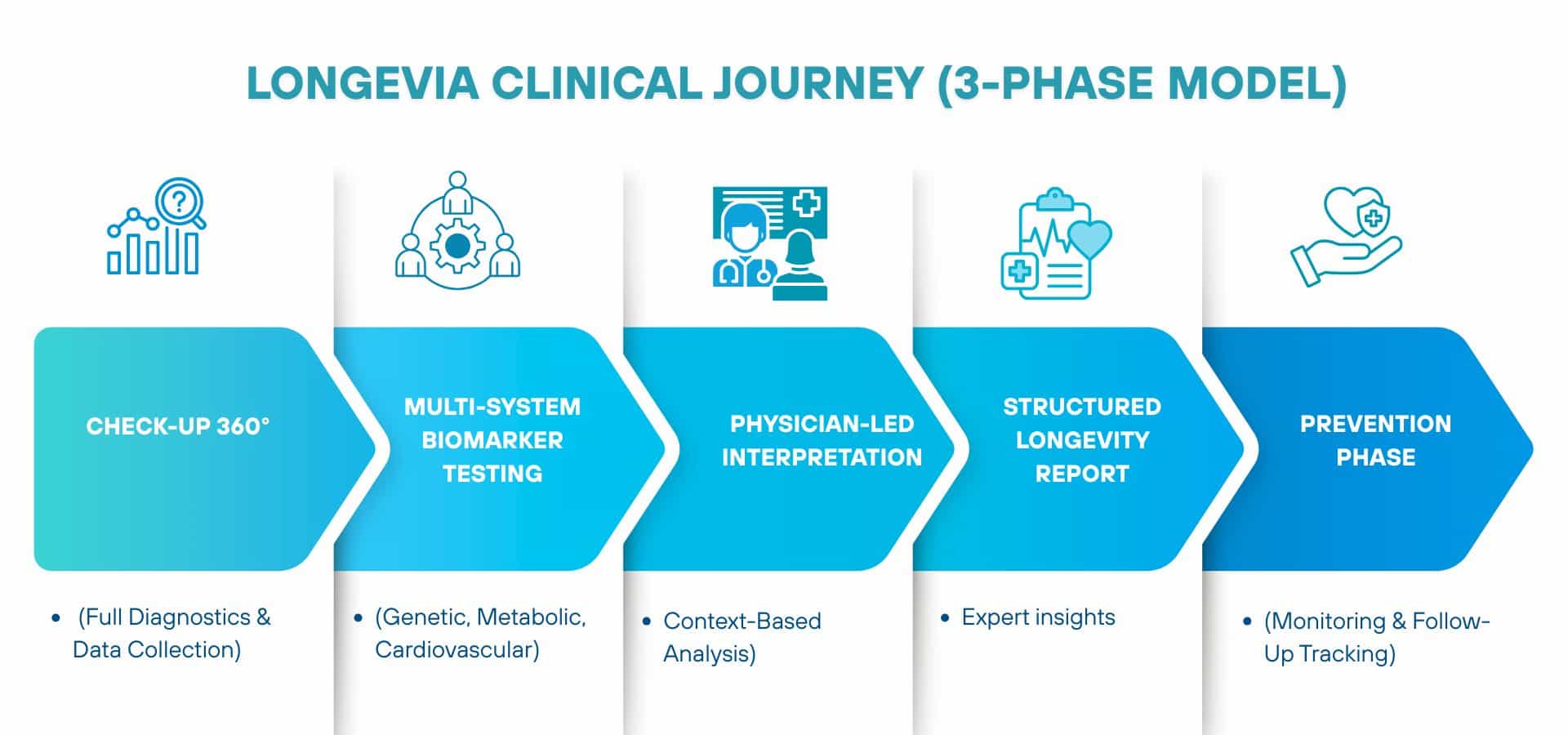
The clinic follows a structured clinical pathway known as the Protocollo Longevia, which is divided into three defined phases:
- Check-up 360° – A concentrated diagnostic phase where biological data is collected across multiple systems, including metabolic, genetic, and cardiovascular markers.
- Action Phase – Physician-led interpretation of collected data, where findings are reviewed in context rather than as isolated results.
- Prevention Phase – A longer-term monitoring approach, where changes are tracked over time through follow-up assessments and updated reports.
This structured model reduces ambiguity. For a broader industry perspective, you can review leading longevity clinics across Italy to see how different models operate within the same ecosystem. Each phase has a clear role, and the transition between phases is defined, which supports clarity in decision-making.
The clinic is also designed with time efficiency in mind. Core diagnostic assessments are typically completed within 2–3 days. This allows individuals with demanding schedules to integrate the visit into existing business travel without extended disruption.
At a Glance – Longevia Medical Clinic
|
Category
|
Details
|
|
Location
|
Rome, Italy
|
|
Clinic Type
|
Physician-led longevity clinic
|
|
Core Focus
|
Preventive diagnostics and biological age assessment
|
|
Typical Stay
|
2–3 days
|
|
Diagnostic Depth
|
Multi-system biomarker analysis (genetic, metabolic, vascular)
|
|
Signature Method
|
Protocollo Longevia (three-phase clinical pathway)
|
|
Environment
|
Urban clinical facility
|
|
Privacy Level
|
High
|
|
Professional Recognition
|
Multidisciplinary medical board with academic affiliations
|
Many guests integrate their visit into existing work schedules rather than planning a dedicated stay. The clinic’s central location in Rome supports short, structured visits that can be completed alongside professional commitments.
High-performers often work in environments where decisions are based on data, not guesswork. The same expectation is applied to health. Longevia Medical Clinic is structured to provide measurable insights rather than general observations.
One of the key reasons individuals choose this clinic is its diagnostics-first model. Instead of beginning with interventions, the process starts with structured data collection across multiple biological systems. This includes genetic markers, metabolic indicators, cardiovascular function, and sleep-related metrics. The goal is to understand patterns before making decisions.
Another defining factor is the use of specific, named technologies and methods, rather than broad or undefined approaches:
- DNA Methylation Analysis (Epigenetic Clock Testing)
Used to assess biological age by analyzing gene expression patterns over time.
- NAD+ Intravenous Infusion Protocol
A physician-supervised delivery method designed to bypass digestion and introduce compounds directly into circulation.
- Cryocamera Total Body (–87°C)
A controlled, short-duration cold exposure system conducted under medical supervision.
- EmSculpt HIFEM Technology
Uses high-intensity electromagnetic fields to induce muscle contractions (approximately 24,000 contractions in a 30-minute session).
- TruSculpt iD Radiofrequency System
A device-based method used for localized fat cell reduction through controlled heat delivery.
- K.O.S. Respiratory Optimization System
A technology using electromagnetic stimulation and resonance principles to assess and support nasal airflow and breathing patterns.
These technologies are not presented as standalone solutions. They are used within a structured clinical framework where physician interpretation determines relevance and application.
USP & Key Takeaways
- Structured Three-Phase Clinical Model
Clear progression from diagnostics to interpretation to monitoring.
- Multi-System Data Integration
Combines genetic, metabolic, and cardiovascular insights into a single report.
- Biological Age Tracking
Uses measurable markers to assess internal aging patterns.
- Physician-Led Interpretation
Data is contextualized rather than presented in isolation.
- Time-Efficient Design
Core diagnostics are completed within a short, defined timeframe.
The clinic’s value lies not in any single technology, but in how these elements are combined into a structured, repeatable system.
Clinical Purpose
The primary purpose of Longevia Medical Clinic is to support early identification of potential health risks through measurable biological data.
Instead of asking, “What problem needs treatment?” the clinic asks:
“What patterns are emerging, and what do they indicate over time?”
This includes:
- Identifying metabolic imbalances before symptoms appear
- Assessing cardiovascular function at a preclinical stage
- Monitoring inflammation and cellular stress markers
- Evaluating how different systems interact rather than function in isolation
The approach is based on observation and interpretation, not urgency. This reflects the core concept behind longevity medicine and its shift toward preventive analysis. It avoids fear-based messaging and does not assume that identified risks will lead to specific outcomes. Instead, it provides structured information that can support long-term planning.
Who This Clinic Is Designed For
In many cases, structured health assessments for executives are integrated into long-term planning.
This clinic is designed for individuals who operate in high-responsibility environments and require clear, structured insight rather than generalized advice.
Best suited for:
- Executives and Founders
Individuals managing complex decisions who value structured, time-efficient assessments.
- Entrepreneurs and Investors
Those focused on long-term performance and risk awareness.
- Professional Athletes
Individuals monitoring physical systems and performance-related metrics.
- High-Performers Seeking Clarity
People who want measurable insight into how their body is functioning over time.
The clinic is not designed as a general wellness destination or a treatment center for acute conditions. It is structured as a decision-support environment, where data and physician interpretation guide understanding.
Focus Areas
|
Focus Area
|
What This Means in Practice
|
|
Medical Discipline
|
Systems medicine, epigenetics, preventive diagnostics
|
|
Core Biological System
|
Metabolic, cardiovascular, and cellular aging processes
|
|
Environment & Design
|
Urban clinical setting designed for efficiency and discretion
|
|
Program Structure
|
Multi-phase model with defined diagnostic and review stages
|
|
Lifestyle as Medicine
|
Measured inputs such as nutrition, sleep, and movement
|
|
Privacy
|
Controlled, high-discretion clinical environment
|
|
Long-Term Strategy
|
Ongoing monitoring through repeat assessments and updated reports
|
Longevia Medical Clinic follows a preventive, systems-based medical philosophy known as the Protocollo Longevia. The approach shifts the focus from reacting to symptoms toward identifying measurable biological signals at an earlier stage.
This model reflects the broader shift toward Medicine 3.0 in healthcare, where prevention replaces reaction.
In traditional healthcare models, action often begins after a condition becomes visible. Here, the process begins earlier—at the level of biomarkers, patterns, and system interactions. The goal is not to predict exact outcomes, but to understand direction and change over time.
The clinic uses a systems medicine approach, meaning multiple biological systems are assessed together. For example, metabolic function, vascular health, inflammation, and sleep patterns are not reviewed separately. They are interpreted as part of a connected network.
A key principle of this model is physician interpretation over raw data. Data alone can be misleading if viewed in isolation. At Longevia, results are reviewed within a clinical context, taking into account how different systems influence each other.
The clinic deliberately avoids unverified trends or experimental methods that lack sufficient clinical grounding. The focus remains on measurable indicators supported by current research, while also acknowledging that the field of longevity medicine is still developing.
Core System Focus
The clinic’s analysis centers around core biological systems that influence long-term function:
- Mitochondrial Function
Related to how cells produce energy. Changes in this system can affect physical and cognitive performance.
- Inflammation Markers
Chronic, low-level inflammation is studied as a contributing factor in multiple long-term conditions. Long-term system balance often depends on strategies to strengthen immune resilience over time.
- Cardiovascular and Vascular Health
Includes assessment of arterial function and early indicators of vascular aging.
- Metabolic Regulation
Examines how the body processes energy, including glucose and fat metabolism.
|
🔍 Did You Know?
Modern systems medicine distinguishes between biomarkers that show how much aging has occurred and those that indicate how fast it is progressing.
|
Lifestyle as a Medical Tool
At Longevia Medical Clinic, lifestyle is not treated as general advice. It is evaluated and measured as part of the clinical framework.
- Nutrition is analyzed based on metabolic response rather than standard dietary guidelines.
- Sleep is assessed through respiratory and recovery patterns, not just reported duration. This highlights the role of deep sleep in recovery and aging within structured longevity models.
- Movement is evaluated through measurable indicators such as muscle mass and fat distribution. This aligns with research on muscle health and its role in longevity and metabolic stability.
The aim is to understand how daily habits influence internal systems over time. Adjustments, when discussed, are based on observed data rather than generic recommendations.
|
🔍 Did You Know?
Research shows that non-regenerative sleep patterns and latent inflammation can remain undetected without targeted diagnostics.
|
Diagnostic Assessment Includes
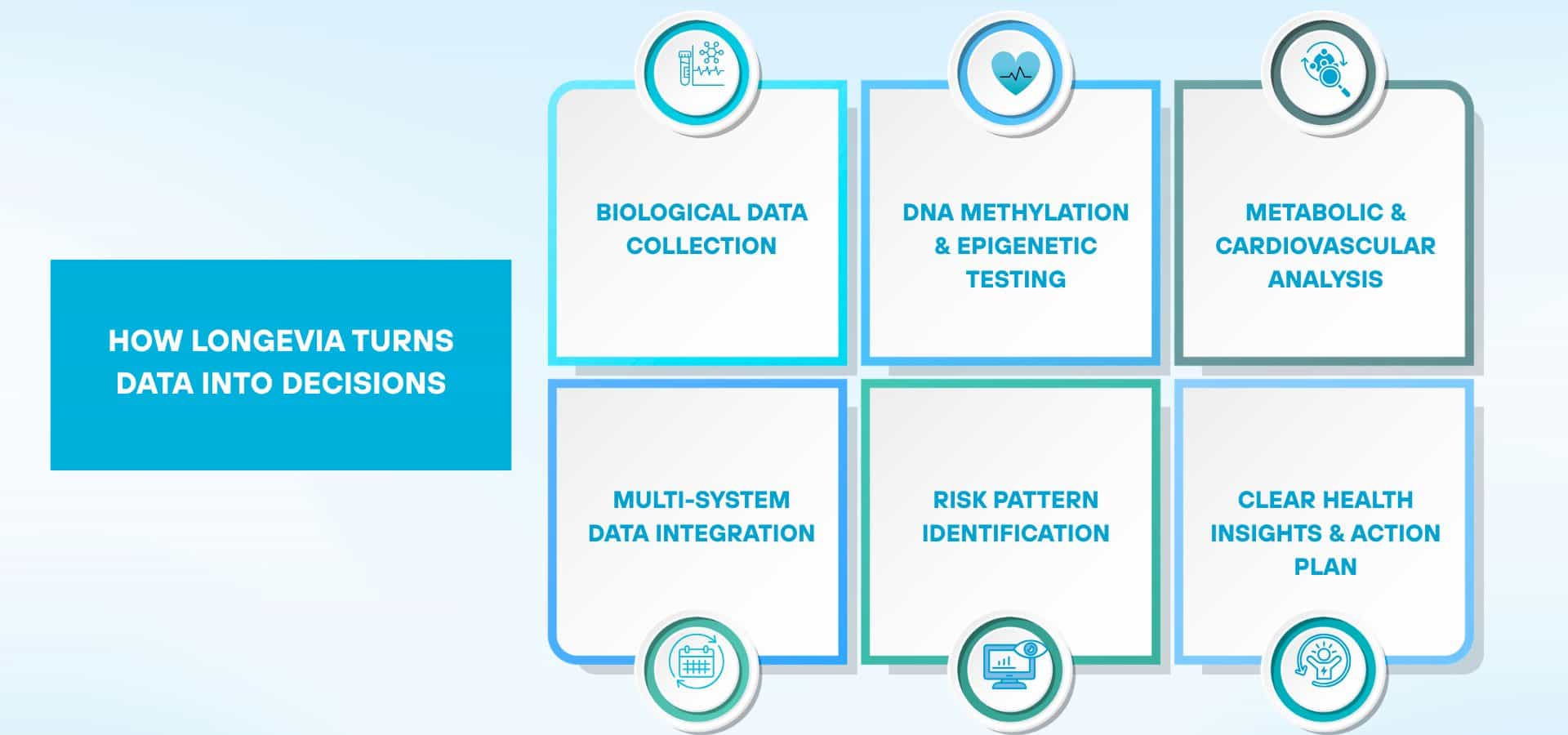
The clinic’s diagnostic process is structured to collect data across multiple systems within a defined timeframe. Assessments may include:
- DNA Methylation Testing (Epigenetic Clock)
Used to estimate biological age based on gene expression patterns. These assessments are commonly used to understand how biological age differs from chronological age in clinical practice.
- Oxidative Stress Analysis
Evaluates cellular stress levels that may influence long-term function. These patterns are often influenced by the long-term effects of stress on aging and systemic health.
- Metabolic Profiling
Includes markers related to glucose metabolism, lipid balance, and energy regulation.
- Cardiovascular and Vascular Testing
Assesses arterial function and early indicators of vascular aging.
- Sleep and Respiratory Assessment
Focuses on breathing patterns and sleep quality using specialized tools. In practice, improving sleep efficiency and recovery cycles becomes part of long-term monitoring.
These diagnostics are conducted under physician supervision and are interpreted within a structured clinical framework.
|
🔍 Did You Know?
Certain biomarkers can signal increased risk for conditions years before symptoms become visible.
|
Chronomedicine & Future Risk Mapping
The clinic incorporates elements of chronomedicine, which focuses on how biological processes change over time.
Instead of making fixed predictions, the clinic tracks patterns and trends. This allows for:
- Identification of changes in biological markers
- Comparison between current and previous data points
- Monitoring of how quickly certain systems are changing
This approach supports long-term observation rather than short-term conclusions. It recognizes that biological systems are dynamic and influenced by multiple factors, including environment, lifestyle, and genetics.
The emphasis remains on tracking direction, not forecasting certainty.
Longevia Medical Clinic is structured around one central strength: turning complex biological data into clear, usable insight. Rather than focusing on isolated tests or single systems, the clinic integrates multiple data points into a structured clinical narrative.
This approach reduces confusion. Instead of receiving fragmented reports, guests receive a cohesive interpretation that connects how different systems interact. The emphasis is not on volume of data, but on clarity of interpretation under physician supervision.
Key Medical Strength 1 – Biological Age Measurement
One of the clinic’s strongest capabilities is assessing biological age using DNA methylation analysis and metabolic markers.
This provides a different perspective compared to chronological age. Two individuals of the same age may show very different biological profiles depending on lifestyle, genetics, and environmental exposure.
The clinic uses this data as a reference point not as a fixed label, but as a way to track changes over time.
|
🔍 Did You Know?
There is an estimated global gap of around 9.6 years between lifespan and years lived in good health.
|
Key Medical Strength 2 – Multi-System Data Integration
Another key strength is the ability to combine multiple biological systems into a single report.
Instead of reviewing metabolic, cardiovascular, and genetic data separately, the clinic integrates them into a unified framework. This helps identify relationships between systems, such as how metabolic imbalance may influence vascular health or inflammation levels.
This integrated view supports more structured understanding compared to isolated testing.
Key Medical Strength 3 – Structured Clinical Workflow
The clinic follows a clearly defined, repeatable workflow:
- Data Collection (Check-up 360°)
- Physician Interpretation (Action Phase)
- Monitoring and Follow-up (Prevention Phase)
Each phase has a defined role. This reduces uncertainty and helps individuals understand where they are in the process.
The structure is particularly relevant for high-performers who prefer clear frameworks over open-ended processes.
Outcome 1 – Energy Perception
Before:
Reported low perceived energy levels and inconsistent daily performance.
After:
Reported improvement in perceived mental clarity and energy consistency following structured assessment and monitoring.
Source:
Clinic-reported observational data
Outcome 2 – Body Composition
Before:
Higher proportion of body fat with lower muscle mass indicators.
After:
Measured reduction in fat percentage and increase in muscle mass following participation in structured programs.
Source:
Clinical program data
|
⚠️ Editorial Note
These outcomes reflect individual experiences reported within clinic materials. Results vary. Diagnostics indicate patterns and risk signals, not guaranteed outcomes.
|
The clinic offers structured programs based on its three-phase model. These programs are not positioned as treatments, but as diagnostic and monitoring frameworks.
Protocollo Longevia (2–3 Days)
|
Category
|
Details
|
|
Duration
|
2–3 days
|
|
Focus
|
Comprehensive diagnostic assessment
|
|
Core Components
|
Genetic testing, metabolic profiling, cardiovascular evaluation
|
|
Output
|
Longevity Report (structured biological overview)
|
This program is designed for individuals seeking a baseline understanding of their biological systems within a short timeframe.
Extended Monitoring Program (Ongoing)
|
Category
|
Details
|
|
Duration
|
Ongoing
|
|
Focus
|
Long-term tracking and reassessment
|
|
Core Components
|
Periodic diagnostics, updated reports
|
|
Output
|
Longitudinal data tracking
|
This program supports continuous observation rather than one-time assessment. It allows changes to be tracked over time, which is central to preventive models.
Medical & Restorative Therapies
The clinic includes a range of physician-supervised technologies:
- NAD+ Intravenous Infusion
- Cryocamera Total Body (–87°C)
- EmSculpt HIFEM Technology
- TruSculpt iD Radiofrequency System
- Ozonotherapy
These are integrated into clinical workflows rather than used independently.
Clinical Facilities
The clinic is equipped with:
- Genetic and epigenetic testing systems
- Cardiovascular and vascular diagnostic tools
- Sleep and respiratory assessment technologies
- Metabolic analysis equipment
Each system contributes to a broader diagnostic framework rather than functioning in isolation.
Architecture, Environment & Digital Discipline
The environment is designed for efficiency and discretion:
- Urban clinical setting (not resort-based)
- Structured scheduling to reduce downtime
- High level of privacy
- Minimal digital distractions during assessments
The design supports focused evaluation rather than extended stays.
Pricing
|
Category
|
Details
|
|
Clinic Positioning
|
Premium diagnostic clinic
|
|
Stay Length
|
2–3 days
|
|
Entry Pricing
|
High-tier
|
|
What’s Included
|
Diagnostic assessments, physician review, reporting
|
|
Additional Costs
|
Follow-up programs, extended monitoring
|
|
Program Structure
|
Multi-phase clinical pathway
|
|
Clinical Principle
|
Data-first, interpretation-led
|
How Programs Are Structured
Programs follow a consistent sequence:
- Pre-Visit Preparation
Collection of background information and medical history (if available)
- On-Site Diagnostics
Structured testing across multiple systems within a defined timeframe
- Physician Interpretation
Review of results in a clinical context
- Reporting
Delivery of a structured Longevity Report
Length of Stay
The standard stay is 2–3 days, depending on the scope of diagnostics.
This duration is designed to balance depth of analysis with time efficiency.
Recommended Length of Stay
A stay of 2–3 days is generally sufficient to complete core diagnostics and initial physician consultations.
This timeframe allows:
- Completion of structured assessments
- Initial interpretation of results
- Delivery of a preliminary report
Follow-up processes may take place remotely or during future visits.
How to Reach the Clinic
- Nearest Airport: Rome Fiumicino Airport
- Transfer Time: Approximately 40 minutes depending on traffic
Transport Options:
- Private transfer
- Taxi services
- Car rental
🔗 Find best flights to Rome
🔗 Find car rentals in Rome
Links provided for travel planning convenience only.
Accommodation & Stay Planning
The clinic does not operate its own accommodation facilities.
Guests typically stay in nearby hotels or serviced apartments within central Rome.
🔗 Explore nearby hotels & apartments
What to Bring
- Previous medical records (if available)
- Comfortable clothing for assessments
- Standard travel essentials
What Patients Commonly Report
Based on clinic-reported feedback, common themes include:
- Increased awareness of internal health metrics
- Improved understanding of long-term risk factors
- Clarity in interpreting complex medical data
- Structured approach to health monitoring
These reports reflect subjective experiences and should be interpreted as such.
Media & Professional Recognition
The clinic’s work is supported by:
- Academic collaborations in genetics and cardiovascular research
- Integration of peer-reviewed research into clinical protocols
- Contributions from specialists affiliated with recognized institutions
Longevia Medical Clinic represents a structured approach within the broader longevity sector, which is increasingly shifting toward preventive and data-driven models.
Its value lies in clarity and structure, not in outcome claims. By combining multi-system diagnostics with physician interpretation, the clinic provides a framework that supports informed decision-making.
However, it is important to recognize that longevity medicine is still an evolving field. There is no universal agreement on how aging should be measured, and biomarkers do not provide certainty. They indicate patterns and trends, not fixed outcomes.
For executives and high-performers, the clinic functions as a decision-support system. It provides data, context, and structure allowing individuals to make more informed choices about long-term health.
Is this a medical clinic or a wellness center?
It is a physician-led medical clinic. The focus is on structured diagnostics and clinical evaluation, not general wellness or relaxation services. All assessments are conducted under medical supervision, with results interpreted by qualified professionals.
Who is this clinic designed for?
The clinic is designed for people who prefer clear, data-driven insight. This includes:
- Executives and founders
- Investors and entrepreneurs
- Professional athletes
- High-performers seeking clarity
It is best suited for individuals who want to understand their health in a structured way, rather than those looking for quick treatments.
Are programs personalized?
Yes, programs are based on individual diagnostic data. Each person receives insights based on their own biological markers, with physician interpretation guiding the process. This ensures the approach is specific, but it does not guarantee outcomes.
How is privacy handled?
The clinic maintains high discretion and confidentiality. Medical data is handled securely, and scheduling is structured to ensure privacy for each guest.
Can I remain connected during my stay?
Yes. The programs are designed to be time-efficient, allowing guests to stay connected to work if needed. Most assessments are completed within a short, structured timeframe.
What if I have a chronic condition?
If you have a medical condition, you should consult your personal physician before making decisions. The clinic provides diagnostic insights, but it does not replace ongoing medical care.
How should value be assessed relative to cost?
Value depends on how much importance you place on structured diagnostics and long-term insight. The clinic provides clarity and measurable data, which may be valuable for those focused on long-term planning.
In high-performance environments, decisions are often driven by speed. Health, however, follows a different rhythm. It changes slowly, often without clear signals, until patterns become visible.
This is where structured diagnostics play a role. They do not provide instant answers, but they offer a way to observe, measure, and understand what is happening beneath the surface.
Longevia Medical Clinic reflects this approach. It does not position itself as a solution for immediate change. Instead, it provides a framework for understanding biological systems over time.
For executives, this aligns with how other decisions are made. Financial systems, operations, and performance metrics are all tracked and reviewed. Health, in this context, becomes another system one that benefits from structured observation.
There are limits. No model can fully predict outcomes, and no diagnostic tool offers certainty. However, reducing uncertainty even partially can support better decisions.
👉 View Longevity Program
↩ Return to ExtendMy.Life
↑ Back to Top
Disclaimer
This content is provided for informational and editorial purposes only. It does not constitute medical advice, diagnosis, or treatment. No doctor–patient relationship is established through this material. All diagnostics referenced are designed to identify potential risk patterns and biological indicators. They do not confirm outcomes or predict future health with certainty. The field of longevity medicine is evolving, and interpretations of biomarkers may vary. Scientific understanding continues to develop, and no single framework provides definitive conclusions. Any medical decisions should be made in consultation with a qualified healthcare professional who understands your individual medical history. This document does not recommend specific treatments or interventions. It is intended to support informed, structured decision-making.
References
Franceschi, C., Garagnani, P., Parini, P., Giuliani, C. and Santoro, A., 2018. Inflammaging: a new immune–metabolic viewpoint for age-related diseases. Nature Reviews Endocrinology, 14(10), pp.576–590.
Horvath, S., 2013. DNA methylation age of human tissues and cell types. Genome Biology, 14(10), p.R115.
Kennedy, B.K., Berger, S.L., Brunet, A., Campisi, J., Cuervo, A.M., Epel, E.S., Franceschi, C., Lithgow, G.J., Morimoto, R.I., Pessin, J.E. and Rando, T.A., 2014. Geroscience: linking aging to chronic disease. Cell, 159(4), pp.709–713.
López-Otín, C., Blasco, M.A., Partridge, L., Serrano, M. and Kroemer, G., 2013. The hallmarks of aging. Cell, 153(6), pp.1194–1217.
Mattson, M.P. and Arumugam, T.V., 2018. Hallmarks of brain aging: adaptive and pathological modification by metabolic states. Cell Metabolism, 27(6), pp.1176–1199.