The clinic operates under direct medical leadership from Dr. Christophe de Jaeger, a specialist in senescence biology with over 30 years of clinical experience. The governance structure follows a centralized analytical model, where patient data is processed through a dedicated Scientific Information Analytical Center using machine learning algorithms.
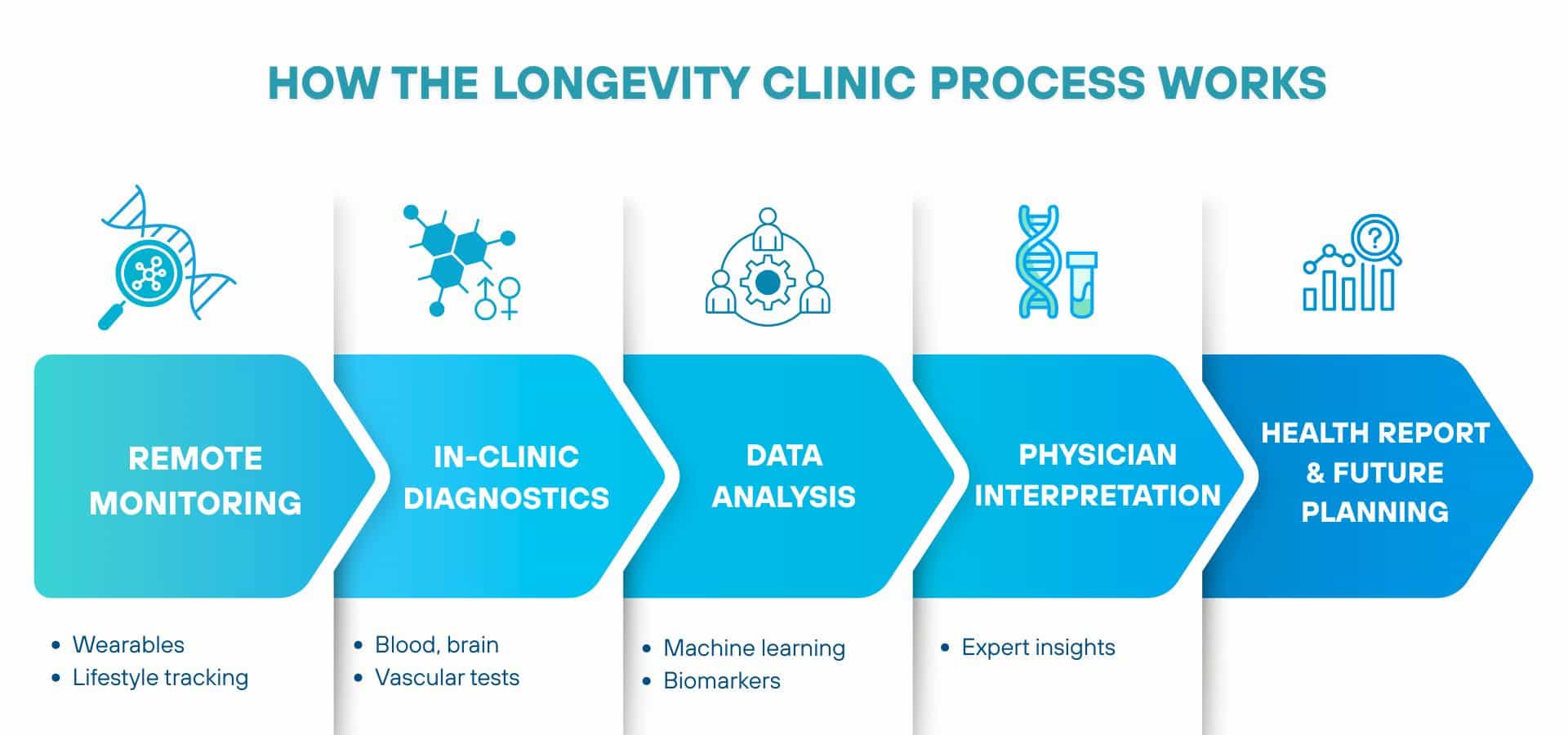
The clinical workflow is based on a three-level routing system:
- Level 1: Continuous remote monitoring via wearable devices
- Level 2: In-clinic diagnostic assessment
- Level 3: Individualized scientific evaluation using advanced modeling
This structure allows time-efficient evaluations suitable for high-demand schedules.
At a Glance – Institut Prévention Santé Longévité
|
Category
|
Details
|
|
Location
|
Paris, France
|
|
Clinic Type
|
Clinic Type
|
|
Core Focus
|
Physiological age mapping and early risk detection
|
|
Typical Stay
|
1 day (5–12 hours depending on program)
|
|
Diagnostic Depth
|
Multi-system, including vascular, cognitive, metabolic
|
|
Signature Method
|
Signature Method
|
|
Environment
|
Clinical, data-driven, non-residential
|
|
Privacy Level
|
High, individualized consultations
|
|
Professional Recognition
|
Led by a European pioneer in longevity medicine
|
Many visitors integrate appointments into existing business travel schedules rather than planning dedicated stays. The clinic’s central Paris location supports short, structured visits without requiring overnight accommodation.
The Institut Prévention Santé Longévité is selected by high-performing individuals for its structured, diagnostics-led approach rather than generalized health programs.
Key differentiators are based on clearly defined systems and measurable outputs:
- Physiological Mapping System
A multi-system diagnostic framework that evaluates vascular stiffness, cognitive signals (P300 wave), and metabolic performance in one structured assessment
- Scientific Information Analytical Center
A centralized data-processing unit that integrates genomic, biochemical, and functional data using machine learning models such as clustering and predictive analysis
- Three-Level Clinical Routing Model
A defined pathway: remote monitoring → in-clinic diagnostics → individualized scientific evaluation
- 25-Year Longitudinal Database
Historical patient data used for comparison and trend analysis across similar physiological profiles
- On-Site Nutraceutical Laboratory
Formulation of compounds based on measured metabolic requirements rather than standardized supplementation
These structural components allow the clinic to provide measurable insight into biological systems instead of general recommendations.
Clinical Purpose
The clinic works with one clear goal to prevent problems before they begin. Instead of waiting for illness to show up, it looks for small biological changes early, like spotting smoke before a fire starts.
Its role is to:
- Identify hidden risk signals before symptoms appear
- Give a complete, system-level view of your health, not just one part
- Support long-term health planning using clear, measurable data
- Track changes over time, so you can see what is improving or declining
- Guide smarter lifestyle decisions based on facts, not guesswork
This approach stays calm and structured. It does not create fear or rush. It also avoids making strong promises about the future. Instead, it gives you useful signals and data, helping you stay one step ahead in a practical way. This need is increasingly relevant in the context of executive burnout, where long-term pressure impacts both performance and health.
Who This Clinic Is Designed For
This clinic is built for people who live life in the fast lane and need clear direction without wasting time. Think of it like a dashboard for your body simple, direct, and data-driven.
It is best suited for:
- Executives handling high mental load and constant decision-making
- Founders and entrepreneurs managing pressure, growth, and uncertainty
- Investors and leaders who rely on sharp thinking and long-term focus
- Professional athletes aiming to track performance and recovery closely
- High-performers who want real health insights, not just basic checkups
These individuals are not looking for treatment after something goes wrong. Instead, they want clarity, structure, and control over their health. In many cases, this type of structured evaluation functions similarly to an executive health check for longevity, designed for high-performing individuals.
Focus Areas
|
Focus Area
|
What This Means in Practice
|
|
Medical Discipline
|
Preventive and longevity medicine
|
|
Core Biological System
|
Multi-system (vascular, cognitive, metabolic)
|
|
Environment & Design
|
Clinical setting, non-residential
|
|
Program Structure
|
Short-duration, high-density diagnostics
|
|
Lifestyle as Medicine
|
Measured adjustments in nutrition and activity
|
|
Privacy
|
Controlled consultations and data handling
|
|
Long-Term Strategy
|
Ongoing monitoring and reassessment
|
The clinic follows the concept of Longévisme, developed by Dr. Christophe de Jaeger.
This philosophy defines aging as a measurable biological process rather than an unavoidable decline. The focus is placed on maintaining functional capacity through early observation and correction of physiological changes. This philosophy aligns closely with longevity medicine, where the focus is on early detection and long-term health management rather than reactive treatment.
The approach prioritizes:
- Preventive over reactive medicine
- Physician interpretation over raw data output
- Structured diagnostics over trend-based interventions
Core System Focus
The clinic focuses on something called intrinsic capacity in simple words, it means your body’s true ability to function well every day. Think of it like the engine of a car. If the engine runs smoothly, everything else works better too.
Instead of looking at just one issue, the clinic checks how your whole system performs together. This gives a clearer and more useful picture of your overall health.
It mainly evaluates:
- Cognitive performance – how well your brain works, including memory, focus, and decision-making. Improving cognitive function often involves strategies that help improve memory and brain performance over time.
- Mobility and physical strength – how easily you move, your balance, and muscle strength
- Metabolic efficiency – how your body uses energy, manages weight, and controls blood sugar
- Cardiovascular function – how healthy your heart and blood flow are
By studying these areas together, the clinic can spot small changes that many people ignore. It’s like checking all parts of a machine before something breaks down.
This system-based approach helps you understand not just how you feel today, but how your body is performing over time giving you a smarter way to stay healthy and active.
|
🔍 Did You Know?
Grip strength is considered a reliable indicator of overall functional capacity and long-term health risk.
|
Lifestyle as a Medical Tool
In this clinic, lifestyle is not just simple advice like “eat well” or “sleep more.” It is treated as a measurable medical tool something that can be tracked, tested, and improved step by step.
Think of it like fuel for your body. If the fuel is poor, the engine struggles. If it is clean and balanced, everything runs smoothly.
The clinic carefully evaluates:
- Nutritional patterns – what you eat, how often you eat, and how it affects your body
- Physical activity levels – how much you move, exercise, and stay active during the day
- Sleep and recovery cycles – how well you sleep, how long you rest, and how your body recovers. Sleep quality plays a major role here, as seen in research on deep sleep and recovery and its impact on long-term health.
Many people also explore how to fall asleep faster to improve recovery and daily performance.
Instead of giving random tips, the clinic uses real data to understand your habits. This helps turn daily routines into clear, trackable actions.
In simple terms, your lifestyle is no longer guesswork. It becomes a practical tool you can adjust and improve just like tuning a machine for better performance.
|
🔍 Did You Know?
Lifestyle and environmental factors contribute to approximately 70% of the aging process, while genetics account for around 30%.
|
Diagnostic Assessment Includes
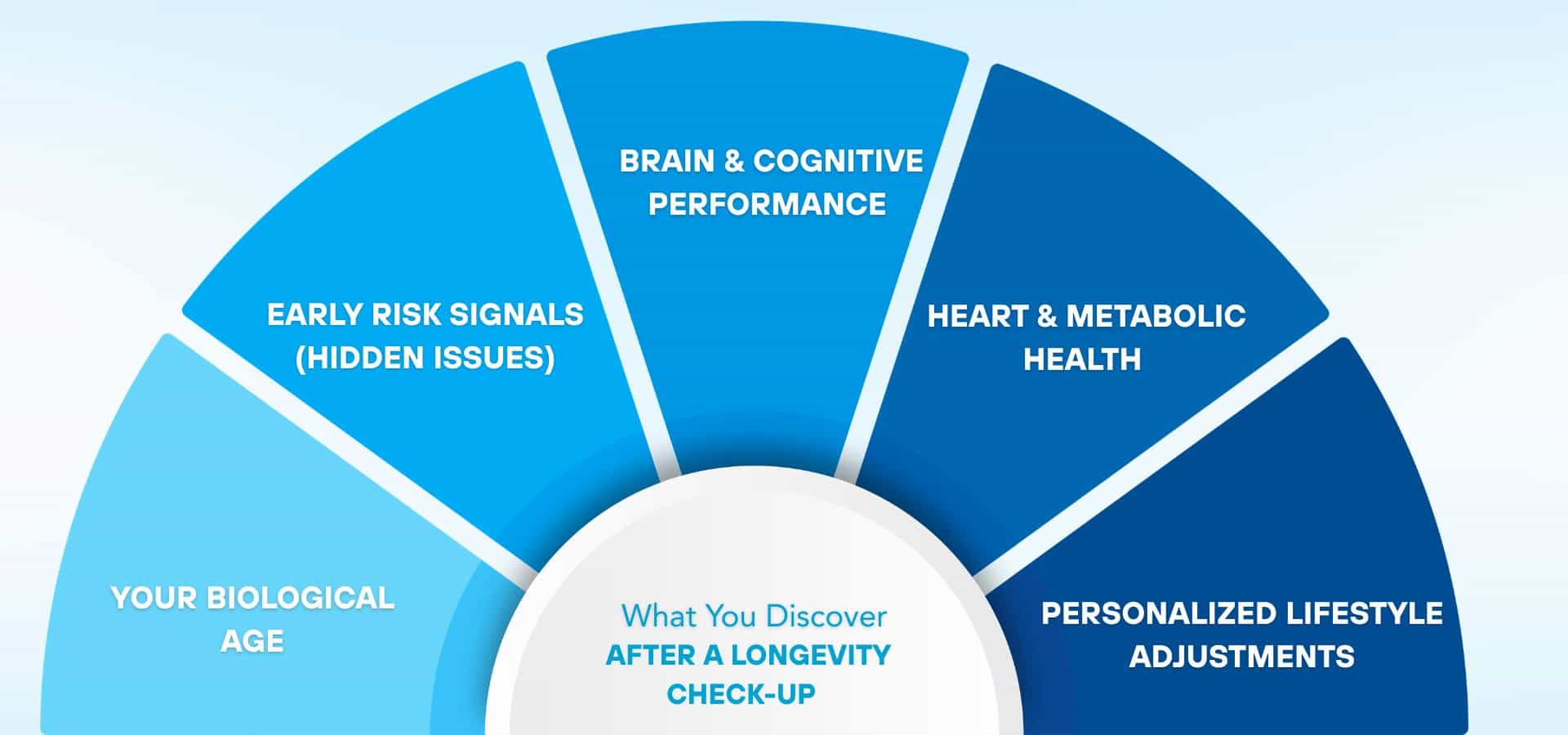
The Institut Prévention Santé Longévité applies a multi-system diagnostic model that evaluates functional performance rather than isolated markers.
Assessment typically includes:
- Vascular Analysis
Carotid-femoral and carotid-radial arterial stiffness measurements
- Neuro-Cognitive Testing
Cognitive evoked potentials such as the P300 wave to assess early brain function changes
- Metabolic & Body Composition Testing
Analysis of visceral fat, bone density, and metabolic efficiency. In some cases, detox strategies can support metabolic balance and overall system efficiency.
- Inflammatory Biomarkers
Including IL-6, TNFR-1, and GDF-15, associated with functional decline
- Longevity Biomarkers
Telomere length and additional predictive biological markers
|
🔍 Did You Know?
Epigenetic clocks use DNA methylation patterns to estimate biological age and assess long-term disease risk trends.
|
Chronomedicine & Future Risk Mapping
The clinic uses structured data modeling to understand where your health may be heading in the future. In simple words, it connects the dots from your current data to possible future patterns—like reading early signs before a story fully unfolds.
Think of it like a weather forecast. It does not guarantee rain, but it helps you carry an umbrella just in case.
This approach helps to:
- Identify early deviations from your normal (baseline) health
- Track changes over time, showing what is improving or declining
- Support long-term decisions with clear and organized data
- Build a bigger picture instead of focusing on one-time results
These projections are probability-based, not fixed predictions. They give you helpful direction, not final answers.
In short, the goal is not to say “this will happen”, but to help you understand “this might happen if nothing changes.” This allows you to act early, stay prepared, and make smarter choices for your future health.
Key Medical Strength 1 – Physiological Age Mapping
The clinic specializes in measuring biological age using integrated diagnostic systems. This provides a functional view of how the body is performing compared to chronological age. This helps differentiate biological vs chronological age, offering a clearer view of how the body is actually aging.
|
🔍 Did You Know?
Biological age can differ significantly from chronological age depending on lifestyle and physiological condition.
|
Key Medical Strength 2 – Data Integration Across Systems
The clinic brings together different types of health data to see the full picture, not just small pieces. It is like solving a puzzle each piece matters, but only together do they make sense.
It combines multiple data layers, including:
- Genomic data – your genetic information and inherited traits
- Biochemical markers – signals from blood and body chemistry
- Functional performance metrics – how your body performs in real situations
- Wearable device outputs – daily data like steps, heart rate, and sleep patterns
By combining all these layers, the clinic can spot patterns across systems, instead of looking at each result separately.
Key Medical Strength 3 – Structured Clinical Routing
The clinic follows a three-level model to keep everything clear, connected, and consistent. Instead of random checkups, it builds a smooth system where each step supports the next—like climbing stairs one level at a time.
The three levels include:
- Level 1: Continuous monitoring – everyday tracking through devices and regular data collection
- Level 2: In-clinic diagnostics – detailed tests and assessments done at the clinic
- Level 3: Individualized scientific evaluation – expert analysis that turns data into clear insights and plans
This structured model helps avoid confusion or gaps in information. Nothing is looked at in isolation.
In simple terms, it connects daily habits, clinical tests, and expert insights into one clear flow. This reduces fragmentation and supports long-term tracking, so you can see your health journey over time not just one snapshot.
Outcome 1 – Energy & Cognitive Clarity
Before:
Reported fatigue, reduced attention span, inconsistent performance
After:
Improved focus, sustained energy levels, better cognitive stability
Source:
Clinic-reported outcomes
Outcome 2 – Cardiovascular Risk Awareness
Before:
No visible symptoms or known risk markers
After:
Identification of early vascular stiffness and structured monitoring plan
Source:
Clinic-reported outcomes
|
⚠️ Editorial Note
These outcomes reflect individual experiences reported within the clinic’s published materials. Results vary. Diagnostics indicate risk patterns, not certainty, and outcomes depend on multiple individual factors.
|
The clinic offers structured diagnostic programs designed in layers—simple to advanced—so you can choose how deep you want to go. Think of it like peeling an onion: each layer reveals more detail about your health.
These programs vary in depth and duration, but all follow a clear system. They focus on understanding your body step by step, not rushing through quick checkups.
Basic Check-Up (5–5.5 Hours)
This is the starting point—a foundation-level assessment that gives a clear snapshot of your current health. It is simple, focused, and efficient, perfect for those who want quick but meaningful insights.
It includes:
- Standard biological markers (blood analysis) – checks key indicators like sugar levels, cholesterol, and overall body balance
- Body composition assessment – measures fat, muscle, and overall body structure
- Lung function testing – evaluates how well your lungs are working and your breathing capacity
- Initial vascular evaluation – examines blood flow and early signs of cardiovascular changes
In simple terms, this check-up works like a health baseline. It shows where you stand today, so future changes can be tracked clearly and accurately.
Essential Check-Up (7 Hours)
This level goes a step deeper. It builds on the basic check-up and adds more detailed insights especially for brain function, senses, and internal systems. Think of it as moving from a simple map to a more detailed guide.
It expands to include:
- Memory and cognitive testing – checks focus, recall, and thinking speed
- Hearing analysis (4,000–20,000 Hz) – evaluates both normal and high-frequency hearing range
- Skin hydration and dermal evaluation – measures skin health, hydration, and aging signs
- Extended vascular parameters – deeper analysis of blood flow and vessel condition
This level is ideal for those who want a broader and clearer understanding of how their body and mind are performing together.
Advanced Check-Up (Up to 12 Hours)
This is the most detailed and in-depth program. It is designed for those who want maximum clarity and precision leaving no stone unturned.
It provides:
- Brain mapping and cognitive signal analysis – detailed study of brain activity and function
- Telomere length and tumor markers – insights into cellular aging and early risk indicators
- Heavy metal exposure analysis – detects toxins like lead or mercury in the body
- Neurotransmitter profiling – evaluates chemical signals that affect mood, focus, and energy
- Doppler ultrasound for arterial systems – advanced imaging to assess blood flow and artery health
In simple words, this program is like a deep dive into your body’s inner system. It connects multiple layers of data to give a highly detailed and structured view of your health, helping you make informed long-term decisions.
Medical & Restorative Therapies
The Institut Prévention Santé Longévité mainly works as a diagnostic and evaluation center. This means it does not follow fixed treatment plans for everyone. Instead, every step is based on real findings from your data—like tailoring a suit that fits you perfectly, not one-size-fits-all.
All interventions are designed around what your body actually needs, not assumptions or general advice.
Core components include:
- Physician-led interpretation sessions – experts explain your results clearly and guide your next steps
- Nutritional consultations based on metabolic data – diet plans are built using how your body processes food, not guesswork
- Physical activity guidance aligned with functional capacity – exercise advice is matched to your strength, mobility, and fitness level
In simple terms, this approach turns information into action. Instead of random changes, you get structured, data-backed guidance that helps restore balance and improve performance over time.
Clinical Facilities
The clinic is built on high-precision diagnostic technology, designed to capture accurate and detailed health data. Think of it like using a high-resolution camera you see every detail clearly, not just a blurry picture.
The infrastructure includes:
- Dedicated physiological mapping equipment – tools that track how different systems in your body function together
- Neuro-cognitive testing systems (including P300 signal analysis) – advanced methods to measure brain response, attention, and processing speed
- Vascular diagnostic tools (arterial stiffness measurement) – checks the flexibility and health of your blood vessels
- Scientific Information Analytical Center – a central system that processes and connects all your data into meaningful insights
- On-site laboratory for individualized formulation – allows customized solutions based on your unique results
In simple terms, this setup ensures nothing is left to guesswork. Every result is backed by accurate tools and structured analysis, helping create a clear and reliable understanding of your health.
Architecture, Environment & Digital Discipline
The clinic operates in a structured and controlled clinical setting, designed to keep everything smooth, focused, and private. It is not a busy hospital environment—think of it more like a quiet workspace where every step is planned.
Key features include:
- Non-residential facility – patients visit only for assessments, with no overnight stay required
- Appointment-based workflow – every session is scheduled to avoid delays and crowding
- Controlled data access and patient confidentiality – your information is handled securely and shared only when necessary
- Minimal external distractions – a calm setting that allows accurate testing and focused evaluation
In simple terms, the environment is built to respect your time and privacy. Everything runs in an organized way, so you can move through each stage without stress or interruption—like a well-managed system that works quietly in the background.
Pricing
|
Category
|
Details
|
|
Clinic Positioning
|
Executive preventive clinic
|
|
Stay Length
|
Half-day to full-day
|
|
Entry Pricing
|
Not publicly listed
|
|
What’s Included
|
Diagnostics and physician consultation
|
|
Additional Costs
|
Tiered Diagnostics evaluation
|
|
Program Structure
|
Tiered diagnostic evaluation
|
|
Clinical Principle
|
Diagnostics-first. No outcome claims
|
How Programs Are Structured
The clinic follows a clear and step-by-step process so nothing feels confusing or rushed. Each stage is planned in order—like following a recipe where every step matters for the final result.
The process includes:
- Pre-visit preparation – you receive guidance before your visit to get ready properly
- Collection of baseline information – basic data is gathered to understand your starting point
- On-site diagnostics – tests are carried out at the clinic using advanced tools
- Multi-system testing in a short timeframe – different body systems are checked efficiently, without wasting time
- Physician interpretation – experts study your results and connect the data points
- Structured consultation – findings are explained in a simple and clear way
- Reporting – you receive a complete health report with measurable indicators
In simple terms, the process turns complex data into easy-to-understand insights, helping you know exactly where you stand.
Length of Stay
One of the key advantages is time efficiency. The clinic respects your schedule and avoids long hospital stays.
Most programs are completed within:
- 5 to 12 hours
- Usually within a single day
This means you can complete a full, detailed health evaluation in just one visit—like getting a full system check without putting your life on hold.
Recommended Length of Stay
The clinic is designed to be time-efficient, so you don’t need to block several days for your visit. Everything is organized to deliver maximum insight in minimum time.
A half-day to full-day visit is usually enough, depending on the program you choose. Simpler check-ups take less time, while more advanced evaluations may need a full day.
In simple terms, it fits easily into a busy schedule like handling an important task in one focused session instead of spreading it over many days.
How to Reach the Clinic
- Nearest Airport: Paris Charles de Gaulle
- Transfer Time: Approximately 30–45 minutes
🔗 Find best flights to Paris
🔗 Find car rentals in Paris
Links provided for travel planning convenience only.
Accommodation & Stay Planning
The clinic does not provide accommodation. Visitors typically stay in nearby hotels or apartments within central Paris.
🔗 Explore nearby hotels & apartments
What to Bring
Preparing well can make your visit smoother and more comfortable. You don’t need to carry much—just the basics that help the process run without delays.
Here’s what to bring:
- Previous medical records (if available) – helps doctors understand your history and compare past data
- Comfortable clothing – makes movement, testing, and long sessions easier
- Minimal personal items – keeps things simple and avoids unnecessary distractions
Based on feedback collected within the clinic, many patients notice clear and practical improvements after their evaluations and guided changes. These are not instant miracles, but steady shifts that make daily life feel better.
Commonly reported outcomes include:
- Increased general energy – feeling less tired and more active throughout the day
- Improved sleep patterns – deeper, more restful sleep and better recovery
- Better cognitive focus – sharper thinking, improved concentration, and mental clarity
- Greater awareness of long-term health risks – a clearer understanding of what to watch and how to act early
Improved outcomes are often linked to stronger immune resilience, which plays a key role in long-term health stability.
Media & Professional Recognition
The clinic is connected with respected work in the field of longevity and aging science. Its approach is not built on trends, but on ongoing research and scientific contribution.
It is associated with:
- Longevity research initiatives – involvement in studies focused on healthy aging and long-term performance
- Academic contributions in aging science – participation in knowledge-sharing within the scientific community
- Clinical publications on physiological aging – research and findings related to how the body changes over time
The Institut Prévention Santé Longévité reflects a structured approach within the broader longevity sector, where diagnostics and interpretation take priority over intervention.
Its model aligns with a growing shift toward early-stage risk identification and data-driven health analysis. However, longevity medicine remains a developing field with varying methodologies and limited standardization across providers.
For executives, the relevance lies in structured insight rather than outcomes. The clinic offers measurable data, physician-led interpretation, and longitudinal tracking frameworks that support informed decision-making without requiring ongoing treatment engagement.
This positions the clinic as an analytical layer within personal health management rather than a replacement for traditional medical care.
Is this a medical clinic or a wellness center?
The Institut Prévention Santé Longévité operates as a medical diagnostic clinic with a preventive focus. It is designed to assess health through structured testing, not to provide spa, wellness, or relaxation-based services.
Who is it designed for?
The clinic is designed for executives, founders, investors, athletes, and high-performing individuals. It suits those who want clear, data-driven insights into their health without long or disruptive treatment programs.
Are programs personalized?
Yes, programs are personalized based on diagnostic findings and physician interpretation. Each assessment is built around measured data, ensuring insights are specific to the individual rather than general recommendations.
How is privacy handled?
Privacy is managed through controlled consultations and structured data systems. Patient information is handled securely, with limited access and a strong focus on confidentiality for high-profile individuals.
Can I stay connected during visits?
Yes, programs are designed to minimize disruption to work schedules. Most assessments are completed within a few hours, allowing individuals to stay connected and manage their responsibilities.
Does the clinic treat chronic conditions?
No, the clinic focuses on diagnostics and risk identification rather than treatment. Any medical conditions identified should be managed separately with a personal physician or healthcare provider.
How should value be evaluated?
Value should be evaluated based on diagnostic depth, clarity of insight, and structured reporting. It functions more like a health assessment tool than a treatment service, supporting better long-term decisions.
A Strategic Pause That Protects the Years Ahead
In high-performance environments, health is often managed reactively addressed only when issues become visible. However, many biological changes develop gradually, without clear external signs.
A clinic like the Institut Prévention Santé Longévité provides a structured pause to assess these underlying systems. It allows individuals to step out briefly, review measurable data, and return with a clearer understanding of their current trajectory.
This is not a model built on outcomes or promises. It is based on observation, interpretation, and planning. The value lies in identifying patterns early and understanding how different systems interact over time.
For decision-makers, this process can function as a form of long-term risk assessment. It introduces structure into an area that is often managed without clear data.
Rather than focusing on extending lifespan in abstract terms, the emphasis remains on maintaining functional capacity cognitive, physical, and operational—over time.
👉 View Longevity Program
↩ Return to ExtendMy.Life
↑ Back to Top
Disclaimer
This content is provided for informational and editorial purposes only. It does not constitute medical advice, diagnosis, or treatment. No doctor–patient relationship is established through this material. The information presented reflects publicly available research and structured analysis of clinical models. While efforts have been made to ensure accuracy, the field of longevity medicine is evolving, and interpretations may vary. Diagnostics described in this document indicate potential risk patterns and biological trends. They do not predict outcomes with certainty. Individual responses differ based on genetics, lifestyle, environmental factors, and other variables beyond clinical measurement. Readers should not rely on this content to make medical decisions. All health-related decisions must be made in consultation with a qualified physician or licensed healthcare provider familiar with the individual’s medical history. No claims are made regarding prevention, treatment, reversal, or cure of any condition. This material does not endorse specific medical interventions
References
Belsky, D.W., Caspi, A., Houts, R., Cohen, H.J., Corcoran, D.L., Danese, A., Harrington, H., Israel, S., Levine, M.E., Schaefer, J.D. and Sugden, K. (2015) Quantification of biological aging in young adults. BMC Medicine, 13(1), pp.1–12.
Franceschi, C., Garagnani, P., Parini, P., Giuliani, C. and Santoro, A. (2018) Inflammaging: a new immune–metabolic viewpoint for age-related diseases. Nature Reviews Endocrinology, 14(10), pp.576–590.
Horvath, S. (2013) DNA methylation age of human tissues and cell types. Genome Biology, 14(10), pp.1–20.
World Health Organization (2020) Decade of Healthy Ageing: Baseline Report. Geneva: World Health Organization.
Cambridge University Press (2023) Association of diet quality and physical activity with healthy ageing in the French NutriNet-Santé cohort. British Journal of Nutrition, pp.1–12.
National Center for Biotechnology Information (2024) Biomarkers of aging and intrinsic capacity: clinical implications. PMC Database.
Springer (2023) Advances in aging research and longevity science. Aging Research Reviews, pp.1–15.
Frontiers Media (2024) Biological mechanisms of aging and frailty. Frontiers in Aging, pp.1–10.
Oxford University Press (2023) Longevity medicine and predictive health systems. Life Medicine, 2(4), pp.1–9.
SciExplor (2025) Geromedicine and future health models. Geromedicine Journal, pp.1–8.