HealthMiro operates as a physician-led preventive longevity clinic at 10-12 Emmanuel Rd, London SW12 0BY, under the medical directorship of Dr. Enam Abood. The clinic's proprietary methodology is the Miro Score, a 0–100 longevity metric providing a structured, trackable measure of biological health status across multiple systems.
Named signature technologies include AI-integrated health tracking for continuous data monitoring and CIMT ultrasound for early cardiovascular risk assessment. The clinic offers specialist Corporate Longevity Programs and Executive Health services alongside individual clinical programmes. The Comprehensive Health Assessment starts from £1,250.
Executive Time Efficiency
health.miro operates on an appointment-based structure designed for individuals with demanding schedules. Diagnostic sequencing and consultation blocks are organised to minimise fragmentation of time while maintaining analytical depth.
Remote follow-up consultations are available when clinically appropriate. This allows continuity of care for patients who travel frequently or manage international business commitments. Monitoring and reassessment can be coordinated without requiring prolonged physical presence in London. Many individuals combine this with an executive health check for longevity for deeper insight.
At a Glance – Clinic Snapshot
|
Field
|
Detail
|
|
Official Name
|
HealthMiro
|
|
Address
|
10-12 Emmanuel Rd, London SW12 0BY
|
|
Email
|
hello@healthmiro.com
|
|
Medical Director
|
Dr. Enam Abood
|
|
Clinic Type
|
Private physician-led outpatient longevity clinic
|
|
Proprietary Methodology
|
The Miro Score (0–100 longevity metric)
|
|
Named Technologies
|
AI-Integrated Health Tracking / CIMT Ultrasound
|
|
Specialist Services
|
Corporate Longevity Programs / Executive Health
|
|
Comprehensive Health Assessment
|
From £1,250
|
|
Core Focus
|
Preventive medicine, biomarker analysis, biological age modelling
|
|
Diagnostic Depth
|
100+ biomarker panels, GI360, DUTCH, OAT, biological age models
|
|
Typical Stay
|
Outpatient visits; no overnight stay required
|
|
Environment
|
Clinical setting: London SW12
|
|
Privacy Level
|
GDPR-compliant data governance, physician-led review
|
Many visitors integrate consultations and diagnostic sessions at health.miro into existing professional schedules rather than planning extended health stays. The clinic’s West London location at 220c Blythe Road supports structured appointments that can be coordinated efficiently within defined time windows. You can also explore the best longevity clinics in London to compare similar providers.
Initial physician-led consultations and diagnostic sequencing are organised in scheduled blocks to minimise disruption to business commitments. Follow-up reporting sessions may occur in person or via telemedicine where appropriate. Most visitors arrange independent accommodation nearby in West London, Kensington, or Hammersmith depending on preference and travel logistics.
Accommodation is not operated by the clinic. Visitors commonly select business hotels or serviced apartments within short distance of the clinic, allowing discretion and ease of movement between professional commitments and medical appointments.
🔗 Explore nearby hotels & apartments
Use the Quick Links below to navigate directly to the sections most relevant to your review.
- Led by Dr. Enam Abood, Medical Director: All clinical governance is directed by Dr. Enam Abood, Medical Director of HealthMiro. His oversight ensures that all diagnostic interpretation, program design, and clinical decision-making remain physician-led rather than technician-delivered.
- The Miro Score Proprietary: 0–100 Longevity Metric HealthMiro's defining clinical tool is The Miro Score, a proprietary 0–100 longevity metric that synthesizes data across multiple biomarker systems into a single, trackable score. This replaces fragmented multi-panel reporting with a unified, comprehensible measure of biological health trajectory updated at each assessment cycle under Dr. Abood's physician interpretation.
- AI-Integrated Health Tracking: Named Technology AI-Integrated Health Tracking is a named, specific technology at HealthMiro using artificial intelligence to continuously monitor and analyse health data between formal clinical assessments. This enables real-time pattern recognition and supports proactive physician intervention rather than relying solely on periodic snapshots.
- CIMT Ultrasound Named Cardiovascular Diagnostic CIMT (Carotid Intima-Media Thickness): Ultrasound is a named diagnostic technology at HealthMiro providing early-stage, non-invasive cardiovascular risk assessment by measuring arterial wall thickness. This goes beyond standard blood lipid panels to identify subclinical atherosclerosis before symptoms develop.
- Corporate Longevity Programs and Executive Health: HealthMiro is specifically named as specialized in corporate longevity programs and executive health structured programs designed for organizations and senior professionals seeking systematic biological health assessment and longitudinal oversight at a corporate level.
- Comprehensive Health Assessment: from £1,250 The named entry-level diagnostic program starts from £1,250, providing a transparent entry point into HealthMiro's structured clinical assessment.
- Extended named diagnostics:
- GI360 stool microbiome testing
- DUTCH hormone metabolite analysis
- Organic Acids Testing (OAT)
- 100+ biomarker panels
- The Miro Score composite biological age modelling
Email: hello@healthmiro.com
The clinic’s model separates diagnostics from outcomes. Biomarker findings indicate risk patterns and system strain. They do not predict certainty or guarantee prevention. Many programs also focus on how to improve immune resilience for longevity.
This structure appeals to individuals who value measured oversight, risk transparency, and medical governance rather than experiential positioning.
health.miro is structured around preventive oversight rather than reactive treatment. The clinic’s stated purpose is to identify early biological deviation before the development of clinically diagnosed disease. This includes metabolic instability, inflammatory load, hormonal imbalance, mitochondrial strain, and early cardiovascular risk markers.
The clinic does not frame aging as a condition to be reversed. Instead, it treats aging as a measurable biological trajectory influenced by biomarker trends, lifestyle exposure, and cumulative system stress. Composite biological age models are used as directional tools, not predictive guarantees.
The objective is long-term planning support. Through repeated measurement and physician review cycles, patients receive structured insight into trend movement rather than one-time laboratory interpretation. Risk is assessed probabilistically, and recalibration occurs through scheduled review rather than episodic reaction.
There is no urgency framing. The clinic operates within a measured model designed for informed decision-making.
Clinical Purpose
The clinic’s clinical purpose can be summarised across three pillars:
- Early Risk Identification
Identification of metabolic, inflammatory, endocrine, and mitochondrial patterns before overt pathology develops.
- System-Level Understanding
Integration of cardiovascular, glycaemic, hormonal, renal, and inflammatory markers within one interpretive framework rather than siloed specialty review.
- Long-Term Planning Support
Structured follow-up cycles designed to monitor biomarker trajectory and adjust lifestyle or medical oversight accordingly.
This framework is informational and governance-based. It does not promise disease prevention or outcome certainty.
Who This Clinic Is Designed For
health.miro is structured for individuals seeking analytical medical oversight rather than symptom-driven consultation.
health.miro is structured for:
- Executives managing sustained cognitive load
- Founders and entrepreneurs under chronic stress exposure
- Investors and professionals seeking data-driven risk insight
- Professional athletes requiring structured metabolic and recovery assessment
- High-performers seeking clarity on biomarker trends rather than symptomatic treatment
It is not positioned for acute illness management, inpatient care, or emergency intervention. It serves individuals seeking structured preventive analysis under physician supervision.
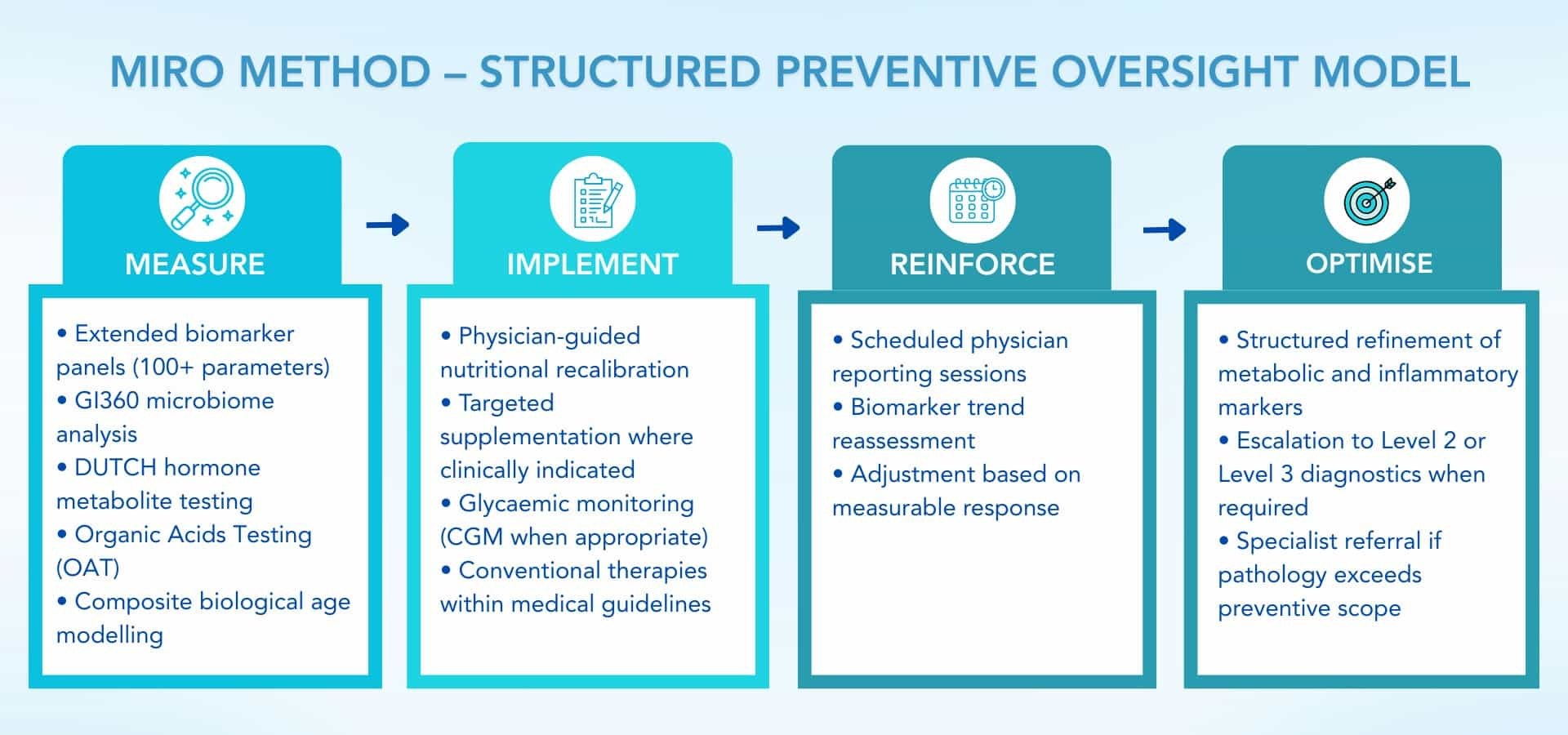
health.miro, under Dr. Enam Abood (Medical Director), operates within a diagnostics-first preventive medicine framework anchored by The Miro Score a proprietary 0–100 longevity metric.
The Miro Score: Named Proprietary Longevity Metric
The Miro Score is HealthMiro's defining clinical tool, synthesizing data from extended biomarker panels, hormone metabolite analysis, microbiome profiling, AI-Integrated Health Tracking, and CIMT Ultrasound into a single, trackable 0–100 score. The score provides:
- A unified measure of biological health status across multiple systems
- A trackable longitudinal metric updated at each assessment cycle
- A clear, comprehensible output from complex multi-panel data
- Physician-interpreted context rather than raw laboratory numbers
Under Dr. Enam Abood's clinical oversight, The Miro Score is used as a directional tool, not a predictive guarantee. It indicates biological health trajectory and supports structured, long-term planning.
|
🔍 Did You Know?
Longitudinal cohort analyses (e.g., Moffitt et al., 2017) suggest that accelerated biological aging markers are associated with higher transition rates from single chronic conditions to multimorbidity.
|
AI-Integrated Health Tracking
AI-integrated health tracking enables continuous monitoring of health data between formal clinical assessments using artificial intelligence to identify emerging patterns and support proactive physician-led response before clinical thresholds are crossed.
CIMT Ultrasound
CIMT (Carotid Intima-Media Thickness) Ultrasound provides early cardiovascular risk identification by measuring the thickness of the carotid artery wall detecting subclinical atherosclerosis before overt symptoms appear.
Core System Focus
- The Miro Score (0–100 composite biological health metric)
- AI-Integrated Health Tracking (continuous pattern monitoring)
- CIMT Ultrasound (subclinical cardiovascular risk)
- Metabolic and glycaemic regulation
- Hormonal and adrenal axis (DUTCH metabolite testing)
- Gut microbiome health (GI360)
- Mitochondrial function (organic acid testing)
- Biological age trajectory (composite modelling)
|
🔍 Did You Know?
Observational research suggests that sustained physical activity is associated with more favorable aging biomarker profiles, though causality remains under investigation.
|
health.miro operates within a diagnostics-first model. Clinical interpretation begins with structured measurement rather than symptomatic assumptions. The objective is to identify biological strain patterns, early deviation, and inter-system interaction before disease thresholds are crossed.
Testing depth is determined by clinical presentation and executive objectives. Not all patients undergo maximum-level diagnostics. Escalation follows relevance, not marketing intensity.
Diagnostic Assessment Includes
Depending on clinical indication, assessment may include:
- Extended functional blood panels (often exceeding 100 biomarkers)
- Inflammatory markers including C-reactive protein (CRP)
- Glycaemic markers such as fasting glucose and HbA1c
- Lipid profiling
- Renal and hepatic indicators
- DUTCH hormone metabolite testing
- GI360 stool microbiome analysis
- Organic Acids Testing (OAT) for metabolic pathway insight
- Composite biological age modelling
- Continuous Glucose Monitoring (CGM) when indicated
All laboratory outputs undergo physician interpretation. Individual values are not treated as standalone conclusions. Pattern recognition across systems guides reporting.
Chronomedicine & Future Risk Mapping
health.miro incorporates temporal pattern recognition into its oversight model. Biomarker trends are evaluated across time rather than as isolated snapshots. This approach aligns with principles of chronomedicine, where timing and pattern movement inform interpretation.
Future risk mapping at the clinic is probabilistic. Biological age acceleration, inflammatory burden, glycaemic instability, and hormonal shifts are used to estimate directional risk rather than outcome prediction.
Reporting cycles are structured:
Baseline measurement → Physician interpretation → Follow-up review → Trend reassessment.
This iterative model supports long-term planning rather than episodic reaction.
health.miro’s strengths lie in interpretive integration rather than procedural volume. The clinic does not position itself around high-intensity intervention. Its value is derived from structured biomarker analysis, physician oversight, and longitudinal reporting cycles.
Below are three areas where the clinic demonstrates defined medical strength.
Key Medical Strength 1: The Miro Score Proprietary 0–100 Longevity Metric
HealthMiro's primary clinical differentiator is The Miro Score, a proprietary 0–100 longevity metric under Dr. Enam Abood's physician oversight that synthesizes complex multi-system biomarker data into a single, trackable measure of biological health trajectory.
|
🔍 Did You Know?
Longitudinal research suggests that accelerated biological age markers are associated with higher transition rates from single chronic conditions to multimorbidity. These associations inform risk framing but do not establish individual certainty.
|
Key Medical Strength 2: AI-Integrated Health Tracking
A named technology at HealthMiro AI-Integrated Health Tracking provides continuous between-assessment health monitoring using artificial intelligence, enabling pattern recognition and proactive physician-led response that standard periodic assessment cannot offer.
Key Medical Strength 3: CIMT Ultrasound Early Cardiovascular Risk
CIMT ultrasound is a named, specific diagnostic capability using carotid artery wall thickness measurement to identify subclinical atherosclerosis at an early, pre-symptomatic stage. This provides cardiovascular risk insight beyond what standard lipid panels can detect.
Key Medical Strength 4: Corporate Longevity Programs and Executive Health
HealthMiro's specialist positioning in corporate longevity programs and executive health distinguishes it as a clinic capable of delivering structured biological health assessment at organizational scale not just for individual patients but for corporate teams and senior executive cohorts.
Key Medical Strength 5: Multi-System Biomarker Integration
Extended biomarker panels (100+ parameters), GI360 microbiome testing, DUTCH hormone metabolite analysis, and Organic Acids Testing (OAT) all interpreted by Dr. Enam Abood within the Miro Score framework rather than as isolated data points.
Before & After – Executive Outcomes
The following summaries reflect individual experiences described within the clinic’s published materials. They illustrate diagnostic sequencing and physician interpretation rather than guaranteed results. Outcomes vary based on baseline health status, adherence, and biological variability.
Case 1: Persistent Fatigue with Normal Routine Tests
Before:
An executive reported ongoing fatigue, nausea, and cognitive slowing despite routine primary care blood tests returning within standard reference ranges.
After:
Expanded assessment identified iron deficiency, low vitamin D status, and gastrointestinal imbalance. Following physician-guided nutritional recalibration and monitoring, the individual reported improved energy and a reduction in persistent nausea over subsequent months.
Source:
Clinic-published patient experience summary.
Case 2: Insulin Resistance & Metabolic Instability
Before:
A professional experiencing bloating, fluid retention, and fluctuating energy levels was found to have early glycaemic instability and markers consistent with insulin resistance.
After:
Through structured dietary recalibration, metabolic monitoring, and follow-up biomarker review, glycaemic markers improved and reported energy levels stabilised over time.
Source:
Clinic-published patient case description.
|
⚠️ Editorial Note
These outcomes reflect individual experiences reported within the clinic’s published materials. Results vary. Biomarker analysis indicates risk patterns and biological strain, not certainty. Outcomes depend on multiple individual factors including baseline health, adherence, genetics, and environmental exposure.
|
Case 3: Hormonal & Gastrointestinal Complexity
Before:
A patient presented with migraines, anxiety, abdominal discomfort, and suspected small intestinal bacterial overgrowth (SIBO), alongside indicators of hormonal imbalance.
After:
Integrated diagnostics identified gastrointestinal dysbiosis and low thyroid function. Following physician-led evaluation and monitored intervention, the patient reported improved digestive stability and reduced migraine frequency over time.
Source:
Clinic-published patient experience summary.
|
⚠️ Editorial Note
Hormonal and gastrointestinal conditions require individualised interpretation. Biomarker findings indicate biological patterns, not certainty of outcome. Reported improvements reflect individual experience and are not predictive of uniform results.
|
All programs at HealthMiro are structured through the Miro Score methodology under Dr. Enam Abood (Medical Director).
Comprehensive Health Assessment From £1,250
Named entry-level diagnostic program.
Includes across the Miro Score assessment framework:
- Extended biomarker panel (100+ parameters)
- CIMT Ultrasound subclinical cardiovascular risk assessment
- AI-Integrated Health Tracking setup and baseline
- GI360 microbiome analysis (where indicated)
- DUTCH hormone metabolite testing
- Organic Acids Testing (OAT)
- Composite biological age modelling → The Miro Score (0–100)
- Dr. Enam Abood physician interpretation session
- Structured clinical report with The Miro Score output
From £1,250
Corporate Longevity Programs
Named specialist services for organizations and executive teams:
- Structured biological health assessment designed for corporate delivery
- The Miro Score applied across executive cohorts for comparative and individual insight
- AI-Integrated Health Tracking for ongoing corporate health monitoring
- CIMT Ultrasound and biomarker assessments at group or individual level
- Dr. Enam Abood's clinical oversight and reporting
- Scalable programme design for teams of varying sizes
- Pricing on consultation contact hello@healthmiro.com
Executive Health Programme
Named specialist service for senior professionals:
- Comprehensive Health Assessment (from £1,250) as foundation
- AI-Integrated Health Tracking for continuous monitoring
- CIMT Ultrasound cardiovascular risk assessment
- The Miro Score longitudinal tracking across review cycles
- Priority access to Dr. Enam Abood
- Remote follow-up consultations where appropriate
Health Optimisation Programme (8–12 Weeks)
Outpatient program across diagnostic intake, reporting sessions, and review cycles:
- Extended biomarker panel, OAT, inflammatory and glycaemic markers
- The Miro Score baseline and follow-up tracking
- Physician interpretation and structured lifestyle plan
- Defined review cycle
Female Hormones & Weight Loss Programme (10–16 Weeks)
Two-phase program integrating endocrine analysis and metabolic review:
- DUTCH hormone metabolite testing
- Glycaemic, inflammatory, and thyroid panels
- The Miro Score hormonal and metabolic tracking
- HRT or GLP-1 discussion where clinically appropriate
Skin Health Programme (8–12 Weeks)
An integrative program combining biomarker testing and microbiome analysis:
- GI360 stool testing and inflammatory markers
- The Miro Score dermatological and gut health component
- Physician-led nutritional and lifestyle adjustment plan

health.miro operates as a private outpatient medical clinic in West London. It does not provide inpatient admission, residential recovery stays, or retreat-style accommodation. All services are delivered through scheduled consultations, structured diagnostics, and defined review cycles.
The clinic integrates functional medicine diagnostics with conventional medical oversight. Interventions are selected based on physician interpretation of laboratory findings and system interaction patterns.
Medical & Restorative Therapies
Therapies discussed within the clinic’s framework may include:
- Structured functional nutrition protocols
- Targeted nutraceutical supplementation
- Low Dose Naltrexone (LDN) under physician supervision
- Peptide bioregulators aimed at cellular signalling pathways
- Hormone Replacement Therapy (HRT) when clinically indicated
- Continuous Glucose Monitoring (CGM) for glycaemic variability analysis
These therapies are not prescribed generically. They are considered only after diagnostic review and within medical guidelines. The clinic does not promote experimental or trend-driven interventions.
Clinical Facilities
health.miro functions as an urban outpatient clinic. Diagnostics are conducted through accredited laboratory partners. On-site consultations focus on:
- Physician-led reporting sessions
- Interpretation of extended biomarker panels
- Hormone metabolite review
- Microbiome test analysis
- Structured risk mapping discussions
The clinic does not operate imaging suites or inpatient treatment wards. Where advanced diagnostics exceed outpatient scope, referral pathways are defined.
Architecture, Environment & Digital Discipline
The clinic operates within a professional urban medical setting in West London. It is not a spa environment. The setting prioritises privacy, discretion, and structured consultation rather than experiential design.
Digital discipline is maintained through secure data storage systems compliant with GDPR regulations. Laboratory results, biological age modelling outputs, and clinical notes are stored within controlled-access systems.
The outpatient model allows patients to integrate visits within work schedules rather than requiring extended absence from professional commitments.
Governance & Privacy
health.miro operates under United Kingdom medical regulatory standards. Clinical oversight is provided by a UK-licensed General Practitioner (MRCGP) with certification in functional medicine (IFMCP). All diagnostic interpretation is physician-led. For a broader comparison, see the best longevity clinics in the UK.
Laboratory testing is conducted through accredited external providers operating under recognised quality assurance frameworks. Raw laboratory data is not interpreted by automated systems alone. Physician review remains mandatory before any structured plan is discussed.
Patient data handling complies with the General Data Protection Regulation (GDPR). Clinical notes, biomarker results, biological age modelling outputs, and hormone testing data are stored within secure, access-controlled systems.
The clinic maintains defined escalation pathways. When diagnostic findings indicate pathology outside preventive scope, referral to appropriate medical specialists is advised. The clinic does not position itself as a replacement for specialist care.
Longevity modelling, biomarker interpretation, and risk mapping operate within probabilistic frameworks. Governance is based on measurement, interpretation, and documented review cycles — not on guarantees of prevention or outcome certainty.
Pricing at HealthMiro reflects Dr. Enam Abood's physician-led assessment structured through The Miro Score methodology.
Pricing
|
Service
|
Price
|
|
Comprehensive Health Assessment
|
From £1,250
|
|
Corporate Longevity Programs
|
On consultation
|
|
Executive Health Programme
|
On consultation
|
|
Health Optimisation Programme (8–12 weeks)
|
On consultation
|
|
Female Hormones & Weight Loss (10–16 weeks)
|
On consultation
|
|
Skin Health Programme (8–12 weeks)
|
On consultation
|
Pricing is discussed transparently prior to diagnostic sequencing.
Pricing Notes
|
Category
|
Details
|
|
Clinic Positioning
|
Private physician-led outpatient longevity clinic — London SW12
|
|
Entry Point
|
Comprehensive Health Assessment from £1,250
|
|
Proprietary Methodology
|
The Miro Score (0–100) included in all assessments
|
|
Named Technologies
|
AI-Integrated Health Tracking / CIMT Ultrasound
|
|
Corporate Services
|
Corporate Longevity Programs pricing on consultation
|
|
Contact
|
hello@healthmiro.com
|
How Programs Are Structured
Programs follow a defined workflow:
Pre-visit preparation
Medical history intake and diagnostic planning.
On-site diagnostics
Laboratory sampling and structured assessment.
Physician interpretation
Comprehensive review session integrating cross-system biomarker analysis.
Reporting & Follow-up
Defined review cycle assessing trend direction and recalibration where appropriate.
This structure separates measurement from decision-making and emphasises physician oversight. These structured pathways are similar to executive longevity testing packages designed for high performers.
Length of Stay
health.miro operates exclusively as an outpatient clinic.
- No inpatient admission
- No residential accommodation
- No retreat-style programming
Initial visits may be completed within scheduled consultation blocks. Follow-up reviews may be conducted remotely where appropriate.
The clinic is designed to integrate within professional schedules rather than require extended absence from work.
Clinic: HealthMiro Medical Director: Dr. Enam Abood Address: 10-12 Emmanuel Rd, London SW12 0BY Email: hello@healthmiro.com
HealthMiro operates strictly by appointment. It does not accept walk-in visits and does not provide residential accommodation. All services are outpatient and appointment-based.
Recommended Length of Stay
- Comprehensive Health Assessment: Single visit (half-day to full-day)
- Corporate Longevity Programs: Structured engagement timeline on consultation
- Follow-up reporting sessions: In-person or remote where appropriate
- No overnight stay required
How to Reach the Clinic?
- Nearest Underground: Balham (Northern Line) — short walk/taxi to Emmanuel Rd
- Overground: Streatham Hill short taxi ride
- Nearest Airports: London Gatwick (LGW) ~25–30 minutes / London Heathrow (LHR) ~45–60 minutes
- Taxi/Rideshare: Widely available throughout South London
For travel planning convenience:
🔗 Find best flights to London
🔗 Find car rentals in London
Links provided for travel planning convenience only.
Accommodation & Stay Planning
health.miro does not operate on-site accommodation. Patients travelling from outside London typically arrange independent lodging nearby.
West London offers serviced apartments and business-oriented hotels suitable for short stays aligned with consultation schedules.
🔗 Explore nearby hotels & apartments
What to Bring
Patients are advised to bring:
- Prior laboratory results (if available)
- Medication list
- Relevant imaging reports
- Personal identification
No specialised equipment or athletic gear is required unless advised during pre-visit planning.
The longevity sector remains heterogeneous. There is no globally standardised framework governing preventive longevity clinics. Models range from wellness-oriented retreats to highly medicalised outpatient clinics. As a result, due diligence requires evaluation of physician leadership, diagnostic specificity, regulatory compliance, and reporting structure.
health.miro positions itself as a physician-led outpatient clinic operating within UK medical regulation. It uses named diagnostics, including extended biomarker panels (100+ markers), GI360 microbiome testing, DUTCH hormone metabolite analysis, Organic Acids Testing, and composite biological age modelling. Interpretation is conducted by a licensed General Practitioner rather than automated reporting systems.
Outcomes in longevity medicine are inherently probabilistic. Associations between biological age acceleration, inflammatory burden, metabolic instability, and multimorbidity progression are supported by longitudinal cohort research. However, these associations do not predict individual certainty. Diagnostics indicate directional risk patterns, not guaranteed outcomes.
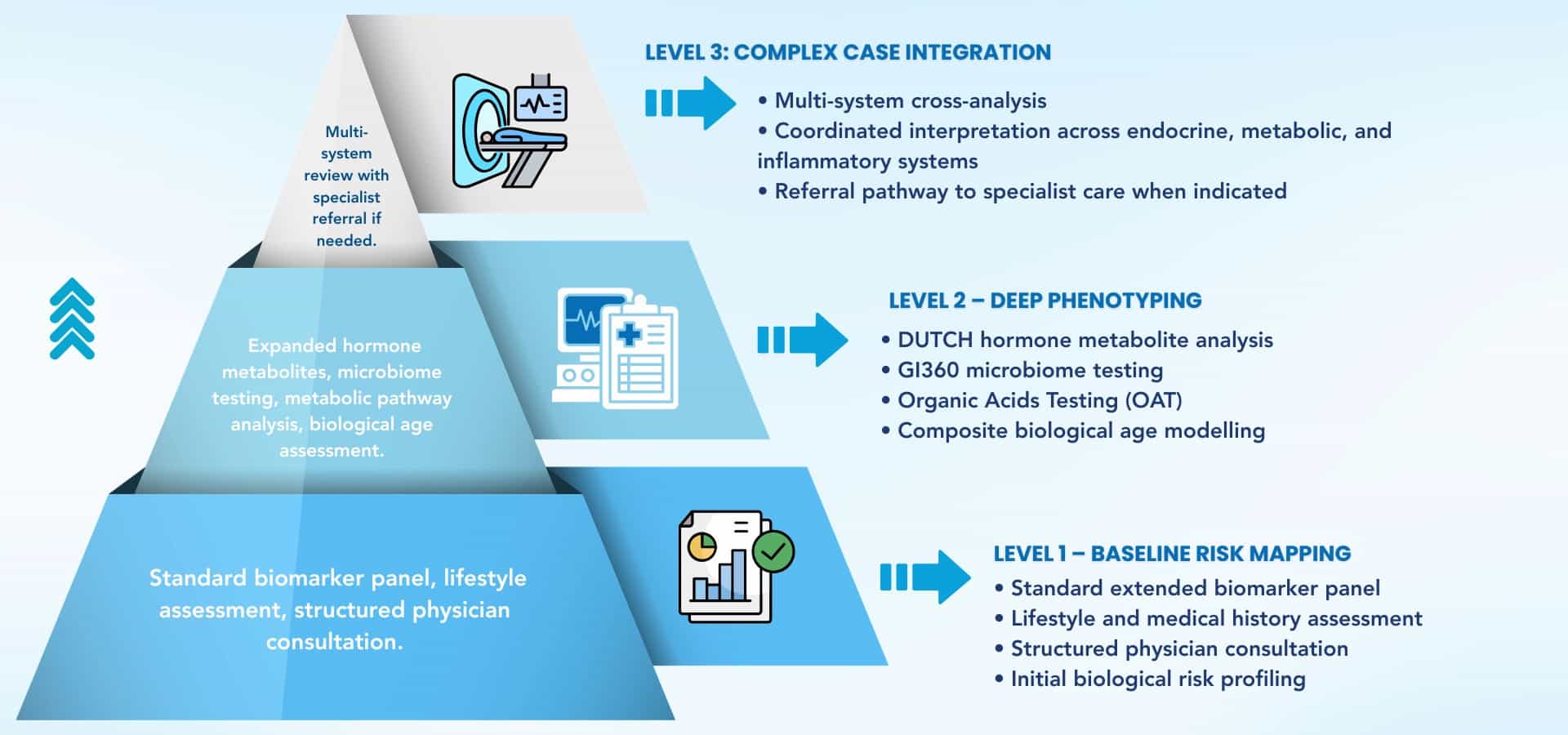
Within the broader sector, health.miro’s positioning can be characterised by:
- Physician-led governance rather than technician-led delivery
- Structured three-level routing architecture
- Defined review cycles rather than one-time optimisation sessions
- GDPR-compliant data management
- Referral pathways when pathology exceeds preventive scope
The clinic does not position itself as experimental, investigational, or outcome-guaranteeing. Its model emphasises measurement, interpretation, and structured oversight.
health.miro operates within a segment of the longevity sector that emphasises structured measurement over narrative positioning. In a field often characterised by trend-driven language, the clinic’s model centres on extended biomarker analysis, physician interpretation, and defined reporting cycles.
Longevity medicine remains evidence-evolving. Associations between biological age acceleration, inflammatory burden, and long-term health outcomes are supported by cohort research, yet individual prediction remains uncertain. No diagnostic model eliminates biological variability. Within this context, health.miro positions its services as probabilistic risk mapping rather than outcome assurance.
For executives and high-performing individuals, the clinic’s relevance lies in governance structure. Baseline mapping, interpretation sessions, and scheduled reassessment provide data-informed insight without requiring residential stays or extended disruption to professional commitments.
The clinic does not promise reversal of aging, disease prevention, or performance enhancement. Its offering is structured clarity under physician oversight within recognised UK medical standards. This reflects trends seen across the best longevity clinics in Europe.
Is health.miro a medical clinic or a wellness centre?
health.miro operates as a physician-led outpatient medical clinic in the United Kingdom. It is not a spa, retreat, or lifestyle centre. Diagnostic sequencing and reporting are conducted under the supervision of a UK-licensed General Practitioner.
Lifestyle variables such as nutrition, sleep, and metabolic regulation are discussed within a medical framework. The clinic does not provide recreational wellness services.
Who is the clinic designed for?
The clinic is structured for executives, founders, investors, professional athletes, and high-performing individuals seeking clarity around biomarker trends and long-term risk mapping.
It is not positioned for emergency care, inpatient treatment, or acute disease management.
How personalised is the process?
Personalisation begins with diagnostic depth. Testing may include extended biomarker panels, GI360 microbiome analysis, DUTCH hormone testing, Organic Acids Testing, and biological age modelling when clinically appropriate.
Interpretation is physician-led. No fixed protocol is applied universally. Personalisation refers to diagnostic sequencing and reporting cycles, not experimental treatment variation.
How is patient privacy handled?
health.miro operates under UK medical regulation and complies with the General Data Protection Regulation (GDPR). Clinical notes, laboratory data, and biological age modelling outputs are stored within secure, access-controlled systems.
Data is used for clinical interpretation only and not distributed without appropriate consent.
Can patients remain connected and working during programs?
Yes. The outpatient structure allows consultations to be integrated within professional schedules. Follow-up reporting sessions may be conducted remotely when appropriate.
There is no inpatient admission or residential requirement.
Does the clinic treat diabetes or chronic conditions?
The clinic focuses on preventive risk mapping and biomarker interpretation. It does not replace specialist care for established chronic disease.
If diagnostics indicate pathology beyond preventive scope, referral to appropriate medical specialists is recommended. All medical decisions should be made in collaboration with a personal physician.
How should value be evaluated relative to cost?
Value is derived from diagnostic depth, physician interpretation time, and structured review cycles rather than single interventions.
The clinic’s model supports long-term oversight and risk transparency. It does not guarantee disease prevention or lifespan extension.
A Strategic Pause That Clarifies the Years Ahead
In high-performance environments, risk is rarely ignored. Financial exposure, operational uncertainty, and strategic volatility are measured, reviewed, and managed through structured oversight. Biological systems deserve similar discipline.
health.miro positions itself within a preventive framework built on extended biomarker mapping, physician interpretation, and defined review cycles. It does not promise reversal of aging or elimination of disease risk. It offers structured insight into metabolic, inflammatory, hormonal, and mitochondrial patterns that may influence long-term trajectory.
Longevity medicine remains evidence-evolving. Biological age models, inflammatory markers, and glycaemic indicators provide directional information, not certainty. Within that uncertainty, measured oversight can reduce blind spots.
For executives, founders, athletes, and high-performing individuals, the value lies not in intensity of intervention but in clarity of interpretation. The clinic’s outpatient structure allows integration into professional schedules without requiring residential retreat or extended downtime.
Preventive medicine, when approached conservatively, is less about urgency and more about intention.
👉 View Longevity Program
↩ Return to ExtendMy.Life
↑ Back to Top
Disclaimer
This page is provided for informational and editorial purposes only. It is intended to support structured review and informed decision-making. It does not constitute medical advice, diagnosis, or treatment.
Reading this content does not establish a doctor–patient relationship with health.miro, its physicians, or ExtendMy.Life. Clinical services are delivered only through formal consultation and individual medical assessment.
Longevity medicine and biological age modelling operate within probabilistic frameworks. Associations between biomarkers, aging patterns, inflammatory markers, and long-term health outcomes are primarily derived from observational and cohort research. These associations indicate population-level trends and do not guarantee individual outcomes.
Diagnostic findings represent biological patterns and risk indicators, not certainty of disease development or prevention. Individual results vary based on genetics, lifestyle, environmental exposure, adherence, and pre-existing medical conditions.
All medical decisions, including laboratory testing, medication use, hormone therapy, supplementation, or lifestyle modification, should be made in consultation with a qualified personal physician. ExtendMy.Life does not provide medical services and does not recommend specific treatments.
This page separates editorial analysis from clinical care and should not replace personalised medical consultation.
References
Aging Cell (2024) ‘Biological age modelling and longitudinal health outcomes’, Aging Cell, 23(2), e70142.
Belsky, D.W. et al. (2015) ‘Quantification of biological aging in young adults’, Proceedings of the National Academy of Sciences, 112(30), pp. E4104–E4110.
Ferrucci, L. and Fabbri, E. (2018) ‘Inflammageing: chronic inflammation in ageing, cardiovascular disease, and frailty’, Nature Reviews Cardiology, 15(9), pp. 505–522.
Franceschi, C. et al. (2018) ‘Inflammaging and “Garb-aging”’, Trends in Endocrinology & Metabolism, 29(9), pp. 623–633.
Horvath, S. (2013) ‘DNA methylation age of human tissues and cell types’, Genome Biology, 14(10), R115.
Kennedy, B.K. et al. (2014) ‘Geroscience: linking aging to chronic disease’, Cell, 159(4), pp. 709–713.
Levine, M.E. et al. (2018) ‘An epigenetic biomarker of aging for lifespan and healthspan’, Aging (Albany NY), 10(4), pp. 573–591.
López-Otín, C. et al. (2013) ‘The hallmarks of aging’, Cell, 153(6), pp. 1194–1217.
Moffitt, T.E. et al. (2017) ‘Aging trajectories and multimorbidity risk’, Journals of Gerontology: Series A, 72(2), pp. 175–183.
Organisation for Economic Co-operation and Development (2024) Health at a Glance: Europe 2024. Paris: OECD Publishing.
World Health Organization (2022) Global report on ageing and health. Geneva: WHO.