
Epik Clinic operates under physician supervision, led by Dr. Marija Lucija Antolič, with support from specialists in cardiology, radiology, nutrition, and performance health.
The care model follows a clear sequence: diagnostic testing, physician-led analysis, and structured reporting. Data from lab tests, imaging, and wearable devices is integrated into a single clinical review, rather than assessed in isolation.
Facility in Kranj function as urban diagnostic center. Programs are designed to be time-efficient, allowing comprehensive evaluation without extended stays. All outputs are medically reviewed, with a focus on clarity and decision support.
At a Glance – Epik Clinic
|
Category
|
Details
|
|
Location
|
Kranj, Slovenia
|
|
Clinic Type
|
Physician-led longevity clinic
|
|
Core Focus
|
Preventive diagnostics and risk identification
|
|
Typical Stay
|
Multi-day structured assessment (non-residential)
|
|
Diagnostic Depth
|
60+ lab tests, DEXA scan, VO2 max, CGM
|
|
Signature Method
|
Integrated diagnostics with physician-led interpretation
|
|
Environment
|
Urban clinical setting
|
|
Privacy Level
|
High – structured, appointment-based access
|
|
Professional Recognition
|
Emerging longevity clinic in Central Europe
|
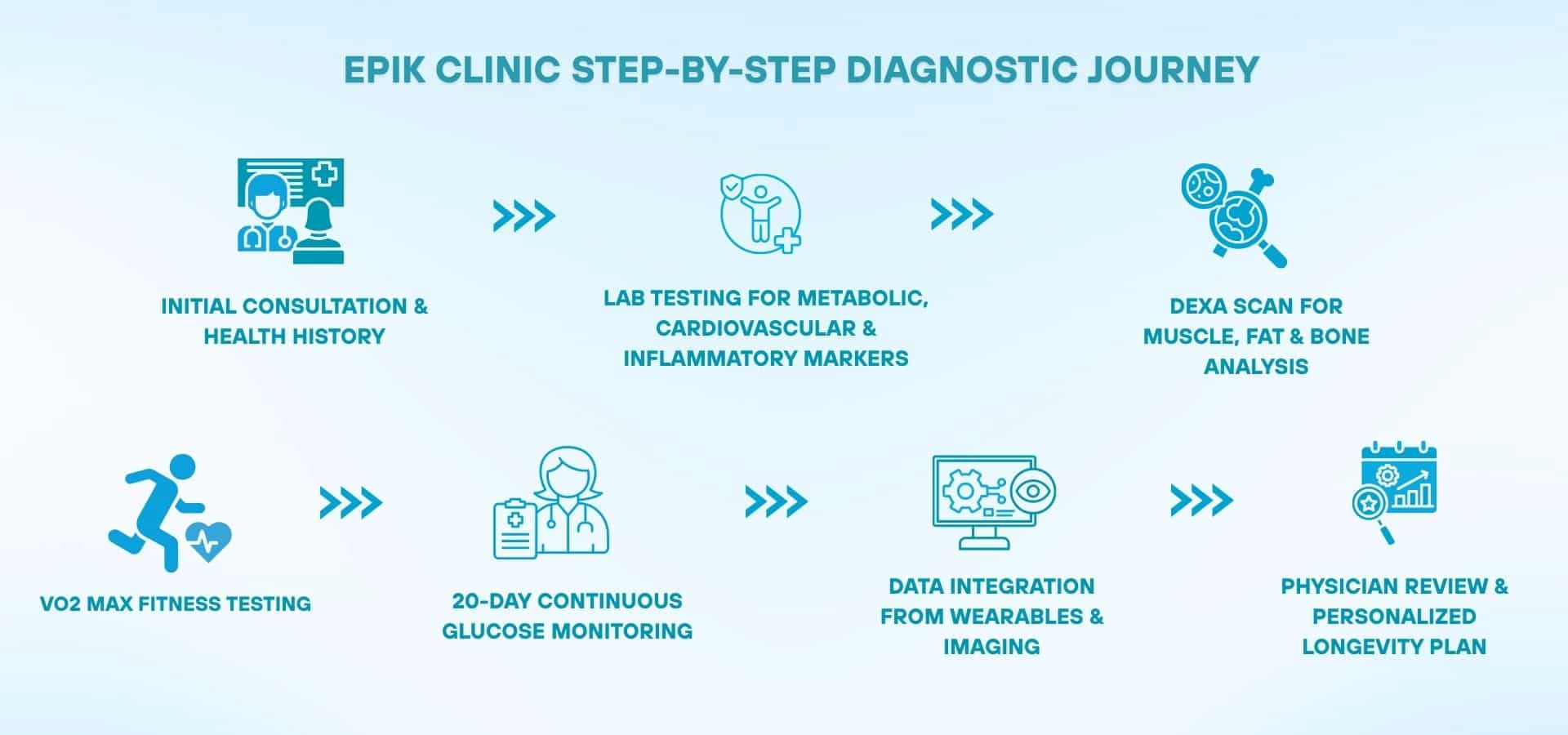
Epik Clinic is chosen for its structured, data-driven approach to health evaluation. The clinic focuses on diagnostic depth and clear interpretation rather than general wellness advice.
A key feature is 20-day continuous glucose monitoring (CGM), which tracks real-time responses to food and activity. This provides a more detailed view than standard blood tests.
The clinic also uses DEXA scanning for body composition and VO2 max testing for fitness assessment both widely recognized clinical benchmarks. Biomarkers such as ApoB and homocysteine are included to improve cardiovascular risk assessment.
All results are consolidated into a structured Longevity Plan with clear interpretation and defined observation points. This level of clarity, combined with physician oversight, is the primary reason many high-performing individuals choose the clinic.
Clinical Purpose
The clinical purpose of Epik Clinic is to identify early risk patterns before they develop into measurable conditions. The focus is on understanding how biological systems such as metabolism, cardiovascular function, and hormonal balance interact over time.
Rather than responding to symptoms, the clinic builds a structured view of current health status using diagnostic data. This allows for informed, physician-guided planning based on measurable indicators, not assumptions.
The emphasis remains on clarity and long-term perspective. Diagnostics are used to map trends and highlight potential risks, without assigning certainty or predicting outcomes.
Who This Clinic Is Designed For
Epik Clinic is designed for individuals who require structured health insights within limited time.
This typically includes:
- Executives managing high workloads and decision pressure
- Founders and entrepreneurs operating in high-responsibility roles
- Investors and professionals seeking long-term performance stability
- Athletes focused on recovery, resilience, and measurable outputs
- High-performers who prefer data interpretation over general advice
The clinic is not positioned for acute care or symptom-driven treatment. It is suited for individuals seeking clarity, structured evaluation, and physician-reviewed insight into long-term health patterns. Many individuals seek this level of insight after experiencing executive burnout, where performance and health begin to overlap.
Focus Areas
|
Focus Area
|
What This Means in Practice
|
|
Medical Discipline
|
Preventive and longevity-focused medicine
|
|
Core Biological System
|
Metabolic, cardiovascular, and functional systems
|
|
Environment & Design
|
Urban, clinical, non-residential setting
|
|
Program Structure
|
Diagnostics → physician review → structured reporting
|
|
Lifestyle as Medicine
|
Data-informed adjustments (nutrition, activity, recovery)
|
|
Privacy
|
Controlled access with scheduled clinical workflow
|
|
Long-Term Strategy
|
Ongoing monitoring and trend-based evaluation
|
Epik Clinic operates on a preventive medical model that prioritizes early detection over reactive treatment. The approach focuses on identifying measurable changes in biological systems before they develop into clinical conditions.
Rather than evaluating isolated markers, the clinic applies a systems-based view. Data from metabolism, cardiovascular function, and body composition is interpreted together to understand broader patterns. This reduces the risk of fragmented analysis and supports more coherent clinical insight.
A key principle is physician-led interpretation. Raw data alone is not considered sufficient; all findings are reviewed within a clinical context to avoid misinterpretation or over-reliance on single metrics.
The model avoids trend-driven or unverified interventions. Instead, it relies on established diagnostic methods and evidence-informed frameworks, acknowledging that predictive accuracy has limitations and requires ongoing monitoring.
Core System Focus
The primary focus is on metabolic and cardiovascular systems, as these are closely linked to long-term health outcomes. This includes glucose regulation, lipid markers, body composition, and cardiorespiratory fitness.
Continuous glucose monitoring and advanced biomarker analysis are used to detect early signs of metabolic imbalance. These signals often appear years before conventional diagnosis, allowing earlier observation of risk patterns.
|
🔍 Did You Know?
Low cardiorespiratory fitness is associated with higher mortality risk than several traditional risk factors, making VO2 max a key indicator in long-term health assessment
|
Lifestyle as a Medical Tool
Lifestyle factors are treated as measurable inputs rather than general advice. Nutrition, physical activity, sleep, and recovery are assessed using objective data, including continuous monitoring and performance testing.
Adjustments are not prescribed as fixed protocols but are guided by observed responses in the data. This allows for more precise alignment between daily habits and biological outcomes.
|
🔍 Did You Know?
Tracking glucose responses over multiple days can reveal significant variation in how individuals respond to the same foods, highlighting the limits of standardized dietary guidance.
|
Diagnostic Assessment Includes
Epik Clinic applies a multi-layered diagnostic process designed to capture a detailed view of biological function across systems.
The assessment typically includes:
- Comprehensive laboratory testing (60+ biomarkers) covering metabolic, cardiovascular, and inflammatory markers
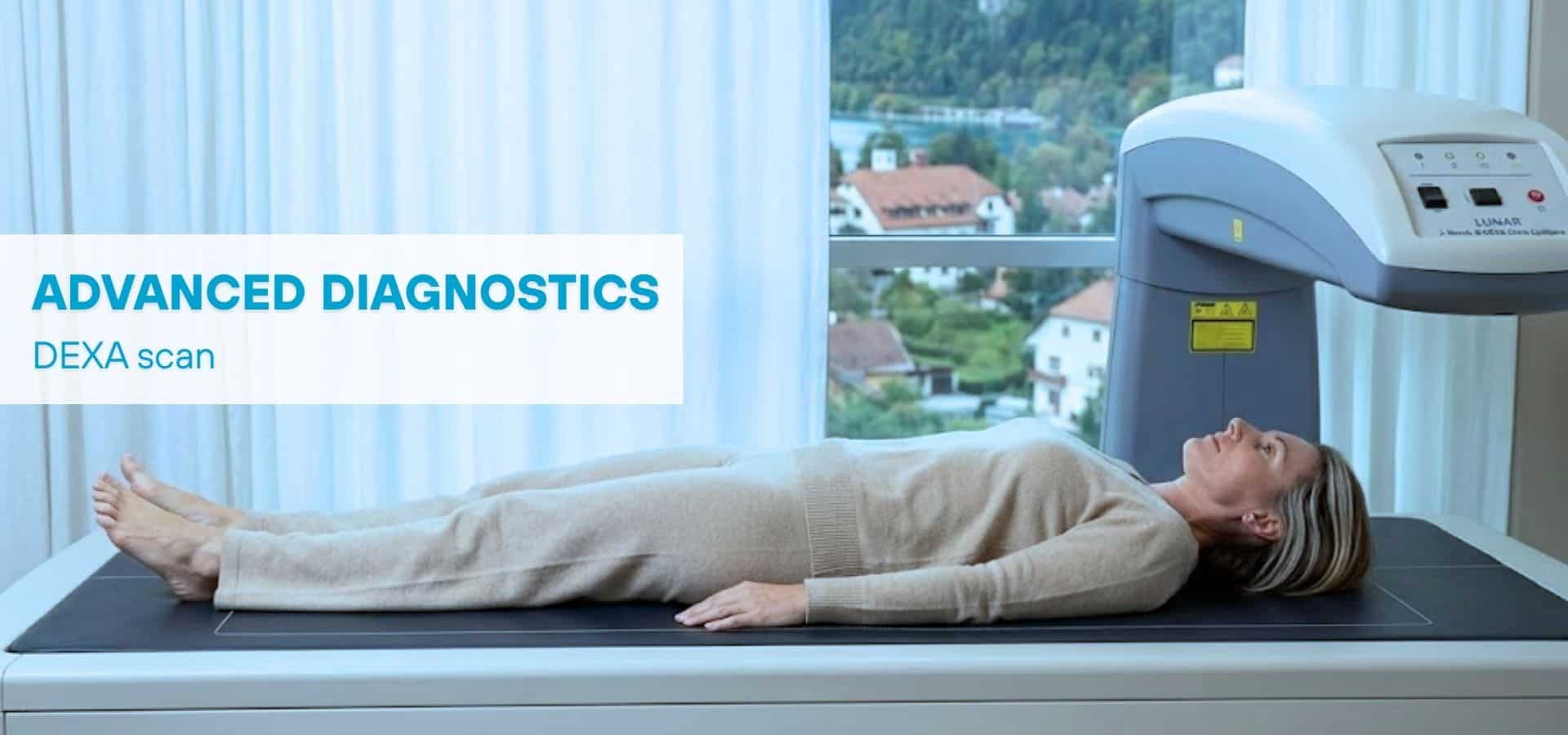
- DEXA scan for body composition, including muscle mass, bone density, and visceral fat
- VO2 max stress testing to evaluate cardiorespiratory capacity
- 20-day continuous glucose monitoring (CGM) to track real-time metabolic response
- Ultrasound imaging (abdominal and vascular) for structural assessment
- Wearable data integration to reflect daily activity, sleep, and recovery patterns
All data points are consolidated into a single clinical review. This reduces reliance on isolated findings and supports a more complete understanding of how systems interact.
|
🔍 Did You Know?
Single blood tests provide a snapshot, while continuous monitoring such as CGM captures patterns over time, often revealing variations that standard testing may miss.
|
Chronomedicine & Future Risk Mapping
The clinic applies a predictive framework that considers how biological markers change over time, rather than focusing only on current values. This approach aligns with principles of chronomedicine, where timing and variation in physiological processes are part of the assessment.
By analyzing trends such as glucose variability, fitness capacity, and biomarker shifts the clinic maps potential future risk patterns. These insights are not used to predict outcomes with certainty but to highlight areas that may require closer observation.
The objective is to support long-term planning through structured data interpretation, rather than short-term intervention or reactive care.
Epik Clinic focuses on structured, system-level diagnostics rather than isolated testing. Its strength lies in combining multiple data streams into a single, physician-reviewed assessment that supports clear decision-making. This structured approach is similar to executive longevity testing, where multiple systems are analyzed together to identify early risk patterns.
Key Medical Strength 1 – Metabolic Pattern Analysis
The clinic uses 20-day continuous glucose monitoring (CGM) alongside laboratory markers to assess how the body responds to food, activity, and daily routines. This approach captures variability over time, rather than relying on single measurements.
It allows early identification of irregular glucose patterns and insulin response, which may not appear in standard tests.
|
🔍 Did You Know?
Glucose variability not just average levels is increasingly linked to metabolic risk, making continuous tracking more informative than isolated readings.
|
Key Medical Strength 2 – Integrated Body Composition & Fitness Assessment
Epik combines DEXA scanning with VO2 max testing to evaluate both structural and functional health. This provides a clearer view of muscle mass, fat distribution, bone density, and cardiorespiratory capacity.
These metrics are assessed together, helping to identify imbalances that may affect long-term physical resilience and performance.
Key Medical Strength 3 – Physician-Led Data Integration
All diagnostic outputs are reviewed within a single clinical framework. Instead of presenting raw data, the clinic consolidates findings into a structured Longevity Plan with defined observation points.
This reduces interpretation gaps and supports a more coherent understanding of risk patterns across systems. The emphasis is on clarity and context, rather than volume of information.
Outcome 1 – Metabolic Awareness
Before:
Limited visibility into daily glucose response and metabolic variability. Standard lab tests within normal range, but no continuous data on how diet and activity affected glucose levels.
After:
Continuous glucose monitoring identified fluctuations linked to specific foods and routines. This provided a clearer understanding of metabolic patterns and highlighted areas requiring closer observation.
Source:
Clinic-reported case material and CGM-based assessment data.
Outcome 2 – Cardiovascular & Fitness Insight
Before:
General perception of good fitness based on lifestyle, without objective measurement of cardiorespiratory capacity or body composition.
After:
VO2 max testing and DEXA analysis revealed discrepancies between perceived fitness and measured capacity. This enabled a more accurate understanding of physical condition and long-term performance indicators.
Source:
Clinic-reported assessments combining VO2 max and body composition analysis.
|
⚠️ Editorial Note
These outcomes reflect individual experiences reported within the clinic’s published materials. Results vary. Diagnostics indicate risk patterns, not certainty, and outcomes depend on multiple individual factors.
|
Epik Clinic offers structured programs built around diagnostic depth and physician-led interpretation. Programs differ in scope, duration, and level of follow-up, but all follow a consistent framework: data collection, clinical review, and structured reporting.
Premium Program (Multi-Day Assessment)
This program represents the clinic’s most comprehensive diagnostic evaluation. It is designed for individuals seeking a full system-level overview within a limited timeframe.
|
Category
|
Details
|
|
Program Focus
|
Full-spectrum diagnostic assessment
|
|
Duration
|
Multi-day (non-residential)
|
|
Diagnostics Included
|
60+ lab tests, DEXA scan, VO2 max, CGM, ultrasound
|
|
Output
|
Structured Longevity Plan with physician interpretation
|
|
Clinical Oversight
|
Multidisciplinary team review
|
Full Program (12-Month Structured Follow-Up)
This program extends beyond initial diagnostics into ongoing monitoring and periodic reassessment over one year.
|
Category
|
Details
|
|
Program Focus
|
Long-term monitoring and adjustment
|
|
Duration
|
12 months
|
|
Structure
|
Initial diagnostics + periodic reviews
|
|
Follow-Up
|
Continuous expert contact and data tracking
|
|
Output
|
Updated Longevity Plan with trend analysis
|
Medical & Restorative Therapies
Epik Clinic focuses primarily on diagnostic evaluation rather than treatment delivery. Any therapeutic elements are supportive and based on measured data rather than standardized protocols.
These may include:
- Nutritional adjustments informed by glucose monitoring and biomarker results
- Exercise structuring guided by VO2 max and body composition data
- Recovery planning based on wearable data (sleep, activity, stress patterns)
The emphasis remains on interpretation and guidance under physician oversight, not on predefined therapy packages.
Clinical Facilities
The clinic operates as a diagnostic hub equipped with specific medical technologies:
- DEXA scanner for body composition and bone density analysis
- VO2 max testing equipment for cardiorespiratory assessment
- Continuous glucose monitoring (CGM) systems for metabolic tracking
- Ultrasound imaging systems for abdominal and vascular evaluation
- Laboratory diagnostics infrastructure supporting 60+ biomarkers
- Wearable data integration systems for daily physiological tracking
All equipment is used within a structured clinical workflow, where results are consolidated and reviewed by physicians.
Architecture, Environment & Digital Discipline
The clinic is based in an urban, non-residential setting in Kranj. The environment is designed for efficiency, allowing individuals to complete assessments without extended stays.
Access is appointment-based, supporting controlled patient flow and privacy. The structure prioritizes minimal disruption to professional schedules rather than immersive or retreat-style experiences.
Digital inputs such as wearable data and continuous monitoring are integrated into the clinical process. This allows the clinic to combine controlled diagnostic testing with real-world behavioral data, creating a more complete assessment context.
Pricing
Epik Clinic positions itself within the premium preventive diagnostics segment. Pricing reflects the depth of testing, physician involvement, and structured analysis rather than volume of services.
|
Category
|
Details
|
|
Clinic Positioning
|
Premium, diagnostics-first longevity clinic
|
|
Stay Length
|
Multi-day (non-residential) or extended annual program
|
|
Entry Pricing
|
Typically within high-end preventive care range (varies by program scope)
|
|
What’s Included
|
Advanced diagnostics, physician review, structured reporting
|
|
Additional Costs
|
Optional add-ons (e.g., extended testing, cancer screening)
|
|
Program Structure
|
Tiered programs (assessment + optional long-term follow-up)
|
|
Clinical Principle
|
Measurement → interpretation → monitoring
|
How Programs Are Structured
Programs follow a consistent, step-based workflow:
- Pre-visit preparation
Initial data collection and scheduling of diagnostic modules
- On-site diagnostics
Laboratory testing, imaging, and performance assessments
- Physician interpretation
Consolidation of all findings into a unified clinical review
- Reporting
Delivery of a structured Longevity Plan with defined observation points
This structure ensures that all outputs are interpreted within a clinical context, rather than presented as isolated data.
Length of Stay
The clinic operates on a non-residential model. Most assessments are completed over a few days, depending on program scope.
For individuals enrolled in extended programs, follow-up occurs periodically over several months, without requiring continuous on-site presence. This allows integration with professional schedules while maintaining continuity of monitoring.
Recommended Length of Stay
Epik Clinic operates on a non-residential model. Most diagnostic programs are completed over 2 to 4 days, depending on the depth of testing.
For extended programs, follow-up assessments are scheduled periodically without requiring continuous stay. This allows individuals to integrate visits into existing work or travel plans.
How to Reach the Clinic
The clinic operates in Kranj, both accessible via Slovenia’s main international entry points.
- Nearest Airport: Ljubljana Jože Pučnik Airport
- Transfer Time: Approximately 20–30 minutes to Kranj
- Transport Options: Private transfers, taxis, and rental vehicles
For travel planning:
🔗 Find best flights to Ljubljana
🔗 Find car rentals in Ljubljana
Links provided for travel planning convenience only.
Accommodation & Stay Planning
Epik Clinic does not operate on-site accommodation. Guests typically stay in nearby hotels or serviced apartments in Kranj.
The urban setting allows flexible scheduling, with the option to attend appointments between professional commitments.
🔗 Explore nearby hotels & apartments
What to Bring
- Personal identification and booking confirmation
- Any relevant medical records (if available)
- Comfortable clothing for fitness assessments
- Wearable devices (if used), to support data integration
Preparation requirements are minimal, as most diagnostics are conducted on-site under clinical supervision.
What Patients Commonly Report
Epik Clinic is typically associated with clarity of data interpretation rather than immediate outcomes.
Commonly reported themes include:
- Improved understanding of metabolic and cardiovascular markers
- Identification of previously unobserved patterns through continuous monitoring
- Clearer distinction between perceived health and measured data
- Structured guidance based on physician-reviewed findings
- Increased awareness of long-term health trends
These observations reflect the clinic’s focus on measurement and interpretation, rather than treatment or short-term change.
Media & Professional Recognition
Epik Clinic is positioned as an emerging longevity-focused medical facility within Central Europe. Its model aligns with a broader shift toward preventive and systems-based medicine.
The clinic’s approach reflects principles discussed in research areas such as longevity medicine and systems biology, where emphasis is placed on early risk detection and integrated data analysis.
While the field continues to evolve, the clinic’s use of established diagnostic tools such as DEXA scanning, VO2 max testing, and biomarker analysis places it within a medically recognized framework.
Recognition is primarily based on its structured methodology and alignment with contemporary preventive health models, rather than mass-market visibility.
Epik Clinic represents a structured entry point into the growing field of preventive longevity medicine. Its model reflects a broader shift from reactive care toward early risk identification through measurable data.
The clinic’s emphasis on diagnostics-first evaluation, combined with physician-led interpretation, aligns with current clinical thinking around systems-based health assessment. By integrating laboratory testing, imaging, and continuous monitoring, it provides a consolidated view of biological function rather than isolated indicators. To better understand this model, it helps to explore how longevity medicine differs from traditional healthcare systems.
At the same time, the field of longevity medicine remains in development. Predictive models and biomarkers offer useful signals, but they do not provide certainty. Interpretation requires context, and outcomes depend on multiple individual variables.
Within this landscape, Epik Clinic positions itself as a structured, data-focused environment for individuals seeking clarity rather than intervention. For executives and high-performers, the value lies in time-efficient assessment and coherent reporting, supporting informed decisions without reliance on generalized health advice or unverified claims.
Is Epik Clinic a medical clinic or a wellness center?
Epik Clinic operates as a physician-led medical clinic. The focus is on diagnostics, data interpretation, and preventive health assessment, not general wellness services.
Who is this clinic best suited for?
The clinic is designed for executives, founders, investors, athletes, and high-performing individuals who want structured health insights. It is not intended for acute care or symptom-based treatment.
How personalized are the programs?
Programs are based on individual diagnostic data, including lab results, imaging, and continuous monitoring. All findings are reviewed by physicians and consolidated into a structured, personalized report.
How is patient privacy managed?
The clinic operates on an appointment-based model with controlled access. Data is handled within a clinical framework under physician oversight, maintaining a high level of confidentiality.
Can I stay connected to work during the program?
Yes. The non-residential, urban setup allows individuals to integrate visits into their schedule. Most diagnostics are completed within a few days without requiring full disengagement from work.
Does the clinic treat chronic conditions like diabetes?
The clinic focuses on assessment and risk identification. It does not position itself as a treatment center. Individuals with existing conditions should continue care with their primary physician.
How should pricing be evaluated relative to value?
Pricing reflects diagnostic depth, physician involvement, and structured reporting. The value lies in clarity of data and long-term insight, rather than immediate outcomes or treatment delivery.
For high-performing individuals, understanding long-term health patterns is a strategic decision, not a lifestyle trend. Epik Clinic offers structured diagnostics and physician-reviewed insight to support informed choices, without relying on promises or unverified interventions.
The clinic provides a clear view of system-level health, integrating lab results, imaging, and continuous monitoring into a single, actionable Longevity Plan. Programs are designed for efficiency, fitting into professional schedules while delivering meaningful clarity on biological trends.
By focusing on measurement, interpretation, and ongoing observation, the clinic enables executives, founders, investors, and athletes to make decisions with a long-term perspective. It is not a treatment center, nor does it claim to prevent disease or reverse aging; instead, it offers structured insight to support planning and informed lifestyle adjustments.
This approach emphasizes data-driven understanding, physician oversight, and transparency. For professionals seeking clarity over uncertainty, Epik Clinic provides a reliable framework to pause, reflect, and strategically plan for future health.
👉 View Longevity Program
↩ Return to ExtendMy.Life
↑ Back to Top
Disclaimer
The content on this page is provided solely for informational and editorial purposes. It is not intended to constitute medical advice, diagnosis, or treatment. No information on this page should be interpreted as creating a doctor–patient relationship with Epik Clinic or its staff. All diagnostic results and clinical data described are presented as risk indicators or patterns, not definitive outcomes. Individual results may vary, and the interpretation of medical data requires personalized consultation with a licensed physician. The clinic’s programs are focused on preventive evaluation and structured assessment, and do not promise disease prevention, reversal of aging, or therapeutic results. Decisions regarding health, treatment, or lifestyle changes should always be made in consultation with qualified healthcare professionals. By using this information, readers acknowledge that it is provided for educational and strategic planning purposes only, and not as a substitute for professional medical guidance.
Reference
Attia, P. & Gifford, B., 2023. Outlive. Blinkist.
Bredesen, D., 2025. The Ageless Brain. Blinkist.
Kumar-Singh, A., 2024. The Longevity Formula. Blinkist.
Scott, A.J., 2024. The Longevity Imperative. Blinkist.
Cell Press, 2023. Cell, S0092-8674(23)00857-7.
National Center for Biotechnology Information, 2016. PMC4793924.
National Center for Biotechnology Information, 2019. PMC7076122.
National Center for Biotechnology Information, 2024. PMC12006278.
National Center for Biotechnology Information, 2024. PMC12606959.
ScienceDirect, 2024. S0024320524004326.
Frontiers, 2025. Frontiers in Public Health, 13, 1633487.
National Center for Biotechnology Information, 2024. PMC11203944.
National Center for Biotechnology Information, 2024. PMC11641128.
Springer, 2024. s11357-024-01132-0.
National Center for Biotechnology Information, 2024. PMC12539533.
National Center for Biotechnology Information, 2024. PMC12940517.
Oxford Academic, 2024. Biomedgerontology, 80(5), glae297.
Oxford Academic, 2024. QJM, 117(3), pp.177–187.
ScienceDirect, 2024. S0024320524004326.