The Longevity Doctor operates from 10-12 Emmanuel Rd, London SW12 0BY within Coraeon (Integrated Longevity Center), led by Dr. Varun Gadhok (MBBS, BSc, MRCP, MRCGP). The clinic's defining clinical framework is the 'Four Pillars of Health' Sleep, Movement, Nutrition, and Mental Health delivered through a structured diagnostics-first model.
Named diagnostic services include DEXA Body Composition and Visceral Fat Analysis and Specialised VO₂ Max testing for cardiovascular fitness. Entry pricing starts from £450 (Initial Longevity Consultation) with the Comprehensive Longevity Assessment from £1,950. The clinic functions exclusively as an outpatient facility no inpatient beds, no residential programmes. Attendance is appointment-based.
Executive Time Efficiency
Many clients integrate assessments into existing business travel. The four-hour diagnostic session enables concentrated evaluation within a single visit. Follow-up consultations are scheduled separately, either in person or remotely.
The outpatient model supports repeat monitoring without residential commitment.
At a Glance – The Longevity Doctor
|
Field
|
Detail
|
|
Address
|
10-12 Emmanuel Rd, London SW12 0BY
|
|
Medical Director
|
Dr. Varun Gadhok (MBBS, BSc, MRCP, MRCGP)
|
|
Clinical Affiliation
|
Coraeon (Integrated Longevity Center)
|
|
Clinic Type
|
Physician-led preventive longevity clinic
|
|
Named Framework
|
Four Pillars of Health Sleep / Movement / Nutrition / Mental Health
|
|
Named Services
|
DEXA Body Composition & Visceral Fat Analysis / Specialised VO₂ Max testing
|
|
Initial Consultation
|
From £450
|
|
Comprehensive Assessment
|
From £1,950
|
|
Core Focus
|
Early cardiovascular, metabolic, and systemic risk detection
|
|
Typical Visit
|
Outpatient appointment-based sessions
|
|
Diagnostic Depth
|
150+ biomarkers, VO₂ Max testing, DEXA, Trucheck™ liquid biopsy
|
|
Environment
|
Private outpatient clinical setting SW12 London
|
|
Privacy Level
|
Executive-grade discretion
|
Executives are drawn to the clinic for diagnostic depth rather than service breadth. Its distinction lies in measurable system evaluation under physician interpretation within a regulated Harley Street setting.
Led by Dr. Varun Gadhok (MBBS, BSc, MRCP, MRCGP) All clinical governance is directed by Dr. Varun Gadhok, holding qualifications including MBBS, BSc, MRCP, and MRCGP a combined foundation in general internal medicine and general practice that informs his whole-person, systems-based approach to preventive longevity medicine.
Operating from Coraeon (Integrated Longevity Center) The Longevity Doctor operates within Coraeon an integrated longevity centre at 10-12 Emmanuel Rd, London SW12 0BY providing access to Coraeon's broader diagnostic and clinical infrastructure.
Four Pillars of Health: Named Clinical Framework The clinic's defining methodology is structured around four named pillars:
- Sleep: evaluation and optimisation of sleep quality, duration, and circadian alignment
- Movement: including Specialised VO₂ Max testing and physical capacity assessment
- Nutrition: biomarker-guided nutritional evaluation and planning
- Mental Health: stress, cognitive resilience, and psychological wellbeing as clinical variables
Specialised VO₂ Max Testing for Cardiovascular Fitness Specialised VO₂ Max testing is a named service at The Longevity Doctor directly measuring cardiorespiratory fitness capacity as one of the strongest predictors of long-term health outcomes. Conducted as a specific named diagnostic, not a general wellness assessment.
DEXA Body Composition and Visceral Fat Analysis DEXA Body Composition and Visceral Fat Analysis is a named diagnostic service providing precise measurement of bone density, lean muscle mass, and visceral fat distribution. Visceral fat is a clinically relevant metabolic risk marker not visible through standard BMI or weight-based assessment.
Accessible entry pricing
Clinical Purpose
The Longevity Doctor operates within a preventive framework focused on identifying measurable biological risk patterns before they reach clinical thresholds.
Its clinical purpose includes:
- Early identification of subclinical cardiovascular plaque
- Detection of visceral fat and liver infiltration
- Evaluation of metabolic variability
- Multi-cancer screening through liquid biopsy technology
- Measurement of cardiorespiratory fitness (VO₂ max)
- Assessment of muscle mass preservation
The clinic does not frame diagnostics as predictive guarantees. Biomarkers reflect measurable physiological patterns at a specific point in time. Interpretation informs structured planning but does not determine future disease occurrence with certainty.
The model aligns with long-arc prevention rather than reactive treatment.
Who This Clinic Is Designed For
The Longevity Doctor is structured for adults operating under sustained cognitive or performance demand who seek a structured biological evaluation within a regulated clinical setting.
Typical client profiles include:
- Chief executives and senior corporate leaders
- Founders and entrepreneurs
- Institutional investors
- Professional and high-performance athletes
- Individuals seeking systematic health oversight rather than symptomatic treatment
Many clients integrate assessments into business schedules rather than dedicating extended residential stays.
Focus Areas
|
Focus Area
|
What This Means in Practice
|
|
Medical Discipline
|
Preventive longevity medicine under physician leadership
|
|
Core Biological Systems
|
Cardiovascular, metabolic, oncological, cognitive
|
|
Environment
|
Harley Street outpatient clinical setting
|
|
Program Structure
|
Intake → Diagnostics → Physician Interpretation → Roadmap → Optional Reassessment
|
|
Lifestyle as Medicine
|
Structured exercise metrics, protein targets, recovery monitoring
|
|
Privacy
|
Appointment-based, executive-level discretion
|
|
Long-Term Strategy
|
6-month biomarker reassessment (membership tier)
|
The Longevity Doctor, under Dr. Varun Gadhok (MBBS, BSc, MRCP, MRCGP), operates within a preventive medicine framework structured around the 'Four Pillars of Health' a named clinical methodology that treats Sleep, Movement, Nutrition, and Mental Health as interconnected biological variables rather than separate lifestyle concerns.
The Four Pillars of Health
- Sleep Sleep quality, duration, and circadian rhythm alignment are evaluated as clinical variables influencing hormonal regulation, immune function, metabolic efficiency, and cognitive performance. Sleep is not positioned as a lifestyle preference — it is assessed as a measurable biological driver of long-term health risk.
- Movement Physical activity is quantified through Specialised VO₂ Max testing for cardiovascular fitness directly measuring cardiorespiratory capacity. Movement is evaluated not just as general activity but as a specific, measurable biological metric with well-documented associations with long-term health outcomes.
- Nutrition Nutritional assessment is biomarker-guided using the 150+ blood panel to identify nutritional deficiencies, metabolic patterns, and dietary risk factors. Nutritional guidance is grounded in individual diagnostic data rather than population-level generalisations.
- Mental Health Psychological wellbeing, stress resilience, and cognitive health are integrated into the clinical assessment framework recognising that mental health influences biological systems including hormonal signalling, inflammatory pathways, and metabolic regulation.
Core System Focus
- Cardiorespiratory fitness (Specialised VO₂ Max testing)
- Body composition and visceral fat (DEXA Body Composition and Visceral Fat Analysis)
- Metabolic regulation and lipid metabolism
- Multi-cancer early detection (Trucheck™ liquid biopsy)
- Sleep quality and circadian alignment
- Mental health and cognitive resilience
|
🔍 Did You Know?
Cardiovascular plaque can develop for decades before symptoms appear. Some data suggest that up to 50% of first presentations of heart disease may occur as fatal events, underscoring the importance of early risk identification.
|
Lifestyle as a Medical Variable
The clinic treats lifestyle inputs as measurable biological variables rather than generalized wellness advice.
Structured components may include:
- Zone 2 aerobic training (approximately 120 minutes/week where appropriate)
- Resistance training to counteract sarcopenia
- Protein targets (1.5–2g/kg under physician supervision)
- Alcohol reduction where indicated
- Continuous glucose monitoring to assess glycemic variability
- Sleep architecture review (Sleep plays a key role in longevity medicine and recovery)
Skeletal muscle mass declines by approximately 3–8% per decade after age 30, with acceleration over time. Muscle is described as a metabolically active tissue contributing to energy regulation. Functional longevity medicine clinics like Bristol Longevity Clinic emphasise physical capacity.
|
🔍 Did You Know?
Observational data from large cohorts such as the UK Biobank suggest that physical activity, anti-inflammatory dietary patterns, and sleep quality are associated with favorable biological aging markers. Association does not establish causation.
|
The Longevity Doctor, under Dr. Varun Gadhok, applies a diagnostics-first model structured around the Four Pillars of Health with data collection preceding any strategic discussion.
Named Diagnostic Services
Specialised VO₂ Max Testing for Cardiovascular Fitness A named, specific diagnostic service, breath-by-breath metabolic analysis measuring cardiorespiratory fitness capacity directly. Interpreted by Dr. Varun Gadhok within the Movement pillar of the Four Pillars framework.
DEXA Body Composition and Visceral Fat Analysis A named diagnostic service, DEXA scanning, provides precise measurements of bone density, lean muscle mass, and visceral fat distribution. Visceral fat is a clinically relevant metabolic risk marker evaluated within the Nutrition and Movement pillars.
Full Diagnostic Assessment
|
Diagnostic Tool
|
What It Evaluates
|
Four Pillars Alignment
|
|
Specialised VO₂ Max Testing
|
Cardiorespiratory fitness capacity
|
Movement
|
|
DEXA Body Composition & Visceral Fat Analysis
|
Bone density, lean mass, visceral fat distribution
|
Movement / Nutrition
|
|
150+ blood biomarker panel
|
Inflammatory, metabolic, hormonal, lipid, glycaemic markers
|
Nutrition / Sleep
|
|
Whole-body ultrasound
|
Subclinical arterial plaque, liver fat
|
Movement / Nutrition
|
|
Trucheck™ Intelli liquid biopsy
|
70+ solid organ cancer circulating tumour cell screening
|
General preventive
|
|
Continuous Glucose Monitoring (CGM)
|
Glycaemic variability over two weeks
|
Nutrition
|
|
Cognitive screening
|
Brain health indicators
|
Mental Health
|
|
Liver fat analysis
|
Fatty liver infiltration
|
Nutrition
|
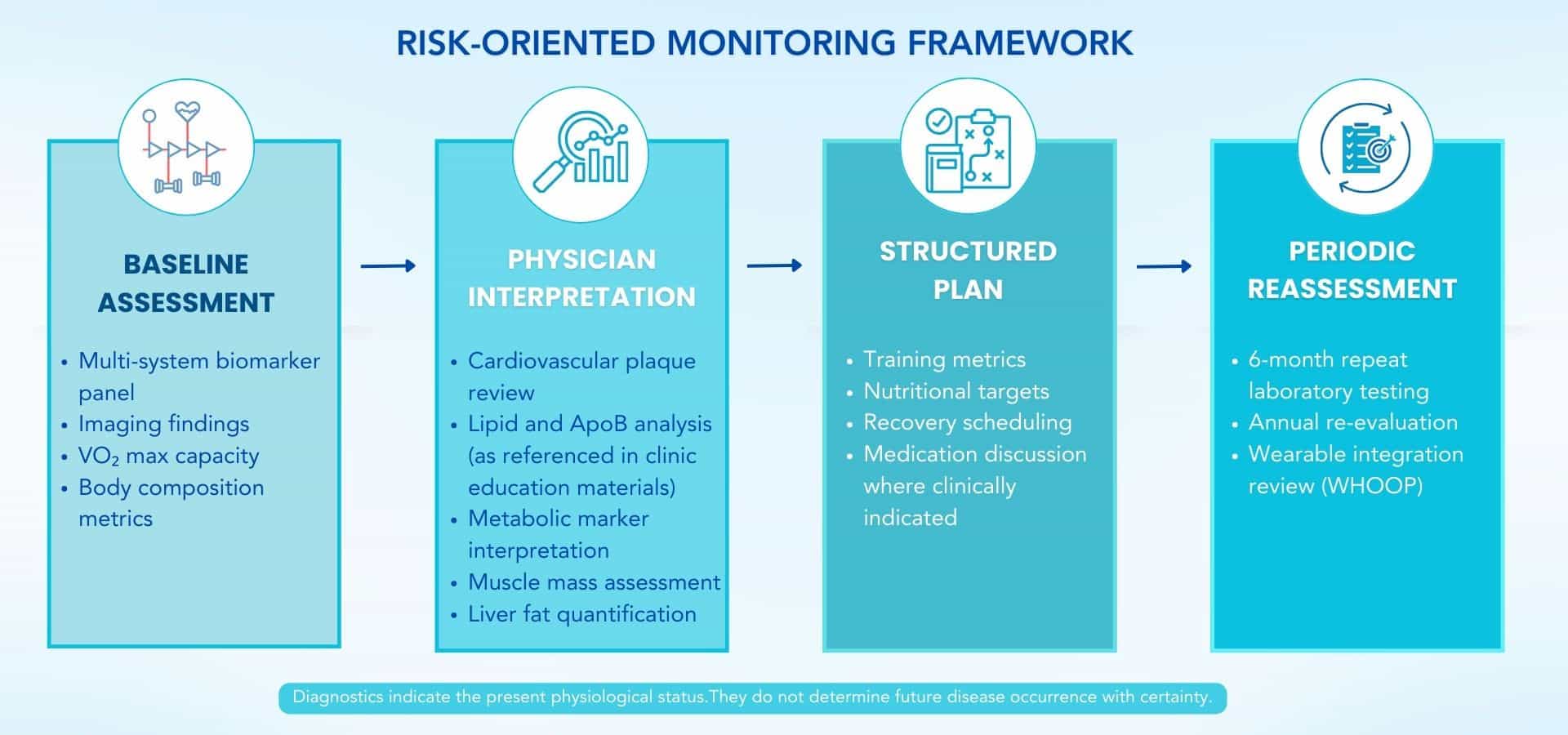
The Longevity Doctor’s differentiation lies not in offering broad lifestyle services, but in structured identification of subclinical risk patterns under physician supervision.
Its strengths are centered around measurable system evaluation and longitudinal interpretation.
Key Medical Strength 1: Four Pillars of Health Framework
Under Dr. Varun Gadhok, the clinic's defining clinical architecture is the 'Four Pillars of Health' Sleep, Movement, Nutrition, and Mental Health. This named framework integrates four biological domains into a single, structured assessment rather than evaluating isolated biomarkers or systems.
Key Medical Strength 2: Specialised VO₂ Max Testing for Cardiovascular Fitness
Specialised VO₂ Max testing is a named, distinct diagnostic capability — directly measuring cardiorespiratory fitness through breath-by-breath metabolic analysis. Applied within the Movement pillar and interpreted by Dr. Gadhok alongside metabolic and cardiovascular biomarkers.
|
🔍 Did You Know?
For certain cancers, early-stage detection is associated with significantly higher five-year survival rates compared to late-stage diagnosis. Screening strategies aim to identify disease before symptom onset, though detection is not guaranteed.
|
Key Medical Strength 3: DEXA Body Composition and Visceral Fat Analysis
DEXA Body Composition and Visceral Fat Analysis provides physician-grade precision measurement of lean muscle mass, bone density, and visceral fat distribution — going beyond BMI or surface-level body weight metrics to identify metabolic risk patterns relevant to long-term health.
Key Medical Strength 4: Integrated Coraeon Clinical Environment
Operating from within Coraeon (Integrated Longevity Center) at 10-12 Emmanuel Rd, London SW12 Dr. Gadhok and The Longevity Doctor have access to Coraeon's broader clinical infrastructure, specialist network, and diagnostic ecosystem.
Key Medical Strength 5: Multi-Cancer Early Screening
Trucheck™ Intelli liquid biopsy for 70+ solid organ cancers integrated as part of the comprehensive preventive assessment under Dr. Gadhok's physician oversight.
The examples below reflect publicly reported experiences and clinic-published narratives referenced. They illustrate how diagnostic findings informed structured decision-making. They do not represent guaranteed outcomes.
Outcome 1 – Fatty Liver Identification in a Physically Fit Individual
Before:
Journalist Max Williams, writing in Square Mile, described himself as physically fit and performance-oriented. He did not expect significant metabolic findings.
After:
Whole-body ultrasound assessment identified liver fat above the optimum 5% threshold. The finding prompted structured adjustments, including reduced alcohol intake, improved nutritional patterns, and wearable-based recovery monitoring.
The case illustrates how visible fitness may not reflect internal metabolic markers. It reflects the detection of a subclinical pattern rather than the treatment of symptomatic disease.
Outcome 2 – Structured Recovery Monitoring
Before:
High-performing individuals often operate under sustained cognitive or professional load with limited objective insight into recovery status.
After:
Under the annual membership tier, wearable integration (WHOOP) enabled sleep, stress, and recovery metrics to be shared directly with the medical team. Data was reviewed alongside biomarker findings during structured follow-ups.
This example reflects improved visibility into recovery patterns within a physician-led framework. It does not imply elimination of fatigue or stress.
Outcome 3 – Subclinical Cardiovascular Awareness
Before:
Traditional assessments may not detect moderate arterial narrowing until thresholds are crossed.
After:
Whole-body ultrasound identified plaque burden in individuals without overt symptoms, enabling earlier physician discussion regarding lifestyle or medication considerations.
Arteries may be approximately 40% blocked without triggering abnormal stress test results.
This reflects early identification, not prediction of events.
|
⚠️ Editorial Note
These outcomes reflect individual accounts reported within clinic materials and media coverage. They do not constitute medical claims or guarantees. Diagnostic findings indicate measurable physiological patterns at a given time. Individual responses vary based on genetics, medical history, environmental exposure, and adherence to medical guidance. Participation does not replace consultation with a primary physician.
|
All programmes follow Dr. Varun Gadhok's Four Pillars of Health framework: Sleep, Movement, Nutrition, and Mental Health.
Initial Longevity Consultation From £450
Entry point into The Longevity Doctor's preventive framework.
- Physician consultation with Dr. Varun Gadhok
- Medical history review and risk factor assessment
- Discussion of Four Pillars health goals
- Programme recommendation and diagnostic planning
- From £450
Comprehensive Longevity Assessment — From £1,950
Full multi-system diagnostic assessment under Dr. Varun Gadhok.
Includes across all four pillars:
Movement:
- Specialised VO₂ Max testing for cardiovascular fitness
- DEXA Body Composition and Visceral Fat Analysis
Nutrition:
- 150+ blood biomarker panel
- Liver fat analysis
- Continuous Glucose Monitoring (where indicated)
Sleep:
- Sleep quality and circadian alignment evaluation
Mental Health:
General Preventive:
- Whole-body ultrasound (subclinical arterial plaque, organ assessment)
- Trucheck™ Intelli liquid biopsy (70+ cancers where selected)
- Physician-led interpretation
- Written Personalised Longevity Plan
From £1,950
Cancer Screening Programme
- 30-minute online risk assessment
- Trucheck™ multi-cancer liquid biopsy (70+ solid organ cancers)
- Dr. Gadhok physician interpretation of findings
- Structured clinical review discussion
Annual Membership (Longitudinal Monitoring)
12-month structured monitoring under Dr. Varun Gadhok:
- 6-month repeat blood testing
- Scheduled physician consultations
- Nutritionist sessions
- WHOOP wearable data integration
- Annual reassessment across all Four Pillars
- Pricing on consultation
The Longevity Doctor operates within a defined outpatient medical setting at 98 Harley Street. The infrastructure is organized around structured diagnostics, physician interpretation, and longitudinal review.
It does not function as a residential retreat, spa, or immersive wellness facility.
Named Technologies & Diagnostic Tools
The clinic incorporates the following technologies and assessment tools
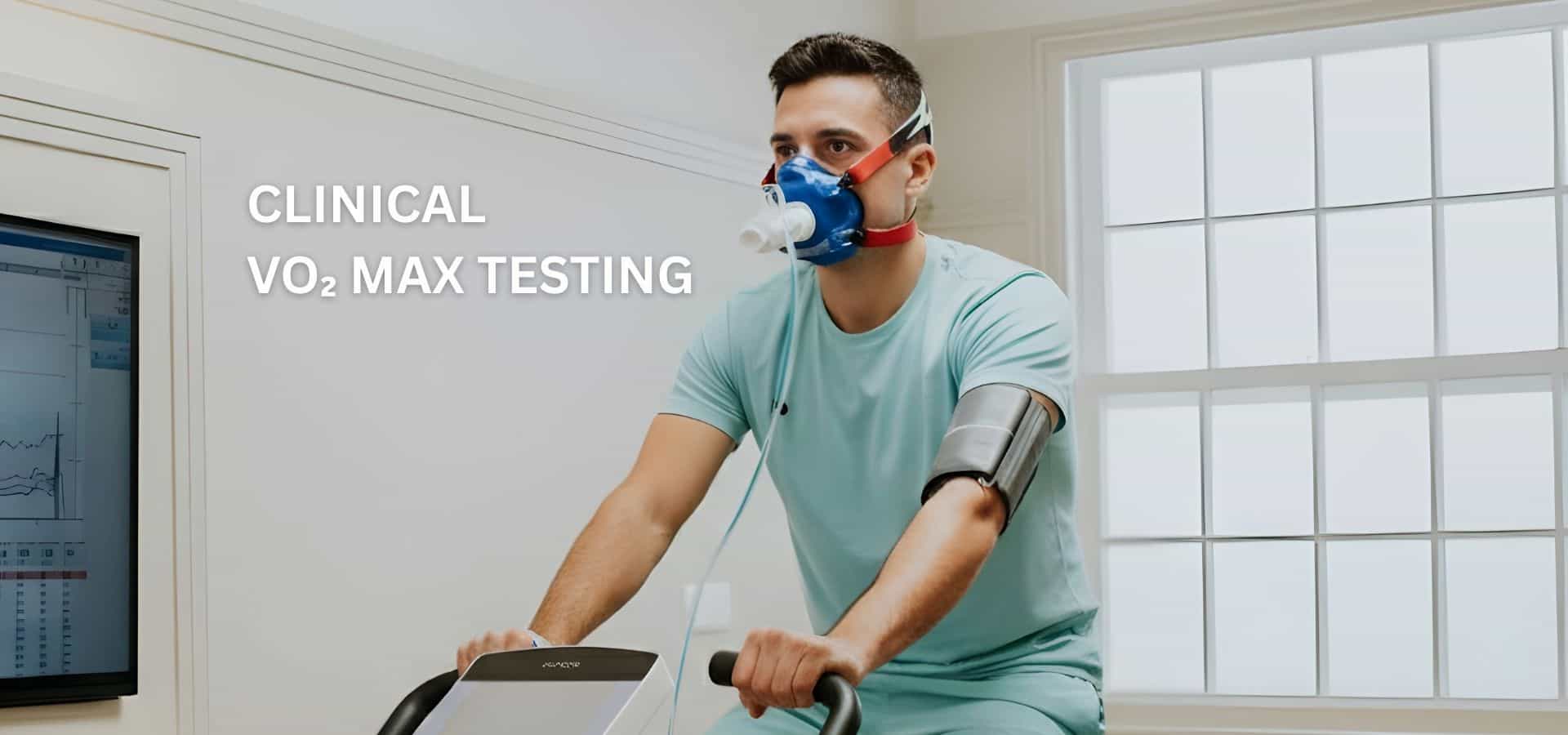
1. Clinical VO₂ Max Testing
- Breath-by-breath metabolic cart analysis
- Performed on a stationary bike
- Measures cardiorespiratory fitness capacity
VO₂ max is one of the strongest predictors of future longevity and cardiovascular health when evaluated in population data.
2. Trucheck™ Intelli Liquid Biopsy
- Blood-based screening tool
- Designed to detect circulating tumor cells across 70+ solid organ cancers
- Used in structured screening contexts
The test supports early detection pathways. It does not guarantee cancer prevention or certainty of diagnosis. Immune health is another important part of longevity medicine.
3. Whole-Body Ultrasound
- Used to identify arterial plaque
- Detects early-stage liver fat infiltration
- Evaluates subclinical cardiovascular narrowing
Arteries may be approximately 40% blocked without triggering abnormal stress tests.
4. DEXA Scan
- Bone density measurement
- Visceral fat distribution analysis
- Body composition evaluation
This supports assessment of sarcopenia and visceral adiposity patterns.
5. Continuous Glucose Monitoring (CGM)
- Two-week monitoring period in selected cases
- Evaluates glycemic variability
- Supports metabolic mapping
6. Comprehensive Laboratory Panels
- 150+ blood biomarkers
- Hormonal profiling
- Inflammatory markers
- Lipid panels
- Glycemic indicators
Laboratory data form the foundation of structured physician interpretation.
Clinical Infrastructure
The Longevity Doctor operates from a regulated Harley Street outpatient facility structured for diagnostic evaluation and physician interpretation.
The facility includes:
- Dedicated ultrasound suite: For subclinical cardiovascular plaque detection and liver fat assessment.
- Clinical VO₂ Max laboratory: Breath-by-breath metabolic analysis conducted on a stationary bike to measure cardiorespiratory fitness.
- DEXA scanning capability: Body composition analysis, including visceral fat and bone density measurement.
- Private consultation rooms: Used for confidential physician review of findings.
- Laboratory coordination systems: Supporting comprehensive 150+ biomarker panels.
- WHOOP wearable integration (membership tier): Sleep, stress, and recovery metrics reviewed alongside clinical data during follow-up.
All findings are interpreted under physician supervision within a structured clinical workflow.
Operational Design & Governance
The Longevity Doctor follows a structured, governance-based clinical sequence designed to separate evaluation from recommendation and ensure physician oversight at each stage.
The operational flow includes:
- Digital intake documentation
- Medical history disclosure and contraindication review
- Comprehensive diagnostic session
- Physician-led interpretation conference
- Structured roadmap discussion
- Optional reassessment scheduling
Each phase is distinct. Diagnostic data is collected before interpretation. Interpretation occurs before structured planning. Planning precedes any implementation discussion.
This separation reinforces clinical discipline:
- Screening before strategy
- Strategy before implementation
- Implementation under physician supervision
- Reassessment at defined intervals
The model reduces reactive decision-making and supports structured longitudinal monitoring.
The design prioritizes:
- Measurable biological systems over subjective wellness metrics
- Physician interpretation over automated dashboards
- Structured oversight over trend adoption
The framework reflects preventive medical governance rather than lifestyle positioning.
Pricing at The Longevity Doctor reflects Dr. Varun Gadhok's physician-led assessment across the Four Pillars of Health framework, operating from Coraeon (Integrated Longevity Center).
Pricing
|
Service
|
Price
|
|
Initial Longevity Consultation
|
From £450
|
|
Comprehensive Longevity Assessment
|
From £1,950
|
|
Cancer Screening Programme
|
On consultation
|
|
Annual Membership (longitudinal monitoring)
|
On consultation
|
Pricing Notes
|
Category
|
Details
|
|
Clinic Positioning
|
Physician-led preventive longevity clinic London SW12
|
|
Entry Point
|
Initial Longevity Consultation from £450
|
|
Comprehensive Assessment
|
From £1,950 (DEXA, VO₂ Max, 150+ biomarkers, ultrasound)
|
|
Framework
|
Four Pillars of Health Sleep / Movement / Nutrition / Mental Health
|
|
Clinical Affiliation
|
Coraeon (Integrated Longevity Center)
|
|
Visit Length
|
Outpatient appointment-based, no overnight stay required
|
How Programs Are Structured
All programs follow a defined sequence.
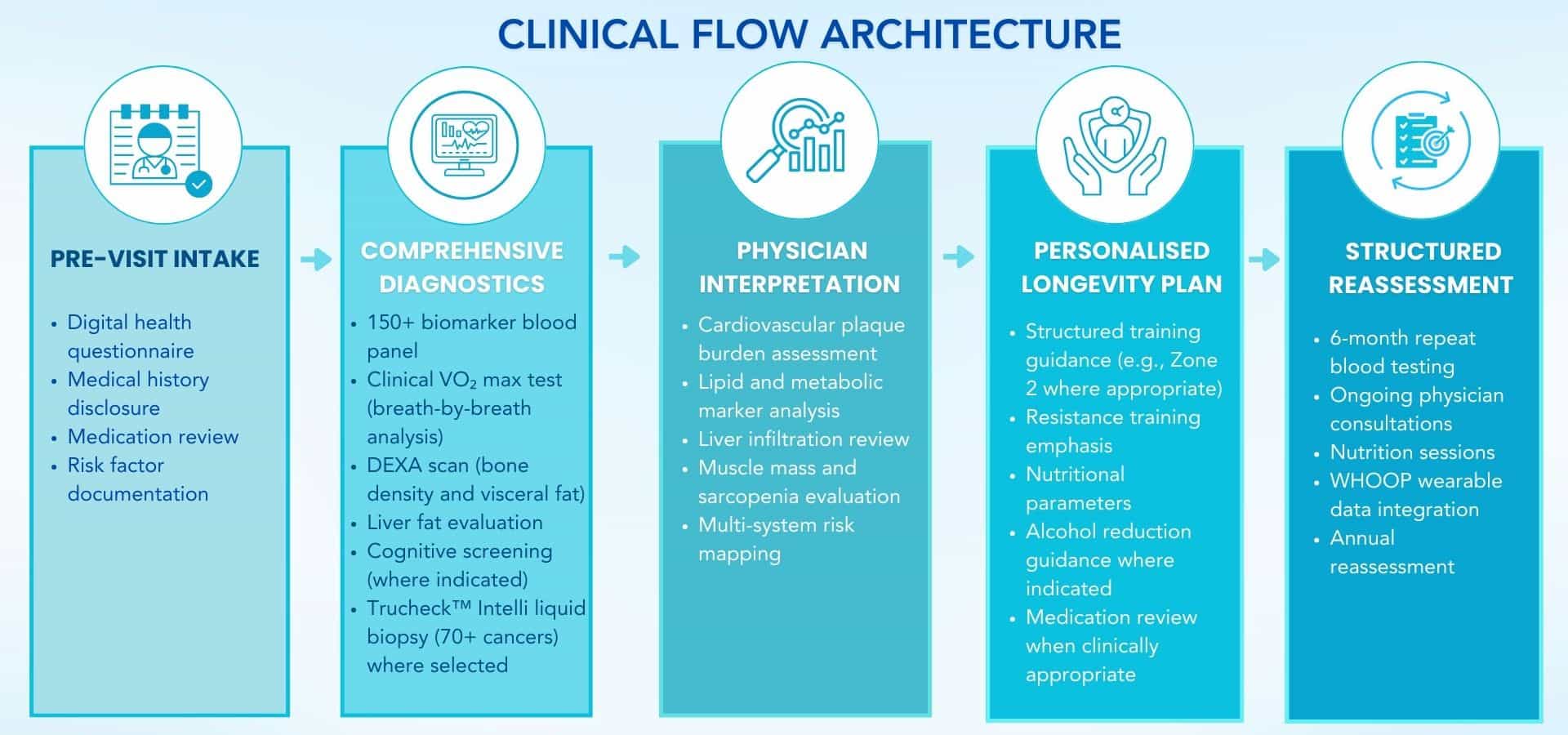
1. Pre-Visit Phase
- Digital health questionnaire
- Medical history review
- Medication disclosure
- Risk factor documentation
2. On-Site Diagnostic Phase
- Multi-system laboratory testing
- Imaging and body composition analysis
- VO₂ max assessment
- Optional liquid biopsy screening
3. Physician Interpretation Phase
- Review of cardiovascular markers
- Metabolic pattern analysis
- Cancer screening interpretation
- Muscle mass evaluation
- Structured risk discussion
4. Planning & Follow-Up Phase
- Written Personalised Longevity Plan
- Discussion of training and nutritional parameters
- Medication review where clinically appropriate
- 6-month reassessment (membership tier)
This structure reinforces separation between evaluation and strategy. These structured plans resemble longevity medicine testing programs.
Length of Visit
Program duration depends on the selected format:
- Blue Package: Approximately 4 hours
- Gold Membership: 12-month monitoring model with scheduled follow-ups
- Cancer Screening Programme: 30-minute risk assessment plus blood test coordination
All attendance is outpatient and appointment-based.
There is no requirement for overnight stay.
No residential immersion is offered.
Repeat evaluation occurs at defined intervals under physician supervision.
Clinic: The Longevity Doctor
Medical Director: Dr. Varun Gadhok (MBBS, BSc, MRCP, MRCGP)
Address: 10-12 Emmanuel Rd, London SW12 0BY Clinical
Affiliation: Coraeon (Integrated Longevity Center)
The Longevity Doctor operates as an outpatient clinic in London SW12, within Coraeon (Integrated Longevity Center). All attendance is appointment-based no overnight stay or residential programme required.
Recommended Visit Duration
Visit length depends on the selected program and the scope of diagnostic evaluation.
- Blue Package: Approximately 4 hours for a single-day comprehensive assessment.
- Gold Annual Membership: Initial diagnostic session followed by scheduled follow-up consultations over a 12-month monitoring cycle.
- Cancer Screening Programme: 30-minute online risk assessment plus laboratory coordination for the Trucheck™ blood test.
There is no requirement for overnight admission. All attendance is outpatient and appointment-based.
Follow-up consultations may be conducted in person or remotely, depending on scheduling requirements and the physician's discretion.
How to Reach the Clinic
The Longevity Doctor is located in central London within the established medical district of Harley Street.
City: London, United Kingdom
Address: 98 Harley Street
Nearest Airport: London Heathrow Airport (LHR)
Typical Transfer Time: Approximately 45–60 minutes by car, depending on traffic conditions.
Transport Options:
- Licensed taxi services
- Ride-share platforms
- Underground and rail connections
- Private transfer services
🔗 Find best flights to London
🔗 Find car rentals in London
Links are provided for travel planning convenience only.
Accommodation & Stay Planning
The Longevity Doctor does not operate on-site accommodation.
Visitors typically stay at:
- Central London business hotels
- Serviced apartments
- Boutique hotels within short travel distance
Accommodation arrangements are independent of clinic operations.
🔗 Explore nearby hotels & apartments
What to Bring
Participants are generally advised to bring:
- Government-issued identification
- Relevant prior medical documentation
- Current medication list
- Comfortable clothing suitable for exercise testing
Additional documentation requirements may be communicated during intake review.
The Longevity Doctor has been referenced in professional media and industry publications cited. Coverage has focused on its diagnostics-first model and physician-led structure rather than lifestyle positioning.
Public discussion centers on structured risk identification, measurable system evaluation, and translation of complex clinical data into actionable medical planning.
What Patients Commonly Report
Based on media interviews and published materials referenced in your source, recurring themes include:
- Greater awareness of internal physiological markers not previously measured
- Identification of “blind spots” such as fatty liver in otherwise fit individuals
- Structured interpretation of recovery data through wearable integration
- Clear separation between assessment and strategy
- Appreciation for physician's explanation of long-term disease trajectories
Journalist Max Williams described the assessment as similar to a “Minority Report” for personal health, a metaphor illustrating predictive mapping rather than deterministic forecasting.
These accounts reflect individual experiences. They do not represent guaranteed biological outcomes.
Professional & Media Recognition
Coverage and recognition, including:
- Feature coverage in Square Mile
- Recognition in Aesthetic Medicine Magazine
- Association with The Private Clinic Group
- Leadership commentary from Dr Philip Borg
- Industry commentary referencing the clinic’s role in preventive geroscience
Public positioning emphasizes:
- Structured diagnostics
- Early risk mapping
- Education-driven interpretation
- Governance-based longevity medicine
Operational scale or media presence does not equate to validated long-term outcome data. Longevity medicine remains an evolving discipline.
The Longevity Doctor operates within preventive geroscience, emphasizing diagnostic clarity and physician interpretation over lifestyle immersion.
Its architecture prioritizes measurable systems, cardiovascular plaque, VO₂ max, metabolic variability, visceral fat, and multi-cancer screening within a defined governance model.
Longevity medicine remains scientifically evolving. Much current research is observational. Biomarkers correlate with risk patterns but do not establish causation or guarantee lifespan extension. Surrogate markers are often used because definitive lifespan trials are impractical.
Within these constraints, the clinic offers structured oversight rather than promise.
This model aligns with longevity medicine across Europe.
For executives who view health as a governance function, the model provides measurable evaluation and periodic review within acknowledged scientific limits. These evaluations are similar to longevity medicine health assessments used by executives.
Is The Longevity Doctor a medical clinic or a wellness centre?
The Longevity Doctor operates as a physician-led preventive longevity clinic within a regulated medical framework. It is not structured as a spa, retreat, or lifestyle wellness centre. Diagnostic testing and interpretation are conducted under physician supervision.
Who is this clinic designed for?
The clinic primarily serves executives, founders, investors, professional athletes, and individuals operating under sustained cognitive or physical demand. It is designed for those seeking structured biological assessment and longitudinal monitoring rather than acute medical treatment.
Does participation replace my primary doctor?
No. Participation does not replace primary medical care. The clinic provides preventive evaluation and structured interpretation. Ongoing medical decisions should be made in consultation with a personal physician.
Are programs personalised?
Yes, interpretation is individualised based on diagnostic findings, medical history, and physician review. The clinic does not apply standardised protocols without assessment.
Does the clinic treat diabetes, heart disease, or cancer?
The clinic does not provide acute treatment or disease management programs. It focuses on preventive assessment and early risk identification. Individuals with diagnosed medical conditions should consult their treating physician before participation.
Is privacy maintained?
Appointments are scheduled individually within a private Harley Street setting. Medical documentation is handled within regulated confidentiality standards.
Can I continue working during the program?
Yes. The clinic operates in an outpatient, session-based format. Many clients integrate diagnostic sessions into existing professional schedules.
Does screening guarantee prevention?
No. Diagnostics identify measurable risk patterns at a given time. They do not guarantee disease avoidance, lifespan extension, or biological reversal.
How should value be evaluated relative to cost?
Evaluation may consider:
- Depth of diagnostic testing (150+ biomarkers)
- Multi-system imaging and VO₂ max assessment
- Physician interpretation
- Structured longitudinal monitoring
Pricing reflects access to medical oversight and diagnostic architecture rather than outcome guarantees.
A Strategic Pause That Protects the Years Ahead
High-performing environments often normalize sustained biological load. Travel, decision density, irregular sleep, and compressed recovery cycles accumulate gradually rather than abruptly. The impact is rarely immediate. It is incremental.
The Longevity Doctor positions itself within this long-arc perspective.
Its model does not offer rapid transformation or anti-aging claims. Instead, it provides a structured evaluation of measurable biological systems associated with cardiovascular disease, cancer risk patterns, metabolic dysfunction, and neurodegenerative trajectories. Diagnostics are interpreted under physician supervision, and findings are translated into a structured plan for review and monitoring.
The broader longevity field continues to evolve. As outlined in the clinic’s referenced research framework, many biomarkers are associative rather than causative. Long-term lifespan trials are impractical. Biological aging clocks and surrogate markers are still under scientific refinement.
Within these constraints, structured oversight may provide clarity.
For executives who approach health as governance rather than episodic repair, the value lies not in promise but in measurement identifying what is present, understanding how it aligns with long-term risk patterns, and reviewing progress over defined intervals.
The clinic does not guarantee outcomes. It provides a structured medical lens through which long-term performance sustainability can be examined.
👉 View Longevity Program
↩ Return to ExtendMy.Life
↑ Back to Top
Disclaimer
This clinic profile is provided for informational and editorial purposes only. It does not constitute medical advice, diagnosis, treatment recommendation, or clinical endorsement. No doctor–patient relationship is created through this content. The Longevity Doctor operates as a physician-led preventive clinic offering structured diagnostic assessments and interpretation. The information presented on this page reflects publicly available materials and referenced research. It is intended to describe clinical architecture, governance structure, and diagnostic scope not to guide individual medical decisions. Diagnostic tools such as blood biomarker panels, VO₂ max testing, whole-body ultrasound, DEXA scanning, continuous glucose monitoring, and liquid biopsy screening identify measurable physiological markers at a specific point in time. These findings indicate patterns associated with risk; they do not predict certainty of disease occurrence, guarantee prevention, or determine lifespan. Longevity medicine is an evolving scientific field. As acknowledged in current research, many associations between biomarkers and long-term outcomes are observational rather than causative. Surrogate markers are often used because definitive lifespan trials are impractical. Biological responses vary based on genetics, medical history, environmental exposure, and adherence to medical guidance. Individuals with chronic conditions including cardiovascular disease, diabetes, autoimmune disorders, neurological conditions, or active cancer should consult their personal physician or specialist before participating in any new medical program. All healthcare decisions should be made in consultation with a qualified licensed medical professional who understands the individual’s complete medical history. ExtendMy.Life does not guarantee clinical outcomes and assumes no responsibility for personal medical decisions made based on this informational profile.
References
Journal of Gerontology: Biological Sciences (2025) ‘Research Article glae297’, Journal of Gerontology: Biological Sciences, 80(5).
National Center for Biotechnology Information (NCBI) (2024) ‘Article PMC10962503’, PubMed Central.
National Center for Biotechnology Information (NCBI) (2024) ‘Article PMC11286550’, PubMed Central.
National Center for Biotechnology Information (NCBI) (2024) ‘Article PMC11456244’, PubMed Central.
National Center for Biotechnology Information (NCBI) (2025) ‘Article PMC12176510’, PubMed Central.
Nature Aging (2025) ‘Research Article’, Nature Aging.
Office for National Statistics (ONS) (n.d.) Health state life expectancies, UK. Newport: Office for National Statistics.
UK Biobank (n.d.) UK Biobank: Study overview.
World Health Organization (WHO) (n.d.) Cardiovascular diseases (CVDs) fact sheet. Geneva: World Health Organization.