Longevity-Experience is a collaborative medical initiative promoted by the Andrea Grimaldi Medical Care group, operating through a network of specialized centers in Naples, Milan, and Florence. The clinic is developed under the scientific direction of Dr. Pio Vecchione and follows a structured approach to preventive and systems-based medicine. This aligns with the modern longevity medicine model focused on proactive care.
A defining feature of the clinic is its “orchestration” model. In this structure, a designated longevity physician acts as the central coordinator, bringing together insights from various specialists into a single, coherent clinical pathway. This reduces fragmentation and allows for a more integrated understanding of the individual’s health status.
The clinical workflow begins with comprehensive diagnostic assessment. This includes the collection of both static data, such as genetic background and medical history, and dynamic data, such as blood biomarkers and wearable metrics. These data points are then interpreted within a structured framework to identify patterns, deviations, and potential long-term risks.
Another key component is the use of a digital system known as the Longevity-Book. This platform allows continuous tracking of biological markers over time, enabling the clinic to monitor changes rather than relying on one-time assessments.
The clinic is designed with time efficiency in mind. Many individuals choose to integrate visits into their existing schedules, often without requiring overnight stays. This makes the model particularly suited for professionals who need structured medical insight without significant disruption to their daily responsibilities. To place this within a broader context, understanding how longevity clinics operate across Italy helps compare different preventive models.
At a Glance – Longevity-Experience
|
Category
|
Details
|
|
Location
|
Naples, Italy
|
|
Clinic Type
|
Preventive longevity clinic
|
|
Core Focus
|
Biological age tracking and early risk identification
|
|
Typical Stay
|
Program-based, outpatient or short visits
|
|
Diagnostic Depth
|
Multi-layer biomarker analysis
|
|
Signature Method
|
Longevity-Book digital tracking system
|
|
Environment
|
Urban, time-efficient clinical setting
|
|
Privacy Level
|
High, physician-managed pathways
|
|
Professional Recognition
|
Physician-led with ethical governance
|

Longevity-Experience is structured around specific operational and clinical features that distinguish it from conventional healthcare models. These differences are not based on lifestyle positioning but on how data is collected, interpreted, and managed over time.
One of the central elements is the role of the longevity physician, who acts as a coordinator across multiple disciplines. Rather than receiving separate recommendations from different specialists, individuals are guided through a unified clinical interpretation. This reduces conflicting inputs and supports clearer decision-making.
The clinic also utilizes a proprietary digital system known as the Longevity-Book. This system records both static data, such as genetic and medical history, and dynamic data, including blood biomarkers and wearable device metrics. By continuously updating this information, the clinic is able to track changes in biological function over time rather than relying on isolated test results. These patterns are also explored in women and longevity factors.
Another distinguishing feature is the structured use of the Longevity Pyramid. This framework organizes interventions in a hierarchical manner, beginning with diagnostics and lifestyle factors before progressing to more complex medical considerations. This layered approach reflects a deliberate prioritization of foundational health data before any escalation in clinical strategy.
The clinic also incorporates the concept of the exposome, which refers to the cumulative impact of environmental, lifestyle, and biological factors on health. By considering these variables together, the clinic attempts to provide a broader systems-level understanding rather than focusing on isolated metrics.
In addition, all clinical pathways are overseen by an independent ethical committee. This governance structure is intended to ensure that decisions are based on scientific evidence and clinical reasoning, rather than commercial trends or unverified interventions.
USP & Key Takeaways:
- Physician-led orchestration model
- Continuous biomarker tracking through Longevity-Book
- Structured Longevity Pyramid framework
- Integration of exposome analysis
- Independent ethical oversight
Clinical Purpose
The clinical purpose of Longevity-Experience is centered on early-stage risk identification and structured interpretation of biological data. Rather than focusing on treating existing conditions, the clinic operates within a preventive framework that aims to detect subtle physiological changes before they develop into clinically recognized disease.
This approach begins with comprehensive diagnostics designed to establish a detailed baseline of an individual’s biological systems. These data points are then analyzed to identify patterns, deviations, and potential long-term risks. The emphasis is not on isolated results, but on understanding how multiple systems interact over time.
A key objective is to support long-term health planning. By tracking biomarkers longitudinally, the clinic provides individuals with a clearer picture of how their biological age compares to their chronological age and how this relationship evolves.
The process is structured to assist in decision-making rather than to prescribe outcomes. It allows individuals to better understand potential trajectories and to make informed choices in consultation with qualified physicians. This reflects a shift from reactive healthcare toward a more anticipatory and data-informed model.
Importantly, the clinic does not operate under urgency or fear-based framing. The focus remains on clarity, interpretation, and structured monitoring rather than immediate intervention. This reflects modern work life balance challenges in high-performance environments.
Who This Clinic Is Designed For
Longevity-Experience is designed for individuals who operate in high-responsibility environments and require structured, time-efficient access to medical insight. The clinic’s model aligns with those who prioritize long-term performance, decision-making clarity, and risk awareness.
This includes:
- Executives managing complex organizations and high workloads (similar to structured executive wellness programs)
- Founders and entrepreneurs navigating sustained cognitive and physical demands
This is often linked to executive burnout risks in high-pressure roles.
- Investors and decision-makers requiring consistent performance over extended periods
- Professional athletes focused on maintaining physical capacity and resilience
- High-performing individuals seeking structured understanding of their health, rather than treatment
The clinic is not designed as a general wellness destination or for individuals seeking immediate symptom relief. Instead, it is suited for those who are interested in understanding how their biological systems are functioning over time and how potential risks can be identified early.
The emphasis is on individuals who value data interpretation, physician oversight, and long-term planning over short-term interventions.
Focus Areas
|
Focus Area
|
What This Means in Practice
|
|
Medical Discipline
|
Preventive and systems-based medicine with physician-led interpretation
|
|
Core Biological System
|
Focus on metabolic health, cellular aging pathways, and system-wide function
|
|
Environment & Design
|
Urban clinical setting designed for short, efficient visits
|
|
Program Structure
|
Tiered model (Basic, Medium, Intense) with scalable diagnostic depth
|
|
Lifestyle as Medicine
|
Structured integration of nutrition, movement, and sleep patterns
|
|
Privacy
|
Individualized pathways managed under physician supervision
|
|
Long-Term Strategy
|
Continuous monitoring and reassessment of biological markers
|
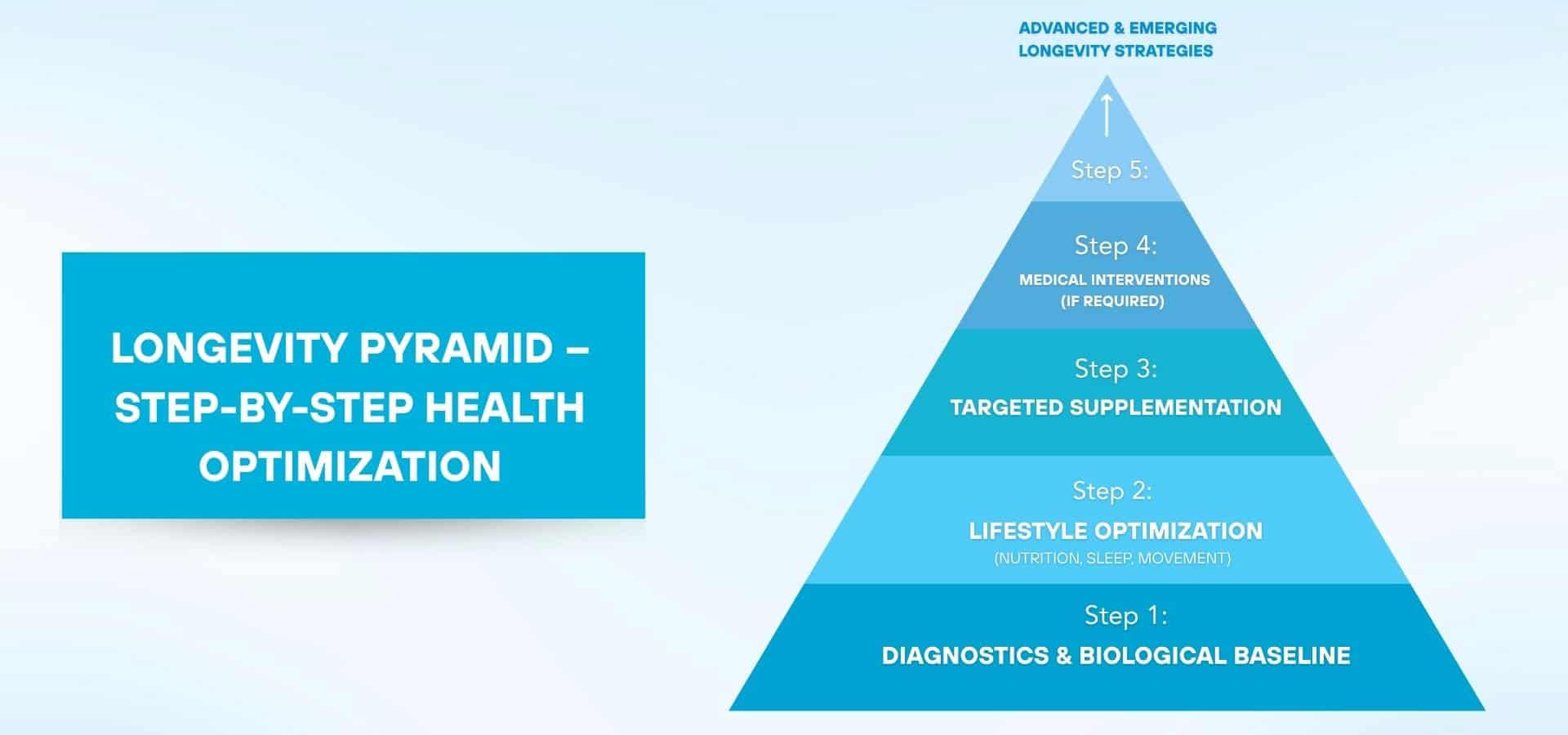
Longevity-Experience is structured around a defined clinical framework known as the Longevity Pyramid. This model organizes health assessment and intervention into a clear hierarchy, where foundational elements are prioritized before more complex medical strategies are considered.
At the base of the pyramid is diagnostics and analysis. The clinic places primary importance on establishing a detailed and accurate biological baseline. This includes evaluating biomarkers, physiological performance, and lifestyle patterns to understand how different systems within the body are functioning.
The second layer focuses on lifestyle interventions, including nutrition, physical activity, and sleep regulation. These factors are treated as measurable variables that influence biological systems and are incorporated into the overall interpretation of health data.
Above this, the model includes targeted supplementation, where nutritional gaps or deficiencies may be addressed based on diagnostic findings. This may include approaches like adaptogens and medicinal mushrooms when clinically relevant. This layer is structured and data-dependent rather than generalized.
The fourth level introduces pharmacological considerations, which may involve the use of clinically established compounds under physician supervision. These are evaluated within the context of the individual’s overall biological profile.
At the top of the pyramid are experimental or emerging strategies, such as regenerative approaches or advanced medical technologies. These are considered only after foundational layers have been established and interpreted.
This hierarchical structure reflects a deliberate approach: prioritizing measurable, evidence-based inputs before considering more complex interventions. It also reinforces the clinic’s focus on sequencing, where each step is dependent on the data and interpretation of the previous layer.
Core System Focus
The clinic approaches aging as a systems-level process rather than a single condition. This means that multiple biological pathways are considered together, including metabolic regulation, cellular repair mechanisms, and energy production processes.
Particular attention is given to mechanisms associated with aging, such as cellular senescence, mitochondrial function, and protein regulation. These processes are not evaluated in isolation but as part of an interconnected system that influences overall physiological resilience.
By examining how these systems interact, the clinic aims to identify areas where function may be declining or where early-stage disruptions may be present. This systems-based perspective allows for a more comprehensive interpretation of biological data.
|
🔍 Did You Know?
Current research describes aging as the gradual breakdown of interconnected biological systems, rather than a simple, linear process of wear and tear.
|
Lifestyle as a Medical Tool
Within the Longevity Pyramid, lifestyle factors are treated as structured and measurable components rather than general recommendations. Nutrition, movement, and sleep are evaluated based on their impact on metabolic and physiological processes. This includes strategies related to nutrition for metabolic health.
The clinic incorporates concepts such as chrononutrition, which examines the timing of food intake in relation to biological rhythms, and sleep optimization, which considers the role of circadian alignment in recovery and metabolic function.
Physical activity is also analyzed beyond general fitness, with attention to its role in supporting cardiovascular function, muscle maintenance, and metabolic stability. These can be supported through home workout strategies. These variables are interpreted alongside diagnostic data to understand their influence on overall health.
|
🔍 Did You Know?
Incremental increases in daily physical activity, such as adding more steps, have been associated with measurable reductions in long-term mortality risk
|

Longevity-Experience places diagnostics at the center of its clinical model. The objective is to generate a structured, multi-layered understanding of how an individual’s biological systems are functioning at a given point in time and how these systems may change over time.
Rather than relying on single-point evaluations, the clinic integrates multiple data sources to build a longitudinal profile. This includes both static data, such as genetic background and medical history, and dynamic data, such as blood biomarkers, physiological performance metrics, and wearable device outputs.
The emphasis is not only on measurement but on interpretation. Data is reviewed within a structured clinical framework to identify patterns, deviations, and relationships between systems. This allows for a more comprehensive understanding of biological function beyond isolated test results.
Diagnostic Assessment Includes
The diagnostic process is designed to capture key indicators across multiple physiological domains. These may include:
- Blood Biomarker Panels:
Analysis of metabolic markers, inflammatory indicators, lipid profiles, and other biochemical parameters to assess internal physiological balance
- Bioelectrical Impedance Analysis (BIA):
Measurement of body composition, including fat mass, lean mass, and hydration status, to provide insight into metabolic health
- VO2 Max Assessment:
Evaluation of cardiovascular and respiratory efficiency, often considered a key indicator of physical capacity and long-term functional performance
- Wearable Data Integration:
Continuous tracking of metrics such as heart rate variability, sleep patterns, and activity levels to capture real-time physiological trends
- Genetic and Lifestyle Data Review:
Incorporation of hereditary factors alongside environmental and behavioral inputs to support a broader interpretation of health status
These diagnostic elements are not used independently but are combined to create a more complete and interconnected profile of the individual’s biology.
|
🔍 Did You Know?
VO2 max is widely regarded in clinical and performance settings as one of the strongest measurable indicators of long-term functional capacity.
|
Chronomedicine & Future Risk Mapping
A key component of the clinic’s diagnostic framework is the integration of chronomedicine, which examines how biological processes change over time and how these changes relate to long-term health outcomes.
The clinic tracks the relationship between biological age and chronological age, using longitudinal data to monitor whether biological systems are aging at an expected rate, slower, or faster. This concept is often referred to as age deviation or “AgeDev.”
By continuously updating biomarker data through the Longevity-Book system, the clinic is able to observe trends rather than relying on isolated measurements. This enables the identification of early shifts in physiological patterns that may indicate increased future risk.
The purpose of this process is not to predict specific outcomes with certainty but to provide a structured view of potential trajectories. This allows individuals and their physicians to make more informed decisions based on observed trends rather than reactive responses.
Longevity-Experience is defined by how it structures, interprets, and manages biological data over time rather than by isolated services. Its core strengths lie in the integration of diagnostics, physician-led coordination, and longitudinal monitoring within a single clinical framework.
The clinic does not rely on one dominant intervention or specialty. Instead, it focuses on combining multiple data streams into a cohesive system that supports long-term understanding and decision-making. This approach is particularly relevant for individuals who require clarity across multiple health variables rather than single-point solutions.
Key Medical Strength 1 – Physician-Led Health Orchestration
A central feature of the clinic is the role of the longevity physician as an “orchestrator.” This physician acts as the primary point of interpretation, coordinating input from various disciplines into a unified clinical pathway.
In conventional healthcare settings, individuals often receive fragmented insights from different specialists, which can lead to conflicting recommendations or incomplete understanding. In contrast, this model consolidates those inputs into a single, structured interpretation.
The orchestration process involves reviewing diagnostic data, aligning it with clinical observations, and ensuring that all variables are considered within the same framework. This reduces fragmentation and allows for a more coherent understanding of system-level interactions.
|
🔍 Did You Know?
Coordinated multidisciplinary care models are increasingly recognized for improving clarity and consistency in interpreting complex health data.
|
Key Medical Strength 2 – Continuous Biomarker Tracking Through Longevity-Book
The clinic utilizes a proprietary digital system known as the Longevity-Book, which serves as a centralized platform for tracking biological data over time.
Unlike traditional medical records that are often static and episodic, this system integrates both historical and real-time data. It includes static inputs such as genetic predisposition and medical history, as well as dynamic inputs like blood biomarkers and wearable device metrics.
This continuous tracking allows for the identification of trends, rather than relying solely on single-point measurements. It supports the monitoring of changes in biological age, physiological performance, and metabolic function over time.
By maintaining an evolving dataset, the clinic can reassess patterns and adjust interpretations as new information becomes available.
Key Medical Strength 3 – Structured Preventive Focus
Longevity-Experience is structured around the principle of identifying potential risks before they develop into clinical conditions. This preventive focus is embedded within the diagnostic workflow and the interpretation process.
Rather than responding to symptoms, the clinic examines subclinical indicators—early biological signals that may not yet be associated with noticeable health issues. These indicators are evaluated within the context of the individual’s overall system function.
This approach aligns with the concept of primordial prevention, which aims to address risk factors at their earliest stages. It emphasizes early awareness and structured monitoring rather than reactive intervention.
The strength of this model lies in its ability to provide a forward-looking perspective, enabling individuals to understand potential trajectories and engage in informed decision-making alongside qualified medical professionals.
The outcomes associated with Longevity-Experience are presented as structured observations rather than guaranteed results. The clinic’s model focuses on interpretation, monitoring, and longitudinal tracking, which means outcomes are typically reflected in improved clarity, data awareness, and measurable changes in functional indicators over time.
These observations are derived from clinical models, case-based insights, and reported patterns rather than controlled outcome claims. The emphasis remains on how individuals understand and respond to their biological data, rather than on fixed endpoints.
Outcome 1 – Improved Functional Capacity Awareness
Before:
Limited visibility into physiological performance metrics such as cardiovascular capacity, body composition, or metabolic efficiency. Health understanding is often based on general indicators or occasional checkups, without a structured baseline.
After:
Introduction of measurable indicators such as VO2 max, body composition through BIA, and biomarker panels provides a clearer view of functional capacity. This also contributes to efforts to improve cognitive performance. Individuals gain a structured understanding of how their physical systems are performing and how these metrics evolve over time.
Source:
Clinical framework observations and diagnostic practices described within the longevity model
Outcome 2 – Increased Awareness of Long-Term Risk Patterns
Before:
Health risks remain largely undefined or are only identified once symptoms appear. Decision-making is typically reactive and based on short-term indicators.
After:
Through continuous biomarker tracking and longitudinal data analysis, individuals gain visibility into potential risk patterns. This includes understanding deviations between biological and chronological age and identifying early-stage indicators that may require monitoring.
Source:
Longevity tracking systems and preventive frameworks within the clinic model
|
🔍 Did You Know?
These outcomes reflect individual experiences and observations reported within the clinic’s published materials and clinical framework. Results vary between individuals. Diagnostic findings indicate patterns and potential risks rather than definitive outcomes, and interpretations should be considered within the context of individual variability and physician oversight.
|
Longevity-Experience structures its clinical services through a modular system referred to as “Mattoni” (building blocks). This approach allows individuals to engage with the clinic at different levels of diagnostic depth and monitoring intensity, depending on their requirements and availability.
The program structure is designed to be scalable rather than fixed. Each level builds upon the previous one, enabling a progressive increase in diagnostic detail and physician-led interpretation. The emphasis remains on structured data collection, interpretation, and longitudinal tracking rather than predefined treatment pathways.
Basic Program (Entry-Level Access)
The Basic Program functions as the initial entry point into the Longevity-Experience system. It is designed to establish a foundational structure for future assessment and monitoring.
Key components include:
- Enrollment into the Longevity-Experience clinical system
- Creation and activation of a personal Longevity-Book digital record
- Archiving of existing medical documentation and historical health data
- Initial structuring of personal health information for future analysis
This level does not involve extensive diagnostic testing but serves to organize and centralize existing data. It creates a baseline framework that allows subsequent programs to build on a structured dataset rather than starting from fragmented information.
Medium Program (Diagnostic Module)
The Medium Program introduces a more comprehensive diagnostic process and marks the transition from data organization to active assessment.
Key components include:
- Initial consultation with the designated longevity physician
- Comprehensive diagnostic assessment, including biomarker analysis and physiological measurements
- Activation of the interactive diagnostic interface within the Longevity-Book
- Establishment of a monitoring schedule for key indicators
At this stage, the clinic begins to interpret collected data within its clinical framework. The focus is on identifying patterns, deviations, and potential areas requiring ongoing observation. This level provides a more structured understanding of biological systems compared to the entry-level program.
Intense Program (Advanced Monitoring & Interpretation)
The Intense Program represents the highest level of engagement within the clinic’s structure. It is designed for individuals seeking continuous monitoring and deeper analytical insight into their biological systems.
Key components include:
- Advanced biomarker tracking with increased frequency of data collection
- Ongoing physician-led interpretation and reassessment cycles
- Access to structured longevity protocols, including Base-Longevity, Resilience-Longevity, and Advanced-Longevity frameworks
- Integration of multiple data streams into a continuous monitoring system
This level emphasizes longitudinal tracking and iterative interpretation. Rather than providing a one-time assessment, the program is structured around repeated evaluation cycles that allow for the observation of trends and changes over time.
Program Structure Overview
|
Program Level
|
Core Function
|
|
Basic
|
Data organization and digital record setup
|
|
Medium
|
Diagnostic assessment and initial interpretation
|
|
Intense
|
Continuous monitoring and advanced analysis
|
Longevity-Experience operates within a clinical framework where therapies, infrastructure, and environment are aligned to support diagnostic interpretation and longitudinal monitoring. The focus is not on standalone interventions but on how different elements contribute to a structured understanding of biological systems.
The clinic environment is designed to support efficiency, privacy, and integration into professional schedules. Rather than functioning as a residential facility, it operates primarily through scheduled clinical visits, allowing individuals to engage with the program without extended disruption to their routines.
Medical & Restorative Therapies
Therapies within Longevity-Experience are positioned as components within a broader diagnostic and interpretative framework. They are not presented as independent solutions but as elements that may be considered based on clinical findings.
These may include:
- Biomarker-guided nutritional interventions:
Adjustments to dietary intake based on observed metabolic and biochemical indicators
- Structured lifestyle modification protocols:
Integration of measurable variables such as sleep timing, physical activity patterns, and recovery cycles
- Metabolic regulation strategies:
Approaches informed by diagnostic data to support energy balance and physiological stability
This may include approaches like detox strategies for health when appropriate.
- Physician-supervised supplementation frameworks:
Use of targeted nutritional compounds based on identified deficiencies or imbalances
All therapeutic considerations are evaluated within the context of the individual’s diagnostic profile and are subject to physician oversight. The emphasis remains on structured interpretation rather than generalized application.
Clinical Facilities
The clinic’s infrastructure is designed to support data collection, analysis, and monitoring across multiple physiological domains. Facilities are oriented toward diagnostics and assessment rather than inpatient care.
Key components include:
- Diagnostic laboratories:
Capable of processing blood biomarkers and other biochemical indicators
- Body composition analysis systems (BIA):
Equipment used to assess fat mass, lean mass, and hydration levels
- Cardiorespiratory assessment tools:
Systems used for evaluating VO2 max and related performance indicators
- Digital monitoring platforms:
Integration with wearable devices and the Longevity-Book system for continuous data tracking
These facilities enable the collection of both baseline and ongoing data, supporting the clinic’s emphasis on longitudinal analysis.
Architecture, Environment & Digital Discipline
Longevity-Experience is situated within an urban clinical setting, allowing for accessibility and integration into existing travel or work schedules. The design prioritizes efficiency and discretion rather than extended residential experiences.
The environment supports:
- Short, structured visits:
Appointments are designed to fit within limited timeframes, making them compatible with professional commitments
- High levels of privacy:
Individual pathways are managed discreetly, with controlled access to personal data
- Digital discipline:
Data collection and monitoring are centralized within structured platforms, reducing fragmentation and enabling consistent tracking
The overall environment reflects a clinical, systems-oriented approach, where infrastructure and design support the accurate collection and interpretation of health data rather than providing a lifestyle or retreat-based experience.
Longevity-Experience follows a structured, tier-based program model rather than a fixed package pricing system. The clinic’s positioning is aligned with premium preventive healthcare, where costs are typically influenced by the depth of diagnostics, frequency of monitoring, and level of physician involvement.
Pricing is not standardized across all individuals. Instead, it reflects the selected program tier (Basic, Medium, or Intense) and the scope of diagnostic assessment required. This approach allows flexibility but also means that pricing is best understood within the context of program structure rather than as a single fixed figure.
The financial model is therefore linked to diagnostic depth and longitudinal engagement, rather than short-term service delivery.
Pricing
|
Category
|
Details
|
|
Clinic Positioning
|
Premium preventive longevity clinic
|
|
Stay Length
|
Flexible, typically short outpatient visits
|
|
Entry Pricing
|
Not publicly standardized
|
|
What’s Included
|
Diagnostic assessment, data integration, physician interpretation
|
|
Additional Costs
|
Advanced diagnostics, extended monitoring cycles
|
|
Program Structure
|
Tiered model (Basic / Medium / Intense)
|
|
Clinical Principle
|
Diagnostics-first, interpretation-led
|
How Programs Are Structured
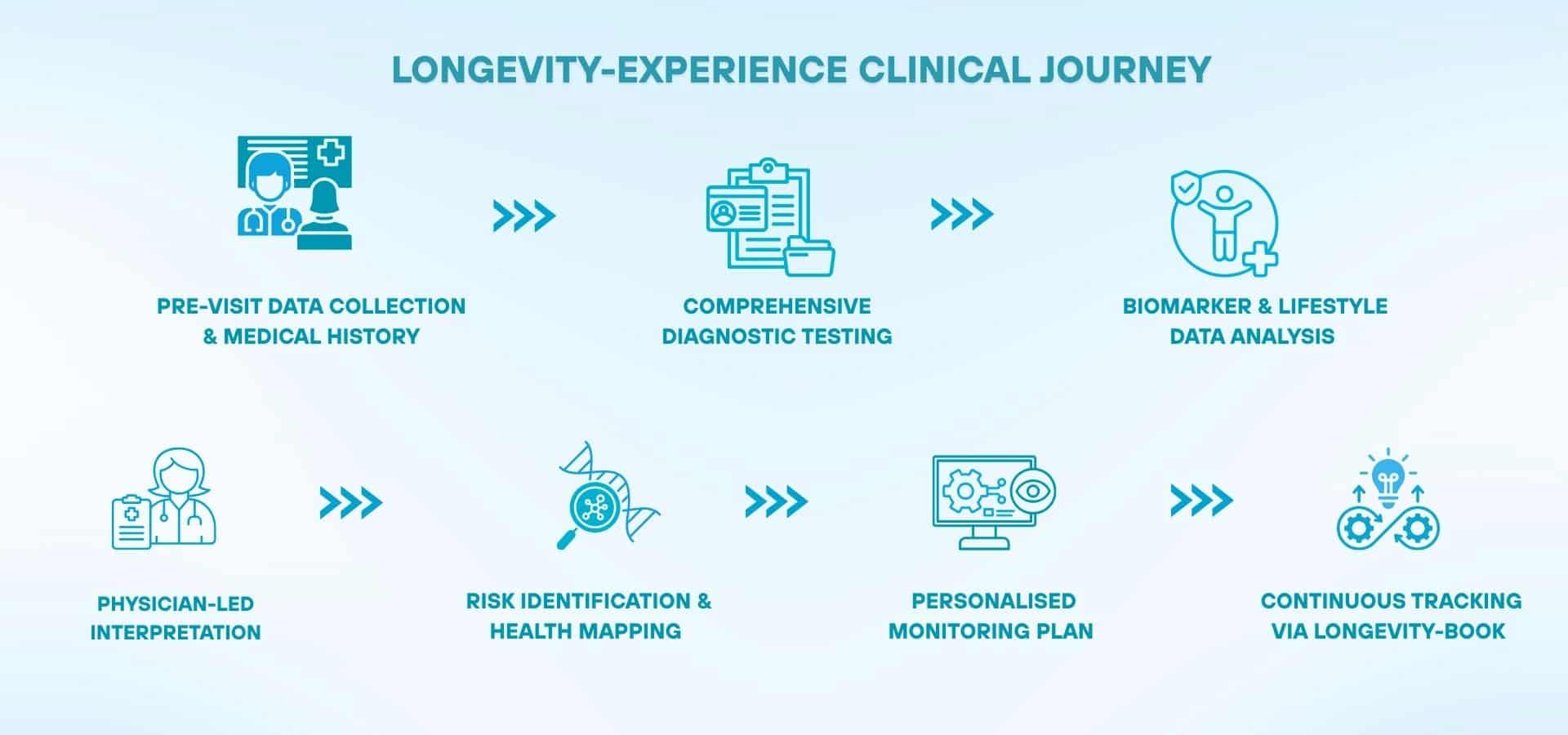
The clinic follows a defined operational flow to ensure consistency in data collection and interpretation. This structure allows individuals to move through each stage with clarity and minimal disruption to their schedules.
1. Pre-Visit Preparation:
- Collection of existing medical records
- Initial data input into the Longevity-Book system
- Preparation of baseline information for clinical review
2. On-Site Diagnostics:
- Completion of biomarker testing and physiological assessments
- Collection of real-time data across multiple systems
3. Physician Interpretation:
- Review of collected data by the longevity physician
- Integration of findings into a structured clinical perspective
- Identification of patterns, deviations, and potential risk indicators
4. Reporting & Monitoring:
- Documentation within the Longevity-Book system
- Establishment of follow-up timelines
- Ongoing updates based on new data inputs
This structured progression ensures that each stage builds upon the previous one, maintaining a consistent and data-driven approach throughout the process.
Length of Stay
Longevity-Experience does not operate as a residential clinic. Most programs are designed around short, scheduled visits, which can often be completed within a limited timeframe.
Many individuals integrate these visits into existing travel or professional schedules. This allows participation without the need for extended stays or significant time away from work.
The duration of engagement is therefore defined less by physical stay and more by the continuity of monitoring and follow-up cycles. Long-term participation typically involves periodic reassessment rather than continuous on-site presence.
Longevity-Experience is designed to integrate into existing professional schedules rather than requiring dedicated recovery time or extended residential stays. Its urban clinical setting in Naples allows individuals to combine medical visits with business travel or short personal trips.
The clinic operates on an outpatient basis, which means most engagements are structured around scheduled appointments rather than continuous on-site presence. This makes it suitable for individuals who prioritize efficiency and minimal disruption.
Recommended Length of Stay
There is no fixed duration for engagement, as the clinic does not operate a traditional inpatient or retreat model. Most visits are completed within a short timeframe, depending on the level of diagnostics involved.
- Basic engagement: Typically requires minimal on-site time, focused on system setup and data organization
- Diagnostic visits (Medium Program): May require a dedicated half-day or full-day session for assessments
- Advanced monitoring (Intense Program): Structured through periodic visits rather than continuous stay
In practice, many individuals incorporate clinic visits into existing travel schedules, reducing the need for separate planning.
How to Reach the Clinic?
Longevity-Experience is located in Naples, Italy, a major urban center with well-developed transport connections.
- Nearest Airport: Naples International Airport (NAP)
- Typical Transfer Time: Approximately 15–30 minutes to central Naples, depending on traffic
- Transport Options:
- Private transfer services
- Taxi and ride-hailing services
- Car rental for flexible movement within the city
🔗 Find best flights to Naples
🔗 Find car rentals in Naples
Links provided for travel planning convenience only.
Accommodation & Stay Planning
Longevity-Experience does not provide on-site accommodation. Individuals typically stay in nearby hotels or serviced apartments, depending on their preferences and schedule.
Naples offers a wide range of accommodation options, from business hotels to private apartments, allowing flexibility in terms of location, privacy, and duration of stay.
Many individuals choose accommodations close to the clinic to minimize travel time between appointments.
🔗 Explore nearby hotels & apartments
What to Bring
Preparation for a visit is generally minimal, but certain items can support a more efficient experience:
- Previous medical records or test results (if available)
- List of current medications or supplements
- Wearable device data (if used)
- Comfortable clothing for any physical assessments
The clinic typically provides guidance in advance regarding any specific requirements based on the selected program.
Longevity-Experience presents outcomes primarily in terms of structured observations and user-reported experiences rather than quantified clinical endpoints. Given the preventive and longitudinal nature of the model, outcomes are typically reflected in improved clarity, ongoing monitoring, and increased awareness of biological systems over time.
The clinic’s reputation is shaped by its physician-led framework, its integration of diagnostics and digital tracking, and its alignment with emerging approaches in systems-based longevity medicine. However, as with the broader field, interpretations should remain cautious due to variability between individuals and the evolving nature of long-term evidence.
What Patients Commonly Report
Based on reported experiences and observational patterns within the clinic’s framework, individuals commonly highlight:
- Improved clarity on health status:
Greater understanding of how different biological systems are functioning and interacting
- Increased awareness of long-term risk patterns:
Identification of early-stage indicators through structured biomarker tracking
- Enhanced energy and performance perception:
Observations of improved day-to-day function following structured lifestyle alignment
- Better decision-making confidence:
Ability to make more informed choices based on physician interpretation of data
- Appreciation for structured monitoring:
Value placed on continuous tracking rather than isolated checkups
These reported outcomes are qualitative and should be understood as individual experiences rather than standardized results.
Media & Professional Recognition
Longevity-Experience is positioned within a broader network of medical and scientific collaboration under the Andrea Grimaldi Medical Care group. Its framework reflects alignment with contemporary research in aging science, systems medicine, and preventive healthcare.
Key elements contributing to its professional positioning include:
- Physician-led clinical direction under Dr. Pio Vecchione
- Integration of structured frameworks such as the Longevity Pyramid
- Use of digital systems for longitudinal biomarker tracking
- Alignment with research on aging mechanisms and preventive strategies
The clinic’s model also reflects influence from studies on longevity populations and “Blue Zones,” where lifestyle, environment, and social structures contribute to extended healthspan.
While these associations provide context, they should not be interpreted as direct validation of outcomes but rather as part of the broader scientific landscape in which the clinic operates.
Longevity-Experience represents a structured approach within the evolving field of longevity medicine, where the focus is shifting from reactive treatment models to preventive, data-driven frameworks. Its positioning is not based on offering isolated interventions but on integrating diagnostics, physician interpretation, and longitudinal tracking into a unified system.
From an executive standpoint, the clinic’s value lies in its ability to reduce uncertainty. By organizing complex biological data into interpretable patterns, it provides individuals with a clearer understanding of how their systems are functioning and how potential risks may develop over time. This is particularly relevant for high-performers whose decision-making depends on sustained cognitive and physical capacity.
The clinic’s reliance on structured frameworks, such as the Longevity Pyramid, and tools like the Longevity-Book reflects a deliberate emphasis on process over outcome. This approach aligns with broader trends in systems medicine, where aging is understood as a multi-factorial process involving interconnected biological pathways rather than a single variable.
However, it is important to recognize that longevity medicine remains a developing field. While certain diagnostic methods and lifestyle interventions are supported by research, many long-term outcomes are still being studied. Individual variability also plays a significant role, meaning that data interpretation must always be contextual and physician-guided.
For executives and high-performing individuals, the relevance of Longevity-Experience lies less in immediate results and more in structured insight. It offers a framework for understanding biological trends, supporting informed decisions, and maintaining long-term performance within a complex and evolving health landscape.
Is Longevity-Experience a medical clinic or a wellness center?
Longevity-Experience operates as a preventive medical clinic with physician oversight. Its primary focus is on diagnostics, data interpretation, and long-term monitoring rather than wellness services or lifestyle retreats.
Who is this clinic designed for?
The clinic is designed for executives, founders, investors, professional athletes, and other high-performing individuals who seek structured insight into their health and long-term risk patterns.
How personalized are the programs?
Programs are structured based on individual diagnostic data, including biomarkers, physiological metrics, and personal history. Interpretation is guided by a designated physician within a coordinated clinical framework.
How is privacy managed?
All data and clinical pathways are managed within a controlled system, with physician oversight and individualized access. The model emphasizes discretion and structured data handling.
Can I stay connected to work during the program?
Yes. The clinic is designed for short, efficient visits that can be integrated into existing schedules, allowing individuals to maintain professional responsibilities during their engagement.
Does the clinic treat conditions such as diabetes or chronic diseases?
The clinic focuses on preventive assessment and risk identification. It does not position itself as a treatment center for specific medical conditions.
How should the cost be evaluated?
Costs are typically aligned with the depth of diagnostics and level of monitoring rather than short-term services. For many individuals, the value lies in structured insight and long-term planning rather than immediate outcomes.
In high-performance environments, most decisions are made with incomplete information. Health is often one of those areas where clarity arrives late typically after measurable decline or disruption has already occurred.
A structured longevity framework introduces a different approach. It creates space to observe, measure, and interpret biological systems before they reach critical thresholds. This is not about immediate change or short-term outcomes. It is about building a clearer understanding of how the body is functioning over time and how different variables may influence long-term stability.
Longevity-Experience operates within this context. Its model emphasizes diagnostics, physician interpretation, and ongoing monitoring rather than isolated interventions. For individuals managing complex responsibilities, this type of structure can provide a reference point something measurable and consistent in an otherwise variable landscape.
There are limits to what current science can define with certainty. Aging remains a complex and evolving field, and outcomes cannot be predicted with precision. However, the ability to track patterns, identify deviations, and review data within a clinical framework offers a different kind of value: informed awareness.
For executives, founders, and high-performers, this awareness can support better long-term planning not by removing uncertainty, but by reducing it.
👉 View Longevity Program
↩ Return to ExtendMy.Life
↑ Back to Top
Disclaimer
This content is provided for informational and editorial purposes only. It is intended to present a structured overview of a longevity clinic model and should not be interpreted as medical advice, diagnosis, or treatment recommendation. No doctor–patient relationship is established through this content. Any references to diagnostic tools, clinical frameworks, or health-related concepts are general in nature and do not apply to individual circumstances without proper medical evaluation. Diagnostics and biomarker assessments discussed in this document are designed to indicate potential patterns or areas of interest. They do not provide certainty regarding future health outcomes. Biological systems are complex, and individual responses vary based on genetics, lifestyle, environment, and other factors. Readers should not use this information to make independent health decisions. All medical considerations, including diagnostic testing, treatment options, and lifestyle changes, should be discussed with a qualified physician who is familiar with the individual’s medical history. Longevity medicine is an evolving field. While some approaches are supported by emerging research, many interventions and long-term outcomes remain under investigation. Interpretations should therefore be made with caution and within the context of professional medical guidance.
References
Belsky, D. (2022) Aging and biological decline.
Chen, L., et al. (2024) ‘Advances in aging science’, Frontiers in Aging.
Liu, Y., et al. (2026) ‘Longevity biomarkers’, Journal of Translational Medicine.
Martinez, P., et al. (2024) ‘Molecular mechanisms of aging’, International Journal of Molecular Sciences, 25(12), p. 6793.
Rossi, F., et al. (2024) ‘Nutritional interventions for aging’, Nutrients, 17(4), p. 722.
The Lancet (2021) ‘Healthy longevity report’, The Lancet Healthy Longevity.
Walker, S., et al. (2023) ‘Healthspan improvements through lifestyle intervention’, PubMed.
Zhang, X., et al. (2025) ‘Article on healthy aging’, Journal of Clinical Investigation.