The Healthy Longevity Café is led by Dr. Ana Baroni (Chief Medical Officer) and Petr Šrámek (CEO/Co-Founder), supported by a multidisciplinary team trained in preventive medicine, nutrition science, and systems-based health assessment.
As the primary retail and entry hub for the Healthy Longevity Clinic network, the café offers a uniquely accessible model — combining structured diagnostics (including in-café Biological Age Assessment from ~1,200 CZK) with a functional food and adaptogen menu, all within a biophilic, non-clinical setting at Opletalova 930/28, 110 00 Prague 1.
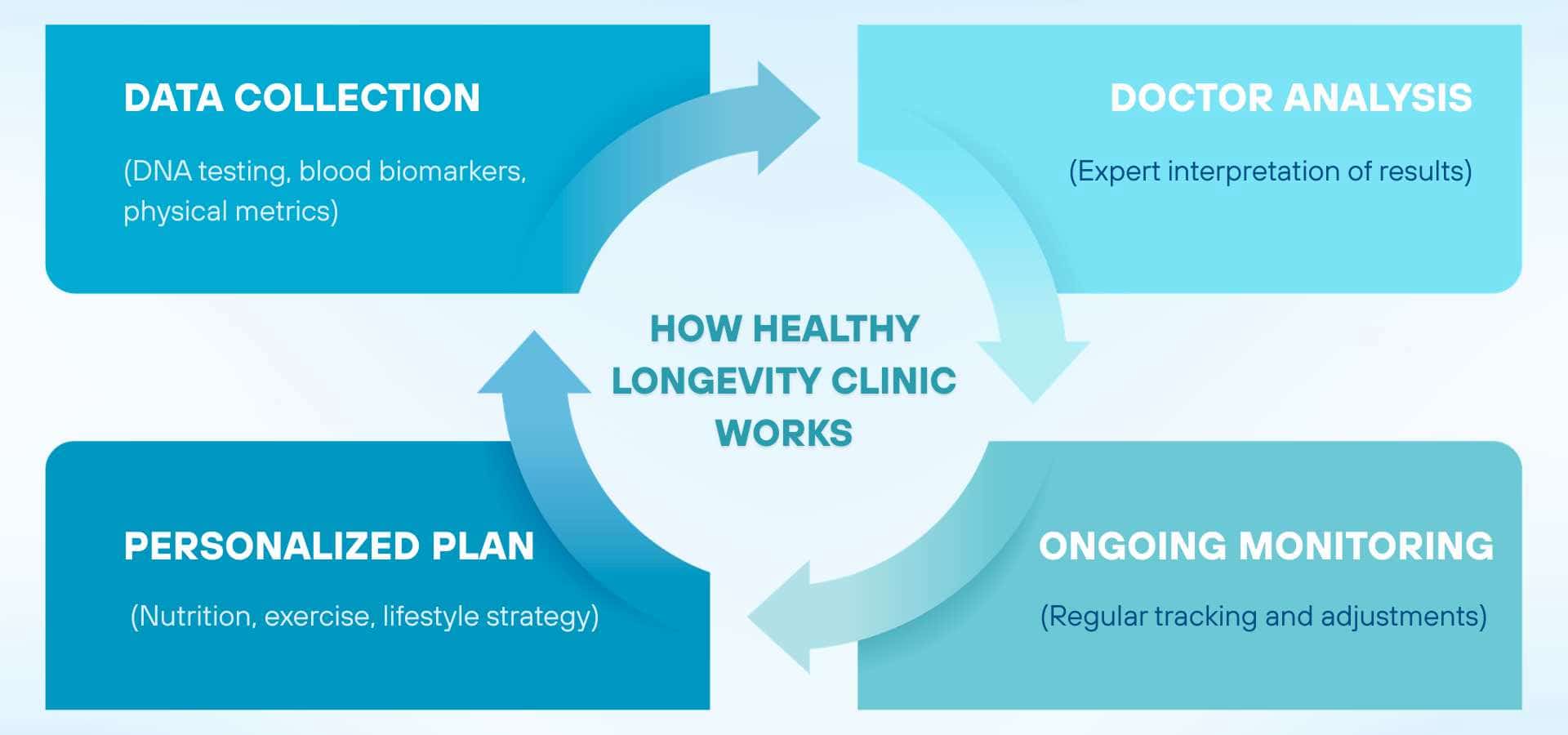
This approach reflects a broader shift toward precision medicine, where health assessment is based on individual biological variability rather than population averages (Collins & Varmus, 2015).
This model reflects modern longevity medicine, where prevention and personalized insights are key to long-term health.
The clinic integrates AI-supported tracking tools that collect behavioral and physiological inputs such as sleep and energy patterns. These inputs are used to support ongoing observation but require clinical interpretation to avoid over-reliance on raw data.
Its urban location in Prague allows for short, structured visits, supporting integration into existing professional schedules without extended downtime.
This clinic is also featured among the best longevity clinics in Prague, known for its data-driven and preventive approach.
At a Glance – Healthy Longevity Café
|
Field
|
Detail
|
|
Address
|
Opletalova 930/28, 110 00 Prague 1 (in the courtyard)
|
|
CMO
|
Dr. Ana Baroni
|
|
CEO / Co-Founder
|
Petr Šrámek
|
|
Clinic Type
|
Preventive Longevity Clinic & primary entry hub for Healthy Longevity Clinic network
|
|
Core Focus
|
Biological age tracking, early risk detection
|
|
Biological Age Assessment
|
From ~1,200 CZK (available in-café)
|
|
Adaptogen Additions
|
Lion's Mane, Chaga, Maca — +50 CZK per drink
|
|
Cricket Protein Shake
|
240 CZK
|
|
Goat Protein Shake
|
280 CZK
|
|
Typical Stay
|
Short diagnostic visits to long-term programmes
|
|
Diagnostic Depth
|
DNA methylation, blood biomarkers, arterial stiffness
|
|
Signature Method
|
Physician-led interpretation with structured monitoring
|
|
Environment
|
Biophilic, non-clinical 'Elegant Jungle' setting
|
|
Amenities
|
Dog friendly / Outdoor seating / High-speed Wi-Fi
|
|
Privacy Level
|
High — appointment-based access
|
|
Professional Recognition
|
Supported by LongevityTech.fund network
|
Led by Dr. Ana Baroni (CMO) and Petr Šrámek (CEO/Co-Founder) The clinic is led by Dr. Ana Baroni, Chief Medical Officer, alongside Petr Šrámek, CEO and Co-Founder. This physician-led governance ensures that diagnostic outputs are interpreted within a clinical framework — not as consumer-facing data reports.
Primary entry hub for the Healthy Longevity Clinic network The Healthy Longevity Café is not a standalone venue. It functions as the primary retail and entry hub for the wider Healthy Longevity Clinic network — making it the most accessible starting point for individuals exploring structured longevity assessment and longer-term clinical engagement.
In-café Biological Age Assessment — from ~1,200 CZK One of the most distinctive features of the café model is the availability of Biological Age Assessment directly within the café setting, starting from ~1,200 CZK. This provides one of the lowest-friction entry points into biological age testing available in Prague.
Adaptogen-enhanced functional food menu The café menu integrates longevity-oriented nutrition with specific adaptogen additions:
- Lion's Mane, Chaga, and Maca available as additions to drinks: +50 CZK per drink
- Cricket Protein Shake: 240 CZK
- Goat Protein Shake: 280 CZK
These are not generic 'healthy' options — they are specifically selected adaptogens and protein sources aligned with the clinic's nutritional framework.
Named diagnostic technologies
- DNA Methylation Testing (epigenetic clocks)
- SphygmoCor arterial stiffness measurement
- Organ-specific ageing metrics
- AI-integrated monitoring application
- CAROL AI Cycle Trainer (REHIT-based)
- Stabfor Filtration System
Clinical Purpose
The primary purpose of the Healthy Longevity Café is to identify early biological signals that may indicate future health risk, before clinical symptoms appear.
This approach is consistent with preventive medicine frameworks, where early detection of risk factors such as metabolic dysfunction, inflammation, or vascular stiffness can support long-term health planning rather than late-stage intervention (WHO, 2020; López-Otín et al., 2013).
The clinic focuses on:
- Early risk identification through measurable biomarkers
- System-level understanding of interconnected biological processes
- Longitudinal tracking to observe changes over time
Rather than reacting to disease, the clinic evaluates patterns such as:
- Biological age deviation
- Rate of aging (“pace of aging”)
- Muscle-to-fat balance
- Cardiovascular load
This reflects a shift toward systems medicine, where health is assessed as an integrated network rather than isolated organs (Hood & Friend, 2011).
Importantly, this model avoids urgency framing. Diagnostic outputs are used to support awareness and planning, not to predict outcomes with certainty.
Who This Clinic Is Designed For
The clinic is structured for individuals operating under sustained performance demands and limited time availability.
This includes:
- Executives managing high cognitive and decision-making load
- Founders and entrepreneurs balancing long work cycles
- Investors focused on long-term performance sustainability
- Professional athletes monitoring physical output and recovery
- High-performers seeking structured health insight rather than treatment
The clinic is not designed for acute care or immediate medical intervention. Instead, it supports individuals who want clarity, measurement, and long-term tracking.
Focus Areas
|
Focus Area
|
What This Means in Practice
|
|
Medical Discipline
|
Preventive medicine, geroscience
|
|
Core Biological System
|
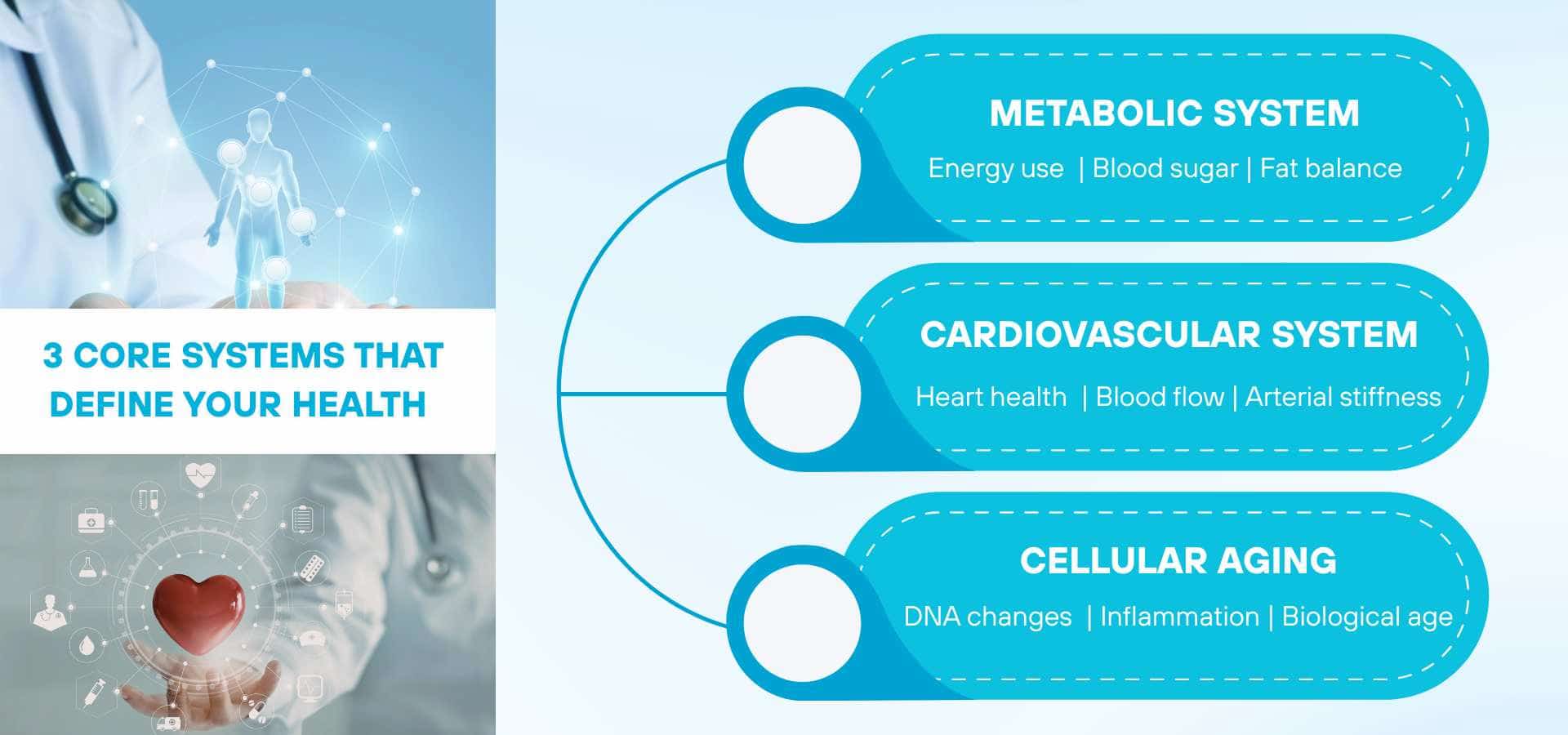
Metabolic, cardiovascular, cellular aging
|
|
Environment & Design
|
Non-clinical, biophilic setting
|
|
Program Structure
|
Diagnostics → Interpretation → Monitoring
|
|
Lifestyle as Medicine
|
Structured nutrition, HIIT, sleep timing
|
|
Privacy
|
Controlled access, individualized care
|
|
Long-Term Strategy
|
Ongoing biomarker tracking
|
The clinic operates within a preventive and systems-based medical framework, informed by geroscience research.
Geroscience proposes that many chronic diseases share common biological drivers related to aging processes, such as:
- Cellular senescence
- Mitochondrial dysfunction
- Epigenetic changes
- Chronic inflammation
(López-Otín et al., 2013; Kennedy et al., 2014)
Instead of targeting individual diseases, this approach evaluates underlying biological mechanisms that influence multiple systems simultaneously.
This aligns with the Medicine 3.0 approach, which focuses on proactive, data-driven healthcare.
The clinic applies this philosophy through:
- Measurement of biological aging
- Monitoring of system-level interactions
- Structured interpretation by physicians
This avoids reliance on trends or unverified interventions and places emphasis on clinical interpretation over raw data, which is critical given the variability of biomarkers across populations (Belsky et al., 2020).
Core System Focus
The clinic primarily evaluates three interconnected systems:
- Metabolic system (energy use, insulin sensitivity, fat distribution)
- Cardiovascular system (arterial stiffness, circulation)
- Cellular aging processes (DNA methylation, inflammation markers)
These systems are closely linked, and dysfunction in one can influence others.
|
🔍 Did You Know?
Biological age, measured through DNA methylation patterns, has been shown to correlate strongly with morbidity and mortality risk, often more than chronological age (Horvath, 2013; Levine et al., 2018)
|
Lifestyle as a Medical Tool
Within this framework, lifestyle is not generalized advice but a structured input based on measurable data.
Many people reach a point where diet and exercise stop working, which is where personalized diagnostics and guidance become essential.
This includes:
- High-Intensity Interval Training (HIIT)
Linked to improved mitochondrial function and metabolic efficiency (Gibala et al., 2012)
- Nutritional adjustments
Based on blood biomarkers and nutrient deficiencies
- Sleep regulation
Aligned with circadian rhythm research, which influences hormonal balance and recovery (Czeisler & Buxton, 2017)
- Movement distribution throughout the day
Short bursts of activity (“movement snacks”) shown to improve cardiovascular response
|
🔍 Did You Know?
Sedentary behavior combined with low muscle mass is associated with increased metabolic risk and reduced resilience, even in otherwise healthy individuals (Booth et al., 2012).
|

Diagnostic Assessment Includes
The clinic uses a combination of clinical and research-backed tools to assess biological systems:
- DNA Methylation Testing (Epigenetic Clocks)
Estimates biological age and deviation from expected aging trajectory
- Blood Biomarker Profiling
Includes nutrient levels, inflammatory markers, and metabolic indicators
- SphygmoCor Arterial Stiffness Measurement
Assesses vascular elasticity and cardiovascular load
- Body Composition Analysis
Evaluates muscle mass vs fat distribution
- Lung Capacity and Grip Strength Testing
Indicators of physical resilience and functional health
- Skin Elasticity and Cellular Membrane Analysis
Reflects structural and aging-related changes
- Stress and Recovery Metrics
Evaluates nervous system balance
Chronic stress, especially after 35, can significantly impact long-term biological health.
|
🔍 Did You Know?
Arterial stiffness is an independent predictor of cardiovascular events and is widely used in clinical risk assessment (Laurent et al., 2006).
|
Chronomedicine & Future Risk Mapping
The clinic integrates concepts from chronomedicine, which studies how biological processes change over time.
This includes:
- Tracking rate of aging (pace of biological change)
- Monitoring biological age deviation
- Observing trends across repeated measurements
Rather than making predictions, this approach supports:
- Identification of patterns
- Adjustment of lifestyle inputs
- Long-term observation under physician guidance
This aligns with longitudinal health models, where repeated measurement is more informative than single-point testing (Belsky et al., 2020).
The clinic’s strengths are structured around measurable diagnostics, physician-led interpretation, and system-level analysis rather than isolated testing.
Key Medical Strength 1 – Primary Entry Hub for Healthy Longevity Clinic Network
The Healthy Longevity Café is positioned as the primary retail and entry hub for the Healthy Longevity Clinic network — providing the most accessible gateway into structured longevity assessment. Visitors can progress from an in-café diagnostic experience to deeper clinical engagement within the broader network.
|
🔍 Did You Know?
Epigenetic clocks such as Horvath and GrimAge have shown strong associations with mortality and disease risk, but remain under continuous validation in diverse populations (Horvath, 2013; Levine et al., 2018).
|
Key Medical Strength 2 – In-Café Biological Age Assessment (From ~1,200 CZK)
The availability of Biological Age Assessment directly in the café starting from ~1,200 CZK makes structured biological age testing more accessible than at most longevity clinics. Under Dr. Ana Baroni's clinical oversight, results are interpreted within a physician-led framework rather than delivered as raw data.
Key Medical Strength 3 – Functional Longevity Menu with Named Adaptogens
The café's menu is clinically informed rather than generically 'healthy':
- Adaptogen additions (Lion's Mane, Chaga, Maca): +50 CZK per drink
- Cricket Protein Shake: 240 CZK — sustainable protein with a specific amino acid profile
- Goat Protein Shake: 280 CZK — alternative protein source for those with standard dairy sensitivities
These are named, specific functional food choices aligned with the clinic's preventive nutrition framework — not generic café offerings.
Key Medical Strength 4: Biological Age & Epigenetic Tracking
DNA methylation testing (epigenetic clocks) estimates biological age and assesses deviation from expected ageing patterns — used as reference indicators, not definitive predictors, under Dr. Ana Baroni's physician supervision.
Key Medical Strength 5: System-Level Diagnostic Integration
Multiple systems evaluated simultaneously:
- Cardiovascular function (arterial stiffness via SphygmoCor)
- Metabolic health (blood glucose, lipid markers, nutrient status)
- Physical resilience (muscle mass, grip strength, lung capacity)
Outcome 1 – Energy Stability & Daily Performance
Before:
- Reported inconsistent energy levels throughout the day
- Afternoon fatigue and reduced cognitive focus
- Irregular recovery after work or training
After:
- More stable energy distribution across the day
- Improved consistency in cognitive performance
- Better perceived recovery between work cycles
Source: Clinic-reported observations from structured programs
Outcome 2 – Body Composition & Physical Resilience
Before:
- Higher visceral fat levels
- Lower muscle mass relative to body composition
- Reduced metabolic flexibility
After:
- Improved muscle-to-fat ratio
- Measurable reduction in visceral fat indicators
- Improved physical resilience markers
Source: Program-level data and client-reported outcomes
|
⚠️ Editorial Note
These outcomes reflect individual experiences reported within the clinic’s published materials. Results vary. Diagnostics indicate risk patterns, not certainty, and outcomes depend on multiple individual factors
|
Biological Age Assessment (In-Café)
From ~1,200 CZK — available directly in the café
The most accessible entry point into the Healthy Longevity Clinic network:
- Biological age estimation using validated assessment tools
- Physician-interpreted results under Dr. Ana Baroni's clinical governance
- Available without full programme enrollment
- Gateway into longer-term engagement with the Healthy Longevity Clinic network
Longevity Club (12 Months)
|
Category
|
Details
|
|
Program Length
|
12 Months
|
|
Core Components
|
DNA Methylation testing, blood biomarker analysis
|
|
Monitoring Cycle
|
Every 3 - 6 months
|
|
Physician Involvement
|
Continuous review and adjustment by Dr. Ana Baroni and team
|
|
Objective
|
Longitudinal tracking of biological aging and system-level changes
|
Diagnostic Lab Brunch (Short Visit)
|
Category
|
Details
|
|
Duration
|
~15 minutes
|
|
Measurement
|
Heart health, stress response, grip strength
|
|
Access Type
|
Walk-in / low-barrier entry
|
|
Purpose
|
Initial screening and baseline data collection
|
This format serves as a simplified entry point — often leading to Biological Age Assessment or Longevity Club enrolment through the wider clinic network.
Medical & Restorative Therapies
- CAROL AI Cycle Trainer (REHIT — reduced-exertion high-intensity interval training)
- Nutritional structuring based on individual blood nutrient profiles
- Sleep regulation protocols aligned with circadian rhythm research
- Adaptogen-enhanced functional food menu (Lion's Mane, Chaga, Maca — +50 CZK per drink)
Clinical Facilities
- Laboratory systems for blood and biomarker testing
- DNA methylation testing capability
- SphygmoCor device for arterial stiffness measurement
- Body composition analysis systems
- Functional assessment tools (grip strength, lung capacity)
- In-café Biological Age Assessment station (from ~1,200 CZK)
Café Amenities
The Healthy Longevity Café is designed to support extended, productive visits:
- Dog friendly — guests can bring pets
- Outdoor seating — terrace access in the courtyard setting
- High-speed Wi-Fi — suitable for remote working between sessions
Architecture, Environment & Digital Discipline
- Circadian lighting systems aligned with hormonal cycles
- Biophilic design elements incorporating plant-based environments
- Controlled digital exposure to maintain focus during assessments
- Courtyard setting at Opletalova 930/28 — calm urban environment within Prague 1
Diagnostic Pricing
|
Service
|
Price
|
|
Biological Age Assessment (in-café)
|
From ~1,200 CZK
|
|
Longevity Club (12 months)
|
On consultation
|
|
Diagnostic Lab Brunch
|
On consultation
|
Menu Pricing
|
Item
|
Price
|
|
Adaptogen additions (Lion's Mane, Chaga, or Maca)
|
+50 CZK per drink
|
|
Cricket Protein Shake
|
240 CZK
|
|
Goat Protein Shake
|
280 CZK
|
Pricing Notes
|
Category
|
Details
|
|
Clinic Positioning
|
Private preventive medical facility and primary Healthy Longevity Clinic network hub
|
|
Entry Point
|
Biological Age Assessment from ~1,200 CZK
|
|
Menu Entry Point
|
Adaptogen additions from +50 CZK / Protein shakes from 240 CZK
|
|
Programme Pricing
|
Phased, data-driven — confirmed after consultation
|
|
Clinical Principle
|
Measurement → Interpretation → Tracking
|
How Programs Are Structured
Programs follow a consistent framework:
- Pre-visit preparation
Collection of baseline information and prior health data
- On-site diagnostics
Comprehensive measurement of biological systems
- Physician interpretation
Clinical evaluation of data within individual context
- Reporting and follow-up
Structured documentation and periodic reassessment
This reflects best practices in longitudinal health monitoring, where repeated evaluation improves insight accuracy (Belsky et al., 2020).
Length of Stay
- Short visits: Same-day diagnostic sessions
- Extended programs: Multi-month tracking cycles
The clinic’s urban model allows integration into existing schedules without requiring extended residential stays.
Clinic: Healthy Longevity Café
CMO: Dr. Ana Baroni CEO/Co-Founder: Petr Šrámek
Address: Opletalova 930/28, 110 00 Prague 1 (in the courtyard)
Network Role: Primary retail/entry hub for the Healthy Longevity Clinic network
The café's courtyard location in Prague 1 supports short, structured visits — or extended working sessions thanks to outdoor seating and high-speed Wi-Fi.
Recommended Length of Stay
The appropriate duration depends on the level of diagnostic depth required:
- Initial assessments: Short visits
- Comprehensive programs: Multi-month engagement
How to Reach the Clinic
- Nearest Airport: Václav Havel Airport Prague
- Transfer Time: Approximately 30 minutes
Transport options include:
- Private car services
- Taxis
- Public transport
🔗 Find best flights to Prague
🔗 Find car rentals in Prague
Links are provided for travel planning convenience only.
Accommodation & Stay Planning
The clinic does not operate dedicated accommodation facilities.
Guests typically stay in:
- Nearby hotels
- Serviced apartments
🔗 Explore nearby hotels & apartments
What to Bring
- Previous medical records (if available)
- Wearable device data (optional)
- Comfortable clothing for assessments
What Patients Commonly Report
Based on clinic-reported observations and structured program feedback, individuals commonly report:
- Improved awareness of biological health markers
- More stable daily energy patterns
- Changes in body composition (muscle-to-fat ratio)
- Improved sleep consistency
- Better understanding of long-term health trends
These observations are based on internal program tracking and should be interpreted as reported experiences, not guaranteed outcomes.
Media & Professional Recognition
The clinic operates within a broader scientific ecosystem supported by:
- LongevityTech.fund, collaborating with over 150 scientists and 40 biotechnology organizations
- Coverage and references in European health and innovation publications
- Alignment with research fields such as geroscience, preventive medicine, and systems biology
Its model reflects growing interest in data-driven preventive health frameworks, though the field continues to evolve and remains under active scientific validation.
The Healthy Longevity Café represents a structured approach within the evolving longevity sector, where the focus is shifting from treatment toward early detection and long-term monitoring.
Its model is built on diagnostics, physician interpretation, and repeated measurement. This aligns with broader developments in geroscience and precision medicine, where biological aging and system-level interactions are studied as key drivers of long-term health outcomes.
However, the field remains complex. Biomarkers such as DNA methylation and biological age estimation continue to be refined, and their predictive reliability varies across populations and methodologies (Belsky et al., 2020).
For executives and high-performing individuals, the primary value lies in structured insight rather than outcome claims. The clinic provides a framework to observe biological trends, identify early signals, and support informed decision-making over time.
In this context, its strength is not intervention, but measurement, interpretation, and continuity.
Is this a medical clinic or a wellness facility?
The clinic operates as a preventive medical facility with a diagnostics-first model. It focuses on structured health assessment using measurable data and physician interpretation. It is not positioned as a wellness retreat or spa.
Who is this clinic designed for?
The clinic is designed for executives, founders, investors, professional athletes, and individuals managing high workloads who want structured insight into their biological health rather than treatment.
How is personalisation handled?
Personalisation is based on diagnostic inputs such as DNA methylation testing, blood biomarkers, and physiological measurements. These results are interpreted by physicians to provide structured, individual-level insights.
How is privacy managed?
The clinic operates on an appointment-based system with controlled access. Data handling and consultations are structured to maintain a high level of confidentiality suitable for high-profile individuals.
Can I stay connected to work during visits?
Yes. The clinic’s urban location and short-visit model allow individuals to integrate sessions into their work schedules without extended downtime.
Does the clinic treat conditions such as diabetes or chronic illness?
No. The clinic focuses on diagnostic assessment and risk identification. It does not provide treatment or management for medical conditions. Any medical decisions should be made with a licensed physician.
How should value be evaluated compared to cost?
Value is based on the depth of diagnostic assessment, structured interpretation, and long-term monitoring capability. It is not based on treatment outcomes or guaranteed results.
In high-performance environments, most decisions are made under pressure, and time is often limited. Health, in many cases, becomes reactive—addressed only when performance declines or symptoms appear.
The Healthy Longevity Café introduces a different model. It creates a structured pause where biological systems can be measured, interpreted, and observed without urgency or assumption.
This approach is not about immediate change. It is about understanding direction.
For executives and decision-makers, access to structured biological data can support long-term planning in the same way financial or operational data supports business decisions. It provides visibility into patterns that are not easily noticeable in daily routines.
The clinic does not position itself as a solution or outcome provider. It functions as a framework focused on measurement, clinical interpretation, and continuity over time.
In a field where claims often exceed evidence, this structured model allows individuals to engage with their health in a controlled, informed, and measurable way.
👉 View Longevity Program
Return to ExtendMy.Life
Back to Top
Disclaimer
This content is provided for informational and editorial purposes only. It does not constitute medical advice, diagnosis, or treatment. No doctor–patient relationship is established through this material.
All diagnostic tools and assessments described are intended to provide insight into potential health patterns and risk indicators. These findings do not guarantee outcomes and should not be interpreted as certainty.
The field of longevity and preventive health is evolving. Biomarkers such as DNA methylation and biological age estimation are still under ongoing research and validation. Their interpretation may vary depending on methodology, population, and clinical context.
Any health-related decisions must be made in consultation with a qualified medical professional who has full knowledge of your individual medical history and condition.
Readers should not rely solely on this content when making health decisions.
References
Belsky, D.W., Caspi, A., Arseneault, L., Baccarelli, A., Corcoran, D.L., Gao, X., Hannon, E., Harrington, H.L., Rasmussen, L.J.H., Houts, R., et al. (2020) Quantification of the pace of biological aging in humans through a blood test, eLife, 9, e54870.
Booth, F.W., Roberts, C.K. and Laye, M.J. (2012) Lack of exercise is a major cause of chronic diseases, Comprehensive Physiology, 2(2), pp. 1143–1211.
Collins, F.S. and Varmus, H. (2015) A new initiative on precision medicine, New England Journal of Medicine, 372(9), pp. 793–795.
Czeisler, C.A. and Buxton, O.M. (2017) The human circadian timing system and sleep–wake regulation, Principles and Practice of Sleep Medicine, 6th edn., pp. 353–375.
Gibala, M.J., Little, J.P., Macdonald, M.J. and Hawley, J.A. (2012) Physiological adaptations to low-volume, high-intensity interval training in health and disease, The Journal of Physiology, 590(5), pp. 1077–1084.
Hood, L. and Friend, S.H. (2011) Predictive, preventive, personalized and participatory (P4) cancer medicine, Nature Reviews Clinical Oncology, 8(3), pp. 184–187.
Horvath, S. (2013) DNA methylation age of human tissues and cell types, Genome Biology, 14(10), R115.
Kennedy, B.K., Berger, S.L., Brunet, A., Campisi, J., Cuervo, A.M., Epel, E.S., Franceschi, C., Lithgow, G.J., Morimoto, R.I., Pessin, J.E., et al. (2014) Geroscience: linking aging to chronic disease, Cell, 159(4), pp. 709–713.
Laurent, S., Cockcroft, J., Van Bortel, L., Boutouyrie, P., Giannattasio, C., Hayoz, D., Pannier, B., Vlachopoulos, C., Wilkinson, I. and Struijker-Boudier, H. (2006) Expert consensus document on arterial stiffness: methodological issues and clinical applications, European Heart Journal, 27(21), pp. 2588–2605.
Levine, M.E., Lu, A.T., Quach, A., Chen, B.H., Assimes, T.L., Bandinelli, S., Hou, L., Baccarelli, A.A., Stewart, J.D., Li, Y., et al. (2018) An epigenetic biomarker of aging for lifespan and healthspan, Aging (Albany NY), 10(4), pp. 573–591.
López-Otín, C., Blasco, M.A., Partridge, L., Serrano, M. and Kroemer, G. (2013) The hallmarks of aging, Cell, 153(6), pp. 1194–1217.
World Health Organization (2020) Decade of Healthy Ageing: Baseline Report. Geneva: WHO.