Vital Age Clinic operates under the leadership of MUDr. Barbora Schormová, with a specialist focus on regenerative gynecology and functional medicine. The clinic's clinical identity is defined by its expertise in Bioidentical Hormone Replacement Therapy (BHRT), a named, specialist service alongside advanced diagnostics, including epigenetic age testing, mitochondrial function analysis, and targeted infusion therapies (NAD+ and high-dose vitamin C).
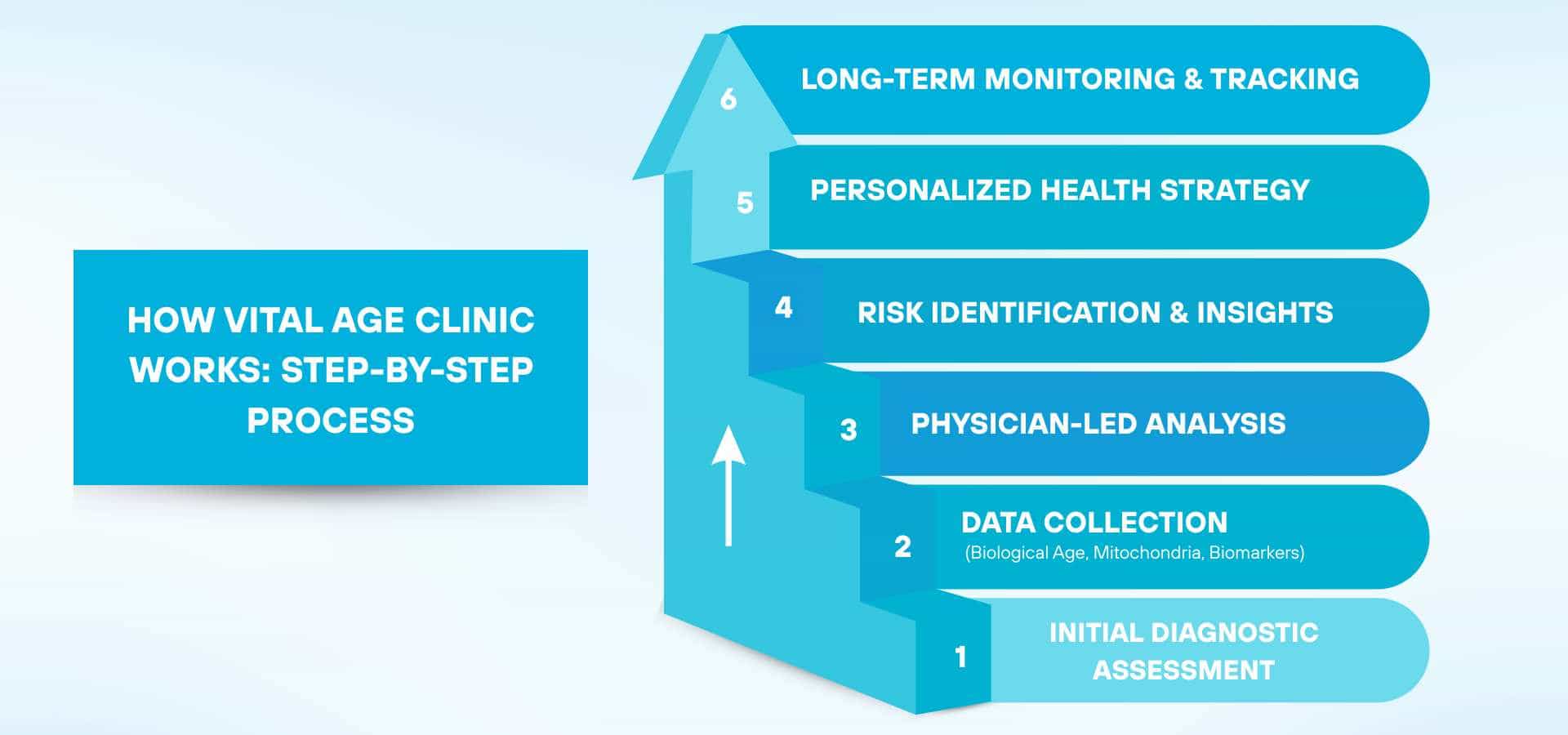
The clinic is located at U Slavie 1527/15, 100 00 Prague 10 (Vršovice) and follows a structured workflow:
- Initial diagnostic assessment
- Data evaluation and risk identification
- Physician-led interpretation by MUDr. Barbora Schormová
- Long-term monitoring and follow-up
This clinic is also featured among the best longevity clinics in Prague, known for its preventive and personalized healthcare approach.
At a Glance – Vital Age Clinic
|
Field
|
Detail
|
|
Address
|
U Slavie 1527/15, 100 00 Prague 10 (Vršovice), Czech Republic
|
|
Email
|
info@vitalageclinic.cz
|
|
Medical Director
|
MUDr. Barbora Schormová
|
|
Clinic Type
|
Physician-led longevity clinic
|
|
Core Specialisms
|
Regenerative Gynecology / Functional Medicine
|
|
Specialist Service
|
Bioidentical Hormone Replacement Therapy (BHRT)
|
|
IV Therapy Focus
|
NAD+ / High-Dose Vitamin C
|
|
Initial Consultation
|
2,500 CZK (~€98) 60 minutes
|
|
Core Focus
|
Biological age, mitochondrial diagnostics, preventive medicine
|
|
Typical Stay
|
Outpatient, structured visits
|
|
Diagnostic Depth
|
Multi-layered functional and epigenetic testing
|
|
Signature Method
|
Prevention of the Prevention framework
|
|
Environment
|
Urban, high-efficiency clinical setting, Prague 10
|
|
Privacy Level
|
High
|
|
Professional Recognition
|
International research collaborations
|
Vital Age Clinic combines specialist medical expertise with advanced diagnostics to deliver highly personalized longevity care. Led by MUDr. Barbora Schormová, a specialist in Regenerative Gynecology and Functional Medicine, the clinic focuses on identifying health risks early and creating tailored strategies based on evidence-informed assessments rather than generalized wellness programs.
Key specialties and services include:
-
Bioidentical Hormone Replacement Therapy (BHRT): A dedicated treatment program using hormones that are molecularly identical to those naturally produced by the body.
-
Regenerative Gynecology: Specialized care focused on female hormonal health, reproductive well-being, biological aging, and pelvic regeneration within a preventive longevity framework.
-
Targeted Infusion Therapies: Protocols including NAD+ to support cellular repair and mitochondrial function, and high-dose vitamin C for antioxidant and immune support.
-
Advanced Diagnostics: Multi-generation epigenetic clock testing (including GrimAge and DunedinPACE), mitochondrial function assessments, microbiome profiling, deep phenotyping, and wearable biometric data integration for HRV, sleep, and glucose monitoring.
-
Transparent Consultation Pricing: Initial 60-minute consultation starting at 2,500 CZK (approximately €98).
Clinical Purpose
Vital Age Clinic is structured around early biological risk identification rather than symptom management. Its clinical purpose is to provide a system-level understanding of how key biological processes such as aging rate, mitochondrial efficiency, and metabolic stability are developing over time (Jylhävä, Pedersen and Hägg, 2020; López-Otín et al., 2023).
The clinic’s approach supports:
- Early detection of deviations in biological aging
- Interpretation of complex health data through physician oversight
- Long-term planning based on measurable health indicators
This model does not operate on urgency or intervention. It is designed to provide structured clarity that can inform future health decisions.
Who This Clinic Is Designed For
Vital Age Clinic is designed for individuals who require structured insight rather than general guidance:
- Executives managing high cognitive and operational demands
- Founders and entrepreneurs navigating sustained performance pressure
- Investors and decision-makers requiring long-term clarity
- Professional athletes focused on measurable physical output
- High-performers seeking biological data, not treatment pathways
The clinic is not positioned for acute care or general medical treatment. It is built for individuals seeking detailed evaluation of internal systems.
Focus Area
|
Focus Area
|
What This Means in Practice
|
|
Medical Discipline
|
Longevity and precision medicine
|
|
Core Biological System
|
Mitochondrial function, metabolic regulation
|
|
Environment & Design
|
Urban, time-efficient clinical setting
|
|
Program Structure
|
Diagnostic-first, physician-led interpretation
|
|
Lifestyle as Medicine
|
Structured exercise, sleep tracking, nutrition alignment
|
|
Privacy
|
High-discretion clinical operations
|
|
Long-Term Strategy
|
Multi-year biological tracking and analysis
|
Vital Age Clinic, under MUDr. Barbora Schormová, applies a framework referred to as the 'Prevention of Prevention' model, shifting focus from preventing disease to identifying early-stage biological changes before symptoms emerge.
Two named clinical specialisms define how this philosophy is delivered:
Regenerative Gynecology addresses female-specific biological aging and hormonal change within a preventive longevity framework, treating hormonal transitions (including perimenopause and menopause) as measurable biological processes to be monitored and supported proactively rather than reactively.
Functional medicine evaluates the root causes of biological imbalance across interconnected systems metabolism, hormonal regulation, gut health, inflammation, and cellular energy rather than addressing isolated symptoms.
Core System Focus
- Mitochondrial function and cellular energy production
- Hormonal regulation (BHRT-supported)
- Metabolic and inflammatory balance
- Gut and microbiome health
- Biological ageing rate (epigenetic clocks)
|
🔍 Did You Know?
Epigenetic clocks such as DunedinPACE measure the rate of biological aging using DNA methylation patterns, offering predictive insight into healthspan and mortality risk (Jylhävä, Pedersen and Hägg, 2020).
|
Lifestyle as a Medical Tool
- Exercise defined by VO₂ max and muscular power benchmarks
- Sleep quality evaluated through physiological markers
- Nutritional patterns aligned with metabolic and cellular needs
- Hormonal optimization through BHRT where clinically indicated
|
🔍 Did You Know?
Physical function, especially muscular strength and power, is strongly associated with long-term mortality outcomes and overall healthspan (Justice et al., 2016; Koklesova et al., 2024).
|

Vital Age Clinic applies a diagnostics-first framework where data collection precedes interpretation. The goal is not to label disease but to identify measurable biological deviations across systems such as aging rate, metabolism, and cellular function.
This approach aligns with emerging longevity research emphasizing biomarkers and system-level analysis rather than isolated clinical indicators (Koklesova et al., 2024; Zhavoronkov et al., 2024).
Diagnostic Assessment Includes
The clinic integrates multiple layers of diagnostic evaluation:
- Epigenetic age testing using multi-generation clocks (e.g., GrimAge, DunedinPACE) to assess biological aging rate
- Mitochondrial functional analysis to evaluate cellular energy production and efficiency
- Microbiome profiling to understand gut-related metabolic and immune interactions
- Advanced blood biomarkers linked to inflammation, metabolic health, and aging pathways
- Wearable biometric data integration, including heart rate variability (HRV), sleep cycles, and glucose stability
- Deep phenotyping, combining physiological, biochemical, and behavioral data
This multi-layered model reflects a shift toward integrated diagnostics rather than single-test evaluation (López-Otín et al., 2023; Gorospe et al., 2023).
|
🔍 Did You Know?
Biological age markers derived from epigenetic clocks have been shown to predict mortality risk more accurately than chronological age in multiple cohort studies (Jylhävä, Pedersen and Hägg, 2020).
|
Chronomedicine & Future Risk Mapping
The clinic incorporates longitudinal tracking to move beyond one-time assessments.
This includes:
- Monitoring biological trends over time
- Identifying deviations in aging trajectory
- Mapping potential future risk patterns
Understanding the difference between biological vs chronological age helps provide deeper insight into long-term health and aging.
Rather than providing a static result, this approach builds a dynamic profile of biological change.
This model reflects a broader shift in medicine toward predictive and preventive frameworks, though variability in interpretation and long-term validation remains a known limitation (Nature Aging, 2024; Nature Reviews, 2025).
Vital Age Clinic’s strengths are based on structured diagnostics, physician-led interpretation, and long-term tracking frameworks rather than short-term interventions.
Key Medical Strength 1: Bioidentical Hormone Replacement Therapy (BHRT)
MUDr. Barbora Schormová leads a dedicated BHRT service using bioidentical hormones that are molecularly identical to the body's own hormones. This specialist service is applied within a functional medicine and longevity framework:
- Individual hormonal profiling before any BHRT recommendation
- Personalized hormone formulations based on diagnostic data
- Ongoing monitoring under MUDr. Schormová's physician supervision
- Integrated with broader biological age and metabolic assessment
|
🔍 Did You Know?
An increase of five years in the GrimAge score has been associated with a ~44% increase in all-cause mortality risk (Jylhävä, Pedersen and Hägg, 2020).
|
Key Medical Strength 2: Regenerative Gynecology
A named clinical specialism covering:
- Hormonal transitions (perimenopause, menopause, post-menopause)
- Pelvic regeneration and female reproductive health
- Female-specific biological aging assessment
- Preventive strategies tailored to women's longevity trajectories
This is not a general women's wellness service; it is a specialist clinical discipline under MUDr. Schormová's expertise.
Key Medical Strength 3: Targeted IV Therapy NAD+ and High-Dose Vitamin C
The clinic's infusion therapy program focuses on two specific named protocols:
NAD+ (Nicotinamide Adenine Dinucleotide) Supporting cellular repair pathways, mitochondrial energy production, and DNA repair mechanisms applied as a targeted clinical intervention, not a general wellness infusion.
High-Dose Vitamin C Targeted antioxidant and immune-support infusion at therapeutic doses administered under clinical supervision and aligned with diagnostic findings.
Key Medical Strength 4: Biological Age Benchmarking
Multi-generation epigenetic clocks (GrimAge, DunedinPACE) to quantify biological ageing and deviation from population norms, interpreted by MUDr. Schormová within the broader Functional Medicine framework.
Key Medical Strength 5: Mitochondrial Diagnostics
Functional testing of cellular energy pathways to identify inefficiencies contributing to fatigue, reduced output, and recovery limitations particularly relevant in the context of hormonal change and BHRT planning.
Outcome 1: Energy Stability and Recovery Capacity
Before:
Individuals reported persistent fatigue, inconsistent daily energy levels, and reduced recovery after physical or cognitive effort. In several cases, these symptoms were present despite maintaining regular exercise, balanced nutrition, and no identifiable clinical diagnosis through standard testing.
From a functional perspective, this reflects a mismatch between perceived health status and underlying biological performance.
Many people reach a point where rest, diet, and exercise stop working, which is where advanced diagnostics and personalized health strategies become essential.
After:
Following structured diagnostics, including mitochondrial function assessment and metabolic profiling, specific inefficiencies in cellular energy production were identified.
Post-evaluation, individuals reported:
- More stable energy distribution throughout the day
- Reduced afternoon fatigue
- Improved recovery after exertion
These changes were observed after aligning lifestyle variables and monitoring biological response over time.
Source:
Clinic-reported case observations
Outcome 2: Cognitive Clarity and Digestive Stability
Before:
Individuals described symptoms such as brain fog, reduced concentration, dizziness, and irregular digestion. These symptoms were often intermittent and not linked to a clear diagnosis in conventional clinical settings.
This reflects a pattern where systemic factors—such as microbiome imbalance or toxin exposure may not be captured through standard testing frameworks.
After:
Through microbiome analysis, toxin screening, and functional diagnostics, contributing biological factors were identified.
Following structured evaluation and monitored adjustments, individuals reported:
- Improved mental clarity and focus
- Reduction in dizziness episodes
- More stable digestive patterns
These observations highlight the role of system-level diagnostics in identifying non-obvious contributors to performance decline.
Source:
Clinic-reported patient testimonials
Outcome 3: Shift from Symptom Uncertainty to Measurable Insight
Before:
Many individuals entered the program with a general sense of underperformancefeeling “not optimal” without a clear explanation. Standard medical evaluations often did not provide actionable insight.
This creates a gap between subjective experience and objective data.
After:
The diagnostic-first model provided:
- Quantified biological age
- Identified deviations in aging speed
- Measurable indicators of metabolic and functional performance
Rather than focusing on symptom resolution, the outcome was a transition toward structured understanding and long-term tracking.
This shift is aligned with broader trends in longevity medicine, where biomarkers and longitudinal data are increasingly used to support health planning (Koklesova et al., 2024; Zhavoronkov et al., 2024).
|
⚠️ Editorial Note
These outcomes reflect individual experiences reported within the clinic’s published materials. Results vary. Diagnostics indicate patterns and potential risks, not certainty. Outcomes depend on multiple variables including baseline health status, adherence, and environmental factors.
|
1. Vitality Circle (Continuous Program)
|
Category
|
Details
|
|
Programme Type
|
Continuous, membership-based clinical support
|
|
Clinical Access
|
24/7 communication availability
|
|
Physician Interaction
|
Monthly 1:1 consultations with MUDr. Barbora Schormová
|
|
Monitoring
|
Ongoing data tracking, including BHRT response
|
|
Purpose
|
Long-term health trajectory management of hormonal, metabolic, and biological age
|
2. Advanced Biological Age Assessment (Short-Term Program)
|
Category
|
Details
|
|
Programme Focus
|
Epigenetic and biological age testing
|
|
Core Diagnostics
|
Multi-generation epigenetic clocks (GrimAge, DunedinPACE)
|
|
Output
|
Biological age report and risk profile
|
|
Follow-Up
|
Optional longitudinal tracking with BHRT integration where indicated
|
3. BHRT Program (Bioidentical Hormone Replacement Therapy)
Specialist-led hormonal optimization under MUDr. Barbora Schormová:
- Comprehensive hormonal profiling
- Personalized bioidentical hormone formulation
- Physician-supervised initiation and monitoring
- Integration with regenerative gynecology assessment
- Ongoing adjustment based on clinical response
4. IV Therapy Protocols
Named targeted infusion services:
NAD+ Infusion
- Cellular repair and mitochondrial energy support
- Physician-supervised session
- Aligned with epigenetic and metabolic diagnostic findings
High-Dose Vitamin C Infusion
- Therapeutic antioxidant and immune support
- Administered under clinical supervision
- Often combined with NAD+ within a structured program
Initial Consultation (Entry Point)
2,500 CZK (~€98) 60-minute consultation with MUDr. Barbora Schormová
- Medical history review
- Discussion of diagnostic goals
- Program recommendation aligned with regenerative gynecology or functional medicine focus
Medical & Restorative Therapies
The clinic integrates therapies based on diagnostic findings rather than predefined packages:
- Functional diagnostic-based interventions
- Visceral therapy
- Mycotoxin-related assessments and management frameworks
- Structured exercise prescriptions based on VO2 max and strength metrics
These therapies are applied within a physician-supervised framework and adjusted over time.
Clinical Facilities
Vital Age Clinic collaborates with international laboratories to expand diagnostic capabilities.
Infrastructure includes:
- Advanced epigenetic testing platforms
- Functional metabolic analysis tools
- Microbiome and toxin screening technologies
- External lab partnerships (USA, Germany, Spain, Italy)
This enables access to diagnostic modalities not commonly available in standard clinical settings.
Architecture, Environment & Digital Discipline
The clinic operates within an urban medical environment designed for efficiency rather than retreat-style stays.
Key characteristics:
- Central Prague location
- Structured appointment scheduling
- High privacy and discretion
- Integration with professional routines
The environment supports short, focused visits rather than extended residential programs.
Pricing
Pricing at Vital Age Clinic reflects the specialist clinical depth provided by MUDr. Barbora Schormová across Regenerative Gynecology, Functional Medicine, BHRT, and advanced longevity diagnostics.
Pricing Overview
|
Service
|
Price
|
|
Initial 60-minute consultation
|
2,500 CZK (~€98)
|
|
BHRT Program
|
On consultation
|
|
NAD+ Infusion
|
On consultation
|
|
High-Dose Vitamin C Infusion
|
On consultation
|
|
Advanced Biological Age Assessment
|
On consultation
|
|
Vitality Circle (continuous membership)
|
On consultation
|
Pricing Notes
|
Category
|
Details
|
|
Clinic Positioning
|
Premium, physician-led Regenerative Gynecology + Functional Medicine
|
|
Entry Point
|
Initial consultation: 2,500 CZK (~€98)
|
|
BHRT
|
Specialist program pricing on consultation
|
|
IV Therapy
|
NAD+ and high-dose vitamin C pricing on consultation
|
|
Programme Pricing
|
Multi-stage clinical assessment confirmed after initial consultation
|
|
Contact
|
info@vitalageclinic.cz
|
How Programs Are Structured
The clinic follows a defined multi-step process:
- Pre-visit preparation: Collection of medical history and baseline data
- On-site diagnostics: Execution of advanced testing protocols
- Physician interpretation: Data analysis and structured explanation
- Reporting and follow-up: Longitudinal monitoring and plan adjustments
This structure emphasizes clarity and continuity over one-time evaluation.
Length of Stay
The clinic operates primarily on an outpatient basis.
- No mandatory extended stay
- Visits can be integrated into business travel
- Follow-ups occur over time rather than during a single visit
Clinic: Vital Age Clinic
Medical Director: MUDr. Barbora Schormová
Address: U Slavie 1527/15, 100 00 Prague 10 (Vršovice), Czech Republic
Email: info@vitalageclinic.cz
Vital Age Clinic operates within an outpatient, urban model in Prague 10 (Vršovice). Visits are typically integrated into existing travel schedules rather than requiring extended stays.
Recommended Length of Stay
- Initial consultation: 60 minutes, 2,500 CZK (~€98)
- Full diagnostic assessment: 1–2 days
- BHRT and IV therapy follow-ups: Short, scheduled sessions
- Vitality Circle (continuous program): Periodic reassessment over months or years
This structure supports flexibility for individuals managing demanding schedules.
How to Reach the Clinic?
- Nearest Airport: Václav Havel Airport, Prague
- Transfer Time: Approximately 20–30 minutes
Transport options include:
- Private car transfer
- Taxi services
- Ride-hailing platforms
🔗 Find best flights to Prague
🔗 Find car rentals in Prague
Links provided for travel planning convenience only.
Accommodation & Stay Planning
Vital Age Clinic does not operate its own residential facility.
Guests typically stay in nearby hotels or serviced apartments within Prague 6 or central Prague, allowing easy access to the clinic while maintaining flexibility.
🔗 Explore nearby hotels & apartments
What to Bring
- Previous medical records (if available)
- List of current medications or supplements
- Wearable device data (optional but relevant)
- Personal schedule considerations for follow-up planning
What Patients Commonly Report
Based on clinic-reported materials, individuals commonly describe:
- Improved awareness of energy patterns
- Greater clarity around biological aging indicators
- More structured understanding of health data
- Stabilization of previously unexplained symptoms
These reports reflect subjective experiences and should be interpreted within the context of individual variability.
Media & Professional Recognition
- Collaboration with international laboratories (USA, Germany, Spain, Italy)
- Alignment with emerging longevity research frameworks
- Integration of epigenetic and biomarker-based methodologies.
What is Vital Age Clinic?
Vital Age Clinic is a physician-led longevity clinic in Prague, Czech Republic. It focuses on advanced diagnostics to measure biological age, energy systems, and long-term health patterns rather than treating diseases.
Is Vital Age Clinic a medical clinic or a wellness center?
It is a medical clinic with a diagnostics-first approach. It is not a spa, retreat, or general wellness center.
Who is this clinic designed for?
The clinic is designed for:
- Executives
- Founders and entrepreneurs
- Investors
- Professional athletes
- High-performers
It is best suited for people who want structured health insights, not treatment.
Does the clinic treat diseases or medical conditions?
No. The clinic focuses on assessment, monitoring, and long-term health understanding. Any treatment decisions should be made with your personal doctor.
What makes this clinic different from regular health checkups?
Most checkups look for diseases.
This clinic looks for early biological changes before symptoms appear using advanced diagnostics like epigenetic testing and mitochondrial analysis.
What is biological age, and why is it important?
Biological age shows how your body is aging internally.
It can be different from your real age and may help indicate long-term health risks.
Are the programs personalized?
Yes. Every program is based on your test results and interpreted by physicians. There is no fixed or one-size-fits-all plan.
How long do I need to stay at the clinic?
The clinic works mostly on an outpatient basis.
Visits are usually short (1–2 days), with follow-ups done over time.
Can I continue my work during the visit?
Yes. The clinic is designed for busy professionals, so you can stay connected and manage your work schedule.
How is privacy handled?
The clinic maintains a high level of confidentiality and discretion, which is important for executives and public figures.
Is this suitable for people with conditions like diabetes?
The clinic focuses on diagnostics and monitoring, not treatment.
If you have any medical condition, you should continue working with your personal physician.
How should I think about the cost and value?
The value comes from:
- Detailed health insights
- Long-term tracking
- Physician-led interpretation
It is not about quick results but about understanding your health over time.
Are results guaranteed?
No. The clinic does not guarantee outcomes.
Diagnostics provide insights and patterns, but results depend on many factors like lifestyle, health history, and environment.
A Strategic Pause That Protects the Years Ahead
In high-performance environments, decisions are rarely made without data. Financial planning, operational strategy, and risk management all rely on measurable inputs. Health, however, is often managed differently—frequently addressed only when performance begins to decline.
A diagnostics-first model introduces a different approach. It does not aim to intervene quickly or promise outcomes. Instead, it creates a structured view of biological systems, allowing individuals to understand how factors such as aging rate, energy production, and recovery capacity are evolving over time.
For executives and decision-makers, this type of insight can support more informed allocation of time, energy, and focus. It shifts health from a reactive concern to a measurable variable within long-term planning.
At the same time, longevity medicine remains an emerging field. Not all diagnostics are fully standardized, and interpretation can vary. Outcomes are influenced by multiple factors beyond measurement alone.
Viewed through this lens, a structured evaluation is not a solution but a tool, one that, when used critically, may support better awareness of the years ahead.
👉 View Longevity Program
Return to ExtendMy.Life
Back to Top
Disclaimer
This content is provided for informational and editorial purposes only. It does not constitute medical advice, diagnosis, or treatment. No doctor–patient relationship is established through this material.
The information presented is intended to describe clinical frameworks, diagnostic approaches, and general scientific context related to longevity medicine. It should not be interpreted as a recommendation for any specific test, procedure, or intervention.
Diagnostics referenced within this document are designed to indicate potential biological patterns, trends, or risk markers. They do not provide certainty regarding current or future health outcomes. Individual results vary and depend on a wide range of factors, including genetics, lifestyle, environment, and adherence to medical guidance.
Longevity medicine is an evolving field. While certain diagnostic tools and biomarkers are supported by emerging research, long-term validation and standardization are still developing. Interpretations may vary between practitioners and institutions.
All medical decisions, including whether to undergo diagnostic testing or pursue any form of treatment, should be made in consultation with a qualified and licensed healthcare professional who is familiar with your individual medical history.
Readers are encouraged to seek independent medical advice before making any health-related decisions.
References
Franceschi, C., Garagnani, P., Parini, P., Giuliani, C. and Santoro, A. (2024) Inflammaging and age-related diseases.
Gorospe, M., Yoon, J.H. and Lee, S. (2023) Molecular mechanisms of aging.
Hussain, T., Tan, B., Yin, Y., Blachier, F., Tossou, M.C.B. and Rahu, N. (2024) Cellular mechanisms involved in aging. Biomedicines, 12(11), p. 2540.
Jylhävä, J., Pedersen, N.L. and Hägg, S. (2020) Biological age predictors. EBioMedicine, 21, pp. 29–36.
Justice, J.N., Ferrucci, L., Newman, A.B., Aroda, V.R., Bahnson, J.L., Divers, J., Espeland, M.A., Marcovina, S., Pollak, M.N. and Kritchevsky, S.B. (2016) A framework for selection of blood-based biomarkers for geroscience-guided clinical trials. The Journals of Gerontology: Series A, 71(11), pp. 1415–1423.
Koklesova, L., Samec, M., Liskova, A., Zhai, K., Al-Ishaq, R., Shakibaei, M., Büsselberg, D. and Kubatka, P. (2024) Longevity research and clinical implications. Journal of Clinical Medicine, 14(10), p. 3604.
López-Otín, C., Blasco, M.A., Partridge, L., Serrano, M. and Kroemer, G. (2023) Hallmarks of aging: An expanding universe. Cell, 186(2), pp. 243–278.
Nature Aging (2024) Longevity medicine developments.
Nature Reviews (2025) Future directions in longevity medicine.
Zhavoronkov, A., Mamoshina, P., Vanhaelen, Q., Scheibye-Knudsen, M. and Moskalev, A. (2024) Advances in longevity biotechnology. Aging, 16.