
Located in Rogaška Slatina, the clinic operates within the Hotel Alexander, a low-capacity facility designed to maintain privacy and structured patient flow.
Medical leadership is based on preventive medicine principles, with programs supervised by physicians who interpret diagnostic findings and guide reporting. The clinic follows a sequential care model, structured into:
- Diagnostic intake and laboratory testing
- Multi-system assessment using specialized technologies
- Physician-led interpretation and reporting
This model allows high-density medical evaluation within a limited timeframe, making it suitable for individuals with restricted availability.
At a Glance – Revita Biological Longevity Clinic
|
Category
|
Details
|
|
Location
|
Rogaška Slatina, Slovenia
|
|
Clinic Type
|
Preventive longevity clinic
|
|
Core Focus
|
Biological age, metabolic and mineral analysis
|
|
Typical Stay
|
5–10 days
|
|
Diagnostic Depth
|
Multi-layer testing (bioimpedance, Oligoscan, lab panels)
|
|
Signature Method
|
Systems-based diagnostic framework
|
|
Environment
|
Low-volume, private clinical setting
|
|
Privacy Level
|
High
|
|
Professional Recognition
|
Preventive and longevity medicine positioning
|
High-performing individuals do not choose a clinic based on comfort or atmosphere. They choose based on structure, clarity, and measurable insight.
Revita Biological Longevity Clinic is positioned around a diagnostics-first workflow, where decisions are guided by data and physician interpretation rather than assumptions.
The value lies in how information is gathered, processed, and explained within a limited timeframe.
Structured Diagnostic Depth
The clinic uses a combination of specific diagnostic tools to build a layered understanding of the body:
- Oligoscan technology → measures mineral levels and heavy metal exposure at a cellular level
- 54-parameter bioimpedance analysis → evaluates body composition, hydration, and metabolic markers
- Comprehensive blood and hormone panels → assess internal system function
Instead of isolated results, these inputs are combined into a multi-system overview, allowing physicians to identify patterns rather than single data points.
Integration of Magnesium-Based Protocols
A distinguishing element is the use of Donat Mg mineral water, which contains a high concentration of magnesium.
This is not used as a general wellness add-on. It is integrated into structured programs where intake is aligned with diagnostic findings related to mineral balance and metabolic function.
Magnesium plays a role in multiple physiological processes, including energy metabolism and nerve signaling, making it a relevant variable within preventive assessment.
Systems-Based Medical Framework
The clinic operates under a systems medicine approach, where:
- Metabolism
- Nervous system
- Cellular function
are assessed as interconnected systems.
This reduces the risk of fragmented analysis, where one issue is reviewed without context. Instead, physicians evaluate how different systems influence each other.
Time-Efficient Program Design
Programs are structured to deliver high-density medical insight within 5–10 days.
This includes:
- Pre-scheduled diagnostics
- Coordinated testing timelines
- Consolidated physician consultations
For executives and professionals, this reduces downtime while maintaining diagnostic depth.
Continuity Through Structured Follow-Up
The process does not end at discharge. Guests receive:
- A Personal Health Card with diagnostic findings
- Structured recommendations for monitoring
- Optional remote follow-up support (up to 6 months)
This ensures that data collected during the stay can be interpreted and revisited over time, rather than remaining static.
Key Takeaways
- Diagnostics are prioritised before interpretation
- Technologies are used in combination, not isolation
- Physician oversight remains central to all decisions
- Programs are designed for efficiency, not duration
- Follow-up extends the value beyond the initial visit
This section explains why the clinic exists and who it is built for.
The focus is not treatment it is structured understanding.
Clinical Purpose
Revita Biological Longevity Clinic is designed to support early-stage insight, not late-stage intervention.
The clinical purpose can be understood through three key functions:
1. Early Risk Identification
The clinic uses layered diagnostics to detect patterns that may not yet show symptoms.
This includes metabolic shifts, mineral imbalances, and changes in cellular function.
2. System-Level Understanding
Rather than reviewing one issue at a time, the clinic maps how different systems interact:
- Metabolism affects energy
- Minerals influence nerve function
- Stress impacts hormonal balance
This creates a connected view of the body, not isolated reports.
3. Long-Term Planning Support
The output of the program is not just test results. It is a structured report that helps individuals:
- Understand current biological status
- Identify areas to monitor
- Make informed decisions with their personal physician
There is no urgency or pressure. The goal is clarity, not action for the sake of action.
Who This Clinic Is Designed For
The clinic is structured for individuals who operate in high-demand environments and require efficient, data-driven insight.
This typically includes:
- Executives managing complex workloads
- Founders and entrepreneurs making high-stakes decisions
- Investors balancing performance and long-term health
- Professional athletes tracking physical performance
- High-performers seeking clarity, not treatment
These individuals often share a common need:
- Limited time
- High cognitive load
- Demand for precision over guesswork
The clinic’s structured model allows them to step out briefly, gather meaningful data, and return with clearer direction. This is particularly relevant for individuals dealing with executive burnout, where performance and recovery become closely linked.
Focus Areas
|
Focus Area
|
What This Means in Practice
|
|
Medical Discipline
|
Preventive and longevity medicine
|
|
Core Biological System
|
Metabolism, cellular energy, mineral balance
|
|
Environment & Design
|
Low-volume, controlled clinical setting
|
|
Program Structure
|
Fixed-duration, diagnostics-first programs
|
|
Lifestyle as Medicine
|
Nutrition, movement, stress regulation integrated into analysis
|
|
Privacy
|
Limited guest capacity and structured scheduling
|
|
Long-Term Strategy
|
Post-program reporting and optional follow-up
|
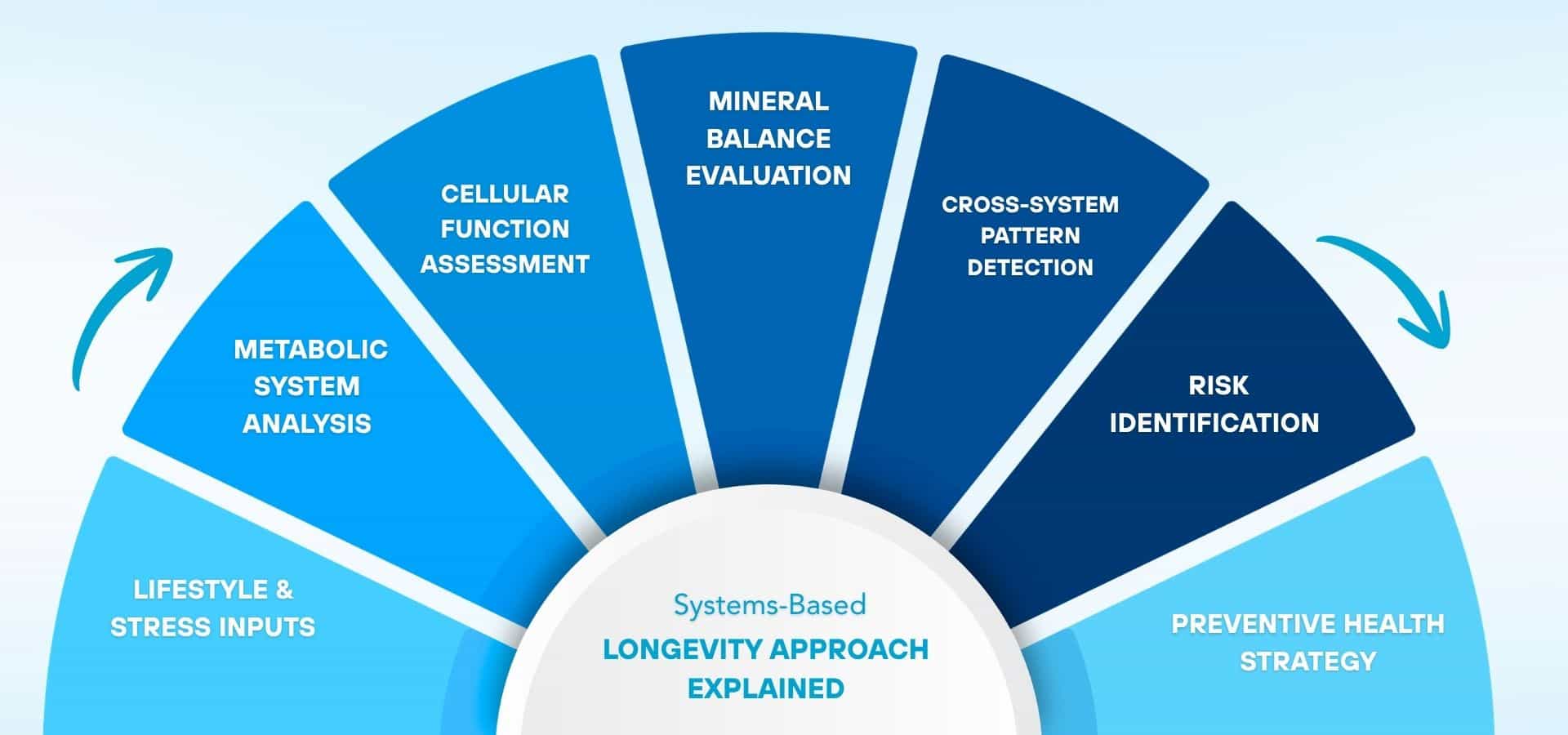
The medical philosophy at Revita Biological Longevity Clinic is grounded in preventive, systems-based medicine.
This means the body is not viewed as separate parts, but as a connected system where every function affects another.
Instead of reacting to symptoms, the clinic focuses on:
- Identifying underlying patterns
- Understanding system interactions
- Supporting informed, long-term decisions
This approach is structured, not trend-driven. It avoids unverified methods and places emphasis on physician interpretation over raw data.
Preventive vs Reactive Approach
Traditional healthcare often works like a fire brigade acting when something goes wrong.
In contrast, Revita follows a preventive model, which looks for early signals before issues become visible.
This includes:
- Detecting metabolic slowdown
- Identifying mineral imbalances
- Monitoring changes in energy production
Core System Focus
The clinic focuses on key biological systems that influence long-term performance:
- Metabolic system → how the body produces and uses energy
- Cellular function → how cells repair, regenerate, and communicate
- Mineral balance → how elements like magnesium support nerve and muscle function
These systems are assessed together to understand how they interact.
|
🔍 Did You Know?
Magnesium is involved in hundreds of biochemical processes, including energy production and nerve signaling, making it a central factor in metabolic stability.
|
Physician-Led Interpretation
Data alone does not provide clarity. The clinic emphasizes clinical interpretation by physicians, where:
- Multiple test results are reviewed together
- Patterns are identified across systems
- Context is applied based on individual profiles
This reduces the risk of misinterpretation that can occur when data is viewed in isolation.
Lifestyle as a Medical Tool
Lifestyle factors are not treated as general advice but as measurable inputs within the overall assessment.
These include:
- Nutritional patterns
- Physical activity levels
- Stress exposure and recovery
They are evaluated alongside diagnostics to understand their impact on biological systems. Many executive wellness programs include similar lifestyle elements, but often without this level of diagnostic integration.
|
🔍 Did You Know?
Chronic stress is associated with a large proportion of long-term health conditions, influencing both metabolic and hormonal systems.
|
Avoidance of Trend-Based Interventions
The clinic maintains a cautious stance toward:
- Unproven longevity trends
- Short-term performance claims
- Interventions lacking clinical validation
The focus remains on:
- Measurable data
- Physician oversight
- Structured, repeatable processes
At Revita Biological Longevity Clinic, diagnostics are not a supporting feature—they are the core of the entire clinical process.
The clinic follows a diagnostics-first workflow, where all insights are built from structured medical testing before any interpretation is made. This ensures that decisions are based on measurable data rather than assumptions.
The goal is simple:
- Understand how the body is functioning today
- Identify patterns that may influence future health
This goes beyond standard executive health evaluations, where fewer systems are typically assessed together.
Diagnostic Assessment Includes
The clinic uses a combination of specific technologies and laboratory testing to build a multi-layered profile:
- Comprehensive blood panels → assess metabolic, hormonal, and inflammatory markers
- Hormone profiling → evaluates endocrine system balance
- Oligoscan technology → detects mineral levels and heavy metal exposure at a cellular level
- 54-parameter bioimpedance analysis → measures body composition, hydration, and metabolic efficiency
- Biological age assessment → estimates cellular condition compared to chronological age
These tests are not reviewed in isolation. Instead, they are combined into a connected diagnostic framework, allowing physicians to identify relationships between systems.
|
🔍 Did You Know?
By mid-life, the body’s extracellular environment can accumulate a significant level of toxins, which may influence how cells absorb nutrients and function over time.
|
Chronomedicine & Future Risk Mapping
Beyond current measurements, the clinic uses diagnostics to support a forward-looking perspective.
This includes:
- Identifying early biological trends
- Mapping potential long-term risks
- Understanding how current patterns may evolve
This approach is sometimes aligned with chronomedicine, where timing, biological rhythms, and progression patterns are considered alongside test results.
Revita Biological Longevity Clinic is structured around precision, sequencing, and interpretation.
Its strengths are not based on volume of services, but on how diagnostics, environment, and clinical review are combined into a clear, time-bound process.
The clinic performs best in areas where data, structure, and physician oversight intersect.
Key Medical Strength 1 – Mineral-Centric Metabolic Assessment
One of the clinic’s defining features is the structured use of Donat Mg mineral water within diagnostic programs.
This is not positioned as a general wellness element. Instead, it is used in alignment with:
- Measured mineral levels
- Metabolic indicators
- Individual diagnostic findings
Magnesium plays a role in energy production, nerve signaling, and muscle function. By integrating it into a monitored framework, the clinic connects nutritional input with measurable biological data.
|
🔍 Did You Know?
Magnesium acts as a cofactor in hundreds of biochemical reactions, including those linked to cellular energy production.
|
Key Medical Strength 2 – Multi-Layer Diagnostic Integration
The clinic does not rely on a single test or metric. Instead, it combines multiple diagnostic layers:
- Bioimpedance data
- Mineral and heavy metal analysis
- Blood and hormone panels
These inputs are reviewed together to identify:
- Cross-system relationships
- Hidden patterns
- Early-stage imbalances
This reduces the risk of fragmented analysis, where one result is interpreted without context.
Key Medical Strength 3 – Time-Compressed Clinical Evaluation
Programs are designed to deliver high-density diagnostic insight within a short timeframe, typically 5–10 days.
This is achieved through:
- Pre-structured testing schedules
- Coordinated diagnostic sequencing
- Consolidated physician consultations
For executives and high-performers, this model reduces disruption while maintaining depth of assessment.
Key Medical Strength 4 – Structured Reporting & Continuity
The output of the program is not limited to test results. Each guest receives:
- A Personal Health Card containing diagnostic data
- A structured summary of findings
- Guidance for ongoing monitoring
In some cases, this is supported by remote follow-up over several months, allowing continuity beyond the initial visit.
Key Medical Strength 5 – Controlled Clinical Environment
The clinic operates within a low-capacity facility, which allows:
- Predictable scheduling
- Reduced external variables
- Increased physician attention per individual
This controlled setup supports consistency in both diagnostics and interpretation.
This section presents observed patterns reported by individuals following structured programs at Revita Biological Longevity Clinic.
These are not guarantees or medical claims.
They reflect individual experiences within a controlled diagnostic setting, where outcomes depend on multiple variables including baseline health, lifestyle, and follow-through.
Outcome 1 – Energy Clarity & Fatigue Awareness
Before:
- Persistent fatigue without a clear cause
- Inconsistent energy levels throughout the day
- Limited understanding of underlying factors
After:
- Structured insight into metabolic and energy-related markers
- Identification of contributing factors such as mineral balance and stress load
- Clearer framework for discussing findings with a personal physician
Source:
Clinic-reported guest feedback and diagnostic summaries
Outcome 2 – Structured Health Visibility
Before:
- General sense of “something feels off” without measurable data
- Fragmented reports from different health checks
- Lack of a connected overview
After:
- Consolidated diagnostic report integrating multiple systems
- Improved understanding of relationships between metabolism, hormones, and lifestyle factors
- A defined baseline for future monitoring
Source:
Patient testimonials and internal reporting formats
Outcome 3 – Sleep & Recovery Awareness
Before:
- Irregular sleep patterns
- Difficulty recovering from stress or workload
- No measurable tracking of contributing factors
After:
- Identification of patterns linked to stress exposure and physiological load
- Greater awareness of recovery cycles
- Structured reference for improving sleep-related habits
Source:
Clinic observations and guest-reported experiences
|
⚠️ Editorial Note
These outcomes reflect individual experiences reported within the clinic’s published materials. Results vary. Diagnostics indicate risk patterns, not certainty, and outcomes depend on multiple individual factors.
|
At Revita Biological Longevity Clinic, programs are not open-ended or flexible in structure.
They follow fixed durations, defined diagnostic phases, and physician-led review cycles.
Each program is designed to:
- Collect structured data
- Interpret results within a defined timeframe
- Provide a clear, documented output
The emphasis is on process consistency, not customization without limits.
Longevity & Anti-Age Program (7–10 Days)
This program focuses on metabolic function, cellular energy, and biological age assessment.
|
Category
|
Details
|
|
Program Focus
|
Biological age estimation and metabolic assessment
|
|
Duration
|
7–10 days
|
|
Diagnostics Included
|
Blood panels, hormone profiling, bioimpedance analysis, Oligoscan
|
|
Key Technologies
|
Hyperbaric oxygen therapy, hydrogen inhalation, IV nutrient support
|
|
Structure
|
Daily scheduled diagnostics with physician review checkpoints
|
|
Output
|
Consolidated diagnostic report and Personal Health Card
|
Detox & Microbiome Balance Program (5–7 Days)
This program is oriented toward digestive system assessment and toxin-related patterns.
|
Category
|
Details
|
|
Program Focus
|
Digestive function and systemic toxin exposure
|
|
Duration
|
5–7 days
|
|
Diagnostics Included
|
Metabolic markers, mineral analysis, digestive indicators
|
|
Key Components
|
Nutritional protocols, abdominal therapies, mineral water intake
|
|
Structure
|
Sequential testing followed by physician interpretation
|
|
Output
|
Structured report on digestive and metabolic interactions
|
Anti-Stress & Burnout Recovery Program (5–7 Days)
This program focuses on stress-related physiological patterns and recovery mechanisms.
|
Category
|
Details
|
|
Program Focus
|
Nervous system balance and stress response
|
|
Duration
|
5–7 days
|
|
Diagnostics Included
|
Hormonal markers, stress indicators, metabolic data
|
|
Key Components
|
Relaxation protocols, sensory therapies, guided recovery sessions
|
|
Structure
|
Combined diagnostic and restorative schedule
|
|
Output
|
Assessment of stress-related impact on biological systems
|
Women’s Health Program (7+ Days)
This program is structured around hormonal balance and system-level assessment in women.
|
Category
|
Details
|
|
Program Focus
|
Hormonal profiling and fatigue-related patterns
|
|
Duration
|
7+ days
|
|
Diagnostics Included
|
Hormone panels, metabolic markers, mineral testing
|
|
Key Components
|
Nutritional planning, movement routines, targeted assessments
|
|
Structure
|
Diagnostic-led evaluation with physician interpretation
|
|
Output
|
Structured hormonal and metabolic report
|
At Revita Biological Longevity Clinic, therapies and facilities are integrated into a structured clinical workflow, not offered as standalone experiences.
Each element whether diagnostic or supportive is positioned within a defined sequence, where timing, supervision, and context are controlled.
The environment is designed to support:
- Consistent data collection
- Predictable scheduling
- Minimal external disruption
Medical & Restorative Therapies
The clinic incorporates a combination of technology-based interventions and monitored protocols, aligned with diagnostic findings.
Key therapies include:
- Hyperbaric oxygen therapy (HBOT)
→ Used to increase oxygen availability in tissues under controlled pressure conditions
- Hydrogen inhalation therapy
→ Delivered through specialized systems to support cellular processes
- IV nutrient infusions
→ Administered under supervision to bypass digestive absorption pathways
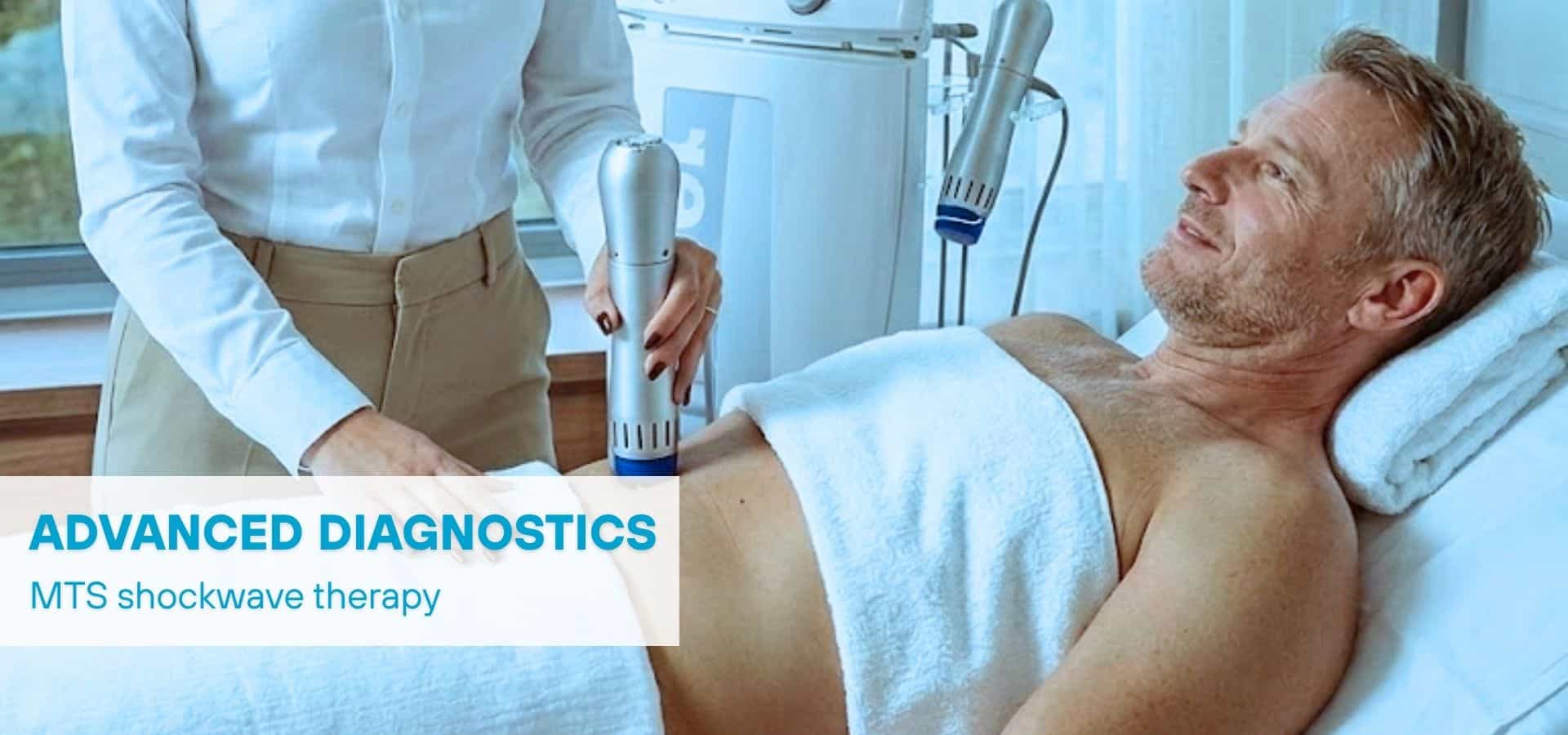
- MTS shockwave therapy
→ Applied in targeted protocols for mechanical stimulation
- Mineral-based intake protocols using Donat Mg mineral water
→ Integrated based on mineral analysis results
These therapies are scheduled within the program timeline, ensuring they are contextualized by diagnostic data rather than used independently.
Clinical Facilities
The clinic includes infrastructure designed for both diagnostic accuracy and controlled delivery of therapies:
- Dedicated diagnostic rooms for testing and measurement
- Laboratory integration for blood and biomarker analysis
- Equipment for bioimpedance and mineral scanning
- Therapy rooms equipped for oxygen and inhalation systems
- Monitored areas for IV administration
All facilities operate within a low-volume capacity model, allowing consistent use without overlap or delay.
Architecture, Environment & Digital Discipline
The clinic is housed within Hotel Alexander, a small-capacity property designed to maintain privacy and controlled movement.
Key environmental characteristics include:
- Limited number of rooms to reduce external variables
- Quiet surroundings supporting structured schedules
- Spatial separation between diagnostics and rest areas
In addition, the clinic promotes a level of digital discipline, where:
- Screen exposure may be reduced during certain phases
- Schedules are structured to limit external interruptions
This supports more consistent observation of:
- Sleep patterns
- Stress responses
- Recovery cycles
At Revita Biological Longevity Clinic, pricing reflects a diagnostics-led medical model, not a service-based or hospitality-driven structure.
Costs are linked to:
- Depth of diagnostics
- Physician involvement
- Program duration
- Technology utilization
There is no single fixed price across all programs. Instead, pricing varies based on the scope and complexity of assessment.
Pricing
|
Category
|
Details
|
|
Clinic Positioning
|
Premium preventive longevity clinic
|
|
Stay Length
|
Typically 5–10 days
|
|
Entry Pricing
|
High-tier (varies by program scope)
|
|
What’s Included
|
Diagnostics, physician consultations, structured reporting
|
|
Additional Costs
|
Optional therapies, extended diagnostics
|
|
Program Structure
|
Fixed-duration, diagnostics-first
|
|
Clinical Principle
|
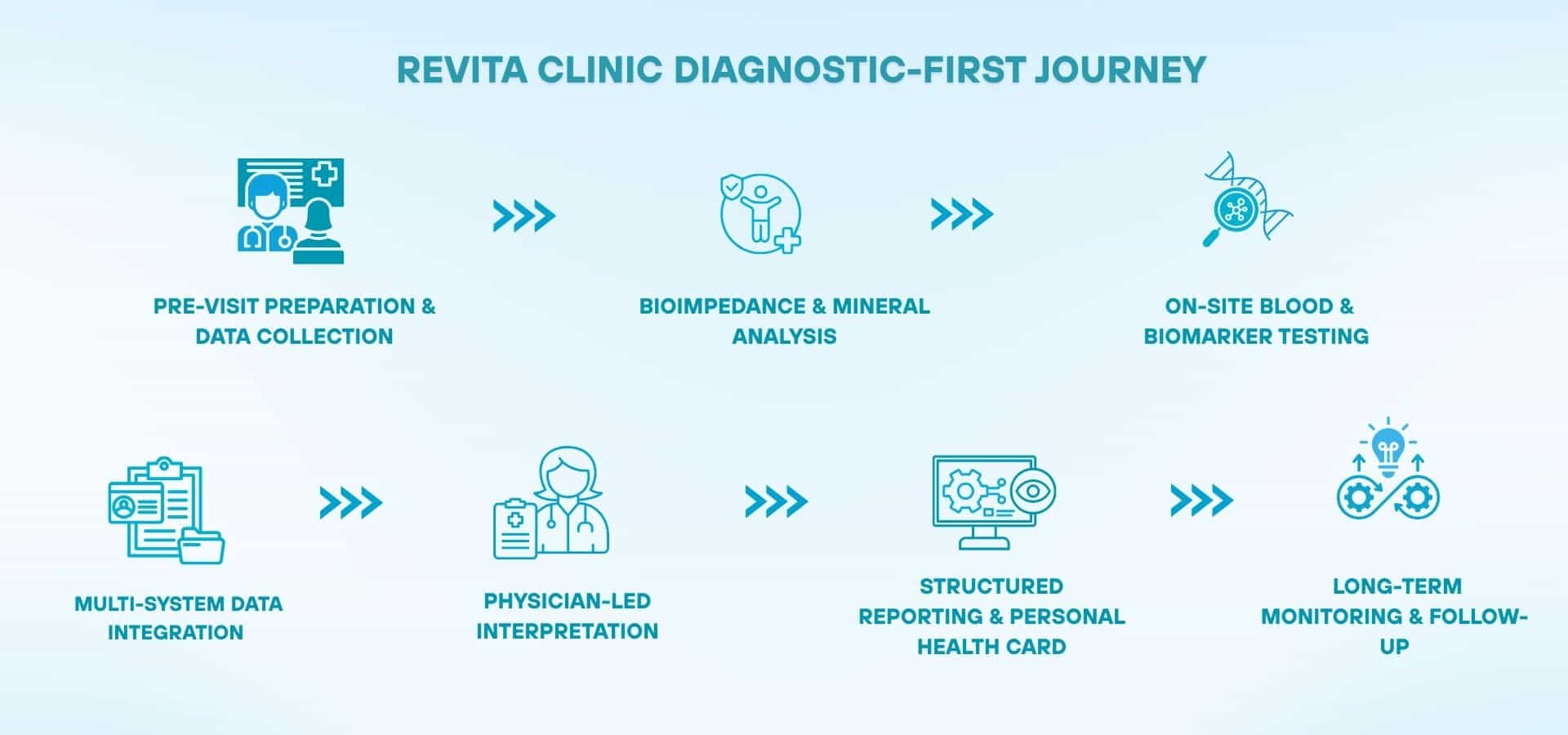
Measurement → Interpretation → Documentation
|
How Programs Are Structured
Programs follow a clearly defined sequence, ensuring that each phase builds on the previous one.
1. Pre-Visit Preparation
- Initial data collection
- Scheduling of diagnostics
- Program alignment based on objectives
2. On-Site Diagnostics
- Blood testing and biomarker analysis
- Bioimpedance and mineral scanning
- System-level assessments
This phase is typically front-loaded within the first days of the stay.
3. Physician Interpretation
- Review of combined diagnostic results
- Identification of patterns across systems
- Contextual explanation tailored to the individual
4. Reporting & Documentation
- Delivery of a Personal Health Card
- Structured summary of findings
- Framework for future monitoring
Length of Stay
The typical duration depends on the program selected:
- 5–7 days → Focused diagnostic programs
- 7–10 days → Expanded, multi-system assessments
The length is designed to balance:
- Depth of analysis
- Time efficiency for professionals
Planning a visit to Revita Biological Longevity Clinic is typically straightforward due to its structured program format and integrated facility setup.
The clinic is designed for individuals who prefer predictable timelines, minimal friction, and efficient scheduling. Most aspects of the stay from diagnostics to accommodation are pre-arranged to reduce decision fatigue.
Recommended Length of Stay
The appropriate duration depends on the level of diagnostic depth required:
- 5–7 days → Suitable for focused assessments and targeted diagnostics
- 7–10 days → Recommended for broader, multi-system evaluation
Shorter stays are designed to deliver essential insights, while longer stays allow for expanded analysis and additional physician review cycles.
How to Reach the Clinic?
The clinic is located in Rogaška Slatina, a well-connected region within Slovenia.
Nearest Airport:
- Ljubljana Jože Pučnik Airport
Typical Transfer Time:
- Approximately 1.5 to 2 hours by road
Transport Options:
- Private transfer arranged in advance
- Rental car for direct travel
- Taxi or chauffeur services
For international visitors, travel is typically routed through major European hubs before reaching Slovenia.
🔗 Find best flights to Ljubljana
🔗 Find car rentals in Ljubljana
Links provided for travel planning convenience only.
Accommodation & Stay Planning
The clinic operates within Hotel Alexander, which provides on-site accommodation.
This setup allows:
- Direct access to diagnostic and therapy areas
- Reduced travel time between sessions
- Consistent daily scheduling
The facility maintains a low room count, supporting privacy and controlled patient flow.
For individuals choosing external accommodation:
🔗 Explore nearby hotels & apartments
What to Bring
Preparation requirements are minimal due to the structured nature of the program.
Recommended items include:
- Comfortable clothing for daily assessments
- Personal medical records (if available)
- Current medication details
- Basic travel documents
No specialized equipment or preparation is typically required, as all diagnostic and clinical tools are provided on-site.
This section outlines how Revita Biological Longevity Clinic is perceived based on reported experiences, structured outputs, and positioning within the preventive health space.
The focus is not on promises or claims, but on consistent themes observed across users and industry context.
What Patients Commonly Report
Across different programs, individuals tend to report similar types of outcomes—not as guarantees, but as patterns of experience:
- Improved clarity about health status
→ Understanding how different systems (metabolism, hormones, minerals) interact
- Structured visibility of internal data
→ Moving from vague symptoms to measurable indicators
- Increased awareness of energy and fatigue patterns
→ Identifying factors influencing daily performance
- Better understanding of stress impact
→ Recognizing how workload and recovery affect biological systems
- Reference point for future monitoring
→ Using diagnostic reports as a baseline for long-term tracking
These outcomes are primarily informational, helping individuals make more informed decisions with their healthcare providers.
Media & Professional Recognition
Revita is positioned within the preventive longevity and systems medicine space, rather than traditional clinical or wellness categories.
Its recognition is based on:
- Integration of diagnostics and structured program design
- Use of specific technologies such as Oligoscan and bioimpedance analysis
- Emphasis on biological age and system-level assessment
- Alignment with broader trends in preventive and longevity medicine
The clinic is not defined by large-scale institutional affiliations, but by its boutique, high-precision model, which prioritizes depth over volume.
Revita Biological Longevity Clinic sits within a growing category of clinics focused on preventive longevity and systems-based diagnostics. This sector is evolving, with increasing interest from executives and high-performers who want structured insight rather than reactive care. To understand this approach better, it helps to explore how longevity medicine differs from traditional healthcare systems.
The clinic’s positioning is built around process clarity, diagnostic depth, and time efficiency. Its value lies in how information is collected, interpreted, and delivered within a defined timeframe. For individuals managing complex schedules, this structured format can reduce uncertainty and support better long-term planning.
At the same time, the broader longevity field remains developing and uneven in evidence quality. Some interventions used across the industry are still being studied, and outcomes can vary widely between individuals. Within this context, the clinic’s reliance on measurable diagnostics and physician oversight provides a more stable foundation compared to trend-driven approaches.
From an executive standpoint, the relevance of the clinic is not tied to outcomes, but to clarity of data and decision support. It offers a controlled environment to step back, assess internal systems, and establish a baseline for future monitoring.
Is this a medical clinic or a wellness center?
Revita Biological Longevity Clinic operates as a preventive medical facility. It focuses on diagnostics and physician-led interpretation rather than spa or lifestyle services.
Who is this clinic best suited for?
The clinic is designed for executives, founders, investors, athletes, and high-performers who want structured health insights within a limited timeframe.
Are the programs personalized?
Yes, programs are adjusted based on diagnostic findings. However, they follow a fixed structure with defined timelines and physician review points.
Does the clinic provide treatment or cure diseases?
No. The clinic does not provide treatment or promise outcomes. It focuses on identifying patterns and providing structured reports for further discussion with a personal physician.
How is privacy handled?
Privacy is maintained through:
- Low guest capacity
- Controlled scheduling
- Limited overlap between patients
This supports a confidential and structured environment.
Can I stay connected to work during the program?
Yes. Programs are designed to be time-efficient, and the environment allows individuals to stay connected if needed, while maintaining structured schedules.
Is this suitable for people with chronic conditions like diabetes?
The clinic provides diagnostic insight, not disease management. Individuals with chronic conditions should consult their personal physician before participating.
How should I think about value vs cost?
The value lies in:
- Structured diagnostics
- Physician interpretation
- Time-efficient evaluation
It is less about services and more about clarity, data, and long-term planning support.
High performance often runs on tight schedules, constant decisions, and ongoing pressure. Over time, this pace can create changes inside the body that are not always visible from the outside.
A structured pause allows space to observe, measure, and understand these internal shifts. Not as a reaction to illness, but as part of long-term planning.
Revita Biological Longevity Clinic provides an environment where data replaces assumptions. Instead of relying on guesswork, individuals receive structured insight into how systems such as metabolism, energy production, and recovery are functioning.
This is not about quick fixes or short-term performance gains. It is about building a clear reference point—a baseline that can be revisited and tracked over time.
For executives and high-performers, clarity often becomes more valuable than intervention. Knowing where attention is needed, what should be monitored, and how different systems interact can support better decisions both professionally and personally.
The value of this process is not immediate change, but informed direction. A structured understanding today can influence how the next years are approached.
👉 View Longevity Program
↩ Return to ExtendMy.Life
↑ Back to Top
Disclaimer
This content is provided for informational and editorial purposes only. It does not constitute medical advice, diagnosis, or treatment recommendations. No doctor patient relationship is established through this content. The information presented is based on publicly available materials and structured analysis, intended to support general understanding. Diagnostics and assessments referenced in this document indicate potential patterns and areas of interest. They do not provide certainty regarding current or future health conditions. Individual outcomes vary based on multiple factors, including medical history, lifestyle, and external variables. Readers should not use this content as a substitute for professional medical consultation. All decisions regarding testing, treatment, or health management should be made in consultation with a qualified healthcare provider. The field of longevity and preventive medicine continues to evolve. Some interventions and approaches discussed within this sector may not yet have long-term validation in large-scale human studies. Professional medical guidance is essential when interpreting any diagnostic information or considering changes to health-related practices.
References
Blagosklonny, M.V., 2012. Cell cycle arrest is not senescence. Aging (Albany NY), 3(2), pp.94–101.
Campisi, J., Kapahi, P., Lithgow, G.J., Melov, S., Newman, J.C. and Verdin, E., 2019. From discoveries in ageing research to therapeutics for healthy ageing. Nature, 571(7764), pp.183–192.
Choudhury, R., Chowdhury, S., Mukherjee, S. and Sil, P.C., 2022. Aging interventions and healthspan improvement: current perspectives. Frontiers in Aging, 3, pp.1–15.
Fontana, L., Partridge, L. and Longo, V.D., 2010. Extending healthy life span—from yeast to humans. Cell, 142(4), pp.528–542.
Galante, J., Galante, I., Bekkers, M.J. and Gallacher, J., 2020. Effect of mindfulness-based interventions on mental health outcomes. Journal of Mindfulness, 11(2), pp.1–17.
Harman, D., 2002. The free radical theory of aging. Antioxidants & Redox Signaling, 5(5), pp.557–561.
Justice, J.N., Cesari, M., Seals, D.R., Shively, C.A. and Carter, C.S., 2019. Comparative approaches to understanding the relation between exercise and longevity. The Journals of Gerontology, 74(5), pp.1–9.
Kaeberlein, M., 2019. The biology of aging: research perspectives and clinical implications. Nature, 464(7288), pp.504–512.
Lopez-Otín, C., Blasco, M.A., Partridge, L., Serrano, M. and Kroemer, G., 2015. The hallmarks of aging. Cell, 153(6), pp.1194–1217.
Miller, E., Kearney, M.L. and Bowman, M., 2021. Behavioral interventions for healthy aging. Current Opinion in Psychology, 41, pp.1–6.
Nambiar, S., Rajan, S. and Mohan, V., 2021. Aging research: molecular mechanisms and clinical implications. Journal of Clinical Medicine, 10(12), pp.1–14.