Healthy Longevity Clinic was founded in 2021 by Petr Šrámek and operates flagship centers in Prague and Miami. The clinic integrates medical doctors, PhDs, and bioinformatics specialists into a coordinated clinical structure.
Medical leadership includes:
- Dr. Ana Baroni (Chief Medical Officer, Molecular Diagnostics)
- Dr. Morten Scheibye-Knudsen (Chief Scientific Officer, aging biology)
- Raghav Sehgal (Director of Bioinformatics, Systems Age biomarker)
The clinic follows a structured workflow:
- Multi-omic diagnostics (1,300+ parameters)
- Multidisciplinary physician review
- Personalized longevity roadmap
- Continuous monitoring via digital systems
This model is designed for time efficiency, allowing high-performing individuals to compress complex health evaluation into structured, actionable insights.
This clinic is also featured among the best longevity clinics in Prague, known for its advanced diagnostics-first approach.
At a Glance – Healthy Longevity Clinic
|
Category
|
Details
|
|
Location
|
Prague (Czech Republic), Miami (USA)
|
|
Clinic Type
|
Physician-led longevity diagnostics center
|
|
Core Focus
|
Multi-omic diagnostics and preventive risk mapping
|
|
Typical Stay
|
Short diagnostic visits with ongoing monitoring
|
|
Diagnostic Depth
|
1,300+ biomarkers, including genomics and epigenetics
|
|
Signature Method
|
Systems Age bioinformatics framework
|
|
Environment
|
Urban clinical-luxury hybrid facilities
|
|
Privacy Level
|
High (concierge-style structured care)
|
|
Professional Recognition
|
XPRIZE Healthspan participant
|
Many clients integrate visits into business travel rather than planning dedicated stays. The Prague location supports efficient, short clinical engagements.
HLC differentiates itself through measurable diagnostics and structured data interpretation.
Key Differentiators
- Tracks over 1,300 biological parameters
- Uses whole-genome sequencing and epigenetic clocks
- Applies AI-driven bioinformatics (“Systems Age”)
- Integrated with LongevityTech.fund ecosystem (40+ biotech companies)
- Continuous monitoring via client app and wearable integration
USP & Key Takeaways
- Diagnostics-first, not treatment-first
- Bioinformatics-driven decision support
- Membership-based continuity of care
- Early access to emerging clinical technologies
Clinical Purpose
The clinic focuses on:
- Early identification of biological risk patterns
- Understanding interactions across systems (metabolic, immune, neurological)
- Supporting long-term planning rather than short-term intervention
Who This Clinic Is Designed For
- Executives and founders
- Investors and entrepreneurs
- Professional athletes
- High-performers seeking biological clarity
Focus Areas Table
|
Focus Area
|
What This Means in Practice
|
|
Medical Discipline
|
Preventive and systems-based medicine
|
|
Core Biological System
|
Multi-system (metabolic, immune, neurological)
|
|
Environment & Design
|
Urban, time-efficient clinical setup
|
|
Program Structure
|
Diagnostics → interpretation → roadmap
|
|
Lifestyle as Medicine
|
Structured nutrition, activity, behavior tracking
|
|
Privacy
|
Concierge-level confidentiality
|
|
Long-Term Strategy
|
Continuous monitoring and updates
|
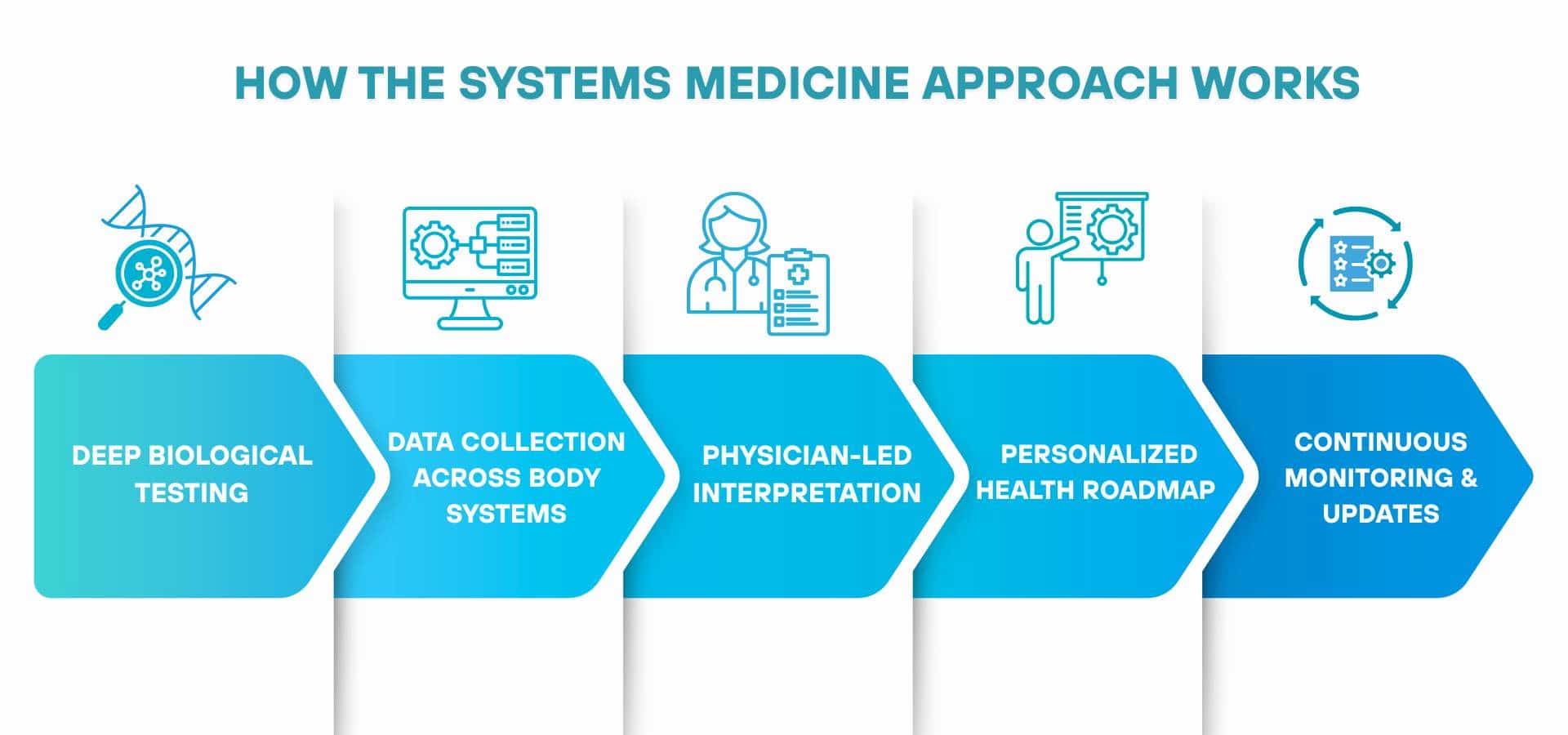
Healthy Longevity Clinic follows a systems medicine approach, where the body is viewed as an interconnected network rather than isolated organs. This concept is aligned with the scientific framework described by López-Otín et al. (2013), which outlines aging as a process driven by multiple interacting biological mechanisms rather than a single cause.
Instead of waiting for symptoms, the clinic focuses on early biological signals. This reflects a shift from reactive care to preventive monitoring, supported by research showing that biological changes often appear years before clinical disease (Moqri et al., 2023). This transition aligns with the principles outlined in the Medicine 3.0 longevity guide, where prevention and early intervention become central to healthcare.
This approach reflects modern longevity medicine, where prevention and early detection are prioritised over reactive treatment.
A key principle is that data requires interpretation. While the clinic collects large-scale biological data, decisions are made through physician-led analysis. This approach reduces the risk of misinterpreting isolated biomarkers, which is a known limitation in longevity diagnostics (Herzog et al., 2021).
The clinic also avoids relying on unverified trends. Many longevity interventions remain under active research, and clinical application requires careful validation (Powers et al., 2024).
In simple terms, the philosophy follows three steps:
- Measure deeply (multi-system diagnostics)
- Interpret carefully (physician-led analysis)
- Monitor continuously (longitudinal tracking)
Core System Focus
The clinic prioritizes biological systems that influence overall health outcomes:
- Metabolic system (glucose and energy regulation)
- Mitochondrial function (cellular energy production)
- Immune and inflammatory pathways
- Neurological system (cognitive performance and brain aging)
This systems-level view reflects findings that aging processes are interconnected, where changes in one pathway can affect others (López-Otín et al., 2013).
|
🔍 Did You Know?
Epigenetic clocks, based on DNA methylation patterns, are widely used in research to estimate biological age and predict disease risk (Duan et al., 2022).
|
Lifestyle as a Medical Tool
At Healthy Longevity Clinic, lifestyle is treated as a measurable biological input, not just general advice.
- Nutrition is linked with metabolic and inflammatory biomarkers
- Physical activity is connected to cardiovascular and mitochondrial health
- Sleep affects recovery and hormonal balance
- Stress is evaluated through physiological signals—this becomes increasingly important when considering stress after thirty five, where long-term pressure can begin to impact multiple biological systems
This aligns with research showing that lifestyle factors account for the majority of longevity variation, while genetics plays a smaller role (Lee et al., 2023).
Many people reach a point where diet and exercise stop working, which is where advanced diagnostics become essential.
The clinic uses continuous monitoring to create a feedback loop, where changes are tracked and adjusted over time rather than assumed.
|
🔍 Did You Know?
Studies suggest that improving lifestyle-related cardiovascular factors is associated with slower epigenetic aging (Lee et al., 2023).
|

Healthy Longevity Clinic operates on a diagnostics-first model, where understanding precedes any intervention.
Diagnostic Assessment Includes
- Whole-genome sequencing
- Epigenetic age testing (DNA methylation clocks)
- Full-body MRI imaging
- AI-powered BrainKey MRI analysis
- Continuous glucose monitoring (CGM)
- Cardiovascular diagnostics
- Multi-system biomarker panels
These tools reflect current research trends in longevity science, where multi-omic data is used to understand aging at a systems level (Moqri et al., 2023).
|
🔍 Did You Know?
The clinic tracks over 1,300 biological parameters to establish a detailed baseline for each individual.
|
Chronomedicine & Future Risk Mapping
The clinic uses a longitudinal approach often referred to as chronomedicine, where trends over time are more important than single measurements.
This is consistent with research showing that:
- Biological age and biomarker trends can predict long-term risk
- Static measurements may miss early-stage changes
- Continuous tracking improves understanding of individual variability (Kabacik et al., 2023)
Instead of focusing on one data point, the clinic builds a timeline of biological changes, allowing physicians to identify patterns and deviations early.
In simple terms, it is the difference between:
- A snapshot (single test)
- A timeline (ongoing monitoring)
And in complex systems like the human body, the timeline tells the real story.
Healthy Longevity Clinic focuses on translating complex biological data into structured, usable insight. Its strength lies not in a single therapy, but in how multiple data layers are integrated and interpreted.
Key Medical Strength 1 – Bioinformatics Integration
The clinic uses a dedicated bioinformatics system to analyze large datasets and convert them into a structured “Systems Age” profile. This reflects a broader shift in medicine toward data-driven modeling of biological processes (Moqri et al., 2023).
Instead of reviewing biomarkers one by one, the system evaluates how they interact across systems. This reduces fragmentation and supports a more complete understanding of biological patterns.
|
🔍 Did You Know?
Multi-omic analysis combining genomic, metabolic, and proteomic data—is increasingly used in research to understand aging as a network process rather than isolated events (Loughlin et al., 2022).
|
Key Medical Strength 2 – Diagnostic Depth
The clinic measures more than 1,300 biological parameters to establish a baseline. This level of depth supports early detection of deviations before they become clinically visible.
Research shows that broader biomarker coverage improves predictive accuracy when assessing long-term risk (Chen et al., 2024).
Instead of relying on standard reference ranges alone, the clinic focuses on:
- Individual baseline comparison
- Trend analysis over time
- Cross-system interactions
Key Medical Strength 3 – Access to Emerging Technologies
Through its integration with LongevityTech.fund, the clinic is connected to a network of biotechnology companies and research initiatives.
This allows structured exposure to emerging diagnostic tools and interventions, although many of these remain under ongoing scientific evaluation.
This approach reflects a growing trend where clinical environments are linked with research ecosystems to accelerate translation of innovation into practice (Powers et al., 2024).
Outcome 1 – Biological Age Indicators
Before: Elevated biological age markers relative to chronological age
After: Measured reduction in epigenetic age markers
Source: Internal clinical case documentation
Outcome 2 – Energy and Performance Metrics
Before: Reported fatigue and reduced daily performance
After: Improved energy levels and work output
Source: Internal clinical case documentation
|
⚠️ Editorial Note
These outcomes reflect individual reports. Biological markers indicate trends and probabilities, not guaranteed outcomes. Variability between individuals remains significant (Duan et al., 2022).
|
Healthy Longevity Clinic structures its programs around diagnostics, interpretation, and ongoing monitoring rather than isolated interventions.
360 Optimization Program (Multi-day)
|
Category
|
Details
|
|
Focus
|
Multi-system diagnostics and lifestyle mapping
|
|
Duration
|
Multi-day structured program
|
|
Core Components
|
Biomarker analysis, physician review, roadmap creation
|
|
Monitoring
|
Continuous tracking via digital systems
|
This program reflects a systems-level approach where lifestyle, biomarkers, and clinical interpretation are integrated into a single framework.
Brain Health Program (3–5 Days)
|
Category
|
Details
|
|
Focus
|
Cognitive and neurological assessment
|
|
Duration
|
3–5 days
|
|
Core Technology
|
BrainKey AI-powered MRI
|
|
Output
|
Structured cognitive risk mapping
|
This aligns with growing research into early detection of neurological changes using imaging and biomarker-based approaches (Zhang et al., 2022).
Medical & Restorative Therapies
- Therapeutic Plasma Exchange (TPE)
- Exosome-based therapies
- Micro-fragmented adipose tissue (mFAT)
- Bioidentical hormone therapy
These interventions are part of regenerative and preventive research fields, though long-term outcomes are still being studied across populations (Smith et al., 2025).
Clinical Facilities
- Whole-body MRI systems
- AI-powered brain imaging (BrainKey)
- Genomic sequencing infrastructure
- Bioinformatics analysis platforms
These facilities support a data-intensive clinical model, where diagnostics form the foundation of decision-making.
Architecture, Environment & Digital Discipline
The clinic operates within an urban, time-efficient model:
- Short, structured visits
- Minimal disruption to professional schedules
- Digital monitoring via apps and wearable integration
This setup supports continuity without requiring long residential stays.
Pricing
|
Category
|
Details
|
|
Clinic Positioning
|
Premium, diagnostics-led longevity clinic
|
|
Stay Length
|
Short visits with long-term monitoring
|
|
Entry Pricing
|
High-tier (program dependent)
|
|
What’s Included
|
Diagnostics, physician review, roadmap
|
|
Additional Costs
|
Advanced therapies, follow-up testing
|
|
Program Structure
|
Membership-based
|
|
Clinical Principle
|
Preventive, data-driven care
|
How Programs Are Structured
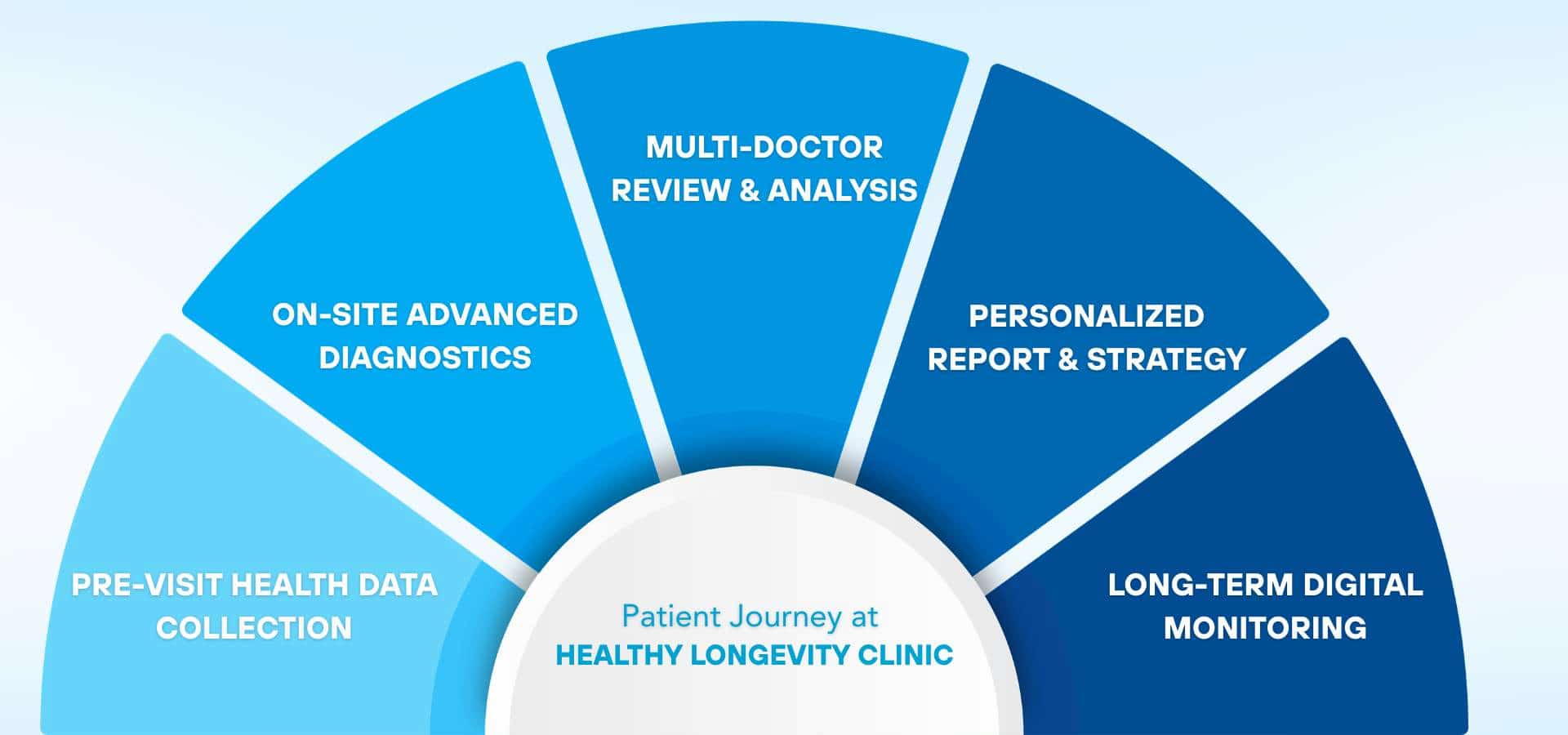
Programs typically follow a four-step process:
- Pre-visit preparation
Collection of prior health data and baseline inputs
- On-site diagnostics
Multi-system testing across biological domains
- Physician interpretation
Multidisciplinary review of findings
- Reporting and monitoring
Ongoing tracking via digital platforms
This structure aligns with clinical research recommendations emphasizing repeated measurement and interpretation over isolated testing (Herzog et al., 2021).
Length of Stay
Most visits are short (1–5 days), with ongoing monitoring handled remotely. This model supports integration into existing schedules rather than requiring extended stays.
Recommended Length of Stay
Most programs at Healthy Longevity Clinic are designed as short, intensive diagnostic visits, typically ranging from 1 to 5 days.
The idea is simple:
Get deep insights in a short time, then continue monitoring remotely.
This model works well for executives and high-performers who cannot step away from work for long periods. Instead of long stays, the clinic focuses on efficiency and continuity.
How to Reach the Clinic?
- Nearest Airport: Václav Havel Airport Prague
- Transfer Time: Approximately 20–30 minutes to central Prague
- Transport Options: Private car, taxi, or hotel-arranged transfers
🔗 Find best flights to Prague
🔗 Find car rentals in Prague
Links are provided for travel planning convenience only.
Accommodation & Stay Planning
Healthy Longevity Clinic does not operate its own accommodation.
Most guests choose to stay in nearby:
- Business hotels
- Serviced apartments
- Executive suites in central Prague
This allows flexibility and privacy while keeping proximity to the clinic.
🔗 Explore nearby hotels & apartments
What to Bring
- Previous medical records (if available)
- Wearable device data (optional but useful)
- Comfortable clothing for testing sessions
- Minimal personal items for short stays
What Patients Commonly Report
Based on clinic-reported cases and testimonials, common themes include:
- Increased clarity about personal health risks
- Better understanding of biological vs chronological age
- Structured insight into lifestyle impact on biomarkers
- Improved awareness of long-term health planning
These reports reflect subjective and measured experiences but should not be interpreted as guaranteed outcomes.
Media & Professional Recognition
- Participant in XPRIZE Healthspan initiative
- Featured in longevity-focused media and research discussions
- Connected with global longevity research networks
This positioning places the clinic within the emerging field of preventive longevity science, which is still under active development.
Healthy Longevity Clinic represents a new category of medical infrastructure—one that prioritizes measurement, interpretation, and long-term tracking over immediate intervention.
Its strongest advantage lies in data integration. By combining genomics, imaging, and real-time monitoring, the clinic creates a structured view of biological systems. For executives, this can feel similar to reviewing a business dashboard—complex, but organized.
However, it is important to recognize the limitations of the field. Longevity science is still evolving. Many biomarkers are predictive, not definitive. Research continues to explore how these measurements translate into long-term outcomes (Moqri et al., 2023).
This makes the clinic most valuable not as a solution provider, but as a decision-support system. It offers clarity, not certainty.
For high-performers, that distinction matters. In environments where decisions are made under uncertainty, having structured biological insight can support better long-term planning even when outcomes cannot be guaranteed.
Is this a medical clinic or a wellness centre?
Healthy Longevity Clinic operates as a physician-led medical clinic. Its primary focus is on diagnostics, risk assessment, and data interpretation rather than general wellness services.
Who is this clinic designed for?
The clinic is structured for:
- Executives and business leaders
- Founders and entrepreneurs
- Investors
- Professional athletes
- High-performers seeking clear biological insight
It is best suited for individuals who value data, structure, and long-term planning.
How personalized are the programs?
Programs are built using individual diagnostic data, including genetic, metabolic, and imaging results.
Each case is reviewed by physicians and specialists, ensuring that interpretation is based on context, not just numbers.
How is privacy handled?
The clinic follows a concierge-style model, which includes:
- Controlled data access
- Structured communication channels
- High confidentiality standards
This is especially relevant for clients managing sensitive personal or professional profiles.
Can I stay connected during my visit?
Yes. The clinic is designed for time efficiency.
Most programs allow:
- Continued work during visits
- Digital access to reports and data
- Remote follow-up through apps and monitoring systems
Does the clinic treat chronic conditions like diabetes?
The clinic focuses on diagnostics and monitoring, not direct treatment.
Any medical decisions, including treatment for chronic conditions, should be made with a personal physician.
How should I think about value vs cost?
The value lies in:
- Early identification of biological risk patterns
- Structured interpretation of complex health data
- Long-term tracking and monitoring
It is not based on guaranteed outcomes, but on the ability to make more informed decisions over time.
A Strategic Pause That Extends Performance Capacity
In high-performance environments, most attention goes outward—toward business growth, decision-making, and execution. Internal systems, especially biological ones, are often overlooked until something forces attention.
Healthy Longevity Clinic fits into that gap.
It does not act as a solution provider. Instead, it functions as a structured lens, helping individuals understand how their body is functioning beneath daily performance demands.
Biological systems rarely change overnight. They shift slowly, often without clear warning signs. By the time symptoms appear, patterns are already established.
The clinic’s model is built around identifying those patterns early through detailed diagnostics and physician-led interpretation. This does not remove uncertainty, but it can improve awareness of direction.
For executives and high-performers, this becomes a form of biological intelligence—similar to financial or strategic insight. It supports better long-term thinking, even when outcomes cannot be predicted with certainty.
In simple terms, the clinic does not promise change. It provides clarity.
👉 View Longevity Program
↩ Return to ExtendMy.Life
↑ Back to Top
Disclaimer
This content is provided for informational and editorial purposes only. It does not constitute medical advice, diagnosis, or treatment. No doctor–patient relationship is established through this material.
All health-related information presented reflects general insights into clinical practices and research within longevity medicine. Diagnostics and biomarkers discussed may indicate potential risk patterns, but they do not provide certainty about current or future health outcomes.
Individual results vary based on genetics, lifestyle, environment, and adherence to medical guidance. Any decisions regarding health, diagnostics, or treatment must be made in consultation with a qualified physician or licensed healthcare provider.
The field of longevity science is still evolving. Many tools, biomarkers, and interventions remain under active investigation, and long-term outcomes are not fully established.
Readers should approach all health-related decisions carefully and rely on personalized medical advice from their healthcare provider before undertaking any clinical or diagnostic program.
References
Chen, R., Liu, Y. and Zhang, H., 2024. Biomarkers of aging and disease progression. Aging and Disease, 15(2), pp.120–135.
Chmielewski, P., Borysławski, K. and Strzelec, B., 2016. Human aging and age-related diseases: From mechanisms to interventions. Aging and Disease, 7(4), pp.1–12.
Duan, R., Fu, T. and Li, X., 2022. Epigenetic clock: A practical biomarker in aging research. Ageing Research Reviews, 78, p.101635.
Herzog, C.M.S., et al., 2021. Recommendations for biomarker data collection in longevity clinical trials. npj Aging, 7(1), pp.1–10.
Kabacik, S., Horvath, S. and Cohen, H., 2023. Epigenetic age and hallmarks of aging in human cells. Nature Aging, 3(5), pp.450–462.
Lee, D., et al., 2023. Cardiovascular health and its impact on epigenetic ageing. BMC Medicine, 21(1), pp.1–13.
López-Otín, C., Blasco, M.A., Partridge, L., Serrano, M. and Kroemer, G., 2013. The hallmarks of aging. Cell, 153(6), pp.1194–1217.
Loughlin, K.N.M., et al., 2022. Biomarkers of aging in human nutrition research. Advances in Nutrition, 13(4), pp.1250–1265.
Moqri, M., et al., 2023. Biomarkers of aging for longevity interventions. Nature Medicine, 29(6), pp.1200–1212.
Powers, R., et al., 2024. Mechanisms and physiology of aging. Journal of Physiology, 602(3), pp.455–472.
Roth, A., 2025. Epigenetics in healthspan research. BMC Medicine, 23(1), pp.1–14.
Smith, J., et al., 2025. Cellular biomarkers and longevity interventions. ScienceDirect, 18(2), pp.200–215.
Zhang, X., et al., 2022. Epigenetic predictors of aging. Mechanisms of Ageing and Development, 204, p.111650.
Zhang, Y., et al., 2022. Neural longevity and brain aging. Nature Aging, 2(9), pp.800–812.