The clinic is directed by G. Stefano Filippini, a medical professional with over three decades of experience in general medicine.
It was established to move away from fragmented care models where different systems of the body are treated separately. Instead, the clinic operates on a structured framework that looks at the body as an interconnected system. This approach is also seen in some of the best longevity clinics in Italy, where healthcare focuses on long-term health rather than quick fixes.
Governance & Clinical Structure
The clinic follows a physician-led model where:
- Diagnostics are conducted first
- Data is interpreted by medical professionals
- Decisions are made based on measurable indicators
There is no reliance on automated reports without clinical context. Each step is reviewed and adjusted under medical supervision.
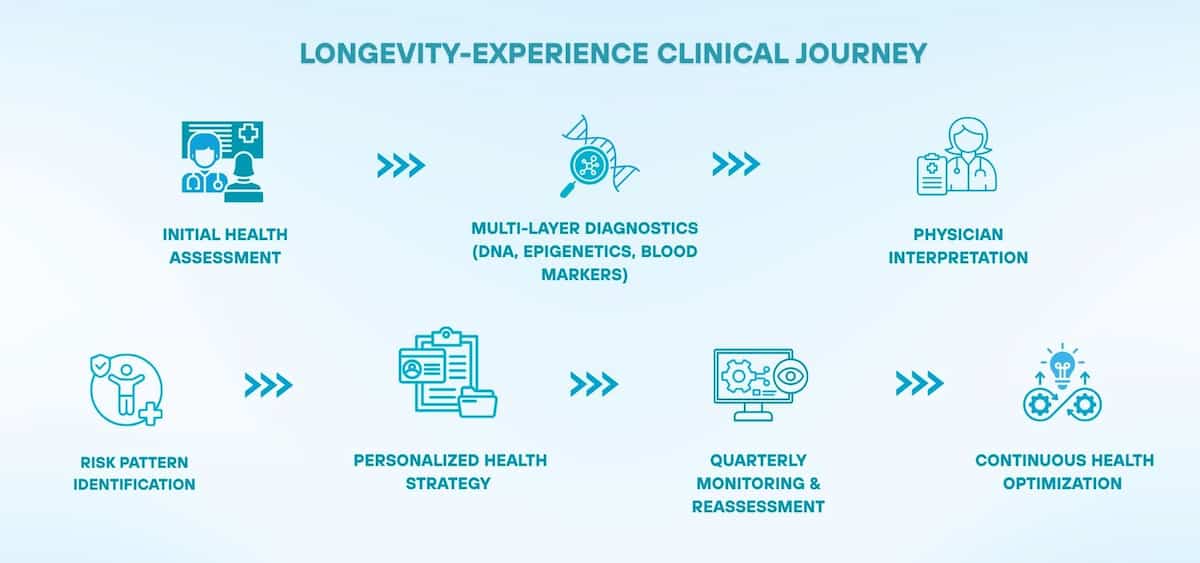
Diagnostic-First Workflow
The process typically follows a clear sequence:
- Initial Assessment
Collection of baseline biological data through advanced testing
- Multi-Layer Diagnostics
Includes genetic, metabolic, and physiological markers
- Physician Interpretation
Data is analyzed in context, not in isolation
- Structured Monitoring
Follow-ups are conducted at defined intervals
This workflow reduces guesswork and avoids one-size-fits-all approaches.
Time Efficiency for High-Performers
The clinic is designed for individuals who cannot afford long, unstructured treatment cycles.
Appointments are:
- Pre-scheduled
- Data-driven
- Focused on decision-making
Many patients integrate visits into business travel or existing schedules rather than planning extended stays. This is especially relevant for individuals managing physical performance and injury prevention strategies.

High-performing individuals often operate in environments where decisions must be based on clear data, not assumptions. The Longevity Medical Center is structured to support that need through measurable diagnostics and repeatable clinical processes.
Rather than offering general wellness guidance, the clinic focuses on biological measurement, physician interpretation, and longitudinal tracking.
Clear Differentiators
1. Multi-Layer Diagnostic Stack
The clinic combines multiple diagnostic layers instead of relying on a single test. These include:
- DNA testing for genetic predisposition
- Epigenetic analysis to observe gene expression changes
- Intestinal microbiota mapping
- Oxidative stress and inflammatory markers
- Cardiovascular and metabolic screening
This layered approach helps reduce the risk of incomplete or misleading conclusions.
2. Structured 12-Month Monitoring Cycle
The clinic operates on a defined annual structure known as Protocollo Longevity.
This includes:
- Baseline assessment
- Quarterly reassessments (every 3 months)
- Adjustments based on measurable biological changes
This system allows trends to be observed over time rather than relying on single-point data.
3. Physician-Led Interpretation
All diagnostic results are interpreted by medical professionals.
There is no reliance on automated dashboards without clinical context.
This reduces:
- Misinterpretation of data
- Overreaction to isolated markers
- Unnecessary interventions
4. Integration with Existing Medical Care
Programs are designed to work alongside existing treatments.
They do not replace primary medical care.
This makes the clinic relevant for individuals already managing:
- Chronic conditions
- Long-term therapies
- Performance-related health tracking
USP & Key Takeaways
- Diagnostics-first clinical model
- Multi-omic testing (genetic, metabolic, microbiome)
- 12-month structured monitoring system
- Physician-led interpretation at every stage
- Focus on measurable biological indicators rather than assumptions
Clinical Purpose
The clinic is built around a clear purpose:
To identify biological patterns early and support long-term health planning through measurable data.
It focuses on:
- Early detection of risk indicators
- Understanding how different systems of the body interact
- Tracking biological changes over time
This supports more structured weight management strategies based on measurable data.
The clinic does not operate as:
- An emergency care facility
- A treatment center for acute illness
- A provider of immediate medical outcomes
Instead, it functions as a structured assessment and monitoring system.
Who This Clinic Is Designed For
This clinic is designed for individuals who value clarity over convenience.
Typical profiles include:
- Executives managing high-stress environments
- Founders and entrepreneurs making long-term decisions
- Investors focused on sustained performance
- Professional athletes tracking physical output
- High-performers seeking structured biological insight
It is not designed for:
- Short-term wellness experiences
- Immediate symptom relief
- General relaxation or recovery stays
Focus Areas
|
Focus Area
|
What This Means in Practice
|
|
Medical Discipline
|
Preventive and systems medicine
|
|
Core Biological System
|
Metabolism, immune function, aging markers
|
|
Environment & Design
|
Clinical, non-residential setting
|
|
Program Structure
|
12-month monitoring with quarterly reviews
|
|
Lifestyle as Medicine
|
Structured nutrition, sleep, and movement planning
|
|
Privacy
|
Controlled access, appointment-based
|
|
Long-Term Strategy
|
Continuous biological tracking and reassessment
|
The clinic follows a preventive framework often referred to as “Medicine 3.0”, where the focus shifts from treating disease to identifying risk before symptoms develop.
The Protocollo Longevity is the clinic’s structured system for applying this philosophy in practice.
Preventive vs Reactive Approach
Traditional models:
- Wait for symptoms
- Diagnose disease
- Apply treatment
This clinic:
- Measures biological signals early
- Identifies patterns
- Monitors changes over time
This reduces reliance on late-stage interventions.
Importance of Physician Interpretation
Raw data alone does not provide clear answers.
The clinic emphasizes:
- Context-based analysis
- Pattern recognition over time
- Clinical judgment over isolated metrics
This is important because biological systems are complex and rarely behave in isolation.
Core System Focus
The primary focus is metabolic regulation and biological aging processes.
This includes:
- Energy utilization
- Inflammatory response
- Cellular stress markers
|
🔍 Did You Know?
Research shows that aging is a multi-system process, which means no single test can fully measure it. Composite biomarkers provide more reliable insights than isolated indicators.
|
Lifestyle as a Medical Tool
Lifestyle is not treated as general advice it is structured and monitored.
The clinic incorporates:
- Nutritional frameworks based on metabolic data
- Physical activity aligned with individual capacity
- Sleep analysis and improvement strategies (see restorative sleep strategies)
These elements are:
- Measured
- Adjusted
- Re-evaluated over time
This also includes sleep environment optimization as part of recovery tracking.
|
🔍 Did You Know?
Even moderate lifestyle changes such as regular physical activity have been associated with measurable reductions in overall health risk indicators.
|
The Longevity Medical Center is built on a diagnostics-first model where decisions are based on measurable biological data rather than assumptions.
The clinic uses a multi-layer assessment system, meaning no single test is used in isolation. Instead, multiple data points are combined to create a broader understanding of how the body is functioning.
Diagnostic Assessment Includes
The clinic’s diagnostic framework typically includes the following categories:
1. Genetic (DNA) Testing
Used to identify inherited predispositions related to metabolism, inflammation, and other biological functions.
2. Epigenetic Analysis
Examines how lifestyle and environmental factors influence gene expression over time.
This helps track how behaviors may be affecting biological aging.
3. Biological Age Testing
Measures how the body is aging compared to chronological age using validated biomarkers.
This is different from calendar age and focuses on:
- Cellular function
- Physiological decline
- System-level stress
4. Intestinal Microbiota Mapping
Analyzes gut bacteria composition.
This provides insight into:
5. Oxidative Stress & Inflammation Markers
Evaluates cellular stress levels that may influence long-term biological function.
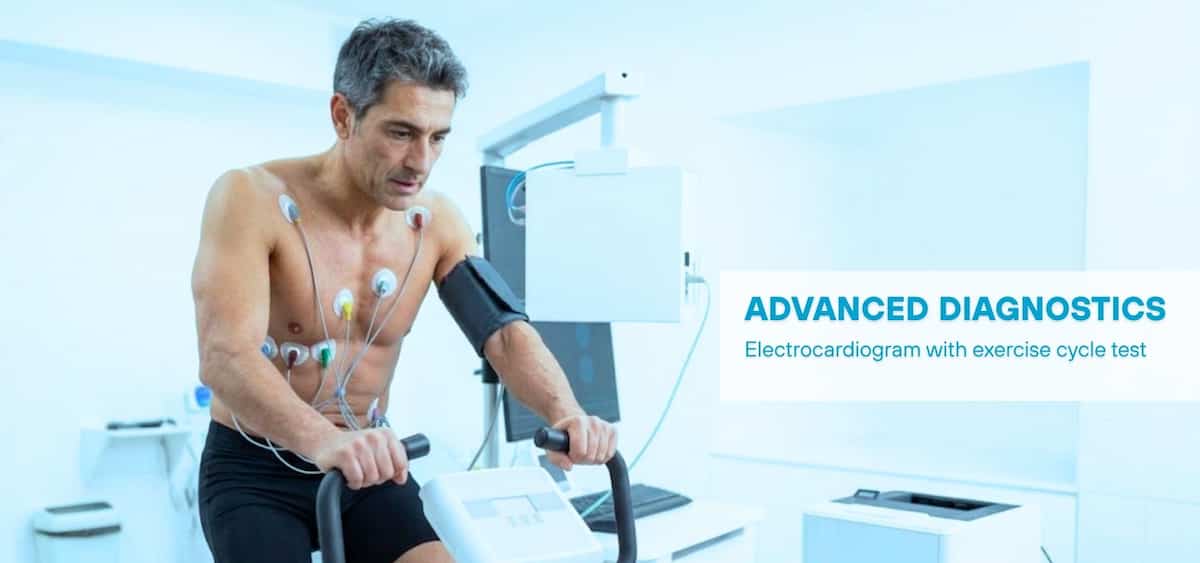
6. Cardiovascular & Metabolic Screening
Includes:
- Lipid profiles
- Blood markers
- Organ function indicators
These tests help identify patterns related to metabolic efficiency and systemic balance.
|
🔍 Did You Know?
Research indicates that combining multiple biomarkers (composite testing) provides a more accurate picture of aging and health status than relying on a single measurement.
|
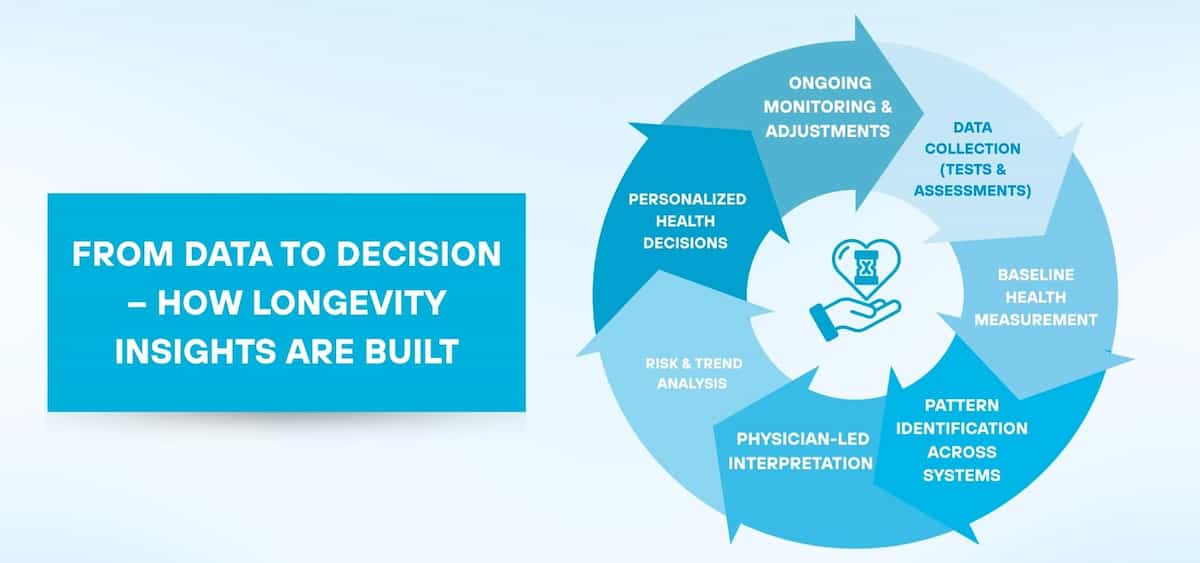
How These Diagnostics Work Together
Each diagnostic layer provides only part of the picture.
For example:
- DNA shows potential risk
- Epigenetics shows current influence
- Blood markers show current state
When combined, they allow physicians to:
- Identify patterns
- Compare baseline vs progress
- Track changes over time
This reduces the likelihood of acting on incomplete information.
Chronomedicine & Future Risk Mapping
The clinic incorporates elements of chronomedicine, which focuses on how biological processes change over time.
Instead of asking:
“What is happening now?”
The approach also asks:
“How is this changing over time?”
The Longevity Medical Center focuses on areas where structured diagnostics, repeated measurement, and physician oversight can provide consistent insight over time.
Rather than offering broad or undefined services, the clinic concentrates on three clearly defined strengths:
- Longitudinal monitoring
- Multi-layer diagnostic integration
- Compatibility with existing medical care
Each of these is supported by a defined system and repeatable process.
Key Medical Strength 1 – Structured Longitudinal Monitoring
One of the clinic’s core strengths is its ability to track biological changes over time through a 12-month structured framework.
This includes:
- Initial baseline assessment
- Scheduled reassessments every 3 months
- Data comparison across time intervals
This approach allows physicians to:
- Identify trends instead of relying on single results
- Observe whether markers are stable, improving, or declining
- Adjust monitoring strategies based on measurable changes
In simple terms, it works like tracking business performance across quarters rather than judging success from a single report.
|
🔍 Did You Know?
Longitudinal monitoring provides stronger insight than one-time testing because biological systems change continuously and are influenced by multiple factors.
|
Key Medical Strength 2 – Multi-Omic Diagnostic Integration
The clinic combines different types of biological data into a unified assessment model.
This includes:
- Genetic data (DNA testing)
- Epigenetic markers (gene expression changes)
- Microbiome data (gut bacteria composition)
- Metabolic and blood markers
Instead of analyzing each result separately, the clinic integrates these data points to understand how systems interact.
Key Medical Strength 3 – Integration with Existing Medical Therapies
The clinic does not operate in isolation from conventional healthcare.
Its programs are designed to work alongside:
- Ongoing medical treatments
- Prescribed medications
- Specialist care
This is important for individuals who:
- Already have diagnosed conditions
- Are under regular medical supervision
- Require continuity in care
The clinic’s role is to provide additional diagnostic clarity, not to replace primary treatment pathways.
This section presents observed patterns reported by individuals who have completed structured programs at the Longevity Medical Center.
These are not clinical guarantees or standardized outcomes.
They reflect individual experiences within a monitored framework and should be interpreted as directional observations, not predictive results.
Outcome 1 – Improved Visibility of Metabolic Function
Before:
- Limited understanding of internal metabolic processes
- Reliance on general health indicators without detailed breakdown
- Difficulty identifying the root cause of energy fluctuations or weight changes
After:
- Access to structured metabolic data through repeated testing
- Clearer interpretation of how different markers interact
- Ability to observe changes across quarterly assessments
Source:
Clinic-reported case observations based on structured monitoring programs
Outcome 2 – Structured Weight Management Tracking
Before:
- Weight management approached through general diet plans
- Lack of insight into body composition and metabolic efficiency
- Inconsistent results without measurable tracking
After:
- Body composition analysis conducted at defined intervals (e.g., 45 and 90 days)
- Data-supported understanding of fat distribution and metabolic patterns
This may also include approaches related to natural fat loss support.
- Improved ability to align nutritional strategies with biological response
Source:
Clinic-reported program data and patient-reported experiences
Outcome 3 – Enhanced Awareness of Biological Aging Indicators
Before:
- No clear measurement of biological age
- Aging assessed only through visible or subjective signs
- No tracking of aging speed or accumulated biological stress
After:
- Use of biological age assessments based on validated biomarkers
- Understanding of how fast the body is aging relative to baseline
- Ability to monitor trends over time using repeated measurements
Source:
Clinic diagnostic framework and longitudinal monitoring data
Outcome 4 – Improved Interpretation of Health Data
Before:
- Exposure to isolated lab reports without clear interpretation
- Difficulty connecting different health indicators
- Limited ability to make informed decisions based on data
After:
- Physician-led interpretation of multi-layer diagnostic results
- Structured explanation of relationships between systems (e.g., metabolism, inflammation)
- Increased clarity in understanding personal biological patterns
This clarity can support efforts toward brain performance improvement.
Source:
Clinical workflow and patient feedback within structured programs
|
🔍 Did You Know?
These outcomes reflect individual experiences reported within the clinic’s published materials and structured programs. Results vary between individuals. Diagnostic findings indicate biological patterns and potential risk markers, not certainty or guaranteed outcomes. Interpretation and decisions must always be guided by qualified medical professionals.
|
The Longevity Medical Center structures its services into defined programs rather than open-ended treatments.
Each program follows a diagnostics-first → physician interpretation → structured monitoring model.
Programs are not standardized packages; they are adjusted based on individual diagnostic findings.
The clinic’s framework is built around time-bound cycles, allowing measurable tracking instead of one-time assessments.
Longevity Program Starter Check-up)
|
Category
|
Details
|
|
Duration
|
Single-phase assessment (short visit)
|
|
Primary Objective
|
Establish baseline biological data
|
|
Diagnostics Included
|
DNA testing, metabolic markers, initial biological age indicators
|
|
Output
|
Structured diagnostic report
|
|
Physician Role
|
Interpretation of results and next-step planning
|
|
Follow-Up
|
Determines eligibility for extended programs
|
12-Month Prevention Program
|
Category
|
Details
|
|
Duration
|
12 months
|
|
Structure
|
Quarterly reassessments (every 3 months)
|
|
Core Focus
|
Metabolic regulation, biological aging markers
|
|
Monitoring Areas
|
Heart, lungs, oxidative stress, body composition
|
|
Diagnostic Frequency
|
Periodic testing across the year
|
|
Adjustment Model
|
Program adapted based on each assessment cycle
|
Weight Recovery Program
|
Category
|
Details
|
|
Duration
|
90-day structured cycle
|
|
Focus
|
Body composition and metabolic response
|
|
Key Metrics
|
Visceral fat, organ function indicators, blood markers
|
|
Assessment Points
|
Day 45 and Day 90
|
|
Method
|
Repeated measurement and adjustment
|
The Longevity Medical Center operates in a clinical, non-residential setting focused on diagnostics, monitoring, and physician-led evaluation.
It is not designed as a retreat or recovery space. The environment supports efficient, appointment-based visits.
Medical & Restorative Therapies
The clinic uses selected therapies as part of structured programs. These are applied based on diagnostic findings and always under medical supervision.
Key areas include:
- Regenerative medicine applications (non-invasive methods)
Some approaches also relate to skin health optimization.
- Clinical nutrition protocols
This may align with broader skin repair strategies depending on clinical needs.
- Sports medicine and movement-based assessments
- Metabolic support interventions
These therapies are not used in isolation. They are integrated within a broader diagnostic framework.
Clinical Facilities
The clinic includes infrastructure required for multi-layer diagnostics and monitoring.
Core facilities include:
- Diagnostic testing systems (blood, metabolic, and biomarker analysis)
- DNA and epigenetic testing integration
- Body composition and visceral fat analysis tools
- Cardiovascular and functional assessment equipment
The setup supports data collection, interpretation, and follow-up tracking.
Architecture, Environment & Digital Discipline
The clinic environment is:
- Urban and easily accessible
- Structured for short visits, not long stays
- Designed for privacy and controlled access
Appointments are scheduled to reduce waiting time and maintain confidentiality.
There is no emphasis on digital detox or retreat-style isolation. Instead, the clinic allows individuals to:
- Integrate visits into work schedules
- Continue professional responsibilities
- Minimize disruption to daily routines
The Longevity Medical Center follows a program-based pricing model rather than fixed public packages.
Costs vary depending on:
- Diagnostic depth
- Program duration
- Level of monitoring required
Pricing is typically provided after the initial assessment phase.
Pricing
|
Category
|
Details
|
|
Clinic Positioning
|
Premium preventive clinic
|
|
Stay Length
|
Outpatient / short visits
|
|
Entry Pricing
|
Not publicly disclosed
|
|
What’s Included
|
Diagnostics, physician review, reporting
|
|
Additional Costs
|
Program-specific testing and follow-ups
|
|
Program Structure
|
Multi-phase (baseline + monitoring)
|
|
Clinical Principle
|
Diagnostics-first, data-driven
|
How Programs Are Structured
Programs follow a consistent flow:
- Pre-Visit Preparation
Initial information collection and scheduling
- On-Site Diagnostics
Multi-layer testing (genetic, metabolic, physiological)
- Physician Interpretation
Results reviewed in clinical context
- Reporting & Planning
Structured feedback with monitoring plan
- Follow-Up Cycles
Periodic reassessment (e.g., quarterly)
This structure ensures decisions are based on measured data, not assumptions.
Length of Stay
The clinic does not operate as a residential facility.
Typical engagement includes:
- Short, scheduled visits
- Follow-up appointments across months
- Integration into existing travel or work routines
There is no requirement for long stays, making it suitable for individuals who prefer time-efficient medical engagement.
The Longevity Medical Center is designed for short, scheduled visits, not extended stays.
Most individuals plan their visits around:
- Business travel
- Existing trips to Italy
- Short medical appointments
The clinic’s location supports efficient access without long downtime.
Recommended Length of Stay
There is no fixed stay requirement.
Typical visit patterns include:
- Half-day or full-day diagnostic sessions
- Follow-up visits scheduled across months
- Periodic check-ins aligned with program cycles
Long-term engagement happens through repeat visits, not continuous stay.
How to Reach the Clinic?
- Nearest Airport: Verona Airport
- Transfer Time: Approximately 20–30 minutes
Transport options:
- Private car or taxi
- Rental vehicles
- Hotel-arranged transfers
🔗 Find best flights to Verona
🔗 Find car rentals in Verona
(Links provided for travel planning convenience only.)
Accommodation & Stay Planning
The clinic does not provide on-site accommodation.
Guests typically stay in:
- Hotels in Verona
- Apartments near Bussolengo
- Business-friendly accommodations close to transport links
🔗 Explore nearby hotels & apartments
What to Bring
For a smooth visit, it is useful to carry:
- Previous medical reports (if available)
- List of current medications
- Comfortable clothing for assessments
- Personal schedule for coordinating follow-ups
The Longevity Medical Center is positioned within the preventive longevity space, where outcomes are typically measured through data trends and patient-reported experience, rather than immediate clinical results.
Its reputation is based on:
- Structured diagnostic processes
- Physician-led interpretation
- Long-term monitoring frameworks
What Patients Commonly Report
Based on available clinic feedback and structured programs, individuals commonly report:
- Better understanding of personal health data
- Clearer insight into metabolic and biological patterns
- Improved ability to track changes over time
- Increased awareness of how lifestyle impacts biological markers
- More structured approach to health decision-making
These observations relate to clarity and tracking, not guaranteed health outcomes.
Media & Professional Recognition
The clinic aligns with broader research and concepts in the longevity field, including:
- Use of biological aging biomarkers
- Focus on metabolic plasticity
- Preventive medicine frameworks
Its approach reflects ideas discussed by experts such as:
- David Sinclair (epigenetic aging)
- Peter Attia (healthspan focus)
However, it is important to note:
- Longevity science is still evolving
- No single method is universally validated
- Clinical outcomes vary between individuals
The Longevity Medical Center represents a structured approach within the emerging field of preventive longevity medicine.
Unlike general wellness models, the clinic emphasizes measurement, repeatability, and physician-led interpretation. Its value lies in providing clarity through data rather than offering predefined outcomes.
For executives and high-performers, this approach aligns with how decisions are made in other areas—based on:
- Evidence
- Trends over time
- Structured evaluation
The clinic’s use of multi-layer diagnostics and 12-month monitoring cycles reflects a shift toward long-term biological tracking, rather than short-term intervention.
However, it is important to recognize the limitations of the field:
- Longevity science is still developing
- Biomarkers are improving but not definitive
- Individual variability remains high
This means the clinic should be viewed as a decision-support environment, not a solution provider.
In practical terms, it offers:
- Better visibility into biological processes
- A structured way to monitor change
- A framework for informed health planning
For individuals operating at a high level, the relevance is not in promises—but in reducing uncertainty and improving decision quality over time.
Is this a medical clinic or a wellness center?
The Longevity Medical Center operates as a physician-led medical clinic.
Its focus is on diagnostics, biological assessment, and preventive monitoring—not spa or wellness services.
Who is this clinic suitable for?
It is designed for:
- Executives and business leaders
- Founders and entrepreneurs
- Investors
- Professional athletes
- High-performers seeking structured health data
It is not intended for short-term relaxation or general wellness experiences.
Are programs personalized?
Yes. Programs are built based on:
- Diagnostic results
- Biological markers
- Physician interpretation
There are no fixed, one-size-fits-all plans.
How is privacy handled?
The clinic follows a controlled, appointment-based model:
- Limited patient flow
- Private consultations
- Structured scheduling
This supports confidentiality and discretion.
Can I continue working during the program?
Yes. The clinic is designed for time efficiency:
- Short visits instead of long stays
- Flexible scheduling
- Integration into business travel
There is no requirement to disconnect from work.
Can people with chronic conditions attend?
Programs are designed to work alongside existing medical care.
They do not replace primary treatment or specialist supervision.
All participation should be aligned with a personal physician.
Is the clinic focused on prevention or treatment?
The primary focus is prevention and monitoring.
The clinic does not operate as a treatment center for acute medical conditions.
How should value be evaluated?
Value depends on the individual’s need for:
- Structured biological insight
- Long-term monitoring
- Data-supported decision-making
It is less about immediate results and more about clarity over time.
High performance is often measured in output—results, speed, and execution.
But long-term performance depends on something less visible: how well the system is maintained over time.
The Longevity Medical Center provides a structured environment where individuals can step back and review their biological data with the same level of attention they apply to business or investment decisions.
This is not about quick fixes or immediate change.
It is about understanding patterns, identifying signals early, and making informed adjustments based on measurable indicators.
For executives, founders, and high-performers, the value lies in:
- Reducing uncertainty
- Improving clarity
- Supporting long-term capacity
The clinic does not offer guarantees. It offers structure, measurement, and interpretation.
In a world where most decisions are reactive, this approach introduces a more deliberate process one that aligns with planning, tracking, and continuous evaluation.
👉 View Longevity Program
↩ Return to ExtendMy.Life
↑ Back to Top
Disclaimer
This content is provided for informational and editorial purposes only. It does not constitute medical advice, diagnosis, or treatment. No doctor–patient relationship is established through this material. The information presented reflects a structured overview of the clinic’s approach, diagnostic methods, and program design. It is intended to support general understanding, not individual medical decision-making. All diagnostic tools referenced are used to identify biological markers and potential risk patterns. These indicators do not provide certainty, prediction, or guaranteed outcomes. Biological systems are complex and influenced by multiple factors, including genetics, environment, and lifestyle. Any health-related decisions, including participation in clinical programs, should be made in consultation with a qualified and licensed medical professional who understands your personal medical history. The field of longevity and preventive medicine is evolving. While many diagnostic tools and frameworks are supported by current research, no single method has universal validation across all populations. Readers are encouraged to approach all health information with appropriate professional guidance.
References
Belsky, D.W., Caspi, A., Arseneault, L., Baccarelli, A., Corcoran, D.L., Gao, X., Hannon, E., Harrington, H.L., Rasmussen, L.J.H., Houts, R., Moffitt, T.E. and others (2024) Biomarkers of aging for human studies, Nature Medicine.
Ermolaeva, M.A. (2021) Metabolic plasticity and aging: mechanisms and interventions, Cell Metabolism.
Frontiers in Public Health (2023) Public health challenges of global aging populations, Frontiers Media SA.
Horvath, S. and Raj, K. (2018) DNA methylation-based biomarkers and the epigenetic clock theory of ageing, Nature Reviews Genetics.
Kennedy, B.K., Berger, S.L., Brunet, A., Campisi, J., Cuervo, A.M., Epel, E.S., Franceschi, C., Lithgow, G.J., Morimoto, R.I., Pessin, J.E., Rando, T.A. and others (2014) Geroscience: linking aging to chronic disease, Cell.
Lopez-Otín, C., Blasco, M.A., Partridge, L., Serrano, M. and Kroemer, G. (2013) The hallmarks of aging, Cell.
MDPI (2024) Molecular mechanisms of aging and longevity, International Journal of Molecular Sciences.
Nature (2024) Longevity science and preventive interventions, Nature Publishing Group.
Scott, A.J. (2021) The longevity imperative: building a better society for healthier, longer lives, Harvard Business Review Press.
Sinclair, D.A. (2019) Lifespan: why we age and why we don’t have to, Atria Books.