CarpeDiem Longevity operates as a medically governed longevity clinic that integrates multiple diagnostic systems into one structured workflow. The goal is to reduce fragmentation between testing, interpretation, and follow-up.
The clinic uses a combination of laboratory diagnostics, functional testing, and biomarker analysis to assess how different systems in the body are functioning together. This includes metabolic, cardiovascular, inflammatory, and neurological domains.
One of its defining features is the depth of analysis. A single laboratory assessment can generate extensive biological data, which is then interpreted by physicians rather than presented as raw numbers.
Programs are designed to be time-efficient. Short, intensive formats allow individuals with demanding schedules to complete advanced assessments within a few days, without long stays or disruption to work.
At a Glance – CarpeDiem Longevity
|
Category
|
Details
|
|
Location
|
Ljubljana, Slovenia
|
|
Clinic Type
|
Physician-led longevity diagnostics clinic
|
|
Core Focus
|
Preventive medicine and biological age analysis
|
|
Typical Stay
|
2–5 days depending on program
|
|
Diagnostic Depth
|
Multi-system biomarker analysis
|
|
Signature Method
|
Odometer vs Speedometer biological tracking
|
|
Environment
|
Urban clinical setting
|
|
Privacy Level
|
High
|
|
Professional Recognition
|
Based on international biomarker research frameworks
|

CarpeDiem Longevity is structured for individuals who rely on clear data, not assumptions. The clinic focuses on measurable biological signals and physician-led interpretation rather than generalized health advice.
Its approach is built around depth, structure, and repeatability. Every assessment is designed to reduce uncertainty and provide a clearer understanding of how different systems in the body are functioning together.
Deep Data Integration
One of the defining features of the clinic is the scale of data collected during diagnostics. A single laboratory analysis can generate extensive biological data across multiple systems.
This includes metabolic markers, inflammatory indicators, functional performance data, and epigenetic signals. The purpose is not to collect more data, but to create a more complete biological map.
Validated Biomarker Framework
The clinic uses a structured biomarker model based on international research consensus. These biomarkers span:
- Physiological systems
- Inflammatory pathways
- Functional capacity
- Epigenetic changes
Instead of relying on isolated metrics, the clinic evaluates how these markers interact across systems.
Odometer vs Speedometer Model
CarpeDiem applies a dual-measurement framework:
- Odometer → total accumulated biological damage
- Speedometer → current rate of aging
This distinction helps separate past exposure from current trajectory. It allows physicians to understand whether the focus should be on stabilization, monitoring, or further investigation.
Multi-System Evaluation
Rather than focusing on a single organ or condition, the clinic evaluates multiple systems at the same time.
This includes:
- Cardiovascular function
- Metabolic health
- Inflammatory status
- Neurological indicators
- Physical performance
This system-wide view helps identify patterns that may not be visible through isolated testing.
CarpeDiem Longevity is built around a simple idea: give high-performing individuals a clear, structured view of their biological state before problems appear.
The clinic does not focus on treatment. It focuses on understanding.
Its role is to organize complex biological data into a format that supports long-term decisions—without urgency, pressure, or assumptions.
Clinical Purpose
The clinical purpose is centered on early identification and structured interpretation.
Instead of waiting for symptoms, the clinic evaluates signals that may indicate future risk. These signals often appear years before traditional diagnosis.
The approach includes:
- Identifying early biological imbalances
- Understanding how different systems interact
- Mapping long-term health trajectories
- Supporting informed, data-driven decisions
The goal is not to predict outcomes, but to reduce uncertainty.
Who This Clinic Is Designed For
CarpeDiem Longevity is designed for individuals who operate at a high level and require clarity, not general advice.
This includes:
- Executives managing high cognitive and physical demands
- Founders and entrepreneurs balancing performance and longevity
- Investors focused on long-term capacity and resilience
- Professional and endurance athletes tracking performance metrics
- High-performers seeking structured biological insight
It is not designed for acute care or symptom-based treatment. The focus remains on proactive understanding.
Focus Areas
|
Focus Area
|
What This Means in Practice
|
|
Medical Discipline
|
Preventive and longevity medicine
|
|
Core Biological System
|
Multi-system (metabolic, cardiovascular, inflammatory)
|
|
Environment & Design
|
Clinical, data-driven setting
|
|
Program Structure
|
Short intensive diagnostics with optional long-term tracking
|
|
Lifestyle as Medicine
|
Structured inputs: nutrition, movement, recovery
|
|
Privacy
|
Controlled access and high discretion
|
|
Long-Term Strategy
|
Backcasting from future health and performance goals
|
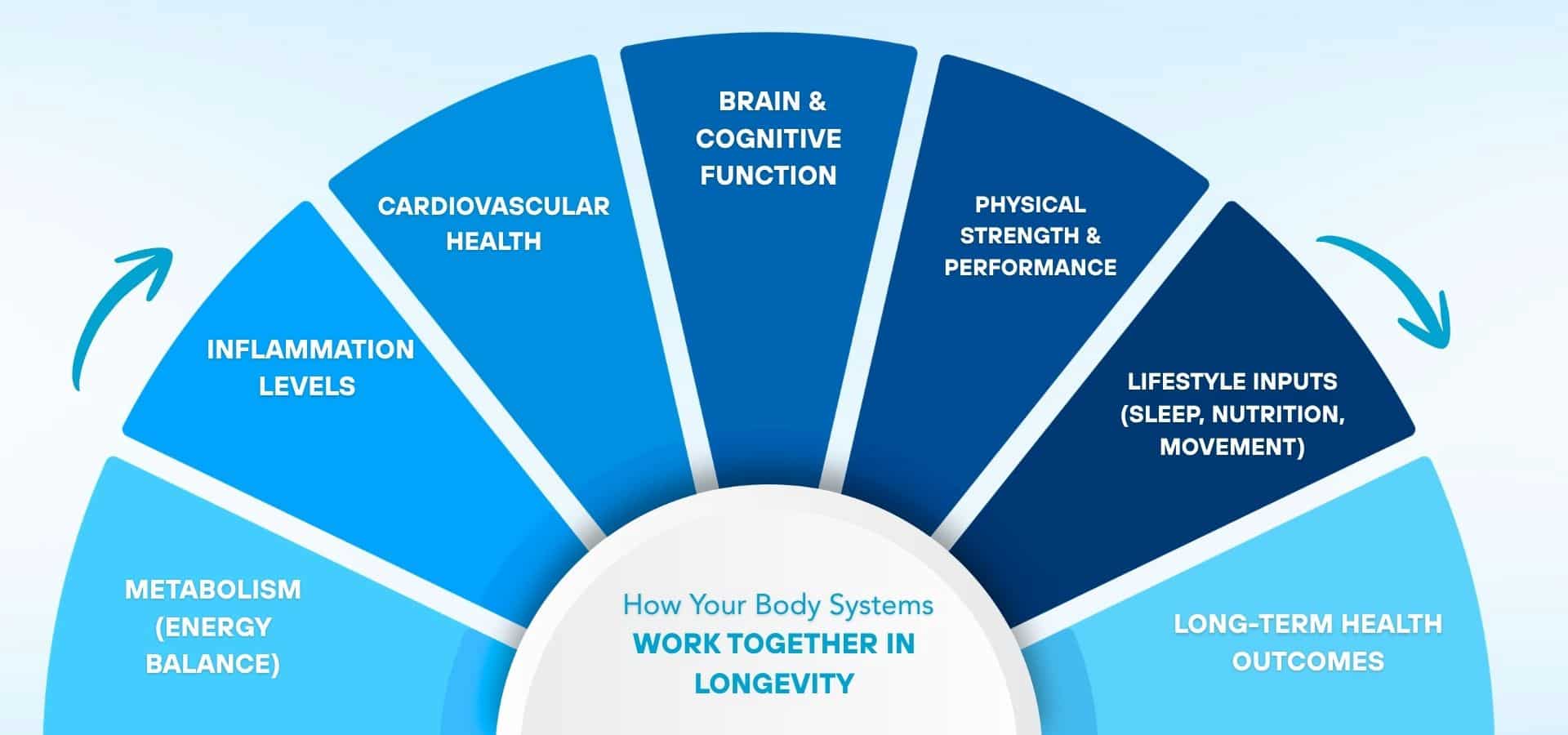
CarpeDiem Longevity follows a systems-based approach to preventive medicine. Instead of treating isolated symptoms, the clinic focuses on how different biological systems interact over time.
This model aligns with the shift from reactive care to early-stage evaluation. The goal is to identify changes before they develop into measurable disease.
A key part of this philosophy is physician interpretation. Data alone does not provide answers. It must be understood in context across systems, timelines, and individual variability.
The clinic avoids trend-driven interventions and focuses on measurable, research-backed markers that can be tracked and reviewed over time.
Core System Focus
The clinic places strong emphasis on interconnected systems that influence long-term health and performance.
These include:
- Metabolic regulation (energy use and glucose control)
- Inflammatory response (chronic low-grade inflammation)
- Cardiovascular function
- Physical strength and functional capacity
These systems do not operate independently. A change in one often affects the others.
For example, reduced metabolic efficiency can increase inflammation, which may impact cardiovascular health and physical performance.
|
🔍 Did You Know?
Low muscle strength is associated with significantly higher long-term health risk, making it one of the most reliable functional indicators in longevity research
|
Lifestyle as a Medical Tool
CarpeDiem treats lifestyle inputs as measurable variables rather than general advice.
These include:
- Nutrition patterns and metabolic response
- Physical activity and strength capacity
- Sleep quality and recovery cycles
Each of these factors is evaluated in relation to biological data, not in isolation.
The aim is to understand how daily habits influence internal systems over time, rather than applying broad recommendations.
|
🔍 Did You Know?
Structured lifestyle interventions have shown measurable improvement in chronic condition markers in a majority of participants when consistently followed
|
CarpeDiem Longevity is built on a diagnostics-first workflow. Every program begins with structured data collection before any interpretation takes place.
The goal is to create a detailed, system-level view of how the body is functioning. This reduces reliance on assumptions and allows physicians to work with measurable biological signals.
The assessment process combines laboratory testing, functional evaluation, and performance metrics into one integrated model.
Diagnostic Assessment Includes
The clinic uses a combination of diagnostic layers to evaluate different aspects of biological function.
These typically include:
- Multi-omic laboratory analysis across metabolic and inflammatory markers
- Epigenetic testing to estimate biological age
- Cardiovascular risk indicators such as blood pressure and lipid markers
- Functional performance metrics including strength and endurance
- Inflammatory markers such as hsCRP and IL-6
These diagnostics are not viewed separately. They are combined to understand how different systems influence each other.
|
🔍 Did You Know?
Biological age can be estimated through DNA methylation patterns, which change in predictable ways over time
|
Chronomedicine & Future Risk Mapping
CarpeDiem extends diagnostics beyond current measurements by looking at trends and trajectories.
This includes:
- Evaluating how fast biological changes are occurring
- Comparing current data with population benchmarks
- Identifying patterns that may indicate future risk
This approach is sometimes described as separating:
- Current biological state
- Direction of change over time
The purpose is not prediction, but structured awareness. It allows individuals to understand where they are today and how their biological systems may evolve if current patterns continue.
CarpeDiem Longevity focuses on structured analysis rather than isolated testing. Its strengths lie in how data is combined, interpreted, and tracked over time.
Instead of offering single-point insights, the clinic builds a layered understanding of biological function. This allows patterns to be identified across systems rather than within one metric.
Composite Biomarker Analysis
One of the clinic’s core strengths is the use of combined biomarkers rather than relying on single values.
Different systems in the body age at different rates. Looking at one marker alone may not reflect the full picture. By combining multiple indicators, physicians can better understand how systems interact.
This approach supports a more balanced interpretation of biological state.
|
🔍 Did You Know?
Experts agree that composite biomarkers provide stronger insight into aging patterns than individual markers alone
|
Performance-Based Longevity Metrics
CarpeDiem integrates physical performance into its evaluation model.
This includes measurable indicators such as:
- Cardiorespiratory fitness (VO2 max)
- Muscle strength
- Functional movement capacity
These metrics reflect how well the body performs under real conditions, not just laboratory values.
They provide a practical layer to clinical data, linking internal markers with external performance.
Continuous Data Tracking and Adaptation
The clinic does not treat diagnostics as a one-time event. For individuals in extended programs, data is tracked over time.
This includes:
- Repeat laboratory testing
- Wearable device data
- Periodic performance assessments
The purpose is to observe changes, not just capture a single snapshot.
As new data becomes available, interpretations can be refined, allowing for a more accurate understanding of long-term patterns.
CarpeDiem Longevity presents outcomes in terms of observed changes in biological markers and functional capacity. These are not guarantees, but structured observations based on reported data and program participation.
The focus remains on measurable shifts rather than subjective claims.
Outcome 1 – Reduced Medication Dependency
Before:
Individuals managing long-term conditions often rely on ongoing medication to maintain stability in areas such as blood sugar or blood pressure.
After:
With structured lifestyle interventions and continuous monitoring, some individuals report a reduced dependency on medication under physician supervision.
Source:
Clinical lifestyle intervention data
Outcome 2 – Improved Functional Capacity
Before:
Reduced strength, lower endurance, and limited physical capacity are commonly observed in individuals with declining metabolic or cardiovascular function.
After:
Measured improvements in strength, mobility, and endurance markers are reported following structured evaluation and monitoring.
Source:
Clinical observation data
|
⚠️ Editorial Note
These outcomes reflect individual experiences reported within structured programs. Results vary based on personal conditions, adherence, and external factors. Diagnostics indicate patterns and risk signals, not guaranteed outcomes.
|

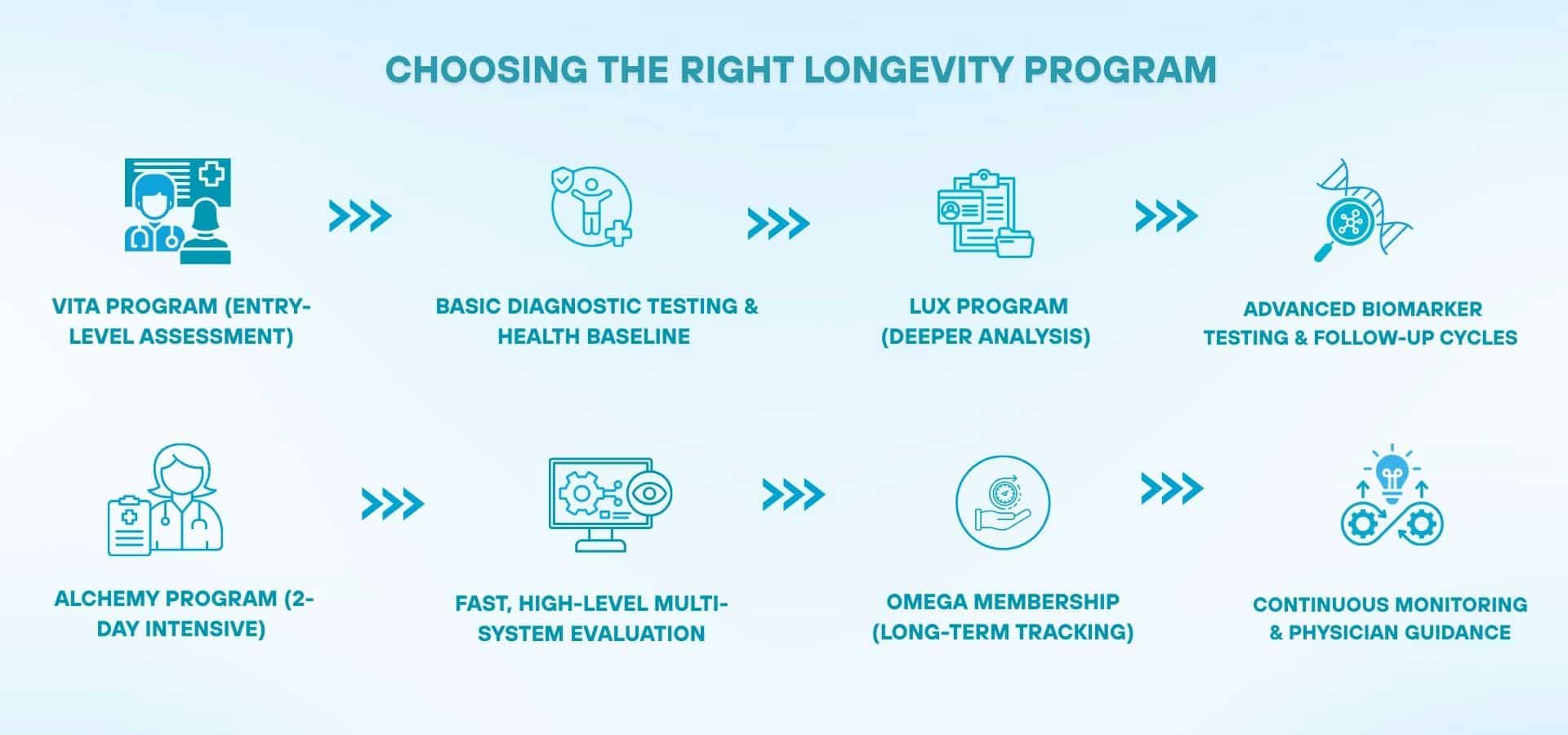
CarpeDiem Longevity offers structured programs designed around diagnostic depth, time efficiency, and ongoing evaluation. Each program differs in duration, level of analysis, and continuity of physician oversight.
The focus remains on assessment and interpretation rather than treatment delivery.
Alchemy (2-Day Intensive)
The Alchemy program is designed for individuals with limited time who require a high level of diagnostic insight within a short period.
Duration:
24–48 hours
Structure includes:
- Multi-system laboratory diagnostics
- Functional performance assessments
- Cardiovascular and metabolic evaluation
- Initial physician-led interpretation
This format allows participants to complete a comprehensive evaluation without extended stays.
Omega Membership (Long-Term Program)
Omega is a continuous care model built around long-term monitoring and iterative evaluation.
Duration:
Ongoing (membership-based)
Structure includes:
- Dedicated physician oversight
- Periodic diagnostic reassessment
- Integration of wearable data and tracking
- Continuous updates based on biological changes
This model is designed for individuals who want to track biological patterns over time rather than rely on a single assessment.
Lux Membership (Advanced Diagnostics Program)
The Lux program sits between short-term diagnostics and long-term membership.
Duration:
Multi-day program with follow-up cycles
Structure includes:
- Expanded laboratory testing
- Deeper biomarker analysis
- Scheduled reassessment cycles
- Data tracking between visits
This option is typically suited for individuals seeking more depth than a short program, without committing to continuous membership.
Vita Membership (Entry-Level Assessment)
Vita is the foundational program focused on identifying early imbalances.
Duration:
Short-term assessment with optional follow-up
Structure includes:
- Baseline diagnostic testing
- Metabolic and inflammatory marker analysis
- Initial physician review
This program provides a starting point for individuals entering preventive longevity assessment.
CarpeDiem Longevity operates within a clinical setting designed for structured evaluation rather than extended stays. The environment supports efficiency, privacy, and focused assessment.
The clinic does not position itself as a treatment or recovery facility. Instead, it integrates diagnostic infrastructure with controlled, physician-led evaluation.
Medical & Restorative Therapies
The clinic’s primary focus is diagnostics and interpretation. Any supportive interventions are integrated within a medically supervised framework and aligned with measured biological data.
These may include:
- Physician-guided lifestyle adjustments based on diagnostic findings
- Structured movement and performance assessments
- Nutritional analysis linked to metabolic markers
- Recovery-focused protocols where clinically relevant
All interventions are secondary to diagnostics and are evaluated in relation to measurable biological signals.
Clinical Facilities
CarpeDiem Longevity combines multiple diagnostic tools within a single location to reduce fragmentation.
Facilities typically support:
- Advanced laboratory diagnostics and biomarker testing
- Functional performance assessment equipment
- Cardiovascular evaluation tools
- Data integration systems for multi-system analysis
The infrastructure is designed to support a comprehensive evaluation within a limited timeframe.
Architecture, Environment & Digital Discipline
The clinic is based in an urban setting, allowing easy access and integration into existing travel or work schedules.
The environment is structured to support:
- High levels of privacy and discretion
- Minimal disruption to professional routines
- Focused, time-efficient visits
Digital inputs are managed to reduce distraction during assessments, allowing individuals to remain engaged in the evaluation process.
CarpeDiem Longevity positions its programs within a premium diagnostic framework. Pricing reflects the depth of analysis, physician involvement, and level of ongoing evaluation.
Costs are typically not standardized publicly, as programs are structured based on individual diagnostic scope and follow-up requirements.
Pricing
|
Category
|
Details
|
|
Clinic Positioning
|
Premium longevity diagnostics clinic
|
|
Stay Length
|
Typically 2–5 days depending on program
|
|
Entry Pricing
|
Not publicly disclosed
|
|
What’s Included
|
Diagnostics, physician interpretation, reporting
|
|
Additional Costs
|
Follow-up testing, extended monitoring
|
|
Program Structure
|
Tiered programs and membership options
|
|
Clinical Principle
|
Diagnostics-first, physician-led evaluation
|
How Programs Are Structured
Programs follow a consistent and structured flow to ensure clarity and efficiency.
1. Pre-visit preparation
Initial data collection, medical history review, and planning of diagnostic scope.
2. On-site diagnostics
Comprehensive testing across multiple systems within a defined timeframe.
3. Physician interpretation
Results are reviewed and explained in context, focusing on patterns rather than isolated values.
4. Reporting
A structured report is provided, outlining key findings and observed biological trends.
Length of Stay
The length of stay depends on the program selected:
- Short programs (e.g., Alchemy): 2 days
- Mid-level programs: 3–5 days
- Long-term memberships: periodic visits with ongoing monitoring
The structure is designed to minimize time away from professional responsibilities while maintaining diagnostic depth.
Planning a visit to CarpeDiem Longevity is typically straightforward, as programs are designed to fit within existing travel or work schedules.
The clinic operates in an urban setting, which allows individuals to combine diagnostic visits with business travel or short stays rather than planning extended time away.
Recommended Length of Stay
The recommended stay depends on the selected program and level of diagnostic depth.
- Short intensive programs: 2 days
- Comprehensive assessments: 3–5 days
- Ongoing programs: periodic visits scheduled over time
Most individuals choose shorter, structured visits to minimize disruption while still completing full evaluations.
How to Reach the Clinic?
CarpeDiem Longevity is located in Ljubljana, the capital of Slovenia, with access to regional and international travel routes.
- Nearest airport: Ljubljana Jože Pučnik Airport
- Transfer time: Approximately 20–30 minutes to the city center
- Transport options: Private transfer, taxi, or car rental
🔗 Find best flights to Ljubljana
🔗 Find car rentals in Ljubljana
Links provided for travel planning convenience only.
Accommodation & Stay Planning
CarpeDiem Longevity does not typically operate as a residential clinic. Most individuals arrange accommodation nearby.
Ljubljana offers a range of hotels and serviced apartments within close distance of the clinic, allowing flexible scheduling and easy access.
🔗 Explore nearby hotels & apartments
What to Bring
Preparation is minimal and focused on practicality.
Typically recommended:
- Personal identification and medical history (if available)
- Comfortable clothing for assessments
- Any current health reports or previous test results
The clinic provides guidance in advance to ensure all required information is available before arrival.
CarpeDiem Longevity presents its outcomes through observed patterns in biological data and participant feedback. The focus remains on measurable changes and reported experiences rather than claims.
The clinic positions itself within a growing field of preventive and longevity-focused medicine, where structured diagnostics and long-term tracking are becoming more common.
What Patients Commonly Report
Individuals who complete structured programs often describe changes in how they understand their health rather than immediate outcomes.
Commonly reported themes include:
- Increased clarity around biological markers and health risks
- Better understanding of how lifestyle impacts internal systems
- Improved awareness of physical performance and recovery patterns
- Greater structure in long-term health planning
These observations reflect perception and understanding, not guaranteed clinical results.
Media & Professional Recognition
The clinic’s framework aligns with broader research in longevity science, particularly in areas such as:
- Biomarker-based aging assessment
- Multi-system evaluation models
- Preventive and predictive medicine
Its approach reflects principles discussed by researchers and clinicians in the longevity field, including work associated with David Sinclair and Peter Attia.
Recognition in this space is typically linked to alignment with emerging scientific frameworks rather than traditional medical rankings.
CarpeDiem Longevity reflects a broader shift in healthcare from reactive treatment to structured, data-led prevention. For executives and high-performers, the real challenge is not access to information, but making sense of it. The clinic addresses this by organizing complex biological data into a clear, structured framework that supports better long-term decisions.
Its model is built on diagnostics, not assumptions. By combining multi-system testing with physician-led interpretation, it creates a more complete picture of how the body is functioning over time. At the same time, the longevity field is still evolving. Biomarkers provide useful signals, but they do not offer certainty. Within this context, CarpeDiem positions itself not as a solution, but as a system for understanding helping individuals assess their biological state and make more informed decisions about performance and longevity.
Is CarpeDiem Longevity a medical clinic or a wellness center?
CarpeDiem Longevity operates as a physician-led clinic focused on preventive diagnostics. It is not positioned as a wellness center or spa. The core approach is based on structured medical evaluation, biomarker analysis, and physician interpretation rather than relaxation or lifestyle services.
Who is this clinic best suited for?
The clinic is designed for individuals who require clarity and efficiency. This typically includes executives, founders, investors, and athletes who want structured insight into their biological state. It is less suited for individuals seeking treatment for immediate symptoms or acute medical care.
Are the programs personalized?
Yes, programs are built around individual biological data. Diagnostic results are interpreted by physicians, and findings are presented in the context of each person’s health profile. The focus is on understanding patterns rather than applying general recommendations.
How is privacy handled?
The clinic operates with a high level of discretion. Data collection, analysis, and reporting are managed within a controlled environment. Access to personal health information is limited and handled under medical confidentiality standards.
Can I stay connected to work during the program?
Yes, programs are designed to fit within professional schedules. The clinic’s urban setting allows individuals to remain connected if needed, although certain assessments may require focused participation during specific sessions.
Does the clinic treat chronic conditions like diabetes or hypertension?
The clinic focuses on identifying biological patterns and potential risk factors. It does not replace primary medical care or provide direct treatment for chronic conditions. Any treatment decisions should be made with a personal physician.
How should I think about value versus cost?
The value of the clinic lies in structured insight rather than immediate outcomes. For individuals managing long-term performance and health, understanding biological patterns may support better decisions over time. However, results are not guaranteed, and the benefit depends on how the information is used after the program.
High performance often comes with constant forward movement—decisions, deadlines, and ongoing pressure. In that environment, health is usually managed reactively, only when something starts to feel off.
CarpeDiem Longevity introduces a different approach. It creates space for structured evaluation, where biological data is gathered, organized, and interpreted before problems appear.
This is not about stepping away from performance. It is about understanding the systems that support it.
By combining multi-system diagnostics with physician-led interpretation, the clinic provides a clearer view of how the body is functioning today and how it may change over time. This allows individuals to move from guesswork to informed awareness.
There are no promises attached to this process. No guarantees of outcomes or predefined results. The value lies in the clarity it provides.
For executives, founders, and high-performers, this kind of structured pause can act as a checkpoint one that helps align long-term health with long-term performance.
👉 View Longevity Program
↩ Return to ExtendMy.Life
↑ Back to Top
Disclaimer
This content is provided for informational and editorial purposes only. It does not constitute medical advice, diagnosis, or treatment, and it does not establish a doctor–patient relationship. The information presented reflects general research, clinical frameworks, and reported observations. These may not apply to every individual. Diagnostic tools and biomarkers can indicate patterns and potential risks, but they do not predict outcomes with certainty. The field of longevity medicine is still evolving. While many approaches are supported by emerging research, long-term evidence in humans may be limited for certain interventions. All medical decisions, including testing, treatment, and lifestyle changes, should be made in consultation with a qualified healthcare professional who understands your personal medical history. Readers should use this information as a reference for understanding, not as a basis for medical action.
References
Attia, P. (2023) Outlive: The Science and Art of Longevity. New York: Harmony Books.
Belsky, D.W. et al. (2022) ‘Quantification of the pace of biological aging in humans through a blood test’, eLife, 11, e73420.
Ferrucci, L. et al. (2020) ‘Measuring biological aging in humans: A quest’, Aging Cell, 19(2), e13080.
Horvath, S. (2013) ‘DNA methylation age of human tissues and cell types’, Genome Biology, 14(10), p. R115.
López-Otín, C., Blasco, M.A., Partridge, L., Serrano, M. and Kroemer, G. (2013) ‘The hallmarks of aging’, Cell, 153(6), pp. 1194–1217.
López-Otín, C., Kroemer, G. and Hallmarks of Aging Consortium (2023) ‘Hallmarks of aging: An expanding universe’, Cell, 186(2), pp. 243–278.
Sinclair, D.A. (2019) Lifespan: Why We Age and Why We Don’t Have To. London: Thorsons.
World Health Organization (2021) Decade of Healthy Ageing: Plan of Action. Geneva: World Health Organization.
Knowler, W.C. et al. (2002) ‘Reduction in the incidence of type 2 diabetes with lifestyle intervention or metformin’, New England Journal of Medicine, 346(6), pp. 393–403.
López-Otín, C. and Kroemer, G. (2021) ‘Hallmarks of health’, Cell, 184(1), pp. 33–63.