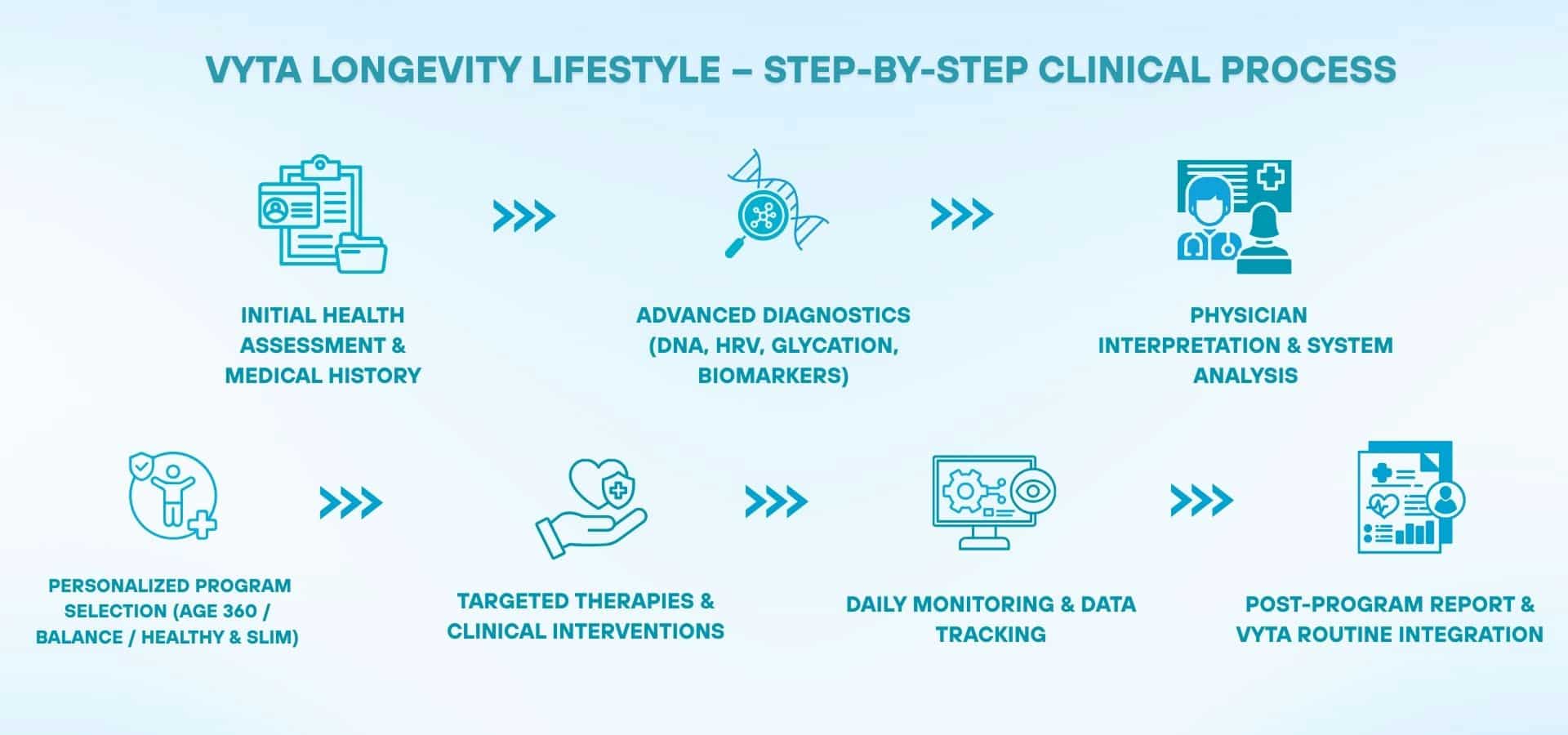
VYTA Longevity Lifestyle was founded by Dr. Umberto Carraro, who serves as Medical Director and leads a multidisciplinary clinical team of over 20 specialists. This includes expertise across cardiology, immunology, neurology, nutrition, and sports medicine, forming a coordinated framework for system-level health evaluation.
The primary clinical hub is located in Abano Terme, a region known for its long-standing integration of therapeutic mineral resources within medical practice. Additional centers operate in Milan and Rome, supporting accessibility within major urban environments.
The clinic follows a structured care model designed for efficiency and clarity:
- Phase 1: Diagnostic Mapping
Comprehensive biological assessment, including DNA testing, oxidative stress markers, HRV, and glycation analysis.
- Phase 2: Physician Interpretation
Clinical review of data to identify patterns across metabolic, cardiovascular, and neurological systems.
- Phase 3: Program Structuring
Allocation into defined pathways such as AGE 360, Healthy & Slim, or Balance.
- Phase 4: Continuity & Monitoring
Integration into the VYTA Routine, a structured follow-up system designed to extend monitoring beyond the on-site phase.
This model allows high-efficiency engagement, often within 3 to 14 days, without requiring extended absence from professional responsibilities.
To understand how this model compares, a comparison of Italy’s top longevity clinics provides broader context across different clinical approaches.
At a Glance – VYTA Longevity Lifestyle
|
Category
|
Details
|
|
Location
|
Abano Terme, Italy
|
|
Clinic Type
|
Preventive longevity clinic
|
|
Core Focus
|
Biological age mapping and system-level diagnostics
|
|
Typical Stay
|
3–14 days
|
|
Diagnostic Depth
|
DNA analysis, AGE Reader (glycation), HRV testing
|
|
Signature Method
|
VYTA Routine (continuous monitoring system)
|
|
Environment
|
Clinical setting integrated with thermal resources
|
|
Privacy Level
|
High
|
|
Professional Recognition
|
Featured in national publications and medical discussions
|
High-performance individuals typically operate within constrained schedules and require clarity rather than broad recommendations. VYTA Longevity Lifestyle is structured to meet this requirement through measurable diagnostics, physician-led interpretation, and defined program pathways. This is particularly relevant when considering burnout patterns in high-performance professionals over time.
Structural Differentiators
- Diagnostics-First Framework
Programs begin only after structured biological mapping, including DNA profiling, HRV analysis, and glycation measurement.
- Named Diagnostic Technologies
- AGE Reader for tissue glycation and cardiovascular risk
- HRV analysis for autonomic nervous system function
- Redoxomic testing for oxidative stress
- Defined Clinical Interventions
- Electric whole-body cryotherapy at -90°C
- Intermittent Hypoxic-Hyperoxic Therapy (IHHT)
- Medical-grade intravenous nutrient protocols
- Systemic ozone bio-modulation
- Multidisciplinary Oversight
A coordinated team of specialists ensures that findings are interpreted across systems rather than in isolation.
- Continuity Through Structured Monitoring
The VYTA Routine provides an ongoing framework for tracking biological markers and maintaining adherence beyond the clinic environment.
USP & Key Takeaways
- Structured, data-driven health evaluation
- Physician-led interpretation of all diagnostics
- Integration of medical, nutritional, and physiological systems
- Short-duration, high-efficiency programs
- Focus on long-term biological tracking rather than short-term outcomes
This reflects broader shifts in how work and health interact, including why traditional work-life balance models are no longer effective.
Clinical Purpose
VYTA Longevity Lifestyle is designed around a single operational goal:
to provide structured visibility into biological systems before dysfunction becomes clinically visible.
The clinic does not operate within a reactive healthcare model. Instead, it focuses on identifying early-stage deviations across key systems such as metabolism, inflammation, and autonomic regulation. This approach allows for the detection of patterns that may otherwise remain unobserved in standard clinical settings.
The clinical purpose can be understood through three core functions:
- Early Risk Identification
Diagnostic tools such as DNA profiling, glycation measurement (AGE Reader), and HRV analysis are used to detect early biological stress markers. These indicators do not diagnose disease but highlight potential areas of vulnerability.
- System-Level Understanding
Rather than evaluating isolated symptoms, the clinic assesses how multiple systems interact. For example, metabolic inefficiency, chronic inflammation, and nervous system imbalance are interpreted as interconnected processes rather than separate conditions.
- Long-Term Planning Support
The output of the clinical process is not a short-term intervention, but a structured framework that supports ongoing decision-making. This includes measurable baselines, repeatable assessments, and integration into daily routines through continuous monitoring.
The emphasis remains on clarity, structure, and interpretation, avoiding urgency-based positioning or outcome-driven claims.
VYTA Longevity Lifestyle is structured for individuals who operate in environments where performance, decision-making, and time efficiency are critical. Many individuals in this group also rely on preventive health frameworks for executives to maintain long-term clarity.
Primary Profiles
- Executives & Senior Leaders
Individuals managing high cognitive loads and complex responsibilities who require structured insight into stress, recovery, and long-term resilience.
- Founders & Entrepreneurs
Professionals navigating sustained pressure and irregular schedules, seeking measurable understanding of internal systems rather than symptomatic management.
- Investors & Decision-Makers
Individuals who prioritize data-driven frameworks and apply similar principles to personal health evaluation.
- Professional Athletes & High-Performance Individuals
Those requiring detailed physiological monitoring, particularly related to recovery, autonomic balance, and metabolic efficiency.
- Time-Constrained Professionals
Individuals who cannot commit to extended recovery periods and require short, intensive, and structured clinical engagement.
Focus Areas
|
Focus Area
|
What This Means in Practice
|
|
Medical Discipline
|
Preventive and systems-based medicine with physician oversight
|
|
Core Biological System
|
Metabolism, inflammation, autonomic nervous system
|
|
Environment & Design
|
Clinical setting integrated with thermal therapeutic resources
|
|
Program Structure
|
Short-duration, diagnostics-led pathways (3–14 days)
|
|
Lifestyle as Medicine
|
Structured nutrition, movement, and stress regulation protocols
|
|
Privacy
|
High-discretion environment with controlled access
|
|
Long-Term Strategy
|
Continuous monitoring via VYTA Routine and repeat assessments
|
VYTA Longevity Lifestyle operates under a preventive medical framework referred to as the “Longevity Lifestyle” model. This approach is built on the principle that biological aging is influenced by measurable processes such as inflammation, oxidative stress, and metabolic imbalance that can be tracked over time.
Rather than responding to disease after it develops, the clinic focuses on identifying early deviations across these systems. The objective is not intervention in isolation, but structured understanding of how multiple biological processes interact and evolve.
A key distinction in this philosophy is the emphasis on physician interpretation over raw data. Diagnostic outputs such as DNA analysis, HRV metrics, and glycation scores are not treated as standalone answers. Instead, they are evaluated within a clinical context to identify patterns, relationships, and potential long-term implications.
The model also reflects a deliberate avoidance of unverified trends. Interventions are selected based on existing clinical rationale and measurable physiological response, rather than emerging or unvalidated practices.
Core System Focus
The clinic’s methodology centers on three primary biological systems:
- Mitochondrial Function
Evaluating cellular energy production and efficiency, particularly in relation to fatigue, metabolic performance, and recovery.
- Inflammatory Regulation
Monitoring markers associated with chronic, low-grade inflammation, which is widely studied in relation to long-term health risk.
- Autonomic Nervous System Balance
Assessed through HRV (Heart Rate Variability), providing insight into stress response, recovery capacity, and nervous system resilience.
These systems are not treated independently. Instead, they are interpreted as part of a connected network, where dysfunction in one area may influence others.
|
🔍 Did You Know?
Research indicates that only a limited portion of lifespan is determined by genetic inheritance, while the majority is influenced by environmental and lifestyle factors
|
Lifestyle as a Medical Tool
Within the Longevity Lifestyle framework, lifestyle factors are structured and monitored with clinical intent. This includes:
- Nutrition Based on Biological Profiling
Dietary recommendations are informed by genetic and metabolic data rather than generalized guidelines.
- Physical Activity as Structured Input
Exercise is administered through supervised programs, such as the “Palestra della Salute,” where intensity and type are aligned with physiological status.
This aligns with long-term physical performance systems developed outside clinical environments.
- Stress and Sleep Regulation
Monitoring of autonomic balance through HRV allows for adjustments in workload, recovery, and sleep patterns. Short rest cycles, including structured daytime recovery strategies, are often integrated into monitoring frameworks.
- Behavioral Integration
Practical systems such as “Smart Shopping” and “Batch Cooking” are introduced to support long-term adherence outside the clinical setting.
|
🔍 Did You Know?
Controlled exposure to environmental stressors, such as cold therapy, has been studied for its potential role in influencing inflammatory pathways and physiological adaptation
|

At VYTA Longevity Lifestyle, diagnostics are positioned as the primary entry point into the clinical process. No program is initiated without prior biological assessment. This ensures that all decisions are based on measurable data rather than generalized assumptions.
The clinic’s diagnostic model is designed to move beyond standard health check-ups by focusing on functional markers, system interactions, and early-stage deviations. The objective is not diagnosis of disease, but identification of patterns that may indicate emerging imbalance across key biological systems.
Diagnostic Assessment Includes
The clinic integrates multiple diagnostic layers to build a comprehensive biological profile:
- DNA Analysis (Genetic Profiling)
Evaluates predispositions related to metabolism, aging pathways, and food tolerances. This forms the baseline for individualized nutritional and physiological planning.
- AGE Reader (Advanced Glycation Measurement)
A non-invasive tool used to assess tissue glycation, which is associated with metabolic and cardiovascular stress patterns.
- HRV (Heart Rate Variability) Analysis
Measures autonomic nervous system balance, providing insight into stress response, recovery capacity, and overall physiological resilience. Environmental factors, including optimizing sleep environment for recovery, are also considered in long-term monitoring.
- Redoxomic Testing (Oxidative Stress Analysis)
Assesses the balance between oxidative stress and antioxidant capacity, which plays a role in cellular function and long-term biological stability. In some cases, metabolic recovery and detox pathways are evaluated within broader system analysis.
- Metabolic and Functional Biomarkers
Blood-based and physiological indicators used to evaluate energy metabolism, inflammation, and systemic efficiency. This links to sustainable metabolic regulation approaches observed through long-term tracking.
These tools are not used independently. Each dataset is integrated into a broader clinical interpretation, allowing physicians to identify patterns rather than isolated values.
|
🔍 Did You Know?
Biological age measured through functional and metabolic markers can differ significantly from chronological age, reflecting the cumulative impact of lifestyle and environmental factors
|
Chronomedicine & Future Risk Mapping
A distinguishing aspect of the clinic’s approach is its application of predictive and time-based analysis, often referred to as chronomedicine.
Rather than focusing solely on current biological status, the clinic evaluates:
- Trajectory of Biological Markers
How key indicators such as HRV, glycation, and oxidative stress may evolve over time.
- Risk Pattern Identification
Early signals that may correlate with long-term metabolic, cardiovascular, or neurological stress.
- Structured Follow-Up Cycles
Reassessment protocols designed to track changes and refine interpretation as new data becomes available.
This approach does not attempt to predict specific outcomes. Instead, it provides a framework for monitoring trends, allowing individuals to make informed decisions based on evolving biological data.
VYTA Longevity Lifestyle is structured around a limited number of clearly defined clinical strengths. Rather than offering a broad range of loosely connected services, the clinic concentrates on areas where diagnostic depth, physician interpretation, and structured follow-up can be consistently applied.
The value lies not in individual therapies, but in how data is collected, interpreted, and translated into a coordinated framework.
Key Medical Strength 1 – Integrated Multi-Layer Diagnostics
The clinic’s primary strength is its ability to combine multiple diagnostic systems into a single, interpretable profile.
Instead of relying on isolated tests, VYTA integrates:
- Genetic data (DNA profiling)
- Physiological metrics (HRV for autonomic balance)
- Biochemical indicators (oxidative stress, metabolic markers)
- Tissue-level measurements (glycation via AGE Reader)
This layered approach allows physicians to identify patterns across systems—for example, how metabolic inefficiency may correlate with autonomic imbalance or inflammatory signals.
The outcome is not a diagnosis, but a structured map of biological function, which can be revisited and refined over time.
|
🔍 Did You Know?
Heart Rate Variability (HRV) is widely used in clinical and performance settings to assess the balance between stress activation and recovery within the autonomic nervous system.
|
Key Medical Strength 2 – Cellular-Level Bio-Modulation Framework
A second strength lies in the clinic’s use of targeted physiological inputs designed to interact with cellular processes.
These include:
- Medical-grade IV nutrient therapy
Delivering micronutrients directly into the bloodstream to bypass digestive limitations.
- Systemic ozone bio-modulation
Introducing controlled oxygen-ozone mixtures to support antioxidant system activity and tissue oxygenation.
- Intermittent Hypoxic-Hyperoxic Therapy (IHHT)
Alternating oxygen levels to influence mitochondrial function and adaptive response mechanisms.
- Electric whole-body cryotherapy (-90°C)
Controlled cold exposure applied in a regulated environment to stimulate physiological adaptation.
These interventions are not applied uniformly. Their use is determined by prior diagnostic findings and clinical interpretation, ensuring alignment with individual biological profiles.
Key Medical Strength 3 – Structured Continuity Through VYTA Routine
A common limitation in short-term clinical programs is the lack of continuity after the initial intervention. VYTA addresses this through its VYTA Routine, a structured system designed to extend monitoring and adherence beyond the on-site phase.
This includes:
- Ongoing tracking of key biological markers
- Integration of nutrition, movement, and recovery protocols into daily routines
- Periodic reassessment to evaluate changes over time
The objective is not to maintain dependence on the clinic, but to establish a repeatable framework that can be integrated into long-term lifestyle planning.
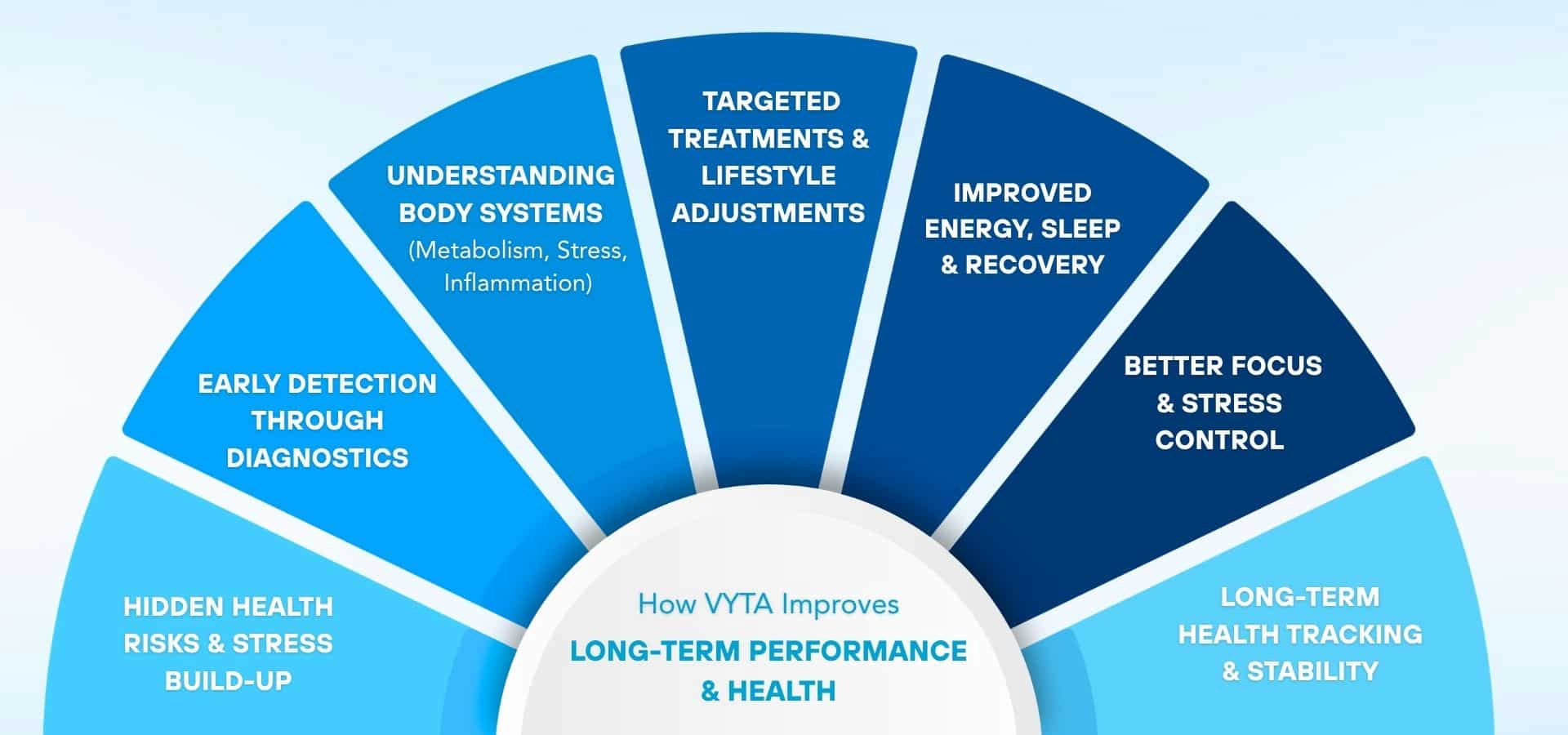
At VYTA Longevity Lifestyle, outcome reporting is positioned within an observational context rather than as a performance claim. The clinic documents patterns reported by participants following structured programs, particularly in relation to energy regulation, stress balance, and daily function.
These observations are derived from internal feedback, follow-up interactions, and program-level reporting. They should be understood as individual experiences, not standardized results or guaranteed outcomes.
Outcome 1 – Energy Regulation & Daily Stability
Before:
Participants often report inconsistent energy levels, afternoon fatigue, and reduced recovery capacity. In some cases, this is accompanied by irregular sleep patterns and perceived mental fog during high-demand periods.
After:
Following structured programs that include HRV monitoring, IV nutrient protocols, and regulated physical activity, participants commonly describe more stable energy distribution throughout the day. Improvements in perceived recovery and reduced variability in energy dips are also noted.
Source:
Clinic-reported testimonials and internal feedback summaries.
Outcome 2 – Stress Response & Autonomic Balance
Before:
Elevated stress exposure, often linked to professional demands, is frequently associated with disrupted autonomic balance. This may present as poor sleep quality, reduced resilience to workload, and prolonged recovery after stress events.
After:
Through the integration of HRV-guided monitoring, mindfulness coaching, and structured recovery protocols, participants report improved awareness of stress patterns and more consistent recovery cycles. Some also note improved sleep consistency and reduced perceived strain during high-pressure periods.
Source:
Clinic-reported data and participant feedback.
|
⚠️ Editorial Note
These outcomes reflect individual experiences reported within the clinic’s materials. Results vary and depend on multiple individual factors, including baseline health status, adherence to protocols, and external lifestyle variables. Diagnostic tools indicate patterns and tendencies, not certainty, and should not be interpreted as predictors of specific outcomes.
|
At VYTA Longevity Lifestyle, programs are structured as time-bound clinical pathways rather than open-ended wellness packages. Each program follows a defined sequence: diagnostic intake, physician interpretation, targeted interventions, and structured monitoring.
Program selection is not standardized. It is determined after initial assessment, ensuring alignment with individual biological profiles and operational constraints such as time availability.
AGE 360 (7 Days)
The AGE 360 program is a 7-day structured pathway focused on evaluating and monitoring biological aging markers across multiple systems.
Program Strcuture
|
Category
|
Details
|
|
Duration
|
7 days
|
|
Entry Point
|
DNA anti-aging analysis and baseline diagnostics
|
|
Core Diagnostics
|
AGE Reader (glycation), HRV analysis, metabolic profiling
|
|
Clinical Inputs
|
IV nutrient therapy (multiple sessions), cryotherapy cycles (-90°C)
|
|
Monitoring
|
Daily tracking of physiological responses
|
|
Physician Role
|
Ongoing interpretation and adjustment
|
|
Objective
|
Structured assessment of biological aging indicators
|
This program is typically selected by individuals seeking a comprehensive baseline understanding of their biological status within a limited timeframe.
Healthy & Slim (14 Days)
The Healthy & Slim program is a 14-day pathway focused on metabolic function, body composition, and nutritional alignment based on genetic and microbiota data.
|
Category
|
Details
|
|
Duration
|
14 days
|
|
Entry Point
|
DNA weight analysis and gut microbiota assessment
|
|
Core Diagnostics
|
Metabolic profiling, HRV monitoring
|
|
Clinical Inputs
|
Cryotherapy sessions, functional training, IV nutrient support
|
|
Nutritional Framework
|
DNA-informed dietary structure with coaching
|
|
Physician Role
|
Oversight of metabolic and physiological responses
|
|
Objective
|
Structured evaluation of metabolic efficiency and lifestyle alignment
|
This pathway is designed for individuals seeking data-driven insight into metabolic function, rather than generalized weight management approaches.
Balance (3 Days)
The Balance program is a shorter, 3-day clinical pathway focused on autonomic nervous system regulation and recovery.
|
Category
|
Details
|
|
Duration
|
3 days
|
|
Entry Point
|
HRV baseline assessment
|
|
Core Diagnostics
|
Autonomic nervous system analysis
|
|
Clinical Inputs
|
IV infusions (Balance protocol), osteopathic treatments
|
|
Monitoring
|
Continuous HRV tracking during stay
|
|
Physician Role
|
Interpretation of stress-response patterns
|
|
Objective
|
Short-term reset of stress and recovery dynamics
|
This program is often selected by individuals with limited time availability who require a structured evaluation of stress-related physiological patterns.
Program Design Principles
Across all programs, several consistent principles apply:
- Diagnostics precede intervention
No pathway begins without baseline assessment.
- Physician interpretation is continuous
Data is reviewed and contextualized throughout the program.
- Time efficiency is prioritized
Programs are structured to fit within defined time windows (3–14 days).
- Continuity is built into the system
Outcomes and data are integrated into the VYTA Routine for post-program monitoring.

At VYTA Longevity Lifestyle, therapies are positioned as controlled clinical inputs rather than standalone solutions. Each modality is applied within a defined framework, following diagnostic assessment and physician interpretation.
The clinic environment is structured to support focused engagement, combining medical infrastructure with controlled conditions that allow consistent monitoring and minimal external disruption.
Medical & Restorative Therapies
The clinic integrates a defined set of therapies, each selected based on its interaction with specific biological systems:
- Medical-Grade Intravenous (IV) Nutrient Therapy
Delivery of vitamins, minerals, and antioxidants directly into the bloodstream. This approach bypasses digestive processing, allowing controlled nutrient availability at the cellular level.
- Systemic Ozone Bio-Modulation
Administration of an oxygen-ozone mixture under medical supervision. This is used within the clinic’s framework to influence oxidative balance and tissue oxygenation.
- Electric Whole-Body Cryotherapy (-90°C)
Exposure to controlled cold within a nitrogen-free electric cryochamber. Sessions are time-regulated and monitored for physiological response.
- Intermittent Hypoxic-Hyperoxic Therapy (IHHT)
Alternating oxygen concentration exposure designed to interact with mitochondrial function and adaptive response mechanisms.
- NanoVi Technology (Protein Support System)
A device-based system used to support cellular repair processes at the protein level through controlled signaling inputs.
- Palestra della Salute (Health Gym)
A supervised exercise environment where physical activity is structured and prescribed based on individual physiological data rather than generalized fitness models.
Each therapy is integrated into a broader clinical plan and is not applied in isolation.
Clinical Facilities
The clinic operates within a medically equipped environment designed to support both diagnostics and intervention:
- Dedicated diagnostic units for genetic, metabolic, and physiological testing
- Electric cryotherapy chamber with full-body exposure capability
- IV therapy suites with medical supervision
- IHHT systems for controlled oxygen modulation
- Functional training and rehabilitation spaces
- Consultation rooms for physician-led evaluation and reporting
The infrastructure supports a closed-loop system, where diagnostics, intervention, and monitoring occur within the same controlled environment.
Architecture, Environment & Digital Discipline
The primary facility in Abano Terme integrates clinical operations with the region’s established thermal resources, including mineral-rich mud and water used within medical protocols.
The environment is structured with three key priorities:
- Privacy
Controlled access, discreet scheduling, and separation of clinical spaces to ensure confidentiality.
- Focused Engagement
Minimal external distractions, allowing participants to engage fully with diagnostic and program processes.
- Digital Discipline
While not restrictive, the environment encourages reduced digital interruption, supporting physiological recovery and cognitive reset during program duration.
At VYTA Longevity Lifestyle, pricing is structured around clinical depth, diagnostic scope, and program duration, rather than individual therapies. Costs are not positioned as transactional service fees, but as part of an integrated medical process that includes assessment, interpretation, and monitored execution.
Public pricing is not fully disclosed, which is consistent with clinics operating under personalized medical frameworks. Final costs are typically determined after initial evaluation, based on diagnostic requirements and program selection.
Pricing
|
Category
|
Details
|
|
Clinic Positioning
|
Premium, physician-led preventive longevity clinic
|
|
Stay Length
|
3 to 14 days depending on program
|
|
Entry Pricing
|
Not publicly disclosed
|
|
What’s Included
|
Diagnostics, physician consultations, therapies, monitoring
|
|
Additional Costs
|
Advanced diagnostics, extended therapies, follow-up assessments
|
|
Program Structure
|
Diagnostic intake → Interpretation → Structured pathway → Monitoring
|
|
Clinical Principle
|
Diagnostics-first, prevention-oriented model
|
How Programs Are Structured
Programs follow a clearly defined sequence designed to maximize clarity within a limited timeframe:
1. Pre-Visit Preparation
Prior to arrival, participants may complete initial questionnaires or share medical history. This allows the clinic to prepare baseline assumptions and allocate diagnostic resources efficiently.
2. On-Site Diagnostics
Upon arrival, comprehensive testing is conducted, including DNA analysis, HRV measurement, glycation assessment, and metabolic profiling. This phase establishes the individual’s biological baseline.
3. Physician Interpretation
All collected data is reviewed by the clinical team. Patterns are identified across systems, and findings are translated into a structured understanding of biological function.
4. Program Allocation & Execution
Based on interpretation, individuals are assigned to a defined pathway such as AGE 360, Healthy & Slim, or Balance. Therapies and activities are scheduled in alignment with diagnostic findings.
5. Reporting & Continuity
At the conclusion of the program, participants receive structured feedback. This may include data summaries, interpretation notes, and integration into the VYTA Routine for ongoing monitoring.
Length of Stay
Program duration is designed to balance clinical depth with time efficiency, particularly for individuals with limited availability.
- 3 Days (Short Format)
Focused assessment of specific systems, commonly related to stress and autonomic balance.
- 7 Days (Standard Format)
Multi-system evaluation with integrated diagnostics and interventions.
- 14 Days (Extended Format)
Deeper exploration of metabolic, nutritional, and physiological patterns with additional monitoring cycles.
The structure allows participants to engage with the clinic without extended absence from professional responsibilities, while still maintaining a defined level of diagnostic and interpretive depth.
Planning a visit to VYTA Longevity Lifestyle is typically approached with the same level of structure as the clinical program itself. The clinic is designed to integrate into existing schedules, allowing high-performing individuals to align visits with business travel or short dedicated time blocks.
The primary location in Abano Terme offers a setting that supports focused clinical engagement while remaining accessible from major European transit hubs.
Recommended Length of Stay
The appropriate duration depends on the level of diagnostic depth required and the specific systems being evaluated.
- 3 Days
Suitable for targeted assessment, particularly for stress, recovery, and autonomic nervous system evaluation.
- 7 Days
Provides a more comprehensive diagnostic overview, including metabolic and inflammatory markers alongside structured interventions.
- 14 Days
Allows for extended monitoring, additional testing cycles, and deeper integration of nutritional and physiological frameworks.
For individuals with limited availability, shorter programs can still provide structured insight, though with reduced diagnostic scope.
How to Reach the Clinic?
The clinic’s primary hub is located in Abano Terme, within close proximity to major transport connections.
- Nearest Airport:
Venice Marco Polo Airport (VCE)
- Typical Transfer Time:
Approximately 45–60 minutes by car
- Transport Options:
- Private transfer services
- Car rental
- Taxi services
🔗 Find best flights to Venice
🔗 Find car rentals in Venice
Links provided for travel planning convenience only.
Accommodation & Stay Planning
VYTA Longevity Lifestyle operates in connection with established hospitality infrastructure in Abano Terme, including facilities integrated within or near the clinical environment.
Guests typically stay:
- Within the same complex as the clinic (e.g., Hotel Plaza integration)
- Or in nearby hotels and serviced apartments within short walking or transfer distance
The location supports efficient movement between accommodation and clinical facilities, minimizing logistical complexity during the program.
🔗 Explore nearby hotels & apartments
What to Bring
Preparation for the visit is minimal but structured:
- Comfortable clothing suitable for clinical assessments and light physical activity
- Personal medical records (if available and relevant)
- Identification and required travel documents
No specialized equipment is required, as all clinical tools and materials are provided on-site.
At VYTA Longevity Lifestyle, outcomes are documented primarily through participant-reported experiences, structured feedback, and internal program observations. The clinic does not position outcomes as guarantees or standardized results, but as patterns observed across individuals following structured clinical pathways.
Reputation is shaped through a combination of medical positioning, multidisciplinary expertise, and presence in national-level publications focused on health, longevity, and lifestyle medicine.
What Patients Commonly Report
Across different programs and durations, several consistent themes appear in participant feedback:
- Improved Energy Stability
Individuals frequently describe more consistent energy levels throughout the day, with reduced fluctuations and improved recovery after demanding periods.
- Better Sleep Quality
Reports often include improved sleep patterns, including easier onset, fewer disruptions, and a greater sense of recovery upon waking.
- Enhanced Stress Awareness and Regulation
Through HRV monitoring and structured coaching, participants note increased awareness of stress triggers and improved ability to manage workload-related pressure.
- Mental Clarity and Focus
Some individuals report improved cognitive clarity, particularly during high-demand tasks requiring sustained attention. This reflects the importance of maintaining long-term cognitive performance under continuous demand.
- Lifestyle Integration
A recurring theme is the ability to carry structured habits—such as nutrition, movement, and recovery protocols—into daily routines through the VYTA Routine framework.
These observations are subjective and vary depending on individual baseline, adherence, and external lifestyle factors.
Media & Professional Recognition
VYTA Longevity Lifestyle and its clinical leadership have been referenced in several Italian publications and professional discussions related to preventive medicine and longevity science.
Notable mentions include:
- Coverage in Corriere della Sera, including interviews with Scientific Director Prof. Damiano Galimberti discussing the relationship between lifestyle, genetics, and aging.
- Features in lifestyle and health-focused publications such as Elle and Grazia, highlighting the clinic’s structured approach to preventive care.
- Inclusion in broader discussions around the evolution of longevity-focused medical models within Italy.
These references contribute to visibility but should not be interpreted as clinical validation. The longevity sector remains an evolving field, and public recognition does not replace scientific consensus.
VYTA Longevity Lifestyle operates within a growing segment of the healthcare landscape focused on preventive, data-driven longevity frameworks. This category is increasingly relevant to individuals managing sustained cognitive and operational demands, where long-term performance depends not only on productivity, but on physiological stability.
The clinic’s structure reflects a shift away from reactive healthcare models toward early-stage biological assessment and longitudinal monitoring. Its emphasis on diagnostics—such as DNA profiling, glycation measurement, and HRV analysis—positions it within a subset of clinics attempting to quantify internal systems before dysfunction becomes clinically visible.
However, the broader longevity field remains complex and still evolving. While certain markers and interventions are supported by emerging research, long-term outcome standardization is limited, and individual variability remains high. As a result, the value of such clinics is less about definitive outcomes and more about structured insight, repeatable measurement, and physician-led interpretation.
From an executive standpoint, the relevance lies in three areas:
- Clarity – Understanding internal biological patterns through measurable data
- Efficiency – Time-bound programs designed to fit within constrained schedules
- Continuity – Ongoing monitoring frameworks that extend beyond a single visit
Rather than positioning itself as a solution, VYTA Longevity Lifestyle functions as a system for observation, interpretation, and structured decision support within the context of long-term performance and health planning.
Is this a medical clinic or a wellness center?
VYTA Longevity Lifestyle is a physician-led medical clinic, not a spa or general wellness center. All programs are based on diagnostics, clinical interpretation, and supervised protocols. While lifestyle elements are included, they are applied within a medical framework using measurable data.
Who is this clinic best suited for?
The clinic is designed for executives, founders, investors, and high-performance individuals who want structured insight into their biological systems. It is less suitable for those seeking quick fixes or symptom-based treatment.
How is personalisation handled?
Personalisation is based on diagnostics such as DNA analysis, HRV, glycation (AGE Reader), and metabolic markers. Physicians review this data to design a structured program aligned with the individual’s biological profile.
How is privacy managed?
The clinic maintains a high level of discretion through controlled access, structured scheduling, and confidential handling of medical data. This is especially important for individuals in leadership or public roles.
Can I stay connected to work during the program?
Yes, connectivity is available. However, the environment supports focused engagement, and some participants choose to reduce digital interruptions during their stay.
Can individuals with chronic conditions attend?
Participation requires prior medical evaluation and physician approval. The clinic does not replace existing healthcare, and coordination with a personal doctor is recommended.
How should value be evaluated relative to cost?
Value is based on the full clinical process diagnostics, physician interpretation, and structured monitoring rather than individual therapies. It is best suited for those seeking long-term clarity, not immediate results.
In high-performance environments, most decisions are driven by speed, output, and external results. Internal systems such as recovery, metabolic balance, and stress regulation are often addressed only when performance begins to decline. This reactive pattern creates gaps, where underlying biological signals remain unobserved until they become disruptive.
VYTA Longevity Lifestyle positions itself within a different framework. It offers a structured opportunity to step away from continuous execution and examine internal systems through measurable diagnostics and physician-led interpretation. The value is not in interruption, but in recalibration.
A short, defined engagement whether three, seven, or fourteen days can provide visibility into patterns that are otherwise difficult to detect during routine schedules. These may include fluctuations in stress response, inefficiencies in metabolic processes, or inconsistencies in recovery cycles. While these signals do not predict outcomes, they can inform how future decisions are approached.
Importantly, the clinic does not position itself as a solution or endpoint. Instead, it functions as part of a broader system of awareness, where data is collected, interpreted, and integrated into ongoing routines. For individuals managing complex responsibilities, this structured pause may serve as a checkpoint allowing alignment between long-term performance goals and underlying biological capacity.
👉 View Longevity Program
↩ Return to ExtendMy.Life
↑ Back to Top
Disclaimer
This content is provided for informational and editorial purposes only. It is intended to present a structured overview of VYTA Longevity Lifestyle and its clinical model within the broader context of preventive health and longevity-focused care. Nothing in this material constitutes medical advice, diagnosis, or treatment. The information presented is not intended to replace consultation with a qualified physician or licensed healthcare provider. No doctor–patient relationship is established through this content. All references to diagnostic tools, therapies, and clinical approaches are descriptive in nature. These elements are included to explain how the clinic operates, not to recommend or endorse specific interventions. Individual health conditions vary significantly, and any medical decisions should be made in consultation with a personal healthcare provider who understands your medical history and current condition. Diagnostic assessments mentioned such as DNA analysis, HRV measurement, glycation testing, and metabolic profiling are designed to indicate patterns, tendencies, or potential areas of interest. They do not confirm the presence or absence of disease, nor do they predict specific outcomes. Interpretation of such data requires clinical expertise and must be considered within a broader medical context. The field of longevity and preventive medicine is continuously evolving. While some approaches are supported by emerging research, others may have limitations, including variability in methodology, population differences, and long-term validation. As such, no claims are made regarding effectiveness, outcomes, or long-term impact. Readers are encouraged to approach this information as part of a broader decision-making process, supported by professional medical guidance and individualized assessment.
References
Cell Press (2014) The hallmarks of aging.
Cell Press (2023) Hallmarks of aging: An expanding universe.
Elsevier (2020) Detoxification and human health.
Frontiers Media (2021) Intermittent hypoxia and human health.
Frontiers Media (2024) Physiological responses to cold exposure.
National Center for Biotechnology Information (2020) Whole-body cryotherapy: Clinical applications and outcomes.
National Center for Biotechnology Information (2021) Hyperbaric oxygen therapy.
National Center for Biotechnology Information (2022) Ozone therapy: Mechanisms and clinical applications.
Nature Publishing Group (2025) Advances in longevity science.
New England Journal of Medicine (2020) Effects of intermittent fasting on health, aging, and disease.
ResearchGate (2020) Clinical uses and molecular aspects of ozone therapy: A review.
ResearchGate (2023) Nutrition and immune function: Role of micronutrients.