Precision Health Clinic is led by a multidisciplinary medical team with expertise in clinical genomics, emergency medicine, and metabolic health.
- Dr. Mansoor Mohammed – Founder and clinical geneticist, responsible for the development of the clinic’s genomic framework
- Dr. Freeha Arshad – Medical Director overseeing clinical governance and patient care protocols
The clinic operates under a structured care model that prioritizes diagnostic accuracy before any form of intervention planning.
A key operational feature is its three-level patient routing system, designed to manage different levels of clinical complexity:
- Level 1: Remote Monitoring
Use of wearable devices and digital tracking tools to monitor baseline health indicators over time
- Level 2: In-Clinic Diagnostics
Includes whole genome sequencing, blood biomarker analysis, and hormonal profiling
- Level 3: Individualized Scientific Profiling
Applied in complex cases, using multi-omics data and advanced analysis techniques
This layered structure allows the clinic to scale its assessment depth depending on individual needs while maintaining consistency in methodology.
The clinic follows a diagnostic-first workflow, where all clinical decisions are preceded by structured data collection and physician interpretation. This reduces reliance on assumption-based care models.
From an operational standpoint, the clinic is positioned for time efficiency. Most assessments are conducted through short, outpatient visits, allowing clients to integrate appointments into existing travel or work schedules without extended disruption. If you want to see how this clinic compares with others in the same space, it helps to review the best longevity clinics in the Netherlands and how their approaches differ.
At a Glance – Precision Health Clinic
|
Category
|
Details
|
|
Location
|
Amsterdam, Netherlands
|
|
Clinic Type
|
Physician-led genomics clinic
|
|
Core Focus
|
Preventive longevity diagnostics
|
|
Typical Stay
|
Outpatient / short diagnostic visits
|
|
Diagnostic Depth
|
Whole genome sequencing + blood biomarkers
|
|
Signature Method
|
Genomic Performance System
|
|
Envrionment
|
Clinical, data-driven
|
|
Privacy Level
|
High - structured physician consultations
|
|
Professional Recognition
|
Genomics- led clinical framework with research alignment
|
Many clients choose to integrate visits into existing business travel due to the clinic’s central urban location. This allows for minimal disruption while maintaining access to structured clinical evaluation.
Decision-making at an executive level often depends on clarity, structure, and measurable input. Precision Health Clinic is selected not for experience-based positioning, but for its defined clinical framework, data integration capability, and physician-led interpretation model. This is why many individuals also look for ways to improve brain performance, especially when mental clarity directly affects daily output.
The clinic’s differentiation lies in how it collects, processes, and interprets biological data rather than how it presents services.
USP & Key Takeaways
1. Genomic Performance System (GPS)
The clinic’s core analytical framework is the Genomic Performance System, developed using data from over 10,000 anonymized DNA profiles.
This system is used to:
- Identify gene variants linked to metabolic pathways
- Map individual responses to nutrients, hormones, and stress
- Support structured interpretation of genetic predisposition
Unlike static genetic reports, the system is used alongside blood biomarkers and lifestyle inputs to provide contextual meaning rather than isolated data points.
2. DNA-Tailored Hormone Calibration Using Bioidentical Hormones
Hormonal analysis is conducted using two layers:
- Functional genomics (gene-hormone interaction pathways)
- Blood biomarker measurements (current hormonal levels)
Based on this, the clinic applies Bioidentical Hormone Replacement Therapy (BHRT) using compounds that are structurally identical to endogenous hormones.
The key distinction is not the use of hormones itself, but the dose calibration process, which is derived from genetic response patterns rather than population averages.
3. Multi-Modal Data Integration Model
The clinic does not treat diagnostics as separate outputs. Instead, it combines three core datasets into a unified clinical interpretation:
- DNA sequencing results
- Blood biomarker panels
- Lifestyle and behavioral data
This integrated model allows physicians to observe interactions between systems, such as:
- Hormonal regulation and metabolic efficiency
- Nutrient absorption and genetic expression
- Stress response and recovery patterns
This reduces reliance on isolated indicators and supports system-level understanding.
4. Structured 7-Step Clinical Workflow
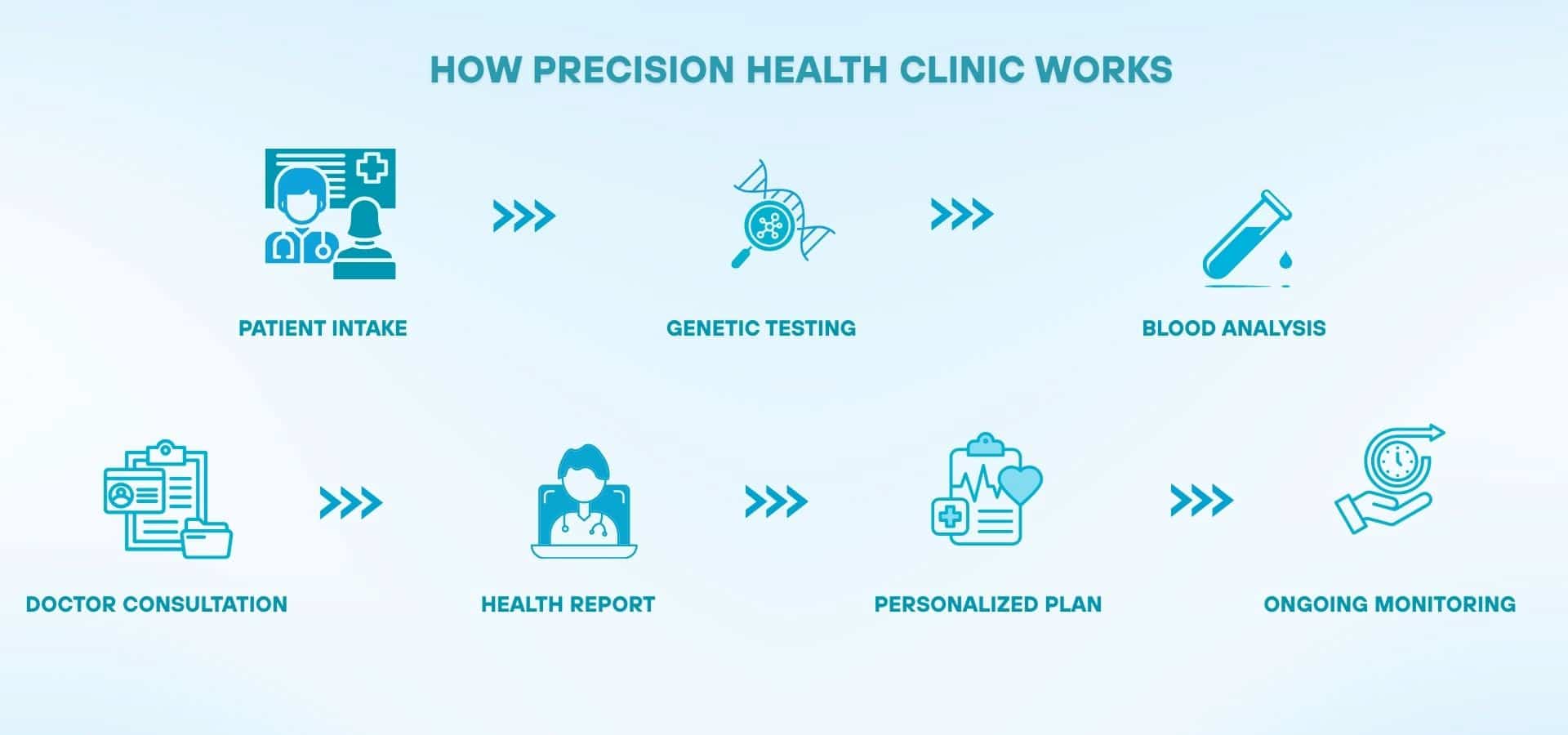
All clients follow a standardized 7-step process, ensuring consistency across assessments:
- Intake and medical questionnaire
- Genetic testing (functional genomics)
- Comprehensive blood analysis
- One-on-one physician consultation
- Health profile summary
- Personalized plan based on data
- Continuous monitoring and follow-up
This structure ensures that data collection, interpretation, and follow-up are sequential rather than fragmented
5. Preclinical Prevention Framework Using Age Deviation Metrics
The clinic applies a preclinical prevention model, where the focus is on identifying biological deviation before clinical symptoms emerge.
A key concept used is Age Deviation (AgeDev):
- The difference between biological age (measured through biomarkers)
- And chronological age (calendar age)
This allows early identification of patterns such as:
- Accelerated metabolic decline
- Hormonal imbalance trends
- Inflammatory markers linked to long-term risk
This approach is analytical rather than predictive. It supports early awareness, not certainty.
6. Physician-Led Interpretation Over Algorithm-Only Output
While the clinic uses data-intensive systems, final interpretation remains physician-led.
This includes:
- Contextualizing genetic risk within lifestyle patterns
- Identifying false positives or irrelevant markers
- Translating data into structured, understandable insights
This reduces the risk of over-reliance on automated outputs and ensures clinical accountability.
Structural Advantage for High-Performance Individuals
From an operational perspective, the clinic is designed for individuals with limited time availability:
- Diagnostics are conducted in a condensed timeframe
- Reports are structured for decision-making clarity
- Follow-ups are integrated into long-term monitoring cycles
The model avoids extended residential stays and instead supports short, high-density clinical engagement.
Clinical Purpose
Precision Health Clinic is structured around a clear clinical objective: to provide early-stage biological insight through measurable diagnostics, rather than responding to advanced or symptomatic conditions.
The clinic’s role is not centered on intervention, but on interpretation and mapping of internal systems. This includes identifying how genetic predisposition, metabolic function, and hormonal regulation interact over time.
The primary functions of the clinic can be understood across three layers:
- Early Risk Identification
Detection of biological patterns that may indicate deviation from expected health trajectories. These are identified through genomic markers, biomarker panels, and longitudinal data comparison.
- System-Level Understanding
Rather than isolating a single issue, the clinic evaluates how multiple systems interact. For example, metabolic inefficiency may be assessed alongside hormonal signaling and inflammatory markers to understand broader physiological patterns.
- Long-Term Planning Support
Outputs are structured to support decision-making over time. This includes understanding baseline biological status, identifying variables that may influence future health, and tracking changes through repeat assessments.
The clinic does not operate under urgency-based framing. It does not position findings as immediate risks requiring rapid action. Instead, it presents measured, data-informed insights that can be incorporated into long-term planning under physician supervision.
Who This Clinic Is Designed For
Precision Health Clinic is designed for individuals who require clarity, structure, and efficiency in understanding their health data.
It is particularly suited to:
- Executives and Senior Leaders
Individuals managing high cognitive demand, decision fatigue, and long working hours who require structured insight into energy regulation, recovery patterns, and long-term health variables.
- Founders and Entrepreneurs
Those operating in high-uncertainty environments, where sustained performance and resilience are critical, and where early identification of biological strain may inform lifestyle adjustments.
- Investors and Capital Allocators
Individuals focused on long-term planning who may view health data as part of broader life strategy, similar to financial or risk planning frameworks.
- Professional Athletes and Performance-Driven Individuals
Those requiring deeper understanding of physiological load, recovery capacity, and system efficiency beyond standard performance metrics.
- High-Performers Seeking Clarity, Not Treatment
Individuals who are not currently seeking treatment for a diagnosed condition but want structured insight into how their body is functioning at a systems level.
This positioning is important. The clinic is not structured as a primary care provider or a treatment facility for chronic illness. It functions as a diagnostic and interpretive layer, supporting individuals who want to understand their biological profile before problems emerge. In many cases, this level of insight is combined with structured health and wellness programs for executives to support long-term consistency.
Focus Areas
|
Focus Area
|
What This Means In Practice
|
|
Medical Discipline
|
Functional genomics combined with systems medicine
|
|
Core Biological System
|
Metabolic regulation, hormonal signaling, aging biomarkers
|
|
Environment & Design
|
Clinical, data-focused setting with structured consultations
|
|
Program Structure
|
Standardized 7-step diagnostic and follow-up workflow
|
|
Lifestyle as Medicine
|
Nutrition, sleep, and behavior evaluated as measurable variables
|
|
Privacy
|
Physician-led consultations with controlled data handling
|
|
Long-Term Strategy
|
Repeat testing, trend analysis, and ongoing monitoring
|
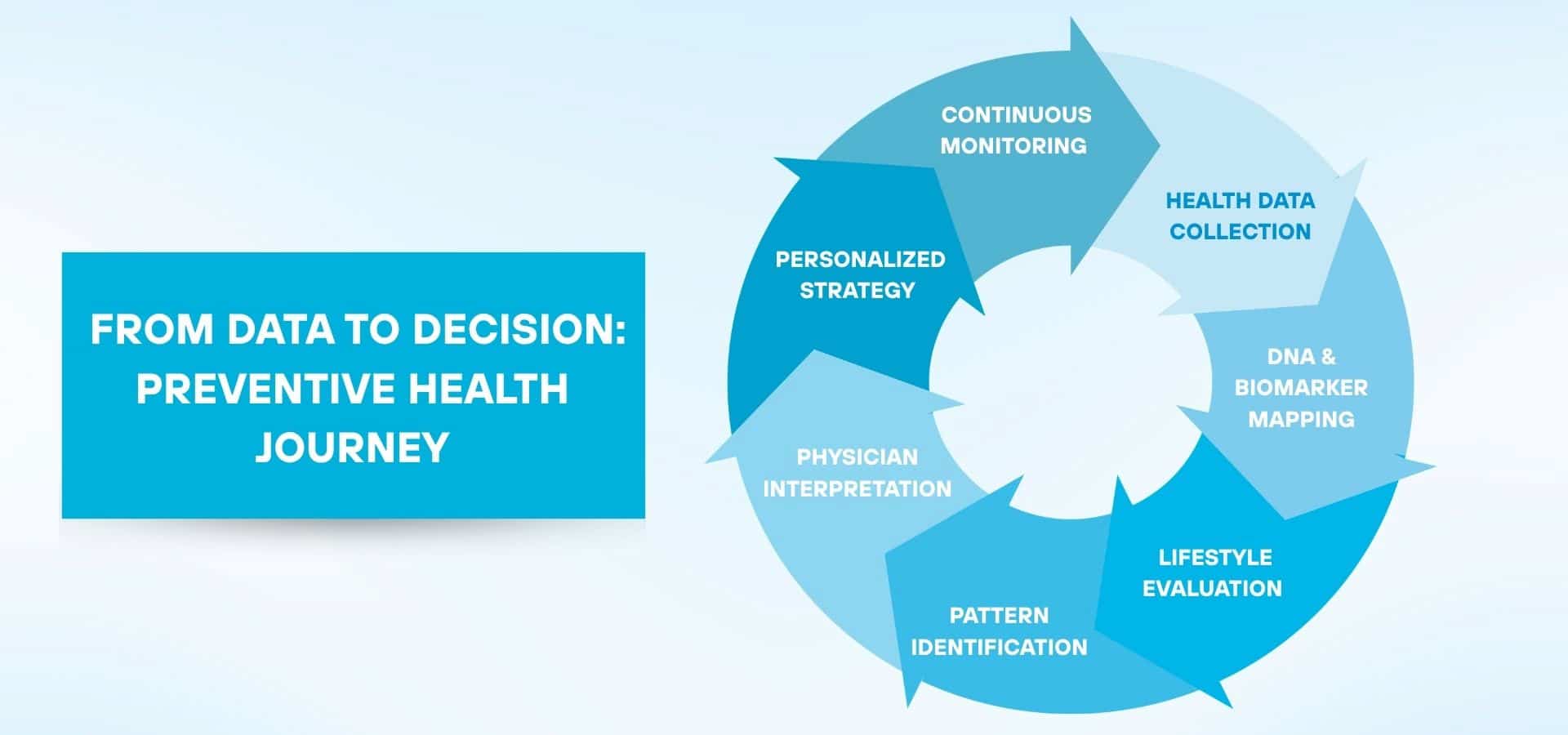
Precision Health Clinic operates under a framework described as Individualized Systems Medicine. This model is based on the premise that human biology functions as an interconnected system rather than a collection of isolated parts.
In traditional clinical settings, assessment often begins after symptoms appear. The focus is then placed on identifying a localized issue and applying a targeted intervention. In contrast, this clinic’s approach begins earlier, using measurable biological data to understand system behavior before clinical symptoms develop.
The distinction is structural:
- Reactive Model: Symptom → Diagnosis → Treatment
- Systems Model: Data → Interpretation → Long-term monitoring
This direction reflects what is often described as a Medicine 3.0 longevity approach, where understanding data early becomes more important than reacting late.
Within this framework, diagnostics are not treated as conclusions. They are treated as inputs that require clinical interpretation, contextualization, and periodic reassessment.
A key principle of this model is that biological variability is expected, not exceptional. Two individuals with similar lifestyles may present entirely different biomarker profiles due to genetic variation, environmental exposure, and metabolic response.
For this reason, the clinic does not rely on generalized health benchmarks alone. Instead, it emphasizes:
- Individual baseline measurement
- Relative deviation over time
- Pattern recognition across multiple systems
This reduces dependence on population averages and increases focus on individual biological trajectories.
Core System Focus
The clinic’s assessments primarily concentrate on three interconnected systems:
- Metabolic Regulation
How efficiently the body converts energy, manages glucose, and processes nutrients. For example, the ability to build muscle for long-term health is often closely tied to how efficiently the body manages energy.
- Hormonal Signaling
Communication pathways that regulate energy levels, mood, recovery, and physiological balance
- Cellular Aging Markers
Indicators such as DNA methylation patterns, inflammatory markers, and cellular senescence activity
Rather than evaluating these systems independently, the clinic examines how they influence each other. For example, hormonal imbalance may affect metabolic efficiency, which in turn may influence inflammatory response.
|
🔍 Did You Know?
Research in longevity science indicates that biomarkers such as DNA methylation patterns are being studied as indicators of biological aging, although standardization across populations remains limited.
|
Lifestyle as a Medical Tool
Within this model, lifestyle is not treated as general advice. It is considered a set of measurable inputs that directly influence biological systems.
The clinic evaluates:
- Nutritional patterns and macronutrient response
- Sleep timing and recovery cycles
- Physical activity and metabolic load
- Behavioral consistency over time
These variables are analyzed alongside genetic and biomarker data to understand how daily habits interact with biological processes.
Importantly, lifestyle adjustments are not applied generically. They are considered within the context of individual biological response patterns identified through diagnostics. Over time, even small habits that help improve immune resilience can influence how the body responds to stress and recovery.
|
🔍 Did You Know?
Clinical observations suggest that increases in visceral fat are associated with measurable changes in cognitive performance markers, though individual variability remains significant.
|
Evidence Position & Limitations
While systems-based and genomics-informed models are gaining attention in longevity science, several limitations remain:
- No universal standard exists for defining biological age
- Biomarker interpretation varies across individuals and populations
- Long-term outcome validation is still evolving
- Not all genetic markers have clear clinical significance
For this reason, the clinic’s philosophy emphasizes physician oversight and cautious interpretation, rather than deterministic conclusions.
Precision Health Clinic operates on a diagnostics-first model, where all clinical engagement begins with structured data collection across genetic, biochemical, and behavioral domains.
The objective is not immediate diagnosis, but the creation of a multi-layered biological profile that allows physicians to interpret system interactions, baseline conditions, and potential deviations over time.
In many ways, this mirrors the depth you would expect from an executive health check for longevity, where multiple systems are assessed together.
This process is standardized, ensuring consistency across individuals while allowing depth to scale depending on complexity.
Diagnostic Assessment Includes
The clinic’s diagnostic framework integrates three primary data sources:
1. Whole Genome Sequencing (Functional Genomics)
Genetic analysis focuses on identifying variants associated with:
- Hormonal regulation pathways
- Nutrient metabolism and absorption
- Inflammatory response tendencies
- Stress and recovery signaling
Rather than treating genetic data as deterministic, it is used to understand probabilistic tendencies that may influence physiological behavior.
2. Comprehensive Blood Biomarker Panels
Blood analysis provides real-time insight into biological function, including:
- Hormone levels (e.g., testosterone, estrogen, cortisol)
- Metabolic markers (e.g., glucose regulation, lipid profiles)
- Inflammatory markers
- Nutrient levels and deficiencies
This layer reflects the current state of the body, complementing genetic predisposition data.
3. Lifestyle & Behavioral Data Mapping
The clinic incorporates structured evaluation of:
- Dietary patterns
- Sleep duration and consistency
- Physical activity levels
- Stress exposure and recovery habits
These inputs are treated as variables that influence biomarker expression and system performance.
Integrated Interpretation Model
The defining feature of the clinic’s diagnostic process is integration.
Instead of reviewing each dataset independently, physicians combine:
- Genetic predisposition
- Current biomarker status
- Lifestyle behavior
This allows identification of relationships such as:
- Why a biomarker may deviate despite “normal” lifestyle patterns
- How genetic factors influence response to nutrition or stress
- Where adjustments may have a measurable impact over time
|
🔍 Did You Know?
Biomarker-based models, including epigenetic clocks, are being explored in research to estimate biological aging, but there is currently no universally accepted clinical standard.
|
Chronomedicine & Future Risk Mapping
Beyond current-state assessment, the clinic applies elements of chronomedicine, focusing on how biological systems change over time.
This includes:
- Tracking biomarker trends across repeated testing
- Comparing biological indicators against age-related benchmarks
- Identifying Age Deviation (AgeDev) — the gap between biological and chronological age
This idea connects closely with biological age vs chronological age, which shows how internal aging may differ from actual years lived.
The purpose of this approach is not prediction with certainty, but pattern recognition over time.
For example:
- A consistent upward trend in inflammatory markers may indicate system stress
- Hormonal shifts over time may reflect changes in metabolic efficiency
- Biomarker variability may signal adaptation or imbalance
This longitudinal perspective supports future risk mapping, where data is used to understand direction rather than outcome.
Role of Physician Interpretation
A critical component of this process is that all diagnostic outputs are interpreted by physicians, rather than delivered as standalone reports.
This includes:
- Filtering clinically relevant signals from background noise
- Identifying correlations that may not be immediately visible
- Avoiding overinterpretation of isolated markers
This reduces the risk of misreading complex datasets and ensures that conclusions remain within medically appropriate boundaries.
Evidence Position & Limitations
While multi-modal diagnostics and genomics-informed assessments are increasingly used in longevity-focused settings, several constraints apply:
- Genetic markers often indicate risk, not certainty
- Biomarker variability can be influenced by short-term factors
- Longitudinal data is required for meaningful trend analysis
- Standardization across clinics and populations remains limited
For this reason, the clinic positions diagnostics as a tool for structured insight, not a definitive assessment of future health outcomes.
Precision Health Clinic’s strengths are not defined by individual services, but by how it structures data collection, interpretation, and longitudinal monitoring into a single clinical workflow.
The clinic’s effectiveness depends on its ability to connect multiple biological signals and translate them into coherent, physician-led insights, rather than isolated findings.
Key Medical Strength 1 – Genomic-Based Personalization Framework
The clinic’s primary capability lies in its use of functional genomics within a clinical decision framework.
Using the Genomic Performance System, genetic data is analyzed to identify:
- Variants associated with hormone metabolism
- Nutrient processing efficiency
- Inflammatory response tendencies
- Stress and recovery signaling pathways
This information is not used in isolation. It is interpreted alongside blood biomarkers to determine how genetic predispositions are expressed in real time.
For example:
- A genetic variant linked to slower nutrient metabolism may be evaluated against current blood nutrient levels
- Hormonal pathway variations may be assessed in relation to measured hormone concentrations
This layered interpretation allows physicians to distinguish between potential risk and current expression, reducing overreliance on static genetic reports.
|
🔍 Did You Know?
Large-scale genomic datasets are increasingly used to identify population-level patterns, but individual-level interpretation still requires clinical context and validation.
|
Key Medical Strength 2 – Precision Hormonal Regulation Using Dual-Layer Analysis
Hormonal assessment at the clinic is based on a dual-layer model:
- Genetic Analysis
Identifies how an individual may process or respond to specific hormones
- Biochemical Measurement
Evaluates current hormone levels through blood testing
This combined approach allows for contextual interpretation of hormonal data, rather than relying solely on reference ranges.
When applied within clinical programs, this framework supports the use of bioidentical hormone compounds, where dosing decisions are based on:
- Genetic response pathways
- Measured biomarker levels
The distinguishing factor is not the use of hormone therapy itself, but the method used to determine dosage and suitability, which is structured and data-informed.
Key Medical Strength 3 – Integrated Multi-System Data Interpretation
The clinic’s third core strength is its ability to integrate multiple data streams into a single interpretive model.
Instead of reviewing diagnostics in isolation, physicians assess interactions across:
- Metabolic function
- Hormonal signaling
- Inflammatory markers
- Lifestyle variables
This allows identification of patterns such as:
- Metabolic inefficiency linked to hormonal imbalance
- Inflammatory markers influenced by lifestyle inputs
- Variability in biomarker expression driven by genetic predisposition
The outcome is not a single diagnosis, but a system-level understanding of how different biological components interact.
Structural Strength – Standardized 7-Step Clinical Workflow
All assessments are conducted within a fixed 7-step framework, ensuring consistency:
- Intake and structured questionnaire
- Genetic testing
- Blood biomarker analysis
- Physician consultation
- Health profile summary
- Personalized plan based on data
- Continuous monitoring and follow-up
This structure ensures that:
- Data collection is sequential and complete
- Interpretation is physician-led
- Follow-up is integrated into the process
Rather than one-time reporting, the clinic operates on a cycle of assessment and reassessment.
Operational Strength – Time-Efficient Clinical Model
The clinic is designed for individuals with limited availability.
Key operational features include:
- Condensed diagnostic timelines
- Outpatient-based assessments
- Structured reporting formats for rapid understanding
- Follow-up systems that do not require extended on-site presence
This allows high-performance individuals to access deep diagnostic insight without long-term disruption to professional schedules.
Evidence Position & Constraints
While the clinic applies advanced diagnostic methods, several limitations remain inherent to the field:
- Genetic data indicates probability, not certainty
- Biomarkers can fluctuate due to short-term variables
- Multi-system interpretation depends on clinical judgment
- Long-term outcome validation is still developing
For this reason, the clinic’s strengths are best understood as analytical and interpretive, rather than outcome-driven.
This section reflects reported user experiences and observational outcomes documented within the clinic’s published materials. These are not controlled clinical results and should be interpreted as individual responses within a specific context.
The purpose of this section is to illustrate how structured diagnostics and physician-led interpretation may translate into perceived changes over time. It does not establish causation or guarantee similar outcomes.
Outcome 1 – Energy Regulation and Daily Performance Stability
Before:
Individuals reported persistent fatigue despite maintaining consistent routines. This included reduced daytime energy, inconsistent focus, and difficulty sustaining performance across long working hours.
After:
Following structured diagnostic assessment and interpretation, individuals reported improved awareness of their biological patterns and perceived stabilization in daily energy levels. Some noted better alignment between workload and recovery cycles.
Source:
Patient-reported experience documented in clinic materials
Outcome 2 – Hormonal Balance and Symptom Awareness
Before:
Individuals experiencing hormonal transitions reported symptoms such as mood variability, reduced energy, and general physiological discomfort without clear understanding of underlying patterns.
After:
After undergoing genomic and biomarker-based evaluation, individuals reported increased clarity regarding hormonal fluctuations and perceived reduction in symptom intensity following structured clinical guidance.
Source:
Patient-reported experience documented in clinic materials
|
⚠️ Editorial Note
These outcomes reflect individual experiences reported within the clinic’s published materials. Results vary between individuals. Diagnostics indicate biological patterns and potential risk markers, not certainty. Outcomes depend on multiple factors, including baseline health, adherence to medical guidance, and broader lifestyle variables.
|
Precision Health Clinic structures its programs around diagnostic sequencing, physician interpretation, and longitudinal monitoring, rather than predefined treatment packages.
Programs are built on a modular clinical framework, where each phase contributes to a deeper understanding of biological systems. The emphasis remains on data collection, interpretation, and structured follow-up. These types of structured assessments are often included in advanced longevity testing packages designed to track changes over time.
Hormone Optimization Program
This program focuses on hormonal profiling and regulation analysis, using a combination of functional genomics and biochemical measurement.
|
Category
|
Details
|
|
Program Type
|
Hormonal assessment and regulation framework
|
|
Duration
|
Multi-phase (initial diagnostics + follow-up cycles)
|
|
Core Diagnostics
|
Functional genomics DNA test + blood hormone panel
|
|
Physician Involvement
|
1:1 consultation for data interpretation
|
|
Output
|
Structured hormonal profile and physician-guided plan
|
|
Follow-up
|
Repeat testing and monitoring cycles
|
Program Structure
- Genetic analysis to identify hormone-related pathways
- Blood testing to measure current hormone levels
- Physician consultation to interpret discrepancies
- Structured follow-up to monitor changes over time
The distinguishing factor is the integration of genetic response patterns with real-time biomarker data, rather than reliance on standard reference ranges alone.
Longevity Program (Extended Multi-System Assessment)
This program is designed to provide a broader system-level evaluation, incorporating genetic, metabolic, and lifestyle variables into a unified clinical profile.
|
Category
|
Details
|
|
Program Type
|
Multi-system longevity diagnostics
|
|
Duration
|
Multi-week / phased assessment
|
|
Core Diagnostics
|
Whole genome sequencing + extensive biomarker panels
|
|
Physician Involvement
|
Multi-stage consultation and reporting
|
|
Output
|
Comprehensive health profile and long-term monitoring framework
|
|
Follow-up
|
Continuous reassessment and data tracking
|
Program Structure
- Whole genome sequencing (50+ genetic variants)
- Comprehensive blood biomarker analysis
- Lifestyle and behavioral data integration
- Physician-led interpretation across systems
- Development of a structured long-term monitoring plan
This program reflects the clinic’s systems-based philosophy, where biological function is assessed across multiple domains rather than isolated markers.
Precision Health Clinic operates within a clinical infrastructure designed to support diagnostics, physician interpretation, and controlled follow-up, rather than extended residential or retreat-based care.
The environment is structured to enable focused assessments, efficient consultations, and secure handling of sensitive biological data.
Medical & Restorative Therapies
Therapies offered at the clinic are directly linked to diagnostic findings and are applied within a physician-supervised framework.
The primary modalities include:
- Bioidentical Hormone Replacement Therapy (BHRT)
Hormonal compounds structurally identical to endogenous hormones, with dosage calibrated based on genomic analysis and blood biomarker data
- Nutritional Adjustment Protocols
Dietary recommendations derived from metabolic markers, nutrient levels, and genetic response patterns
- Lifestyle Regulation Frameworks
Structured adjustments to sleep timing, physical activity, and behavioral consistency, evaluated against measurable biological inputs.
In some cases, simple detox strategies for better health are used to support natural recovery processes alongside clinical monitoring.
These therapies are not applied uniformly. Their role is secondary to diagnostic interpretation and is dependent on individual biological context.
Clinical Facilities
The clinic’s infrastructure supports multi-layered diagnostics and data processing:
- Genetic Testing Infrastructure
Capable of whole genome sequencing and functional genomics analysis
- Biomarker Analysis Laboratories
Facilities for processing blood panels, hormonal assays, and metabolic markers
- Data Integration Systems
Platforms used to combine genetic, biochemical, and lifestyle data into a unified clinical profile
- Consultation Rooms for Physician Review
Structured environments for one-on-one interpretation sessions
The facility is designed for precision and consistency, rather than volume-based patient throughput.
Architecture, Environment & Digital Discipline
The clinic operates within an urban, medically oriented setting, optimized for accessibility and efficiency.
Key environmental characteristics include:
- Clinical Layout
Spaces designed for diagnostic workflows and private consultations, rather than leisure or recovery environments
- Privacy Protocols
Controlled access to personal health data, with physician-led communication and limited exposure to non-clinical staff
- Digital Discipline
Use of structured reporting systems and controlled data access, minimizing unnecessary data fragmentation
- Time-Efficient Design
Layout and scheduling optimized to reduce waiting periods and support high-density clinical engagement
There is no emphasis on experiential or hospitality-based elements. The environment supports focused interaction with data and clinical interpretation.
Precision Health Clinic positions its programs within a premium diagnostic category, where pricing reflects the depth of data collection, physician involvement, and longitudinal monitoring structure.
Costs are associated with diagnostic complexity, laboratory processing, and clinical interpretation, rather than accommodation or hospitality services.
Pricing
|
Category
|
Details
|
|
Clinic Positioning
|
Premium genomics-based diagnostic clinic
|
|
Stay Length
|
Outpatient / short visit model
|
|
Entry Pricing
|
Approximately €2899 (baseline program)
|
|
What’s Included
|
Genetic testing, blood biomarker analysis, and physician consultation
|
|
Additional Costs
|
Follow-up testing, extended monitoring cycles
|
|
Program Structure
|
Standardized 7-step diagnostic and review process
|
|
Clinical Principle
|
Diagnostics-first, physician-led interpretation
|
Pricing varies depending on the scope of diagnostics, number of follow-up cycles, and complexity of assessment.
How Programs Are Structured
Programs follow a consistent multi-phase structure, designed to move from data collection to interpretation and then to ongoing monitoring.
1. Pre-Visit Preparation
Clients complete structured questionnaires covering medical history, lifestyle patterns, and baseline concerns. This ensures that diagnostic testing is aligned with relevant variables.
2. On-Site Diagnostics
Includes genetic sampling, blood biomarker testing, and initial clinical measurements. This phase is conducted within a condensed timeframe to accommodate time constraints.
3. Physician Interpretation
All collected data is reviewed by physicians, who assess interactions between genetic predisposition, current biomarkers, and lifestyle inputs.
4. Reporting & Structured Output
Clients receive a detailed health profile summarizing findings across systems. This report is designed for clarity and decision-making rather than technical complexity.
5. Follow-Up & Monitoring Cycles
Subsequent testing and consultations are scheduled to track changes over time. This enables trend analysis rather than reliance on single data points.
This structure ensures that diagnostics, interpretation, and monitoring are integrated, rather than treated as separate services.
Length of Stay
The clinic operates on an outpatient model, meaning no residential stay is required.
Typical engagement includes:
- Initial Visit: 1–2 days for diagnostic testing
- Follow-Up: Conducted remotely or through short return visits
This model allows individuals to integrate clinical assessments into existing schedules, particularly during business travel.
Here is the next section, written in a structured, neutral, and executive-calibrated format with full compliance:
Planning a visit to Precision Health Clinic is typically approached with efficiency and minimal disruption in mind. The clinic’s outpatient model allows assessments to be integrated into existing travel schedules, particularly for individuals already visiting Amsterdam for business or transit purposes.
The focus is on short-duration, high-density clinical engagement, rather than extended stays.
Recommended Length of Stay
Most clients complete initial diagnostics within a 1 to 2-day timeframe.
This typically includes:
- On-site testing (genetic sampling and blood work)
- Initial clinical measurements
- Scheduling of physician consultation (may occur same day or shortly after)
Follow-up consultations are often conducted remotely or during subsequent short visits, depending on the program structure.
This format supports repeat engagement over time, rather than a single extended stay.
How to Reach the Clinic?
The clinic is located in close proximity to Amsterdam’s primary international airport, making it accessible for short, planned visits.
- Nearest Airport: Amsterdam Schiphol Airport
- Typical Transfer Time: Approximately 10 to 15 minutes by car
Transport Options:
- Private car or taxi services
- Airport transfer services
- Rental vehicles for independent travel
🔗 Find best flights to Amsterdam
🔗 Find car rentals in Amsterdam
Accommodation & Stay Planning
Precision Health Clinic does not operate on-site accommodation. As a result, clients typically stay in nearby hotels or serviced apartments within Amsterdam.
Given the short duration of visits, accommodation is usually selected based on:
- Proximity to the clinic
- Ease of airport access
- Business travel compatibility
🔗 Explore nearby hotels & apartments
What to Bring
To ensure a smooth diagnostic process, clients are generally advised to bring:
- Valid identification documents
- Any available medical history or prior test results
- Comfortable clothing suitable for clinical assessments
Additional preparation requirements, if any, are typically communicated prior to the visit.
Precision Health Clinic presents outcomes primarily through patient-reported experiences and clinical observations, rather than standardized clinical endpoints.
Given the nature of longevity-focused diagnostics, outcomes are typically expressed in terms of awareness, measurable changes in biomarkers, and perceived shifts in daily function, rather than definitive medical results.
What Patients Commonly Report
Based on compiled feedback within clinic materials, several recurring themes appear:
- Increased Awareness of Biological Patterns
Clients report a clearer understanding of how their body functions across metabolic, hormonal, and lifestyle dimensions
- Improved Interpretation of Health Data
Individuals often note that previously unclear or fragmented test results become more structured and understandable after physician-led review
- Perceived Changes in Energy and Recovery
Some clients report improved day-to-day consistency in energy levels and recovery patterns following structured evaluation and monitoring
- Clarity Around Hormonal Transitions
Individuals undergoing hormonal changes report better understanding of fluctuations and contributing factors
These observations are subjective and vary across individuals. They should be understood as reported experiences rather than standardized clinical outcomes
Media & Professional Recognition
Precision Health Clinic’s positioning is supported by its alignment with developments in:
- Clinical Genomics
Application of genetic data in medical decision frameworks
- Longevity and Preventive Medicine Research
Integration of biomarkers, aging clocks, and multi-system analysis
- Collaborative Research Initiatives
Partnerships with research institutions exploring early detection of chronic conditions
The clinic’s methodology reflects broader trends in:
- Systems-based medicine
- Data-driven clinical models
- Integration of multi-omics analysis
It is important to note that while these areas are actively researched, standardization across clinical practice is still evolving.
Precision Health Clinic operates within a segment of healthcare that is transitioning from reactive intervention toward data-driven preventive analysis. Its model reflects a broader shift in longevity science, where genomic data, biomarker tracking, and system-level interpretation are increasingly used to understand biological variability.
However, this field remains in development. Biomarkers of aging are not yet universally standardized, genetic risk interpretation varies across populations, and long-term outcome validation continues to evolve. As a result, the clinic’s role is best understood as analytical rather than outcome-driven.
Its primary value lies in structuring complex biological data into a coherent framework that can support informed decision-making. This includes identifying patterns, tracking changes over time, and contextualizing data within individual physiology under physician supervision. This may also explain why rest, diet, and exercise stop working when deeper biological signals are not fully understood.
For executives, founders, and high-performance individuals, this approach aligns with familiar decision frameworks. It does not eliminate uncertainty, but it introduces greater clarity around underlying variables that may influence long-term performance and health planning.
The clinic does not replace conventional medical systems. Instead, it operates upstream, where data is used to inform awareness before clinical thresholds are reached.
In a sector where claims often exceed evidence, the emphasis on structure, interpretation, and measured positioning becomes a defining characteristic.
Is Precision Health Clinic a medical clinic or a wellness facility?
Precision Health Clinic operates as a physician-led clinical environment focused on diagnostics and preventive assessment. It is not structured as a spa, retreat, or general wellness facility.
Who is this clinic best suited for?
The clinic is designed for executives, founders, investors, professional athletes, and high-performance individuals seeking structured insight into their biological systems rather than treatment for diagnosed conditions.
How is personalisation handled?
Personalisation is based on the integration of genetic data, blood biomarkers, and lifestyle inputs. All findings are interpreted by physicians to provide context-specific insights.
How is privacy managed?
Client data is handled within a controlled clinical framework. Consultations are conducted under physician supervision, and access to sensitive biological information is restricted.
Can I stay connected during my visit?
Yes. The clinic operates on an outpatient model with short visit durations, allowing individuals to remain connected to professional responsibilities.
Does the clinic treat chronic conditions like diabetes?
The clinic focuses on identifying biological patterns and risk indicators. It is not positioned as a treatment center for chronic diseases.
How should value versus cost be evaluated?
Value is typically assessed based on access to structured diagnostics, physician-led interpretation, and the ability to monitor biological changes over time, rather than immediate outcomes.
A Strategic Reset for Long-Term Performance
Sustained performance is rarely limited by effort alone. Over time, it is shaped by how effectively underlying systems are understood, measured, and managed.
Precision Health Clinic operates within this context. It does not position itself as a solution to complex medical conditions, nor does it promise defined outcomes. Instead, it provides structured insight into biological systems that often remain unexamined until visible symptoms appear.
For individuals operating in high-demand environments, this type of clarity may influence decisions beyond health alone. It can affect how energy is allocated, how recovery is managed, and how long-term planning is approached.
However, the value of such insight depends on interpretation. Data, without context, carries limited meaning. The clinic’s function is to organize biological information into a format that can be understood within a clinical framework.
In a field where innovation is advancing faster than validation, measured positioning becomes essential. The clinic’s approach reflects this balance, focusing on structure, interpretation, and continuity rather than certainty.
For those evaluating longevity-focused models, the distinction is clear:
This is not about immediate change, but about informed direction over time.
👉 View Longevity Program
↩ Return to ExtendMy.Life
↑ Back to Top
Disclaimer
This content is provided for informational and editorial purposes only. It does not constitute medical advice, diagnosis, or treatment, and no doctor–patient relationship is established through its use. All information presented reflects general clinical frameworks, publicly available data, and reported observations. Individual responses to diagnostics, lifestyle adjustments, or clinical programs vary significantly based on genetic, environmental, and behavioral factors. Diagnostics described within this document are intended to indicate biological patterns and potential risk markers. They do not predict outcomes, guarantee results, or confirm the presence or absence of disease. Readers should not rely on this content as a substitute for professional medical guidance. All medical decisions, including testing, treatment, or lifestyle changes, must be made in consultation with a qualified and licensed healthcare provider. The field of longevity and preventive medicine is evolving. Many biomarkers, genetic indicators, and intervention models are still under active research, and there is currently no universally accepted standard for several aspects of biological age measurement or long-term outcome prediction. Use of this information is at the reader’s discretion, and all actions should be taken under appropriate clinical supervision.
References
Biomarkers of Aging Consortium (2023) Biomarkers of aging for the identification and evaluation of longevity interventions. Cell.
International Journal of Molecular Sciences (2024) Towards healthy longevity: Molecular targets, biomarkers and biological clocks. International Journal of Molecular Sciences.
Organisation for Economic Co-operation and Development (OECD) (2025) Health at a Glance: Netherlands Country Profile. OECD Publishing.
Oxford University Press (2024) Life Medicine: Aging and longevity research. Oxford University Press.
ScienceDirect (2024) Clinical research on aging biomarkers and longevity mechanisms. ScienceDirect.
Springer (2025) European Journal of Epidemiology: Research on aging and health outcomes. Springe