Longevity Clinic Monument operates as a private outpatient Traditional Chinese Medicine clinic providing acupuncture, herbal medicine, and related therapeutic modalities under recognised UK professional practice standards.
Clinical leadership is provided by Mr. Davy Leung, a practitioner registered with the British Acupuncture Council (BAcC) who has trained in both the United Kingdom and Hong Kong and practiced within NHS-affiliated and private clinical environments.
- Monument, London
- Harold Wood, London
- Farnham, Surrey
The clinic follows a consultation-led diagnostic workflow, typically structured as:
Initial consultation → Traditional Chinese Medicine diagnostic assessment → treatment planning → scheduled follow-up review.
Diagnostic interpretation relies on established Traditional Chinese Medicine pattern recognition methods, including:
- pulse diagnosis
- tongue examination
- symptom pattern clustering
- lifestyle and dietary assessment
Appointments are scheduled within defined consultation blocks designed to integrate with professional schedules.
Executive Time Efficiency
Longevity Clinic Monument operates as an outpatient consultation practice, allowing appointments to be scheduled within standard working days rather than requiring extended residential stays.
Consultations are typically arranged in defined appointment blocks, enabling professionals to integrate visits into existing work schedules or travel plans. Many patients attend appointments during business trips to London or between professional commitments.
Because the clinic’s services are consultation-based, visits generally involve scheduled assessment and treatment sessions followed by immediate return to normal activities.
This structure allows individuals managing demanding workloads to seek practitioner consultation without interrupting professional responsibilities or requiring prolonged recovery time.
Diagnostic Routing Model
Longevity Clinic Monument follows a consultation-first diagnostic routing model designed to interpret symptom patterns before treatment decisions are considered. Rather than applying predefined treatment protocols, the clinic begins with practitioner-led consultation, followed by Traditional Chinese Medicine diagnostic assessment and structured discussion of potential treatment pathways. This process allows diagnostic interpretation to guide treatment planning rather than applying standardised intervention sequences.
At a Glance – Longevity Clinic Monument
|
Category
|
Details
|
|
Location
|
London (Monument, Harold Wood) and Farnham, Surrey
|
|
Clinic Type
|
Private Traditional Chinese Medicine and acupuncture clinic
|
|
Core Focus
|
Acupuncture, herbal medicine, and TCM diagnostic assessment
|
|
Typical Stay
|
Outpatient consultation visits
|
|
Diagnostic Depth
|
Pulse diagnosis, tongue analysis, symptom pattern interpretation
|
|
Signature Method
|
Traditional Chinese Medicine syndrome differentiation
|
|
Environment
|
Private outpatient consultation clinics
|
|
Privacy Level
|
Appointment-based consultations with practitioner confidentiality
|
|
Professional Recognition
|
Registered member of the British Acupuncture Council (BAcC)
|
Many visitors integrate consultations and diagnostic sessions into existing professional schedules rather than planning extended health stays. Longevity Clinic Monument’s London location supports short, structured appointments within defined consultation time blocks.
Accommodation is independent of Longevity Clinic Monument operations. Visitors travelling from outside London typically arrange nearby hotels or serviced apartments depending on travel logistics and personal preferences.
🔗 Explore nearby hotels & apartments
Longevity Clinic Monument differentiates itself through structured Traditional Chinese Medicine diagnostic methodology rather than wellness-oriented services or automated screening platforms.
Consultations are practitioner-led and based on established Traditional Chinese Medicine diagnostic frameworks, including pulse examination, tongue analysis, and syndrome differentiation. These methods are used to interpret physiological imbalance patterns across interconnected body systems.
Key structural features of the clinic include:
- Pulse and tongue diagnostic assessment used in Traditional Chinese Medicine syndrome differentiation
- Individualised herbal medicine prescriptions based on diagnostic interpretation
- Manual acupuncture and electro-acupuncture techniques applied according to practitioner assessment
- Adjunctive therapies including cupping therapy, moxibustion, Gua Sha, and Tui Na therapeutic massage
- Dietary and lifestyle consultation aligned with Traditional Chinese Medicine nutritional principles
Unlike technology-driven longevity clinics that rely on biomarker dashboards or automated testing protocols, interpretation at Longevity Clinic Monument occurs through direct practitioner consultation and Traditional Chinese Medicine pattern analysis.
This framework places emphasis on clinical observation, practitioner expertise, and longitudinal consultation, rather than high-volume diagnostic screening or protocol-driven intervention models.
Longevity Clinic Monument operates as a practitioner-led Traditional Chinese Medicine consultation clinic focused on structured interpretation of physiological imbalance patterns. The clinic’s framework emphasises practitioner evaluation and consultation cycles rather than technology-driven diagnostics or protocol-based optimisation models.
Its purpose is to provide individuals with a complementary medical perspective grounded in Traditional Chinese Medicine diagnostic principles. Consultations focus on identifying symptom patterns, evaluating physiological balance across body systems, and monitoring changes through repeated practitioner assessment.
The clinic does not position its services around rapid intervention, performance optimisation, or experimental therapies. Instead, it emphasises structured consultation, diagnostic interpretation, and longitudinal observation within Traditional Chinese Medicine practice.
Clinical Purpose
The clinical purpose of Longevity Clinic Monument can be summarised across three core objectives.
Early Pattern Identification
Traditional Chinese Medicine diagnostic assessment aims to identify physiological imbalance patterns through pulse diagnosis, tongue examination, and symptom pattern interpretation before conditions progress.
System-Level Interpretation
Consultations evaluate patterns affecting digestive, neurological, musculoskeletal, and hormonal systems within a unified Traditional Chinese Medicine framework rather than analysing symptoms in isolation.
Long-Term Consultation Oversight
Repeated consultations allow practitioners to observe changes in symptom patterns and physiological balance over time, supporting structured monitoring within complementary medicine practice.
This framework is interpretive rather than predictive, and outcomes depend on individual physiology, lifestyle factors, and broader health conditions.
Who This Clinic Is Designed For
Longevity Clinic Monument is designed for individuals seeking structured complementary health consultation rather than acute medical intervention.
Typical visitors include:
- executives managing sustained professional workload
- founders and entrepreneurs experiencing chronic stress exposure
- professionals exploring complementary medical perspectives
- individuals interested in Traditional Chinese Medicine consultation
The clinic is not positioned for emergency care, inpatient treatment, or acute disease management.
Focus Areas
|
Focus Area
|
What This Means in Practice
|
|
Medical Discipline
|
Traditional Chinese Medicine and acupuncture
|
|
Core Biological System
|
Digestive, neurological, hormonal, and musculoskeletal balance
|
|
Environment & Design
|
Private outpatient consultation clinics
|
|
Program Structure
|
Consultation → diagnostic interpretation → treatment sessions
|
|
Lifestyle as Medicine
|
Dietary therapy and lifestyle discussion
|
|
Privacy
|
Confidential practitioner-patient consultations
|
|
Long-Term Strategy
|
Repeated consultations for monitoring physiological balance
|
Longevity Clinic Monument operates within the diagnostic framework of Traditional Chinese Medicine (TCM), a medical system that interprets health through the balance and interaction of physiological forces such as Yin–Yang regulation, Qi circulation, and Zang-Fu organ system relationships.
The clinic’s diagnostic approach centres on Traditional Chinese Medicine syndrome differentiation, a pattern-recognition framework used to interpret clusters of symptoms and physiological signals across interconnected body systems.
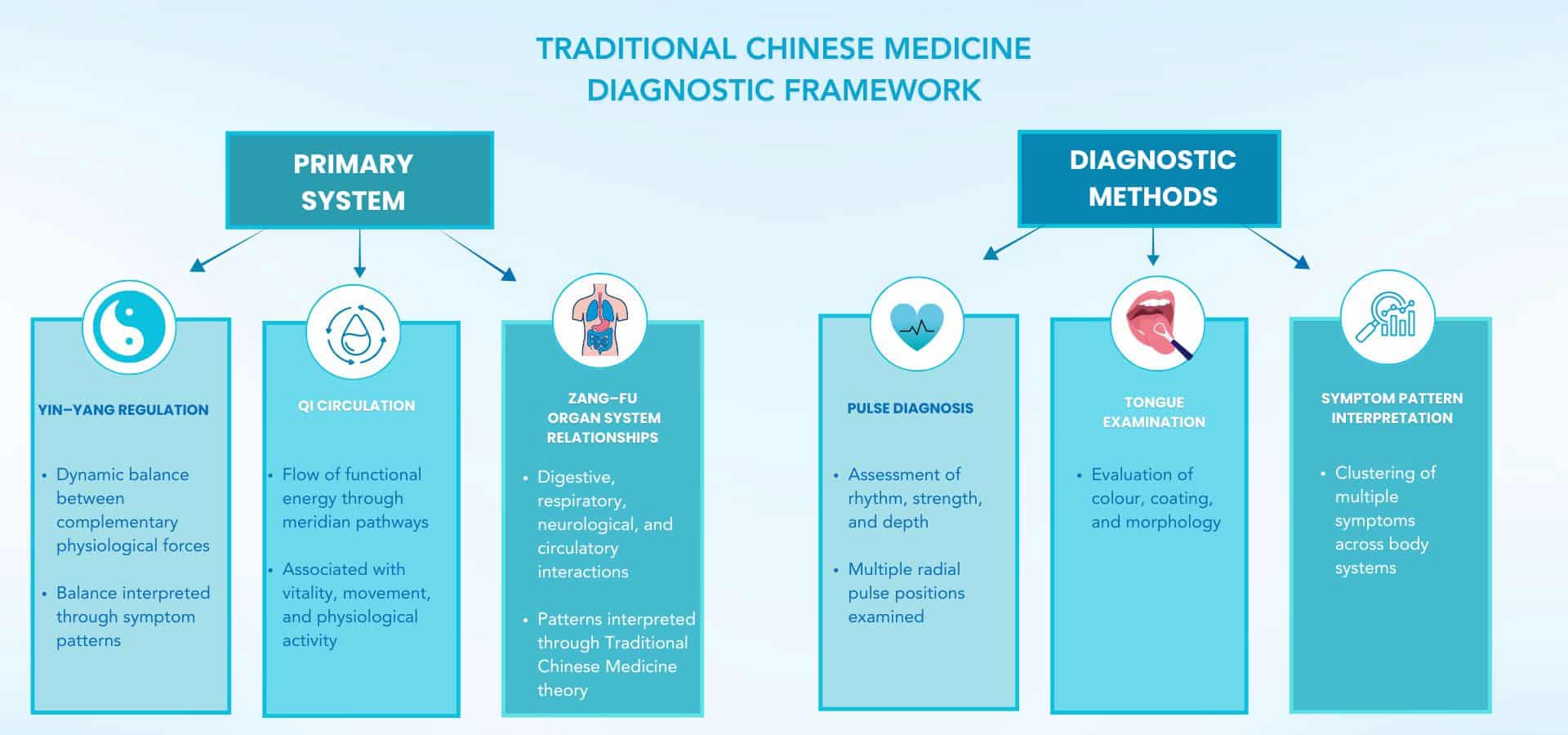
Unlike reactive medical models that intervene after laboratory values cross diagnostic thresholds, Traditional Chinese Medicine emphasises pattern recognition across multiple symptoms and physiological signals before structural pathology becomes clinically defined. Practitioner evaluation therefore focuses on identifying syndrome patterns—combinations of symptoms, pulse characteristics, tongue features, and lifestyle factors interpreted collectively rather than as isolated indicators.
Within this framework, practitioner interpretation remains central. Observations from consultation, physical examination, and symptom discussion are analysed together to understand interactions across physiological systems, with emphasis on clinical observation, practitioner expertise, and longitudinal consultation cycles rather than automated diagnostics or protocol-driven intervention models.
|
⚠️ Editorial Note
Traditional Chinese Medicine frameworks such as Yin–Yang balance, Qi circulation, and Zang-Fu organ relationships originate from historical medical traditions developed over centuries. Although acupuncture and related therapies have been studied in modern clinical research, these diagnostic interpretations do not directly correspond to conventional biomedical disease classifications. Research findings should therefore be interpreted within the broader context of complementary medicine practice.
|
Core System Focus
Traditional Chinese Medicine consultations at Longevity Clinic Monument often evaluate patterns affecting several interconnected physiological systems, including:
- digestive regulation and nutrient absorption
- circulation and musculoskeletal tension patterns
- energy regulation associated with Qi deficiency or stagnation
- neurological stress responses and sleep patterns
Rather than isolating a single symptom, practitioners assess how multiple signals interact across these systems.
|
🔍 Did You Know?
A large individual patient data meta-analysis covering nearly 18,000 patients across 39 clinical trials found that acupuncture produced statistically significant effects for several chronic pain conditions compared with both sham acupuncture and usual care (MacPherson et al., 2017).
|
Clinical studies investigating acupuncture have explored its role in pain modulation and autonomic nervous system regulation, although results vary between individuals and continue to be evaluated in medical research.
Lifestyle as a Medical Tool
Within Traditional Chinese Medicine, lifestyle factors are considered important influences on physiological balance. Consultation discussions may therefore include:
- dietary temperature and food balance principles
- herbal food therapy traditions
- sleep patterns and circadian rhythm stability
- exposure to physical or emotional stress
Lifestyle discussion occurs within consultation reviews and may be revisited during follow-up sessions to observe how symptom patterns change over time.
|
🔍 Did You Know?
Large longitudinal population studies have shown that individuals maintaining healthy lifestyle patterns—including balanced diet, regular physical activity, and stable sleep—experience substantially lower long-term cardiovascular and metabolic disease risk compared with those with multiple lifestyle risk factors (World Health Organization, 2019).
|
Longevity Clinic Monument follows a consultation-led diagnostic framework grounded in Traditional Chinese Medicine assessment methods. Evaluation begins with structured consultation rather than laboratory testing or automated screening technologies.
The objective of this process is to identify patterns of physiological imbalance through practitioner observation and diagnostic interpretation. Assessment typically integrates clinical consultation with physical diagnostic methods traditionally used in Chinese medicine. These observations are interpreted collectively rather than in isolation, allowing practitioners to identify syndrome patterns that may influence consultation planning.
Interpretation is conducted by the practitioner rather than through automated diagnostic systems. Observations are evaluated collectively to identify syndrome patterns and determine appropriate consultation pathways.
Diagnostic Assessment Includes
Traditional Chinese Medicine diagnostic evaluation at Longevity Clinic Monument may involve several established assessment methods.
These commonly include:
- Pulse diagnosis, assessing rhythm, strength, and depth across multiple radial pulse positions
- Tongue examination, evaluating colour, coating, and morphology
- Symptom pattern interpretation, analysing clusters of reported symptoms
- Lifestyle and dietary review, examining behavioural and nutritional influences on physiological balance
- Musculoskeletal assessment, where physical tension patterns or mobility limitations are present
These observations are interpreted together using Traditional Chinese Medicine syndrome differentiation frameworks.
|
🔍 Did You Know?
Traditional Chinese Medicine pulse diagnosis evaluates three positions on each wrist, historically associated with different organ system relationships within the Zang-Fu diagnostic model used in classical Chinese medicine texts (Bensky and Gamble, 2010).
|
Diagnostic Routing Model
Longevity Clinic Monument follows a consultation-based diagnostic routing process designed to interpret symptom patterns through Traditional Chinese Medicine assessment methods before treatment decisions are made.
Rather than applying standardised treatment protocols, the clinic evaluates each case through practitioner-led consultation and syndrome differentiation.
The consultation pathway generally follows a structured sequence:
- Initial Consultation: A comprehensive consultation is conducted to review symptom history, lifestyle factors, and relevant medical background.
- Traditional Chinese Medicine Diagnostic Assessment: Practitioners perform pulse diagnosis, tongue examination, and symptom pattern interpretation to identify possible physiological imbalance patterns.
- Pattern Interpretation and Clinical Discussion: Findings from the consultation and diagnostic assessment are analysed together using Traditional Chinese Medicine syndrome differentiation frameworks.
- Treatment Planning: Where appropriate, practitioners may discuss acupuncture treatment sessions, herbal medicine prescriptions, or additional therapies such as cupping or moxibustion.
- Follow-Up Review: Subsequent consultations allow practitioners to reassess previously identified patterns and observe how symptoms evolve over time.
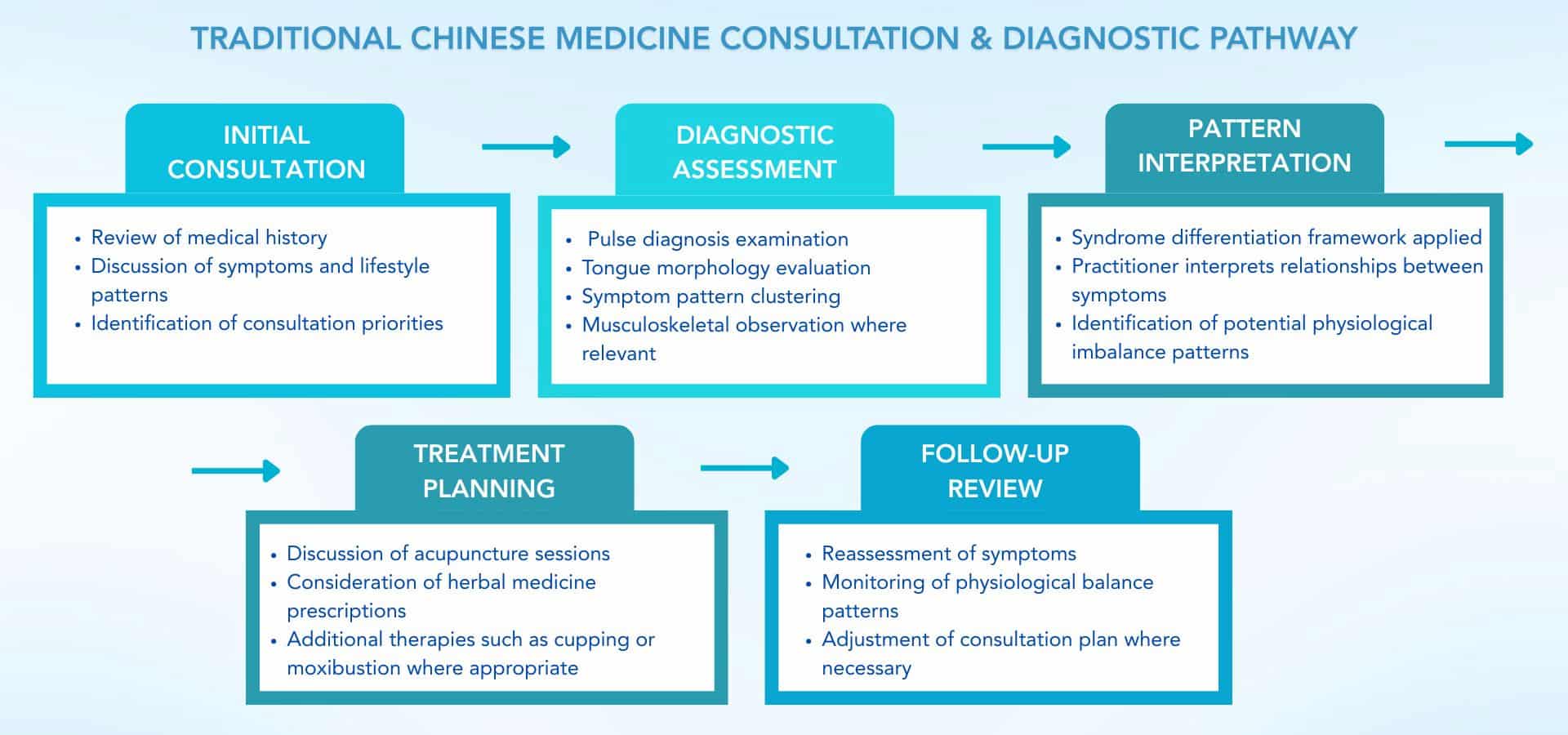
This routing model emphasises practitioner interpretation, consultation cycles, and longitudinal observation rather than single-visit diagnosis.
Chronomedicine & Future Risk Mapping
Consultations at Longevity Clinic Monument often evaluate symptom patterns across time rather than at a single moment. Follow-up consultations allow practitioners to observe how physiological signals evolve and whether previously identified patterns persist, improve, or change.
Consultation cycles typically follow a structured sequence:
Baseline consultation → diagnostic interpretation → treatment consultation → follow-up reassessment.
This longitudinal approach allows practitioners to evaluate symptom progression and physiological balance over multiple consultations rather than relying on a single diagnostic snapshot.
Typical Diagnostic Consultation Flow
Consultation → Pulse & Tongue Assessment → Symptom Pattern Interpretation → Syndrome Differentiation → Treatment Planning → Follow-Up Review
This structured process allows practitioners to observe how symptom patterns evolve across consultation cycles rather than relying on a single diagnostic snapshot.
Longevity Clinic Monument’s clinical approach centers on practitioner interpretation, Traditional Chinese Medicine diagnostic frameworks, and integration of multiple complementary therapeutic techniques within a single consultation pathway. Rather than focusing on high-volume procedures or technology-driven testing, the clinic emphasises diagnostic interpretation and consultation-led treatment planning.
Rather than focusing on high-volume procedures or automated diagnostic technologies, the clinic emphasises pattern-based diagnosis and practitioner observation supported by structured consultation cycles.
The following areas represent the clinic’s primary clinical strengths.
Key Medical Strength 1 – Traditional Chinese Medicine Pattern Diagnosis
Longevity Clinic Monument applies Traditional Chinese Medicine syndrome differentiation, a diagnostic framework that evaluates clusters of symptoms alongside pulse and tongue findings.
Rather than analysing symptoms individually, practitioners interpret patterns that reflect how multiple physiological systems interact. Pulse diagnosis and tongue examination provide additional diagnostic signals that help identify these patterns.
This approach allows practitioners to assess relationships between digestive function, energy regulation, musculoskeletal circulation, and neurological stress responses within a unified framework.
|
🔍 Did You Know?
Traditional Chinese Medicine syndrome differentiation has been used for centuries to classify physiological imbalance patterns. Contemporary clinical studies continue to explore how these diagnostic models correspond with measurable biological processes.
|
Key Medical Strength 2 – Integrated Acupuncture & Herbal Medicine
The clinic integrates acupuncture treatment with Chinese herbal medicine prescriptions, two core therapeutic components of Traditional Chinese Medicine.
Acupuncture sessions may use manual needle techniques or electro-acupuncture stimulation depending on practitioner assessment. Herbal prescriptions are prepared from plant-derived ingredients traditionally used within Chinese medicine pharmacology.
Both approaches are selected according to the diagnostic pattern identified during consultation.
Key Medical Strength 3 – Complementary Therapy Integration
Longevity Clinic Monument also provides several complementary therapeutic techniques used within Traditional Chinese Medicine practice.
These include:
- cupping therapy, which uses suction to stimulate circulation in targeted areas
- moxibustion, a heat-based therapy using burning herbal material near acupuncture points
- Gua Sha, a scraping technique applied to the skin to influence circulation patterns
- Tui Na therapeutic massage, a manual therapy focused on pressure points and musculoskeletal tension
These therapies are typically integrated into consultation plans according to practitioner interpretation of the underlying syndrome pattern.
The following examples reflect patient experiences described within publicly available clinic materials. These summaries illustrate how consultation and diagnostic interpretation may unfold in practice rather than representing guaranteed outcomes.
Outcome 1 – Musculoskeletal Pain Consultation
Before:
A patient reported persistent knee pain that limited daily mobility and physical activity. Previous attempts to manage the condition had provided limited relief.
After:
Following a series of consultations involving acupuncture sessions and practitioner-guided treatment planning, the patient reported perceived improvement in symptoms and mobility.
Source:
Clinic-published patient experience summary.
Outcome 2 – Dermatological Condition
Before:
A patient experienced ongoing eczema affecting facial skin and daily comfort. The condition had persisted despite previous attempts to manage symptoms.
After:
Following herbal medicine consultation and dietary discussion within the Traditional Chinese Medicine framework, the patient reported noticeable reduction in symptoms over subsequent weeks.
Source:
Clinic-published patient experience summary.
|
⚠️ Editorial Note
These examples reflect individual experiences reported within publicly available clinic materials. Outcomes vary between individuals. Diagnostic interpretation indicates physiological patterns rather than certainty of improvement, and reported changes may depend on multiple factors, including baseline health status, lifestyle conditions, and ongoing medical supervision.
|
Longevity Clinic Monument structures its services around consultation and treatment cycles rather than fixed medical packages. Engagement typically begins with a diagnostic consultation, followed by practitioner-guided treatment sessions where appropriate.
The clinic operates as an outpatient consultation practice, meaning appointments are scheduled individually and integrated into a patient’s existing schedule rather than requiring residential stays.
Consultation pathways are determined through practitioner assessment and may evolve over time as symptom patterns and physiological balance change.
Initial Diagnostic Consultation
Format:
Private outpatient consultation appointment.
Clinical Focus:
- medical history review
- pulse diagnosis and tongue examination
- symptom pattern interpretation
- lifestyle and dietary discussion
Consultation Structure:
Initial consultation → Traditional Chinese Medicine diagnostic assessment → practitioner interpretation → treatment planning.
This consultation establishes the diagnostic framework used to guide subsequent treatment decisions.
Follow-Up Treatment Sessions
Format:
Scheduled treatment sessions following initial diagnostic consultation.
Clinical Focus:
- acupuncture treatment sessions
- herbal medicine prescription review
- symptom monitoring and pattern reassessment
- lifestyle and dietary discussion
Follow-up consultations allow practitioners to reassess diagnostic patterns and observe how physiological signals change over time.
Rather than following a fixed protocol, treatment pathways may be adjusted based on practitioner interpretation and patient response across consultations.
Longevity Clinic Monument operates as a private outpatient Traditional Chinese Medicine consultation practice. Services are delivered through scheduled appointments rather than residential programs or inpatient care.
Therapeutic decisions follow practitioner consultation and Traditional Chinese Medicine diagnostic interpretation. Treatments are selected according to the identified syndrome pattern rather than predetermined protocols.
Medical & Restorative Therapies
Therapies available at Longevity Clinic Monument reflect core practices within Traditional Chinese Medicine.
These may include:
- acupuncture, using fine needles inserted at defined acupuncture points
- electro-acupuncture, where mild electrical stimulation is applied through acupuncture needles
- Chinese herbal medicine, prepared from plant-derived ingredients according to diagnostic patterns
- cupping therapy, which applies suction to influence circulation patterns in targeted areas
- moxibustion, a heat-based therapy involving burning herbal material near acupuncture points
- Gua Sha, a scraping technique used to stimulate circulation along the skin
- Tui Na therapeutic massage, a manual therapy focusing on pressure points and musculoskeletal tension
These therapies are applied within consultation plans based on practitioner interpretation.
Clinical Facilities
Consultations take place within private treatment rooms designed for outpatient acupuncture and Traditional Chinese Medicine therapy.
Clinical spaces support:
- acupuncture treatment sessions
- herbal medicine consultation and prescription review
- follow-up consultations and diagnostic reassessment
The clinic operates as a consultation-based practice and does not provide inpatient care, surgical procedures, or emergency medical services.
Architecture, Environment & Digital Discipline
Longevity Clinic Monument operates within a professional clinical environment focused on privacy and consultation clarity rather than recreational wellness facilities.
Appointments are scheduled individually to maintain consultation focus and practitioner availability.
Patient information and consultation records are maintained within practitioner-managed systems consistent with professional confidentiality standards used in Traditional Chinese Medicine practice.
Longevity Clinic Monument structures its services around individual consultations and treatment sessions rather than fixed wellness packages or membership programs.
Pricing reflects practitioner consultation time, treatment sessions, and any additional therapies or herbal prescriptions that may be recommended following diagnostic assessment.
Because treatment pathways are determined through practitioner interpretation, the total number of sessions varies depending on the individual consultation plan.
The clinic operates as an outpatient consultation practice, meaning patients attend scheduled appointments rather than staying at a residential facility.
Pricing
|
Category
|
Details
|
|
Clinic Positioning
|
Private Traditional Chinese Medicine clinic
|
|
Stay Length
|
Outpatient consultation visits
|
|
Entry Pricing
|
Provided following consultation planning
|
|
What’s Included
|
Practitioner consultation and treatment session
|
|
Additional Costs
|
Herbal medicine prescriptions and additional therapies
|
|
Program Structure
|
Consultation → diagnostic interpretation → treatment sessions
|
|
Clinical Principle
|
Practitioner-led Traditional Chinese Medicine assessment
|
How Programs Are Structured
Engagement typically follows a structured consultation sequence.
- Pre-visit preparation: Patients may provide background information regarding symptoms, previous treatments, or medical history prior to consultation.
- On-site consultation: The practitioner conducts a diagnostic evaluation using Traditional Chinese Medicine assessment methods, including pulse diagnosis and tongue examination.
- Practitioner interpretation: Observations are interpreted within the Traditional Chinese Medicine diagnostic framework to identify syndrome patterns.
- Treatment consultation: Where appropriate, acupuncture treatment, herbal medicine prescription, or additional therapies may be discussed.
Length of Stay
Longevity Clinic Monument operates exclusively as an outpatient consultation clinic.
Patients typically attend scheduled appointments and return home after each consultation. The clinic does not provide overnight accommodation or residential treatment programs.
For visitors travelling from outside London, appointments are often integrated into existing travel schedules rather than requiring extended stays.
London hosts one of Europe’s largest healthcare ecosystems, combining conventional medical institutions with a wide network of complementary medicine practitioners.
Longevity Clinic Monument operates as an outpatient consultation clinic located in London, United Kingdom, with additional consultation facilities in Farnham, Surrey. The clinic does not provide residential accommodation or retreat-style programming.
Appointments are typically scheduled in advance and structured to integrate with professional schedules. Many visitors attend consultations during existing business travel or short visits to London rather than planning extended health stays.
Recommended Length of Stay
Because Longevity Clinic Monument operates as a consultation-based outpatient clinic, overnight stays are not required.
Initial diagnostic consultations are typically completed during a scheduled appointment, with follow-up treatment sessions arranged separately depending on practitioner recommendations and patient availability.
Visitors travelling from outside London often schedule consultations within short visits or alongside professional travel.
How to Reach the Clinic?
The clinic’s London location is accessible through the city’s major transport infrastructure.
Nearest Airport
London Heathrow Airport
Typical Transfer Time
Approximately 35–45 minutes by car, depending on traffic conditions.
Transport Options
- taxi services
- underground rail connections
- national rail services
- private car services
🔗 Find best flights to London
🔗 Find car rentals in London
Links provided for travel planning convenience only.
Accommodation & Stay Planning
Longevity Clinic Monument does not operate on-site accommodation.
Visitors travelling from outside London typically arrange nearby hotels or serviced apartments depending on their schedule and travel preferences. The clinic’s central London location provides access to a wide range of business-oriented accommodation options within short travel distance.
🔗 Explore nearby hotels & apartments
What to Bring
Visitors attending consultation appointments may wish to bring:
- previous medical reports or laboratory results
- current medication list
- relevant imaging reports
- personal identification
Providing existing medical information may assist practitioners in understanding prior health history during consultation.
The longevity and preventive health sector includes a wide range of clinical models, from technology-driven biomarker clinics to complementary medicine practices rooted in traditional diagnostic frameworks. As a result, evaluating a clinic often involves reviewing practitioner leadership, diagnostic methodology, and professional governance rather than relying solely on treatment claims.
Longevity Clinic Monument operates within the complementary medicine segment of this landscape, applying Traditional Chinese Medicine diagnostic interpretation alongside acupuncture and herbal medicine therapies. Its approach emphasises practitioner-led consultation and pattern-based diagnostic assessment rather than technology-driven screening platforms.
Within this framework, the clinic’s role is centred on structured consultation, diagnostic interpretation, and treatment planning based on Traditional Chinese Medicine principles.
What Patients Commonly Report
Patient experiences published by the clinic commonly describe themes such as:
- perceived reduction in musculoskeletal discomfort
- improved sleep patterns
- relief from digestive symptoms
- improvement in dermatological conditions
- greater sense of overall wellbeing
These experiences reflect individual patient reports and should not be interpreted as guaranteed outcomes.
Media & Professional Recognition
Longevity Clinic Monument operates within the professional practice framework governing acupuncture and Traditional Chinese Medicine practitioners in the United Kingdom.
The clinic’s lead practitioner is affiliated with recognised professional organisations such as the British Acupuncture Council (BAcC), which establishes professional standards and ethical practice guidelines for acupuncture practitioners.
Professional recognition within this field is typically based on practitioner training, professional association membership, and adherence to established clinical practice standards.
Longevity Clinic Monument operates within the complementary medicine segment of the broader longevity and preventive health sector. While some longevity clinics emphasise biomarker testing, genomic analysis, or technology-driven diagnostics, this clinic’s framework centres on Traditional Chinese Medicine consultation and practitioner-led diagnostic interpretation.
Traditional Chinese Medicine approaches health through pattern recognition across multiple physiological systems rather than isolated laboratory measurements. These diagnostic models have developed over centuries and continue to be applied within contemporary acupuncture and herbal medicine practice.
Research into acupuncture and Traditional Chinese Medicine therapies continues to evolve, and outcomes vary between individuals. Within this context, Longevity Clinic Monument provides a consultation model based on practitioner observation, diagnostic interpretation, and structured follow-up sessions.
For executives and professionals exploring complementary medical perspectives, the clinic offers an opportunity to review health patterns through an alternative diagnostic framework alongside conventional healthcare oversight. Longevity Clinic Monument, often searched online as Longevity Clinic UK, operates within the complementary medicine segment of the preventive health sector.
Is Longevity Clinic Monument a medical clinic or a wellness centre?
Longevity Clinic Monument operates as a Traditional Chinese Medicine consultation practice providing acupuncture, herbal medicine, and related therapies within recognised UK professional practice standards. It is not a spa, retreat facility, or recreational wellness centre.
Consultations are practitioner-led and based on Traditional Chinese Medicine diagnostic interpretation rather than lifestyle programming or wellness experiences.
Who is the clinic designed for?
The clinic is designed for individuals seeking structured complementary health consultation, including executives, founders, entrepreneurs, and professionals interested in exploring Traditional Chinese Medicine perspectives alongside conventional medical care.
It is not intended for emergency medicine, inpatient care, or acute medical treatment.
How personalised is the consultation process?
Consultations are individualised according to Traditional Chinese Medicine diagnostic assessment. Practitioners evaluate symptom patterns using pulse diagnosis, tongue examination, and clinical consultation to interpret physiological imbalance patterns.
Treatment approaches may vary depending on the diagnostic pattern identified during consultation.
How is patient privacy handled?
Appointments take place in private consultation rooms, and patient information is handled according to practitioner confidentiality standards commonly used in Traditional Chinese Medicine practice.
Consultations are scheduled individually to maintain privacy and practitioner focus.
Can patients remain connected and working during treatment sessions?
Yes. Longevity Clinic Monument operates as an outpatient consultation clinic, meaning appointments are scheduled individually and patients return home or to work following each session.
Many visitors integrate consultations into existing workdays or professional travel schedules.
Does the clinic treat diabetes or chronic medical conditions?
Longevity Clinic Monument provides complementary health consultation based on Traditional Chinese Medicine principles. It does not replace specialist medical care for chronic diseases.
Individuals with medical conditions should consult qualified healthcare professionals and continue appropriate medical supervision.
How should value be evaluated relative to cost?
Value is typically determined by practitioner expertise, consultation time, and the diagnostic framework used to interpret symptom patterns.
Longevity Clinic Monument provides practitioner-led consultation and treatment sessions rather than automated diagnostics or protocol-based programs.
A Strategic Pause That Protects the Years Ahead
In high-performance environments, uncertainty is rarely ignored. Financial exposure, operational risk, and long-term strategy are routinely assessed through structured analysis and ongoing review. Health often follows a similar principle, although many of its signals emerge gradually and may remain unnoticed until symptoms become disruptive.
Complementary medical systems such as Traditional Chinese Medicine approach health through pattern recognition and practitioner observation. Rather than focusing on isolated measurements, these frameworks interpret clusters of physiological signals across interconnected body systems. Consultation therefore becomes a process of evaluating how multiple factors—such as stress exposure, sleep patterns, digestion, and musculoskeletal tension—interact over time.
Longevity Clinic Monument operates within this tradition. Its consultations emphasise practitioner interpretation, diagnostic discussion, and repeated evaluation through follow-up sessions. The clinic does not position its services around disease reversal, anti-aging claims, or guaranteed outcomes. Instead, it offers structured consultation grounded in Traditional Chinese Medicine diagnostic principles.
For executives, founders, and professionals managing demanding schedules, the relevance of this model lies in perspective. Consultation may provide an additional framework for interpreting health patterns and understanding how lifestyle factors influence physiological balance.
Longevity medicine remains an evolving field, and complementary diagnostic systems represent only one perspective within a broader healthcare landscape. When approached responsibly and alongside conventional medical care, practitioner-led consultation may contribute to a more comprehensive view of long-term wellbeing.
Complementary diagnostic systems such as Traditional Chinese Medicine represent one perspective within the wider healthcare landscape and are often explored alongside conventional medical oversight.
👉 View Longevity Program
↩ Return to ExtendMy.Life
↑ Back to Top
Disclaimer
This page is provided for informational and editorial purposes only. Its purpose is to support structured review and informed decision-making regarding complementary health services. The content presented here does not constitute medical advice, diagnosis, or treatment.
Reading this page does not establish a doctor–patient relationship with Longevity Clinic Monument, its practitioners, or ExtendMy.Life. Clinical services are delivered only through direct consultation between patients and qualified practitioners.
Traditional Chinese Medicine, acupuncture, and herbal medicine operate within diagnostic frameworks that differ from conventional biomedical models. Research exploring their mechanisms and potential clinical effects continues to evolve, and findings reported in scientific studies do not guarantee individual outcomes.
Descriptions of therapies and diagnostic methods are provided solely to explain the consultation process used by the clinic. They should not be interpreted as recommendations, prescriptions, or assurances of benefit.
Individuals experiencing symptoms, chronic conditions, or medical concerns should consult a qualified healthcare professional. Complementary therapies should not replace appropriate medical care or specialist treatment where required.
Any decisions regarding medical testing, treatment, medication, supplementation, or lifestyle changes should be made in consultation with a licensed healthcare provider familiar with an individual’s medical history.
ExtendMy.Life does not provide medical services and does not recommend specific treatments or interventions.
References
Bensky, D. and Gamble, A. (2010) Chinese Herbal Medicine: Materia Medica. Seattle: Eastland Press.
Ernst, E. and White, A. (2001) ‘Acupuncture: A scientific appraisal’, Journal of Internal Medicine, 259(2), pp. 125–137.
Langevin, H. and Wayne, P. (2018) ‘What is the point? The problem with acupuncture research’, Journal of Alternative and Complementary Medicine, 24(5), pp. 432–438.
MacPherson, H. et al. (2017) ‘Characteristics of acupuncture treatment associated with outcome’, BMJ Open, 7(6), e014901.
Vickers, A. J. et al. (2012) ‘Acupuncture for chronic pain: individual patient data meta-analysis’, Archives of Internal Medicine, 172(19), pp. 1444–1453.
World Health Organization (2019) WHO Global Report on Traditional and Complementary Medicine. Geneva: World Health Organization.