The clinic operates under centralized physician oversight, with all assessments reviewed and interpreted within a medical framework. Programs are structured around measurable diagnostics, followed by physician-led evaluation and reporting.
Its workflow is designed for efficiency. Many assessments are completed within short visit windows, making it suitable for individuals with limited time availability. The facility integrates specific diagnostic technologies, including 3D body scanning systems and real-time movement analysis platforms.
The operational model emphasizes structured evaluation rather than open-ended programs. Each visit follows a defined sequence: data collection, system-level analysis, and medical interpretation.
At a Glance – Healthy Aging Medical Center Vienna
|
Category
|
Details
|
|
Location
|
Vienna, Austria
|
|
Clinic Type
|
Preventive longevity medical center
|
|
Core Focus
|
Biological age analysis, genetic and metabolic profiling
|
|
Typical Stay
|
Short structured visits (hours to 1–2 days)
|
|
Diagnostic Depth
|
Multi-system (genetic, metabolic, musculoskeletal)
|
|
Signature Method
|
Genetic analysis combined with lifestyle-based interpretation
|
|
Environment
|
Urban clinical setting
|
|
Privacy Level
|
High (individual diagnostic assessments)
|
|
Professional Recognition
|
Physician-led longevity research integration
|
Many visitors integrate sessions into existing business travel rather than planning extended stays, reflecting the clinic’s time-efficient structure.
The Healthy Aging Medical Center Vienna is selected primarily for its structured diagnostic model and physician-led interpretation. Rather than offering general wellness services, the clinic focuses on measurable biological assessment using specific technologies and defined clinical workflows.
A key differentiator is the integration of genetic analysis with lifestyle interpretation. The clinic analyzes over 80 genetic variations to identify metabolic tendencies, recovery capacity, and potential risk patterns. These findings are not presented in isolation but interpreted within a broader physiological context.
The clinic also uses Scaneca 3D body analysis, which creates a digital representation of the body to assess posture, fat distribution, and muscle balance within a short time frame. This is supported by the D-Wall motion analysis platform, which evaluates movement patterns, force distribution, and stability in real time.
Another structural component is the use of IHHT (Interval Hypoxia Hyperoxia Therapy) and mild Hyperbaric Oxygen Therapy (HBO). These are applied within a monitored setting to examine how the body responds to controlled oxygen variation, particularly in relation to cellular energy processes.
USP & Key Takeaways
- Physician-led diagnostic model under Karin Stengg
- Genetic analysis covering 80+ biological variations
- Scaneca 3D body scanning for rapid structural assessment
- D-Wall platform for real-time movement evaluation
- Oxygen-based protocols (IHHT and HBO) within controlled settings
- Defined workflow: diagnostics → physician interpretation → reporting
- Time-efficient structure suitable for executive schedules
The Healthy Aging Medical Center Vienna is structured around early-stage biological assessment rather than treatment delivery. Its purpose is to identify patterns across multiple body systems before symptoms appear, allowing individuals to understand how their current lifestyle and physiology may influence long-term health outcomes.
The clinic operates within a preventive framework. It focuses on collecting measurable data and translating it into structured insight, rather than reacting to existing medical conditions. This makes it relevant for individuals who prioritize planning and risk awareness over intervention.
Clinical Purpose
The clinic’s clinical role is centered on three core functions:
- Early Risk Identification
Detection of metabolic, genetic, and physical markers that may indicate future health risks
- System-Level Understanding
Analysis of how different biological systems—such as metabolism, movement, and energy production—interact with each other
- Long-Term Planning Support
Providing structured reports that help individuals make informed decisions about lifestyle and health strategy
This approach does not involve urgency or predictive certainty. Diagnostics are used to indicate patterns and tendencies, not outcomes.
Who This Clinic Is Designed For
The clinic is designed for individuals who require structured, time-efficient health analysis:
- Executives managing high workloads and decision pressure
- Founders and entrepreneurs operating in high-responsibility roles
- Investors seeking long-term performance sustainability
- Professional athletes monitoring physical systems
- High-performers seeking clarity on internal health metrics
It is not designed for individuals seeking immediate treatment, recovery programs, or general wellness experiences.
Focus Areas
|
Focus Area
|
What This Means in Practice
|
|
Medical Discipline
|
Preventive medicine, orthopedics, metabolic assessment
|
|
Core Biological System
|
Mitochondrial function, metabolism, musculoskeletal system
|
|
Environment & Design
|
Clinical, technology-integrated setting
|
|
Program Structure
|
Diagnostics → physician interpretation → structured reporting
|
|
Lifestyle as Medicine
|
Nutrition, movement, stress regulation as measurable inputs
|
|
Privacy
|
Individual assessments with controlled data handling
|
|
Long-Term Strategy
|
Risk awareness and biological trend analysis
|
The Healthy Aging Medical Center Vienna follows a preventive medical model that prioritizes early detection of biological patterns over reactive treatment. The approach is based on the idea that many long-term health outcomes are influenced by measurable changes that occur years before symptoms develop.
Rather than focusing on isolated metrics, the clinic evaluates how multiple systems interact. Genetic predispositions, metabolic activity, and physical function are assessed together and interpreted within a structured clinical framework. This reduces reliance on single test results and emphasizes physician-led analysis.
Core System Focus
The clinic concentrates on primary biological systems that influence long-term performance and resilience:
- Mitochondrial Function
Assessment of cellular energy production and efficiency
- Metabolic Regulation
Analysis of how the body processes nutrients and maintains balance
- Musculoskeletal Stability
Evaluation of posture, movement, and structural alignment
These systems are assessed together to provide a broader understanding of how the body functions under stress and over time.
|
🔍 Did You Know?
Biological aging is influenced by factors such as mitochondrial efficiency and metabolic balance, which can change over time based on lifestyle and environment.
|
Lifestyle as a Medical Tool
Within this model, lifestyle factors are treated as measurable variables rather than general recommendations. The clinic evaluates how daily behaviors influence biological systems and integrates these findings into its analysis.
Key variables include:
- Nutrition aligned with genetic and metabolic indicators
- Physical activity assessed through movement diagnostics
- Stress regulation evaluated through nervous system responses
These elements are not prescribed but analyzed in relation to diagnostic findings, allowing individuals to understand how lifestyle choices may influence long-term biological trends.
|
🔍 Did You Know?
Lifestyle factors are estimated to influence a significant portion of aging-related outcomes, often exceeding the impact of fixed genetic factors.
|
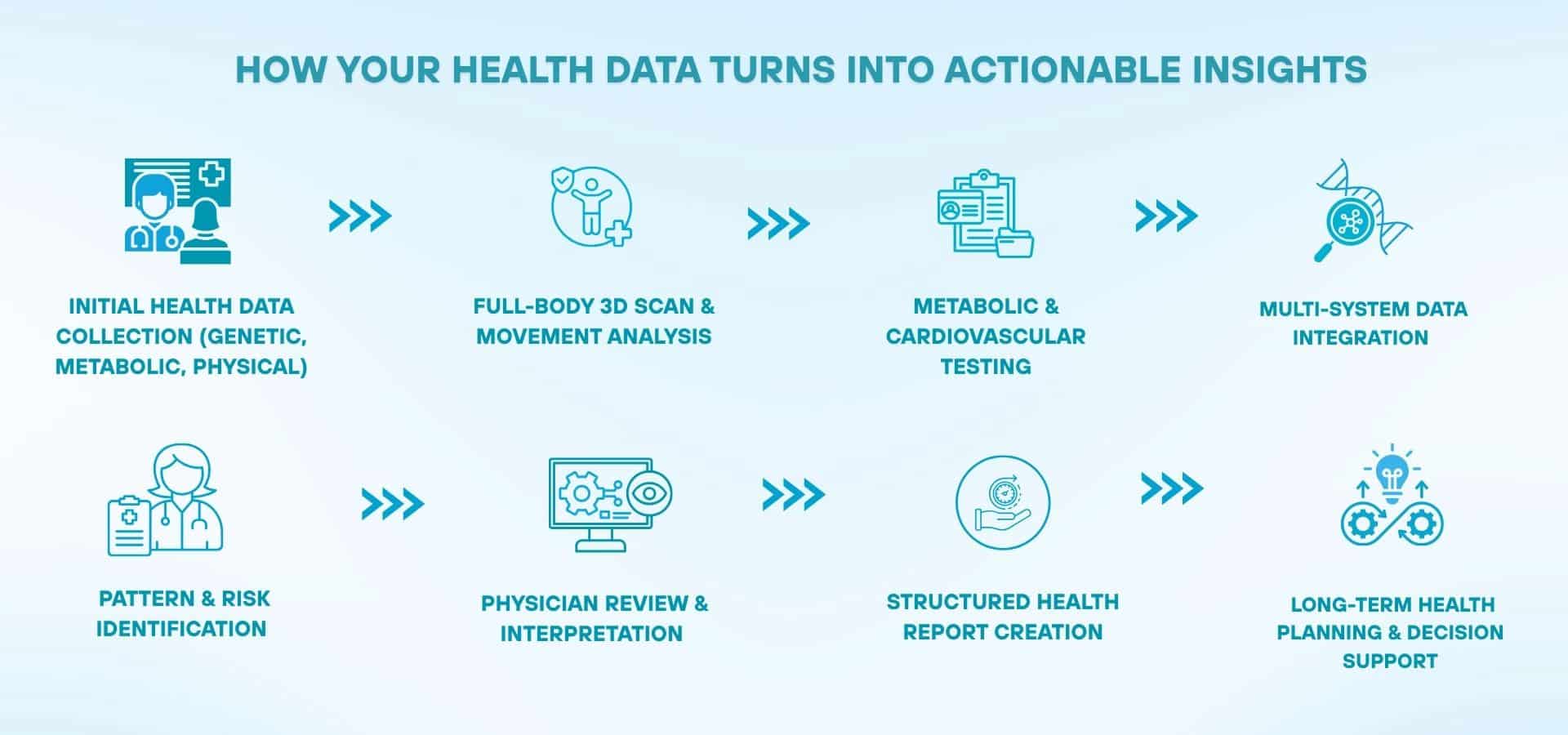
The Healthy Aging Medical Center Vienna uses a structured diagnostic workflow designed to collect measurable data across multiple biological systems. The process begins with data acquisition and ends with physician-led interpretation, ensuring that results are clinically contextualized rather than presented in isolation.
Diagnostics are selected to evaluate key areas such as genetic predisposition, metabolic function, and physical structure. Each tool contributes a specific layer of information, which is then combined into a broader system-level assessment.
Diagnostic Assessment Includes
The diagnostic process typically includes:
- Genetic Analysis (80+ Variations)
Identification of metabolic tendencies, recovery capacity, and potential biological sensitivities
- Scaneca 3D Body Analysis
Creation of a digital body model to assess posture, fat distribution, and muscle balance
- D-Wall Motion Analysis Platform
Real-time evaluation of movement patterns, force distribution, and stability
- Metabolic and Cardiovascular Indicators
Measurement of internal markers related to energy use and system efficiency
Each component contributes to a structured dataset that is reviewed by a physician before conclusions are presented.
|
🔍 Did You Know?
3D body scanning systems can generate a full-body structural analysis in approximately 30 seconds, enabling rapid assessment within limited timeframes.
|
Chronomedicine & Future Risk Mapping
The clinic applies a forward-looking framework often referred to as chronomedicine. This approach uses current biological data to understand how systems may evolve over time.
Rather than predicting specific outcomes, the goal is to identify patterns that could influence future health trajectories. These patterns are presented as risk indicators, not certainties.
This allows individuals to:
- Understand how current biological markers relate to long-term trends
- Identify areas that may require closer monitoring
- Support informed decision-making based on structured medical insight
All findings remain interpretive and are dependent on individual variability, reinforcing the importance of physician oversight in the final assessment.
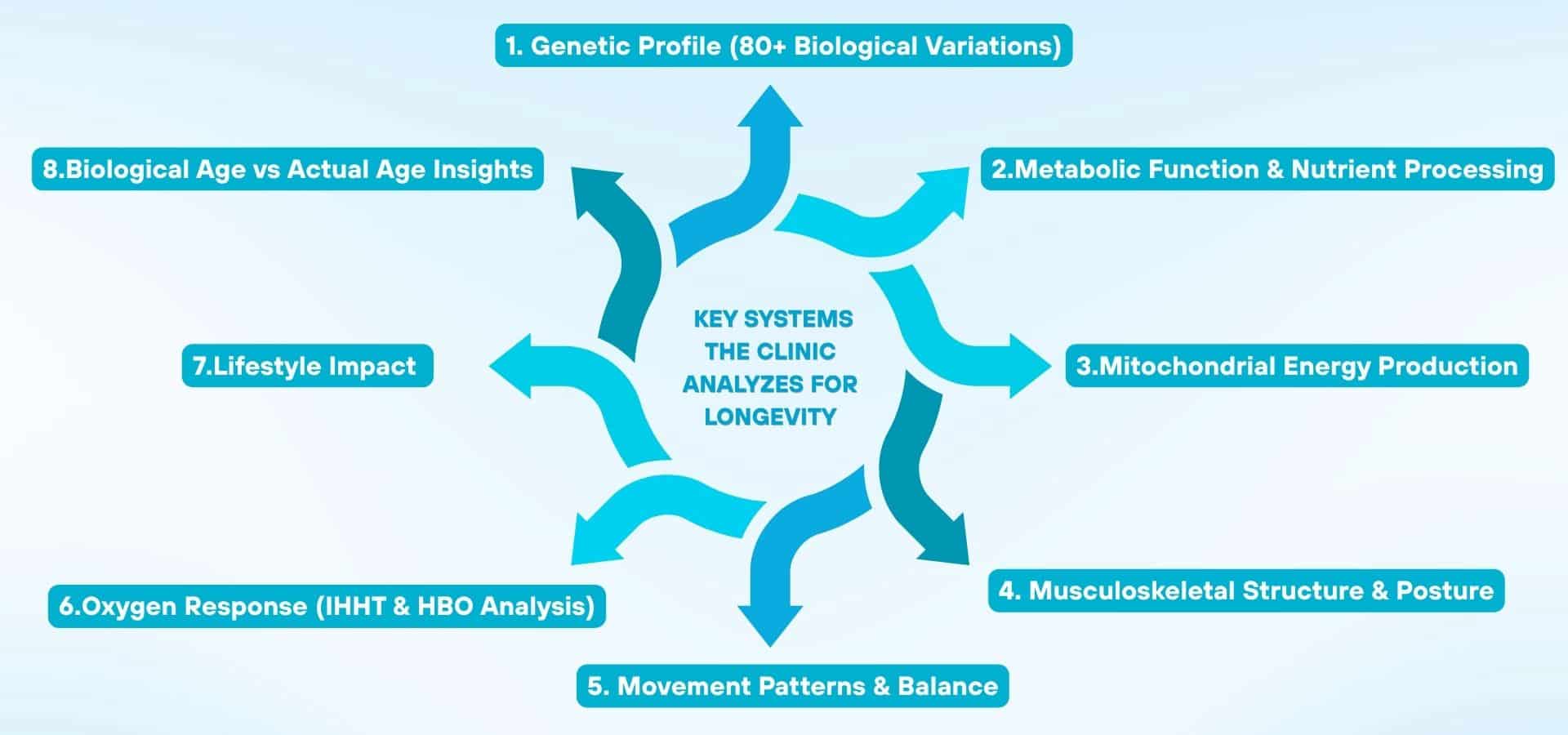
The Healthy Aging Medical Center Vienna is structured around measurable diagnostics and physician-led interpretation. Its strengths lie in how it combines multiple data sources into a single, clinically reviewed framework rather than offering isolated assessments.
The clinic does not position itself around treatment delivery. Instead, it focuses on identifying patterns across biological systems and translating them into structured insight. This approach supports individuals who require clarity on internal health metrics without relying on generalized assumptions.
Key Medical Strength 1 – Biological Age Assessment
A central capability of the clinic is the distinction between chronological age and biological age. Using epigenetic markers and metabolic indicators, the clinic evaluates how the body is functioning relative to expected age patterns.
This assessment is not used to define outcomes but to highlight differences between measured biological activity and standard age benchmarks.
|
🔍 Did You Know?
Biological age can differ from chronological age by several years depending on lifestyle, metabolic efficiency, and environmental factors.
|
Key Medical Strength 2 – Mitochondrial Function Analysis
The clinic places emphasis on mitochondrial performance, as these structures are responsible for cellular energy production. Diagnostics and oxygen-based protocols are used to observe how efficiently cells utilize oxygen and generate energy.
This provides insight into fatigue patterns, recovery capacity, and overall system efficiency, particularly in high-demand individuals.
Key Medical Strength 3 – Movement & Structural Diagnostics
Physical structure and movement are assessed using sensor-based platforms such as the D-Wall system. These tools measure posture, balance, and force distribution in real time.
This allows for identification of inefficiencies in movement patterns that may not be visible through standard observation. The data is then interpreted within a clinical framework to understand its relevance to long-term physical stability.
The Healthy Aging Medical Center Vienna presents outcomes in terms of observed changes in awareness, measurement, and system understanding rather than treatment results. These outcomes are based on structured diagnostics and reported experiences within the clinic’s framework.
The focus is not on transformation claims but on how individuals move from limited visibility of internal health metrics to a more structured and measurable understanding.
Outcome 1 – Biological Age Awareness
Before:
Limited understanding of how biological systems compare to chronological age. Health perception is often based on general fitness or absence of symptoms.
After:
Structured insight into biological age markers derived from genetic and metabolic analysis. Individuals receive a clearer view of how their body is functioning relative to expected benchmarks.
Source:
Clinic-based epigenetic and metabolic assessment framework
Outcome 2 – Physical System Visibility
Before:
Reliance on basic indicators such as weight or general fitness without detailed structural or movement data.
After:
Access to measurable data on posture, muscle distribution, and movement patterns through systems such as Scaneca 3D analysis and D-Wall diagnostics.
Source:
Scaneca 3D body analysis and real-time motion platform
|
⚠️ Editorial Note
These outcomes reflect individual experiences reported within the clinic’s published materials. Results vary. Diagnostics indicate patterns and tendencies, not certainty, and outcomes depend on multiple individual factors.
|
The Healthy Aging Medical Center Vienna structures its programs around diagnostic depth rather than fixed treatment pathways. Each program is built to collect, interpret, and organize biological data under physician supervision.
Programs vary in duration depending on the level of analysis required. Some are designed for short, high-efficiency visits, while others extend over multiple days to allow broader system evaluation. The emphasis remains on structured assessment and reporting, not intervention.
Healthy Aging Essentials (Multi-Day Program)
This program is designed as a comprehensive diagnostic assessment combining genetic, metabolic, and physical analysis.
|
Category
|
Details
|
|
Focus
|
Multi-system diagnostic evaluation
|
|
Duration
|
Multi-day structured assessment
|
|
Core Components
|
Genetic analysis (80+ variations), metabolic indicators, movement diagnostics
|
|
Output
|
Personalized report (approx. 300 pages)
|
|
Clinical Oversight
|
Physician-led interpretation
|
Oxygen-Based Conditioning Programs (Session-Based)
These programs are centered on observing how the body responds to controlled oxygen variation within a monitored environment.
|
Category
|
Details
|
|
Focus
|
Cellular energy and oxygen utilization
|
|
Methods
|
IHHT (Interval Hypoxia Hyperoxia Therapy), Mild Hyperbaric Oxygen Therapy (HBO)
|
|
Duration
|
Session-based (short visits)
|
|
Structure
|
Monitored exposure under controlled conditions
|
|
Clinical Context
|
Used as part of broader diagnostic framework
|
These sessions are integrated into the clinic’s overall assessment model and are interpreted in relation to individual biological responses rather than used as standalone interventions.
The Healthy Aging Medical Center Vienna operates within a clinical setting where therapies and infrastructure are integrated into a structured diagnostic framework. Each component is used to generate measurable data or support controlled observation under physician supervision.
The environment is designed for efficiency and precision rather than extended stays. Technologies are selected based on their ability to provide quantifiable outputs that can be reviewed and interpreted medically.
Medical & Restorative Therapies
The clinic includes a defined set of therapies that are applied within a monitored and medically supervised context:
- IHHT (Interval Hypoxia Hyperoxia Therapy)
Controlled variation of oxygen levels to observe cellular response and energy dynamics
- Mild Hyperbaric Oxygen Therapy (HBO)
Exposure to increased oxygen concentration within a pressurized setting
- MesO2-LED Therapy
Combination of mesotherapy, oxygen delivery, and light-based application for cellular-level observation
- Biofeedback (HRV Measurement)
Monitoring of heart rate variability to assess stress response and nervous system activity
These therapies are not presented as standalone solutions but as components within a broader diagnostic and analytical process.
Clinical Facilities
The clinic is equipped with specific diagnostic and monitoring systems:
- Scaneca 3D Body Scanner
Generates a digital body model for posture and composition analysis
- D-Wall Motion Analysis Platform
Measures movement patterns, balance, and force distribution in real time
- Genetic Testing Infrastructure
Supports analysis of multiple biological markers related to metabolism and recovery
- Oxygen Therapy Units
Designed for controlled IHHT and hyperbaric sessions
Each facility contributes to a structured dataset that is reviewed under physician oversight.
Architecture, Environment & Digital Discipline
The clinic operates in an urban, medically focused environment without resort-style elements. The layout supports short, structured visits with minimal disruption to professional schedules.
Privacy is maintained through individualized assessments and controlled access to diagnostic data. The setting is designed to reduce unnecessary distractions, allowing individuals to complete evaluations efficiently.
Digital connectivity is typically maintained, enabling visitors to integrate sessions into existing work routines rather than requiring full disengagement.
The Healthy Aging Medical Center Vienna positions its services within a premium diagnostic category. Pricing is not standardized publicly, as programs are structured based on the depth of analysis and combination of diagnostic components.
The overall model reflects a diagnostics-first approach, where cost is associated with data collection, physician interpretation, and reporting rather than predefined treatment packages.
Pricing
|
Category
|
Details
|
|
Clinic Positioning
|
Premium preventive diagnostics
|
|
Stay Length
|
Short visits to multi-day programs
|
|
Entry Pricing
|
Not publicly standardized
|
|
What’s Included
|
Diagnostic assessments, physician-led interpretation, structured reporting
|
|
Additional Costs
|
Extended testing modules or additional diagnostic layers
|
|
Program Structure
|
Diagnostics → physician review → report delivery
|
|
Clinical Principle
|
Data-driven analysis before any conclusions
|
Pricing varies depending on the scope of diagnostics selected and the level of personalization required.
How Programs Are Structured
Programs follow a defined and sequential workflow to ensure consistency and clarity:
- Pre-Visit Preparation
Collection of basic background information and scheduling of diagnostic modules
- On-Site Diagnostics
Execution of genetic, metabolic, and physical assessments using clinic technologies
- Physician Interpretation
Review of all collected data under medical supervision
- Structured Reporting
Delivery of findings in a detailed, organized format for future reference
This structure ensures that all outputs are clinically contextualized rather than presented as isolated data points.
Length of Stay
The clinic is designed for time-efficient engagement:
- Short Visits (Hours)
Focused diagnostic sessions integrated into existing schedules
- Extended Visits (1–2 Days or More)
Broader assessments involving multiple systems and deeper analysis
Many individuals incorporate visits into business travel due to the clinic’s central location and structured workflow.
The Healthy Aging Medical Center Vienna is structured for short, efficient visits that can be integrated into existing travel schedules. The clinic does not require extended stays, making it suitable for professionals managing limited time availability.
Its central location within Vienna allows for straightforward access and minimal disruption to business or personal commitments.
Recommended Length of Stay
The appropriate duration depends on the level of diagnostic depth:
- Short Visits (Same Day)
Suitable for targeted assessments and specific diagnostic modules
- Multi-Day Visits (1–2 Days or More)
Required for comprehensive programs involving multiple systems and extended analysis
The structure allows flexibility, enabling individuals to select the level of evaluation that fits their schedule and objectives.
How to Reach the Clinic?
The clinic is located in the central district of Vienna, making it accessible from key transport points:
- Nearest Airport: Vienna International Airport
- Typical Transfer Time: Approximately 20–30 minutes
- Transport Options: Taxi, private transfer, and public transportation
🔗 Find best flights to Vienna
🔗 Find car rentals in Vienna
These links are provided for travel planning convenience only.
Accommodation & Stay Planning
The clinic does not operate its own accommodation facilities. Visitors typically arrange stays in nearby hotels or serviced apartments within the city center.
Due to the clinic’s short-visit model, overnight stays are optional and based on individual travel plans rather than program requirements.
🔗 Explore nearby hotels & apartments
What to Bring
Visitors are generally advised to bring:
- Basic medical history or prior reports (if available)
- Comfortable clothing suitable for movement-based assessments
- Personal identification and travel documents
No specialized equipment is required, as all diagnostic tools are provided on-site.
The Healthy Aging Medical Center Vienna presents outcomes in terms of structured insight and measurable awareness rather than treatment results. The clinic’s model is centered on diagnostics and physician interpretation, so reported outcomes reflect changes in understanding and visibility of biological systems.
Reputation is built on clinical leadership, integration of measurable technologies, and alignment with emerging research in preventive and longevity-focused medicine.
What Patients Commonly Report
Based on clinic-reported feedback and structured observations, individuals often highlight:
- Increased Awareness of Biological Metrics
Clearer understanding of internal health indicators such as metabolic and physical markers
- Structured Health Insights
Access to organized reports that present data in a clinically interpretable format
- Visual Tracking of Physical Changes
Ability to observe posture, muscle balance, and body composition through 3D analysis tools
- Clarity on Long-Term Health Positioning
Better understanding of how current patterns may influence future health trends
These reports reflect perceived value in data clarity rather than outcome-based claims.
Media & Professional Recognition
The clinic and its medical leadership, including Karin Stengg, have been referenced in:
- Austrian media platforms focused on health and medical topics
- Broadcast discussions related to preventive medicine and aging
- Professional interviews addressing genetic testing and longevity frameworks
Recognition is primarily linked to the clinic’s role in integrating clinical diagnostics with longevity-focused research rather than treatment innovation.
The Healthy Aging Medical Center Vienna operates within the emerging field of longevity-focused medicine, where the emphasis is shifting from reactive treatment to structured, preventive assessment. Its model reflects a broader transition toward data-driven health evaluation, combining genetic, metabolic, and physical diagnostics under physician supervision.
Within this context, the clinic’s value lies in its ability to organize complex biological data into a coherent framework. Rather than positioning itself as a treatment provider, it functions as an analytical environment where individuals can better understand how different systems interact over time.
It is important to note that the longevity field is still developing. Many biomarkers and diagnostic approaches are under ongoing research, and long-term validation remains limited. The clinic operates within these constraints by focusing on measurable inputs and avoiding outcome-based claims.
For executives and high-performance individuals, the relevance is primarily strategic. The clinic provides structured insight that can support long-term planning, particularly in environments where performance, resilience, and time efficiency are critical.
This section addresses common considerations regarding the Healthy Aging Medical Center Vienna, focusing on structure, positioning, and suitability rather than outcomes.
Is this a medical clinic or a wellness center?
The clinic operates as a physician-led medical facility. Its primary focus is on diagnostics and structured health assessment rather than wellness services or general lifestyle experiences.
Who is this clinic designed for?
It is designed for executives, founders, investors, athletes, and other high-performance individuals who require structured insight into biological systems. It is not positioned for individuals seeking immediate treatment or recovery-based programs.
How personalized are the programs?
Programs are based on individual diagnostic data, including genetic, metabolic, and physical assessments. Personalization occurs through physician interpretation of this data rather than pre-defined packages.
How is privacy managed?
Assessments are conducted individually, and data is handled within a controlled clinical environment. The structure supports confidentiality, particularly for individuals in high-profile roles.
Can I stay connected to work during visits?
Yes. The clinic’s model is designed for short, efficient visits, allowing individuals to remain connected and integrate sessions into their existing schedules.
Does the clinic treat chronic conditions like diabetes?
The clinic focuses on diagnostics and risk assessment rather than treatment. Individuals with existing conditions should consult their personal physician for medical management.
How should value be evaluated relative to cost?
Value is typically assessed based on the level of diagnostic depth, physician interpretation, and clarity of structured reporting. It is not positioned as a treatment-based service, so outcomes are not the primary measure.
The Healthy Aging Medical Center Vienna operates within a framework designed for individuals who manage sustained performance over long time horizons. In high-demand environments, physical and cognitive systems are often expected to perform consistently without clear visibility into underlying biological changes.
A structured diagnostic setting introduces a different approach. It creates a defined point in time where biological systems can be measured, reviewed, and interpreted under physician supervision. This is not positioned as intervention, but as observation—providing a clearer understanding of how current patterns may relate to long-term trajectories.
For executives and high-performers, this type of structured pause can support more informed decision-making. Rather than relying on assumptions or general indicators, individuals gain access to measurable data organized within a clinical framework.
👉 View Longevity Program
↩ Return to ExtendMy.Life
↑ Back to Top
Disclaimer
This document is provided for informational and editorial purposes only. It is intended to present a structured overview of the Healthy Aging Medical Center Vienna based on available research, clinical positioning, and publicly described methodologies. It does not constitute medical advice and does not establish a doctor–patient relationship. No recommendations, prescriptions, or treatment guidance are provided within this content. All diagnostic tools and assessments referenced are designed to indicate patterns, trends, or potential risk markers. They do not provide definitive diagnoses, nor do they predict future outcomes with certainty. Biological systems are complex and influenced by multiple variables, including genetics, lifestyle, environment, and existing medical conditions. Readers should not rely on this information to make health-related decisions. Any medical concerns, diagnostic interpretations, or treatment considerations must be discussed with a qualified healthcare professional who has access to an individual’s full medical history. The field of longevity medicine is still evolving. While many diagnostic approaches and frameworks show promising directions, long-term clinical validation remains limited in certain areas. As such, all information should be interpreted within the context of current scientific understanding and its limitations.
References
Attia, P. (2023) Outlive: The Science and Art of Longevity.
Dorner, T.E. (2024) Advances in clinical gerontology: from healthy longevity to prevention of care needs, Wiener klinische Wochenschrift.
Felsinger, R., Mayer, S., Haidinger, G. and Simon, J. (2025) Aging well? Exploring self-reported quality of life in the older Austrian population, Journal of Aging & Social Policy.
López-Otín, C., Blasco, M.A., Partridge, L., Serrano, M. and Kroemer, G. (2022) The hallmarks of aging, Cell.
López-Otín, C., Blasco, M.A., Partridge, L., Serrano, M. and Kroemer, G. (2023) The hallmarks of aging: an expanding universe, Cell.
Montgomery, H., Lopez, P. and Singh, A. (2024) Centenarians — the way to healthy vascular ageing and longevity, Cardiovascular Research.
Scott, A. (2024) The Longevity Imperative.
Frontiers Media (2021) Hyperoxia and aging biomarkers, Frontiers in Aging.
National Center for Biotechnology Information (2023) Biomedical research on aging mechanisms, NCBI.
National Center for Biotechnology Information (2024) Advances in longevity and metabolic research, NCBI.