La Clinique de Paris was founded by Claude Chauchard, a physician known for over 30 years of work in biological aging and preventive medicine. The clinic operates under a structured medical governance model, supported by a multidisciplinary team of practitioners and clinical staff.
At its core, the clinic follows a diagnostic-first workflow. Patients undergo a sequence of structured assessments that may include biomarker analysis, metabolic profiling, and functional evaluations. Only after this data is collected does physician interpretation take place, ensuring that recommendations are based on measurable evidence rather than general assumptions.
The care model is designed for efficiency. Instead of extended residential programs, the clinic offers time-compressed, high-density medical visits. This allows individuals to integrate clinical assessments into existing travel schedules or work commitments, an important factor for those managing demanding professional roles.
The clinical environment prioritizes discretion and control. Consultations are structured, data handling follows medical standards, and patient flow is designed to maintain privacy. The setting supports focused medical engagement rather than a hospitality-driven experience.
At a Glance – La Clinique de Paris
|
Category
|
Details
|
|
Location
|
Paris, France
|
|
Clinic Type
|
Physician-led longevity clinic
|
|
Core Focus
|
Preventive medicine and biomarker-based assessment
|
|
Typical Stay
|
Short, structured visits integrated into travel schedules
|
|
Diagnostic Depth
|
Multi-system biomarker, metabolic, and functional profiling
|
|
Signature Method
|
Chrono-Geno Nutrition & biological age assessment
|
|
Environment
|
Controlled clinical setting with structured consultations
|
|
Privacy Level
|
High – medical-grade data handling and private consultations
|
|
Professional Recognition
|
International presence across Paris, Hong Kong, Seoul, Tokyo
|
The clinic’s positioning is built on structure, not lifestyle appeal. Its differentiation comes from the way it organizes medical data, applies clinical frameworks, and maintains physician-led oversight throughout the process. For high-performing individuals, this reduces uncertainty and allows for more informed long-term planning.
Key Differentiators
- Biological Age Assessment Framework
The clinic uses a composite biomarker approach to evaluate biological aging across multiple systems. Instead of relying on a single indicator, it assesses patterns across metabolic, functional, and physiological domains to provide a more complete picture of health status.
- Chrono-Geno Nutrition System
Developed within the clinic’s medical framework, this method aligns nutritional intake with biological rhythms and individual metabolic characteristics. The aim is to create structured, sustainable patterns rather than short-term dietary interventions.
- Vitaminothérapie IV Protocols
Intravenous nutrient delivery allows micronutrients such as vitamin C, magnesium, and B-complex vitamins to bypass the digestive system. This enables direct systemic absorption under clinical supervision.
- EM Slim Technology
This technology uses focused electromagnetic stimulation to induce high-frequency muscle contractions within controlled sessions. It represents a mechanical approach to muscle activation that differs from voluntary exercise.
- GLP-1–Based Metabolic Programs
The clinic incorporates physician-supervised use of compounds such as semaglutide and liraglutide within structured metabolic programs. These are applied in a clinical context focused on metabolic regulation and monitoring.
- Global Clinical Network
With locations across multiple international cities, the clinic operates within a standardized system that supports continuity of care and consistent clinical protocols.
USP & Key Takeaways
- Diagnostics Before Decisions
The process starts with structured testing—biomarkers, metabolic, and functional data before any interpretation is made. This keeps decisions grounded in evidence, not assumptions.
- Multi-System View of Health
Multiple systems are assessed together, including metabolic and hormonal function, to provide a more complete picture rather than isolated insights.
- Time-Efficient Programs
Visits are designed to fit into busy schedules, allowing assessments to be completed without long stays or major disruption.
- Physician-Led Interpretation
Data is reviewed within a clinical context by physicians, ensuring structured and accurate understanding rather than raw data analysis.
- Focus on Risk, Not Prediction
The approach identifies patterns and potential risks over time, without making fixed or guaranteed outcome claims.
Clinical Purpose
The primary purpose of La Clinique de Paris is to support early identification of physiological risk patterns through structured medical diagnostics. Instead of focusing on symptoms or late-stage disease, the clinic aims to detect underlying imbalances across metabolic, hormonal, and functional systems.
This approach allows for a system-level understanding of how different biological processes interact over time. For example, metabolic shifts, hormonal changes, and inflammation markers are not viewed in isolation but as part of a broader physiological network.
The objective is not immediate intervention, but informed long-term planning. By mapping current biological status against expected aging patterns, individuals can better understand potential future risks. This creates a framework for decision-making under physician supervision, rather than reactive care after conditions develop.
Importantly, the clinic avoids urgency-based framing. Diagnostics are positioned as tools for clarity, not triggers for immediate action.
Who This Clinic Is Designed For
This clinic is structured for individuals who operate under high cognitive and performance demands and require clarity without disruption.
It is particularly suited for:
- Executives managing complex decision-making environments
- Founders and entrepreneurs balancing long-term performance with health
- Investors seeking structured insight into longevity and risk
- Professional athletes monitoring physiological performance and recovery
- High-performers who prefer data-driven understanding over generalized wellness approaches
The model is less suited for individuals seeking immediate treatment, short-term results, or non-medical wellness experiences. Instead, it serves those looking for structured analysis and physician-led interpretation.
H3: Focus Areas
|
Focus Area
|
What This Means In Practice
|
|
Medical Discipline
|
Preventive and longevity-focused internal medicine
|
|
Core Biological System
|
Metabolic, hormonal, and functional systems
|
|
Environment & Design
|
Clinical setting prioritizing privacy and efficiency
|
|
Program Structure
|
Diagnostics-first, followed by physician interpretation
|
|
Lifestyle as Medicine
|
Structured nutrition and behavioral alignment
|
|
Privacy
|
Controlled consultations and medical-grade data handling
|
|
Long-Term Strategy
|
Risk mapping and longitudinal health tracking
|
The medical philosophy at La Clinique de Paris is rooted in preventive longevity medicine. This approach differs from traditional healthcare by focusing on identifying early biological changes rather than treating established disease.
Instead of reacting to symptoms, the clinic analyzes underlying mechanisms associated with aging such as metabolic imbalance, hormonal decline, and cellular stress. This aligns with the broader field of geroscience, which studies the biological processes that drive aging across multiple systems.
A key principle is the importance of physician interpretation over raw data. While diagnostic technologies generate large volumes of information, clinical value comes from structured analysis and contextual understanding. Data alone does not provide answers without medical oversight.
The clinic also maintains a cautious stance toward emerging trends. Interventions are considered within a medical framework, and unvalidated or speculative approaches are deliberately avoided.
Core System Focus
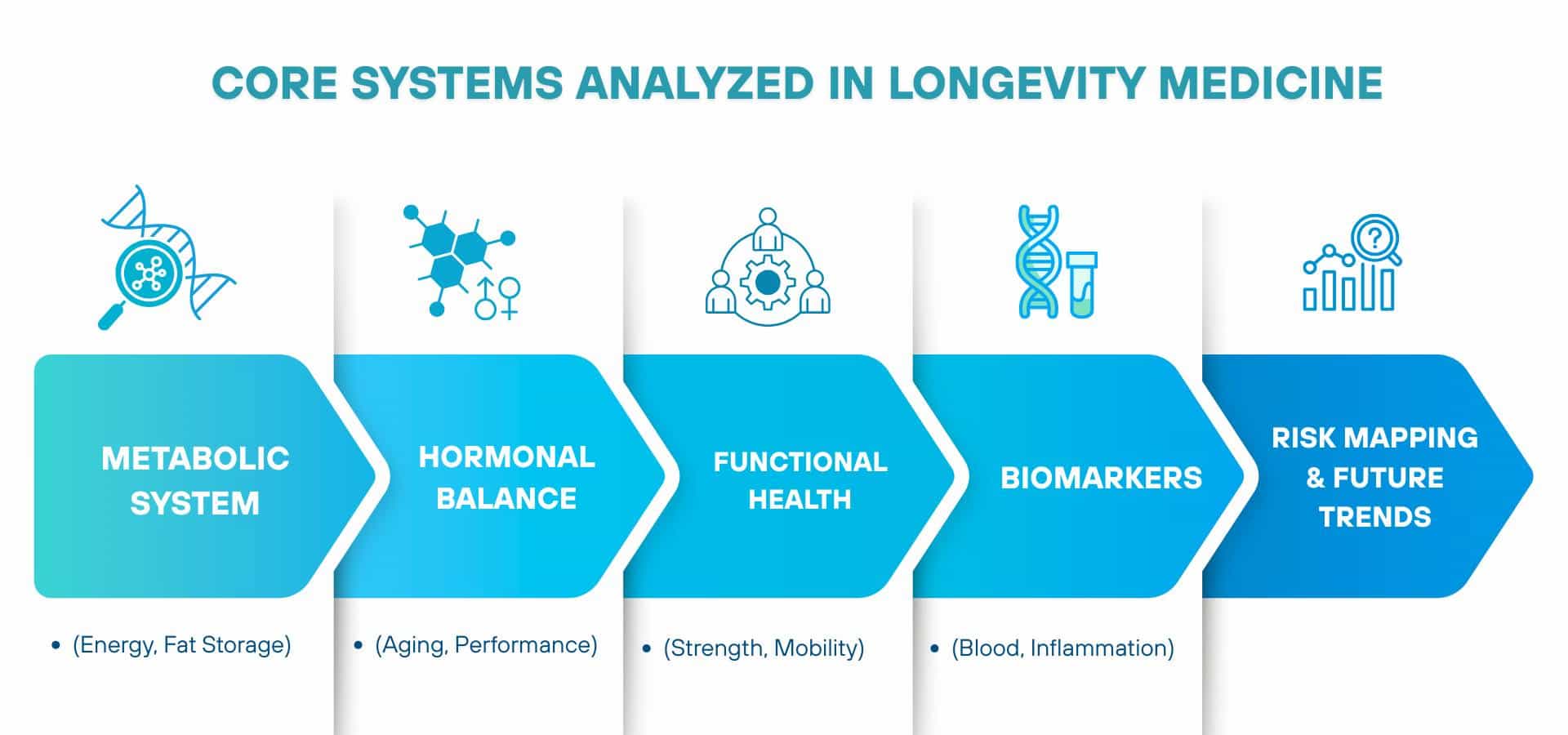
The clinic primarily focuses on metabolic and hormonal systems, as these are closely linked to energy regulation, body composition, and long-term physiological stability. Changes in these systems often develop gradually, making them important areas for early assessment.
By analyzing biomarkers such as glucose regulation, lipid profiles, and hormonal balance, the clinic builds a structured understanding of how the body manages energy, stores fat, and responds to internal and external stress. Instead of looking at single values in isolation, the focus is on identifying patterns across systems to provide a more complete physiological picture.
|
🔍 Did You Know?
Research shows that different organs and systems in the body age at different rates, which is why composite biomarker analysis is considered more reliable than single measurements.
|
Lifestyle as a Medical Tool
Lifestyle factors are integrated as structured variables within the clinical model, rather than general recommendations. This includes nutrition timing, physical activity patterns, and behavioral habits.
For example, approaches such as Chrono-Geno Nutrition align food intake with biological rhythms and individual metabolic responses. The goal is not short-term adjustment but long-term consistency that supports physiological stability.
Lifestyle is treated as a measurable input within the system, not as a standalone solution. Its role is to support medical strategy rather than replace it.
|
🔍 Did You Know?
Clinical observations suggest that aligning nutrition with biological rhythms may influence metabolic efficiency and long-term adherence more effectively than restrictive diets.
|
Diagnostic Assessment Includes
The diagnostic process at La Clinique de Paris is designed to capture a multi-layered view of physiological function.
Typical assessments may include:
- Blood-based biomarker analysis across metabolic and inflammatory markers
- Hormonal profiling related to aging and performance
- Functional assessments such as strength and mobility indicators
- Body composition analysis and fat distribution mapping
- Evaluation of biological age using composite measurement frameworks
These assessments are conducted within a structured workflow, where data collection precedes interpretation.
|
🔍 Did You Know?
Experts have identified at least 14 validated biomarkers that, when combined, provide a more accurate indication of biological aging than any single marker alone.
|
Chronomedicine & Future Risk Mapping
The clinic incorporates elements of chronomedicine, which considers how biological processes change over time and follow internal rhythms.
Rather than focusing only on current health status, this approach evaluates how physiological patterns may evolve. By comparing current biomarker data with known aging trajectories, physicians can identify early deviations that may indicate future risk.
This does not predict outcomes with certainty. Instead, it provides a structured way to monitor trends and adjust strategies under medical supervision.
The emphasis remains on observation, tracking, and informed interpretation—not prediction or guarantee.
The clinic’s strength lies in its ability to combine structured diagnostics with physician-led interpretation within a controlled and efficient clinical framework.
Instead of relying on isolated tests or fragmented insights, the clinic follows a clear sequence—data collection, analysis, and clinical review. Each stage builds on measurable findings, allowing patterns to be identified across multiple systems rather than focusing on single results.
This structured approach helps reduce uncertainty and supports a more consistent understanding of individual health patterns, while maintaining medical oversight throughout the process.
Key Medical Strength 1 – Multi-System Diagnostic Integration
The clinic integrates data from multiple biological systems into a single clinical framework. Rather than analyzing isolated markers, it evaluates how metabolic, hormonal, and functional systems interact with each other.
This approach helps identify patterns that may not be visible when systems are assessed separately. By viewing the body as an interconnected system, the clinic can build a more complete and structured understanding of overall physiological function.
|
🔍 Did You Know?
Muscle strength alone has been identified as one of the strongest indicators of aging-related decline, with expert consensus reaching up to 98%.
|
Key Medical Strength 2 – Structured Metabolic Assessment
Metabolic profiling is used to assess how the body processes energy, stores fat, and responds to different nutritional inputs over time. This includes evaluating visceral fat distribution, lipid markers, glucose regulation, and indicators linked to metabolic stress.
Rather than relying on surface-level measures such as weight alone, this approach examines how efficiently the body manages energy at a deeper level. It looks at how nutrients are utilized, how fat is stored or mobilized, and how the body responds to changes in diet and lifestyle.
By organizing these findings within a structured clinical framework, the clinic develops a clearer and more consistent understanding of metabolic patterns. This helps highlight trends that may influence long-term health trajectories, rather than focusing only on short-term changes or isolated data points.
Key Medical Strength 3 – Physician-Led Program Interpretation
All findings are reviewed within a clinical context, where physician interpretation plays a central role. Rather than presenting raw data in isolation, diagnostic results are analyzed as part of a broader physiological picture.
This approach ensures that data is translated into structured insight, connecting individual markers into meaningful patterns. It helps reduce the risk of misinterpretation that can occur when numbers are viewed without context.
By focusing on trends and relationships between systems, the clinic supports more coherent long-term planning. The emphasis remains on understanding patterns over time, rather than reacting to single or short-term data points.
Outcome 1 – Body Composition Awareness
Before:
Limited visibility into fat distribution, metabolic stress, and muscle balance. Health understanding often based on surface-level indicators such as weight or general fitness.
After:
Structured insight into body composition, including visceral fat patterns and muscle distribution, supported by clinical measurements and physician interpretation.
Source:
Internal clinic observations and patient-reported outcomes.
Outcome 2 – Metabolic Pattern Clarity
Before:
Unclear understanding of how nutrition, energy levels, and metabolic responses are interconnected. Decisions often based on trial-and-error approaches.
After:
Data-supported understanding of metabolic patterns, including how the body processes nutrients and responds to structured programs such as Chrono-Geno Nutrition.
Source:
Clinical framework and patient feedback within structured programs.
|
⚠️ Editorial Note
These outcomes reflect individual experiences reported within the clinic’s published materials. Results vary. Diagnostics indicate risk patterns, not certainty, and outcomes depend on multiple individual factors.
|
Programs at La Clinique de Paris are built around a structured sequence of diagnostics, physician interpretation, and targeted clinical modules. Each program begins with data collection and progresses through analysis before any structured planning is introduced.
These programs are designed with efficiency in mind. Instead of requiring extended stays, they are organized to fit within limited timeframes, allowing individuals to integrate assessments into existing professional or travel schedules.
The focus remains on delivering clear, data-driven insight through a controlled clinical process, rather than offering open-ended or unstructured experiences.
|
Category
|
Details
|
|
Program Focus
|
Comprehensive diagnostic assessment
|
|
Duration
|
2-3 Days
|
|
Core Components
|
Lifestyle medicine coaching, biomarker tracking
|
|
Output
|
Biomarker testing, metabolic profiling, hormonal analysis
|
|
Objective
|
Establish baseline biological status and identify risk patterns
|
This program serves as the entry point for most individuals, providing a detailed overview of physiological function across multiple systems.
Chrono-Geno Nutrition Program (Ongoing / Multi-Week)
|
Category
|
Details
|
|
Program Focus
|
Structured nutritional alignment
|
|
Duration
|
Multi-week, follow-up-based
|
|
Core Components
|
Biological rhythm-based nutrition planning
|
|
Output
|
Personalized nutrition framework
|
|
Objective
|
Support metabolic consistency through structured dietary timing
|
This program is designed to align nutrition with biological rhythms and individual metabolic characteristics, rather than applying generalized diet models.
Vitaminothérapie IV Program (Session-Based)
|
Category
|
Details
|
|
Program Focus
|
Intravenous micronutrient delivery
|
|
Duration
|
Session-based
|
|
Core Components
|
Vitamin C, NAD+, magnesium, B-complex
|
|
Output
|
Personalized nutrition framework
|
|
Objective
|
Direct nutrient absorption under supervision
|
Medical & Restorative Therapies
The clinic offers a range of medically supervised therapies that are integrated into its overall clinical framework. These include:
- Intravenous micronutrient infusions (Vitaminothérapie IV)
- BodySculptor mechanical tissue stimulation
- EM Slim electromagnetic muscle activation
- Hormonal assessment and monitoring programs
- Nutritional structuring through Chrono-Geno frameworks
Each therapy is applied within a structured medical context rather than as a standalone service. Their role is to support the broader diagnostic and interpretive process, ensuring that all interventions remain aligned with individual clinical findings and physician oversight.
Clinical Facilities
The clinic operates within a controlled medical environment designed to support structured diagnostics and organized care delivery. The setting is built around clinical efficiency, ensuring that each stage from assessment to consultation—follows a clear and systematic flow.
Facilities typically include:
- Dedicated diagnostic rooms for biomarker collection and standardized testing
- Advanced equipment for body composition and metabolic analysis
- Private consultation spaces for physician-led review and discussion
- Clinical-grade data systems for secure handling, processing, and reporting of patient information
These elements work together to create a streamlined clinical process. Patients move through each stage in a structured manner, reducing delays while maintaining accuracy and privacy. The overall infrastructure supports efficient patient flow without compromising medical standards or confidentiality.
Architecture, Environment & Digital Discipline
The environment is designed to support focus, privacy, and efficiency rather than leisure or extended stay. Every element of the clinic is structured to minimize distraction and maintain a professional, clinical atmosphere.
Key features of this environment include:
- Structured scheduling of consultations to ensure a smooth and predictable flow throughout the visit
- Controlled and discreet patient movement within the clinic to maintain privacy and avoid unnecessary interaction
- Limited digital engagement, restricted to essential clinical processes and communication
This setup allows individuals to stay mentally aligned with their professional responsibilities while undergoing assessments. The emphasis remains on efficiency and clarity, ensuring that time spent in the clinic is purposeful and well-organized.
Pricing
Pricing at La Clinique de Paris reflects its positioning as a physician-led clinic offering structured diagnostics and medical oversight. Specific costs vary depending on program depth and level of assessment.
|
Category
|
Details
|
|
Clinic Positioning
|
Premium, Physician-led longevity Clinic
|
|
Stay Length
|
Short, Structured visits
|
|
Entry Pricing
|
Varies based on diagnostic scope
|
|
What’s Included
|
Diagnostics, physician consultation, and reporting
|
|
Additional Costs
|
Follow-up programs and extended assessments
|
|
Program Structure
|
Modular, based on diagnostic findings
|
|
Clinical Principle
|
Data-first, interpretation-led approach
|
How Programs Are Structured

Programs follow a clear, step-by-step clinical sequence to ensure consistency and accuracy. Each stage builds on the previous one, keeping the process structured and data-driven.
Typical flow includes:
- Pre-visit preparation
Collection of medical history, lifestyle information, and baseline data to establish initial context
- On-site diagnostics
Biomarker testing, functional assessments, and metabolic profiling conducted within a controlled setting
- Physician interpretation
Structured review of all collected data within a clinical framework to identify patterns and relationships
- Reporting
Delivery of findings with clear, contextual explanation to support understanding and next-step planning
This structured process ensures that all insights are based on measurable data, reducing guesswork and supporting more informed, long-term decision-making.
Length of Stay
Most visits are designed to be completed within a short timeframe, typically ranging from one to three days depending on the program and level of assessment. The schedule is structured to fit multiple diagnostics and consultations into a compact time window.
This approach avoids the need for extended stays and allows individuals to integrate clinical assessments into existing travel or work plans. As a result, professional responsibilities can be maintained while still undergoing a structured medical evaluation.]
Recommended Length of Stay
A stay of 2–3 days is generally sufficient to complete core diagnostic assessments and initial physician consultations. During this time, key evaluations and data collection are organized in a structured sequence to ensure efficiency.
Follow-up steps, including further interpretation or progress tracking, may be conducted remotely or scheduled during future visits. This flexible approach allows continuity without requiring repeated extended stays.
Accommodation and Stay Planning
Planning your stay in advance can make your visit smooth and stress-free. Think of it like setting the stage before a big event everything feels easier when it’s ready.
There are many hotels and serviced apartments located close to La Clinique de Paris. Staying nearby helps you save time and energy, especially during busy assessment days.
Many visitors prefer short stays, so booking 2–3 nights is usually enough. If your plan includes follow-up visits later, you can always adjust your stay accordingly.
🔗 Explore nearby hotels & apartments
How to Reach the Clinic?
- Nearest Airport: Paris Charles de Gaulle Airport
- Typical Transfer Time: 30–45 minutes depending on traffic
- Transport Options: Private transfer, taxi, or car rental
🔗 Find best flights to Paris
🔗 Find car rentals in Paris
Links provided for travel planning convenience only.
What to Bring
To ensure a smooth and efficient visit, it is recommended to bring only essential items needed for clinical assessments:
- Previous medical records (if available)
Any recent test results, reports, or medical history documents can provide useful context for evaluation
- Comfortable clothing
Suitable for basic assessments or movement-related evaluations
- Minimal personal items
Keeping belongings limited helps maintain ease of movement within the clinic
Bringing only what is necessary supports a more streamlined experience and aligns with the clinic’s structured and efficient environment.
What Patients Commonly Report
Based on compiled clinic feedback and reported experiences, individuals who undergo structured programs at La Clinique de Paris often describe a shift toward greater clarity and understanding of their health.
Commonly reported themes include:
- Increased awareness of personal health metrics and overall biological status
- Improved understanding of metabolic patterns, energy levels, and how the body responds to inputs
- Greater clarity around potential long-term health risks and preventive considerations
- More structured approach to nutrition, routines, and lifestyle habits
- Enhanced ability to interpret health data within a clinical and contextual framework
These observations are based on individual experiences and should be interpreted with caution. Outcomes vary depending on personal factors such as biology, lifestyle, and consistency over time.
Media & Professional Recognition
The clinic is associated with broader developments in longevity medicine and preventive healthcare, reflecting its integration into an evolving medical field. Its work aligns with ongoing research and clinical frameworks focused on early detection and system-level health assessment.
Key areas of recognition include:
- Participation in international longevity research discussions, contributing to the exchange of clinical insights and evolving practices
- Alignment with biomarker-based assessment frameworks, which focus on measuring biological age and system performance
- Clinical application of metabolic and hormonal profiling models within structured diagnostic programs
- Involvement in preventive medicine practices across global clinical networks
Recognition is based on its role within the wider longevity ecosystem, rather than isolated claims. The emphasis remains on structured methodology and clinical alignment with emerging medical standards.
La Clinique de Paris represents a structured example of how longevity medicine is evolving from concept to clinical practice. Its approach reflects a shift away from reactive healthcare toward early-stage analysis, where biological systems are evaluated before conditions become clinically visible.
Within the broader longevity sector, this model aligns with the growing use of biomarkers, metabolic profiling, and system-level diagnostics. However, it is important to recognize that the field itself remains in development. There is no single definitive marker of aging, and many interventions continue to be studied for long-term impact.
What differentiates the clinic is not a promise of outcomes, but the structure it provides. By organizing diagnostics, physician interpretation, and follow-up into a coherent process, it allows individuals to engage with their health in a more systematic way.
For executives and high-performers, this structured clarity can support better long-term planning. The value lies not in immediate change, but in understanding measured, contextual, and guided within a clinical framework.
Is this a medical clinic or a wellness center?
It operates as a physician-led medical clinic with a focus on preventive diagnostics rather than general wellness services.
Who is this clinic designed for?
Executives, founders, investors, athletes, and high-performing individuals seeking structured health insights rather than treatment-focused care.
Are programs personalized?
Yes. Programs are structured based on diagnostic findings and physician interpretation of individual biological data.
How is privacy handled?
Through controlled consultations, structured patient flow, and medical-grade data handling protocols.
Can I stay connected to work during my visit?
Yes. Programs are designed to be time-efficient and can be integrated into professional schedules.
Is this suitable for chronic conditions such as diabetes?
The clinic provides diagnostic assessments and structured insights. Any medical decisions must be made in consultation with a personal physician.
How should value be considered relative to cost?
Value is typically evaluated based on the depth of diagnostics, level of physician oversight, and structured reporting rather than short-term outcomes.
A Strategic Pause That Supports Long-Term Performance
In high-performance environments, time is often allocated to growth, execution, and decision-making—while health remains in the background until it becomes a constraint. Clinics like La Clinique de Paris introduce a different approach: structured evaluation before disruption occurs.
Rather than stepping away from performance, this model allows individuals to assess the systems that support it energy regulation, metabolic stability, and long-term resilience. The process is not about immediate change, but about creating a clearer understanding of current status and future direction.
This type of structured pause can be seen as part of long-term planning. Just as financial or strategic decisions are reviewed periodically, biological systems can also be assessed through measurable data and physician interpretation.
The relevance lies in timing. Engaging with health before visible decline provides a broader range of options and a more stable foundation for decision-making.
👉 View Longevity Program
↩ Return to ExtendMy.Life
↑ Back to Top
Disclaimer
This content is provided for informational and editorial purposes only. It is not intended as medical advice, diagnosis, or treatment recommendation. Reading this page does not establish a doctor–patient relationship with La Clinique de Paris or any associated medical professionals. All information presented is based on publicly available materials, clinical frameworks, and research summaries. While efforts are made to ensure accuracy, the field of longevity medicine is evolving, and scientific understanding continues to develop. Diagnostics discussed on this page are designed to indicate patterns, trends, and potential risk factors. They do not provide certainty or predict outcomes. Individual health results vary based on genetics, lifestyle, environment, and adherence to medical guidance. Any medical decisions, including diagnostic testing, treatments, or lifestyle changes, should be made in consultation with a qualified healthcare provider who understands your individual medical history. This page does not promote, prescribe, or recommend specific treatments or interventions. It is intended to support informed awareness and structured understanding only.
References
Deshpande, A., et al. (2020) Caloric restriction and aging: An updated review.
Finkel, T. and Holbrook, N.J. (2000) Oxidants, oxidative stress and the biology of aging.
Frontiers in Aging (2024) Recent advances in aging research.
Harman, D. (2002) Free radical theory of aging.
Harman, D. (2006) Aging and oxidative stress.
Kirkwood, T.B. (2005) Understanding the science of aging.
MDPI (2024a) Molecular insights in aging.
MDPI (2024b) Recent research on cellular senescence.
PubMed (2023) Senolytics and healthspan.
Valenzuela, P.L., et al. (2018) Mitochondrial dysfunction in aging.
Aging-US (2023) Genomic biomarkers of aging.